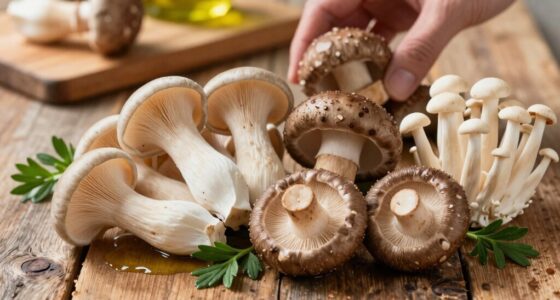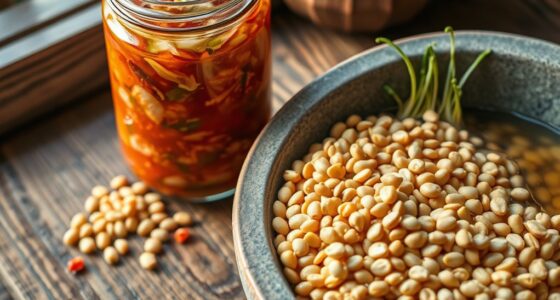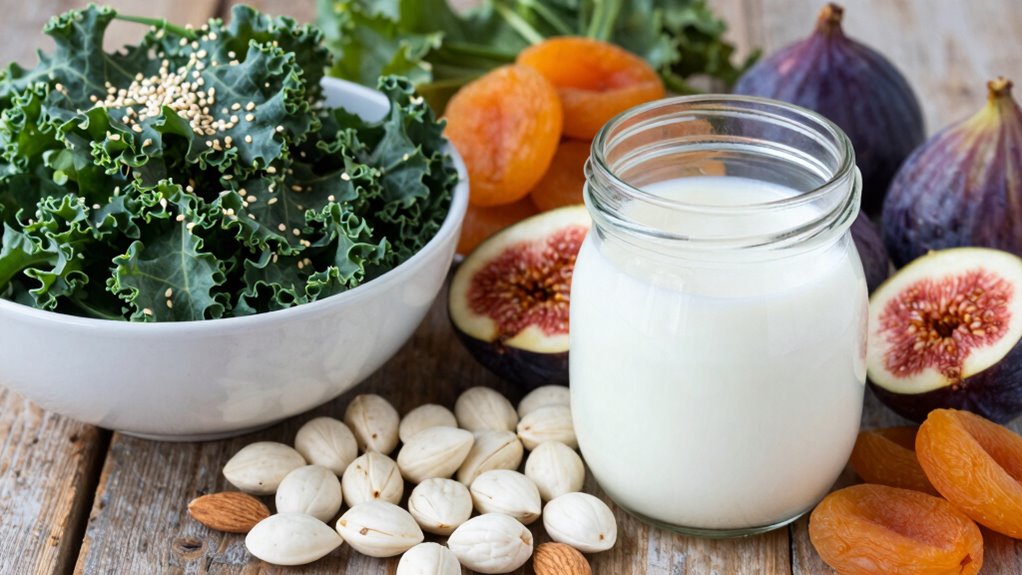

To build strong bones on a vegan diet, focus on calcium-rich foods like leafy greens, fortified plant milks, tofu prepared with calcium sulfate, and seeds such as chia and sesame. Maximize absorption by pairing these with vitamin D sources and minimizing oxalates and phytates through soaking or sprouting. Spreading out your calcium intake throughout the day helps as well. If you want to learn how to optimize your calcium intake even further, keep exploring effective strategies.
Key Takeaways
- Include calcium-rich plant foods like leafy greens, fortified plant milks, tofu, and seeds to meet daily calcium needs.
- Maximize absorption by pairing calcium sources with vitamin D, healthy fats, or nutrient-rich foods.
- Reduce phytates and oxalates through soaking, sprouting, or cooking to improve calcium bioavailability.
- Spread calcium intake throughout the day for better absorption and utilization.
- Diversify calcium sources to ensure sufficient intake, considering bioavailability and absorption factors.
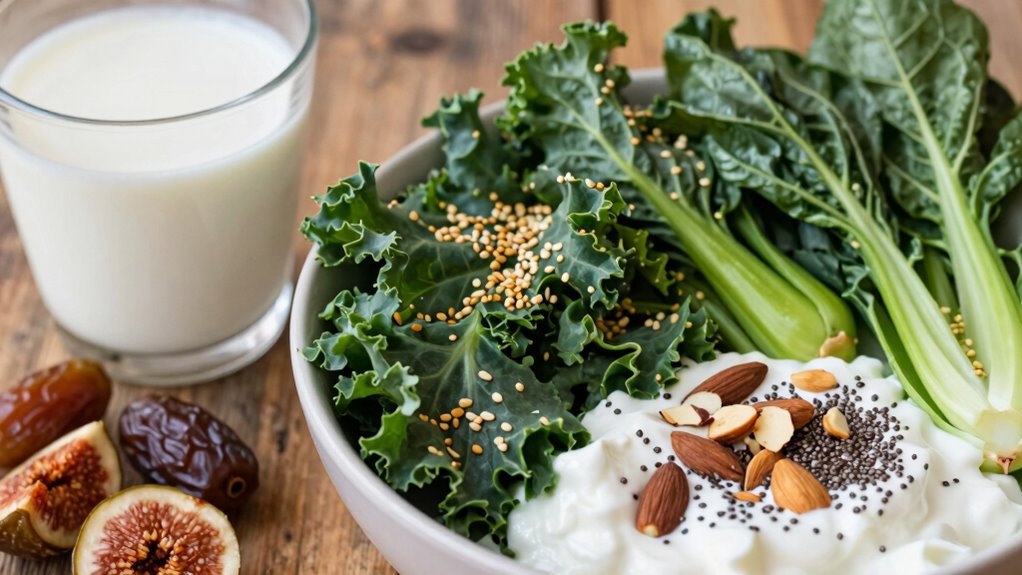
Following a vegan diet doesn’t mean you have to miss out on calcium, an essential mineral for strong bones and overall health. Many plant-based foods are rich in calcium and can help you meet your daily requirements. Leafy greens like collard greens, kale, and bok choy are excellent plant-based calcium sources, offering significant amounts without the need for dairy. Fortified plant milks, such as almond, soy, or oat milk, are convenient options that often contain added calcium, making it easier to reach your daily goals. Tofu prepared with calcium sulfate is another versatile source, especially if you include it regularly in your meals. Additionally, seeds like chia and sesame seeds pack a calcium punch and can be sprinkled over salads, smoothies, or mixed into baked goods.
Plant-based calcium sources like leafy greens, fortified milks, tofu, and seeds support strong bones on a vegan diet.
However, consuming calcium-rich foods alone isn’t enough. To maximize your calcium intake, you need to pay attention to calcium absorption enhancers. Vitamin D plays a key role here, as it helps your body absorb calcium more efficiently. Spending time outdoors in sunlight boosts your vitamin D levels naturally, but if you live in a less sunny climate or have limited sun exposure, you might think about fortified foods or supplements. Certain nutrients, like magnesium and vitamin K2, also support calcium absorption and bone health, so incorporating nuts, seeds, and fermented foods can be beneficial. Understanding calcium bioavailability is crucial when selecting your foods, as not all calcium sources are equally absorbed by the body.
It’s important to be aware that some plant compounds can hinder calcium absorption. Oxalates, found in foods like spinach and beet greens, bind calcium and reduce its bioavailability. While these vegetables are nutritious, it’s best not to rely on them solely for your calcium needs. Instead, balance your diet with low-oxalate greens like kale or bok choy, which offer calcium that your body can absorb more readily. Phytates, present in whole grains and legumes, can also interfere with calcium absorption, so soaking or sprouting grains and beans can help minimize their impact. Incorporating anti-nutrient reduction techniques into your meal prep can further enhance calcium absorption from plant foods. Moreover, choosing foods with higher bioavailability ensures you get the most benefit from your dietary calcium.
Furthermore, the timing of calcium intake throughout the day can influence its absorption, so spreading out calcium-rich foods can be more effective than consuming them all at once. Pairing calcium sources with absorption enhancers like vitamin D-rich foods or healthy fats can optimize your intake. Staying mindful of how different foods interact ensures you get the most out of your plant-based calcium sources. With thoughtful choices and a balanced approach, you can confidently meet your calcium needs without dairy, supporting your bones and overall health on a vegan diet.
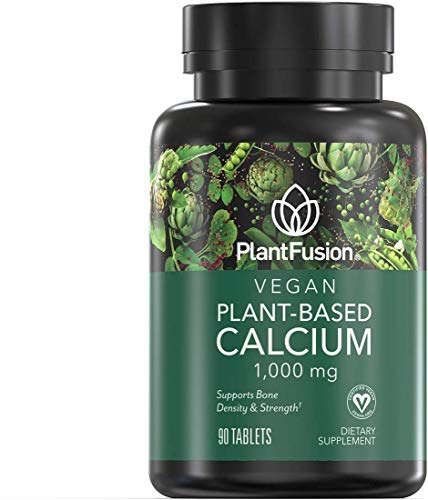
PlantFusion Vegan Calcium, Premium Plant Based Calcium (1000mg) Sourced from Icelandic Red Algae, Plus Magnesium, D3, K2, and Boron, 90 Vegan Tablets
- Plant-Based Calcium & Magnesium: 1000mg per serving from Icelandic red algae
- Premium Natural Source: Made from nutrient-rich Aquamin algae
- Includes Vitamins D3 & K2: Supports calcium absorption and bone health
As an affiliate, we earn on qualifying purchases.
As an affiliate, we earn on qualifying purchases.
Frequently Asked Questions
Can Vegans Get Enough Calcium Without Supplements?
Yes, vegans can get enough calcium without supplements by choosing foods with high calcium bioavailability, like fortified plant milks, tofu, and leafy greens. Many believe in vegan supplement myths, but a well-planned diet can meet your calcium needs naturally. Focus on variety to maximize absorption, and you’ll likely avoid deficiencies. Supplements aren’t always necessary if you prioritize calcium-rich, bioavailable plant foods in your daily meals.
Which Plant-Based Foods Have the Highest Calcium Content?
You’ll be amazed—some plant-based foods pack more calcium than a cow’s milk! Kale, collard greens, and bok choy top the list, offering high calcium bioavailability, meaning your body absorbs it well. Fortified plant milks and tofu also boast impressive calcium levels. Incorporate these plant calcium sources into your meals regularly, and you’ll meet your calcium needs without supplements, all while enjoying delicious, nutrient-rich foods.
How Does Calcium Absorption Differ in Vegans Versus Non-Vegans?
You’ll find that calcium bioavailability differs between vegans and non-vegans because plant-based sources often contain compounds like oxalates and phytates that can hinder absorption. As a vegan, you need to focus on high-bioavailability foods like fortified plant milks, tahini, and leafy greens. Non-vegans benefit from dairy, which provides readily absorbed calcium. To maximize absorption, consider soaking, cooking, or fermenting plant foods to reduce absorption inhibitors.
Are Fortified Foods Necessary for Vegan Calcium Intake?
Fortified foods aren’t strictly necessary for your vegan calcium intake, but they can help guarantee you meet your daily needs. They often contain calcium that’s easily absorbed, improving overall calcium absorption compared to some plant sources. If you consume a varied diet rich in calcium-rich foods like leafy greens, tofu, and fortified plant milks, you might not need fortified foods. However, they’re a convenient option to fill gaps and support ideal calcium absorption.
Does Cooking Affect Calcium Levels in Plant Foods?
Cooking methods can impact mineral bioavailability, including calcium, in plant foods. Boiling or overcooking may cause calcium loss through leaching into water, reducing the amount your body can absorb. Steaming or roasting, on the other hand, tend to preserve calcium content better. To maximize calcium intake, choose cooking methods that minimize nutrient loss, and consider consuming raw or lightly cooked greens and legumes for the best mineral bioavailability.
Conclusion
Remember, you are what you eat, so choose your plant-based calcium sources wisely. Incorporate foods like leafy greens, fortified plant milks, and tofu into your meals to keep your bones strong and healthy. With a little planning, you can meet your calcium needs on a vegan diet without compromise. As the saying goes, “An ounce of prevention is worth a pound of cure”—so nourish your body today for a healthier tomorrow.