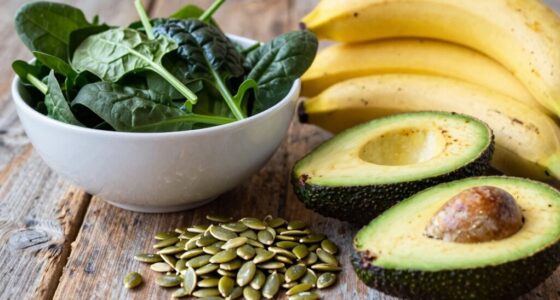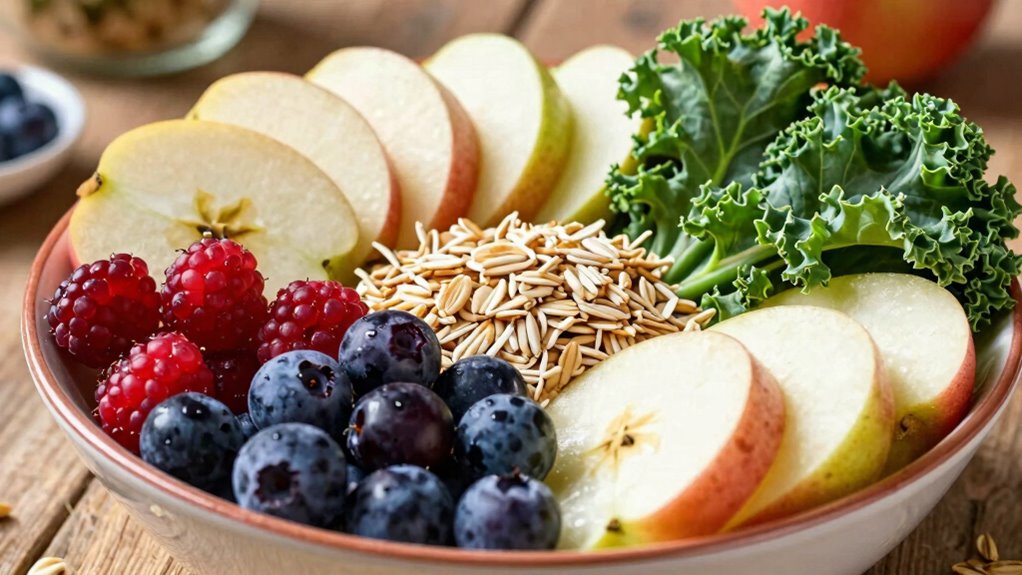

To support your health, aim for about 25-30 grams of fiber daily from plant-based sources like fruits, vegetables, whole grains, nuts, and seeds. Incorporate berries in your breakfast, snack on raw vegetables, and swap white bread for whole-grain options. Increase your fiber intake gradually and drink plenty of water to prevent discomfort. If you want to discover more tips on how to meet your fiber goals naturally, keep exploring for helpful advice.

Get kitchen staples and gadgets delivered free with Prime
- Fast, free delivery on millions of items
- Prime Video, Amazon Music and more included
- Member-only deals all year
Key Takeaways
- Aim for at least 25-30 grams of fiber daily from plant-based sources like fruits, vegetables, whole grains, nuts, and seeds.
- Increase fiber intake gradually to prevent bloating, and drink plenty of water to support digestion.
- Incorporate a variety of fiber-rich foods to maximize nutrient intake and promote overall wellness.
- Choose whole foods over supplements, but use supplements if dietary sources fall short of your fiber needs.
- Regularly include fiber sources in your meals to support digestive health, blood sugar regulation, and feelings of fullness.

Fiber is an essential part of a healthy diet, providing numerous benefits like supporting digestion, regulating blood sugar levels, and helping you feel full longer. When you focus on plant-based sources of fiber, you naturally boost your intake and promote overall wellness. Getting enough fiber from your diet supports fiber digestion, which is crucial for maintaining regular bowel movements and preventing constipation. Unlike dietary supplements, which can be helpful if you’re unable to meet your needs through food alone, fiber-rich plant foods offer additional nutrients that contribute to your health.
To maximize your fiber intake, it’s important to include a variety of plant-based foods like fruits, vegetables, whole grains, nuts, and seeds. These foods are naturally high in fiber, and consuming them regularly ensures your digestive system functions smoothly. When you eat whole foods, you’re also benefitting from vitamins, minerals, and antioxidants that support your immune system and overall vitality. If you find it challenging to reach your daily fiber goals through food alone, dietary supplements like fiber powders or capsules can be a convenient option. However, they shouldn’t replace whole foods, as the synergy of nutrients in plants provides more extensive health benefits.
Incorporating more fiber into your diet doesn’t have to be complicated. Start by adding a handful of berries to your breakfast, snacking on raw vegetables, or swapping white bread for whole-grain options. These small changes can greatly increase your fiber intake over time. Remember, gradual increases help your body adjust without causing bloating or discomfort. Drinking plenty of water is also essential because fiber works best when it absorbs water, softening stool and aiding in smooth digestion. Supporting your diet with plant-based fiber sources ensures you get the most benefit from your dietary choices. Understanding the importance of fiber digestion can help you make more informed dietary decisions that support your long-term health. Incorporating a variety of plant-based foods is key to a balanced, nutrient-rich diet that sustains your energy and well-being.
plant-based fiber supplement powder
As an affiliate, we earn on qualifying purchases.
As an affiliate, we earn on qualifying purchases.
Frequently Asked Questions
Can Fiber Supplements Replace Dietary Fiber Entirely?
Fiber supplements can’t fully replace dietary fiber sources because supplement efficacy varies, and they lack the diverse nutrients found in whole foods. You get more benefits from fiber-rich plant foods like fruits, vegetables, and whole grains, which provide additional vitamins and minerals. Relying solely on supplements can miss out on these nutrients and the complex benefits of natural fiber, so it’s best to prioritize whole food sources for maximum health.
How Does Fiber Intake Affect Blood Sugar Levels?
Did you know that increasing fiber intake can reduce blood sugar spikes by up to 30%? When you eat more fiber, it slows digestion, helping with blood sugar regulation and boosting insulin sensitivity. This means your body responds better to insulin, keeping your blood sugar levels steady. So, incorporating fiber-rich foods into your diet can substantially improve your overall blood sugar control and long-term health.
Are There Risks of Eating Too Much Fiber?
Eating too much fiber can cause issues like bloating, gas, and constipation because excess fiber slows down digestion and can irritate your gut. Your fiber digestion might become overwhelmed, leading to discomfort. To avoid these risks, gradually increase your fiber intake and stay well-hydrated. Remember, moderation is key—too much fiber can disrupt your digestive balance and lead to unwanted side effects.
Which Plant-Based Foods Are Highest in Fiber?
Fruits variety and whole grains are your fiber powerhouses. Berries, apples, and pears pack an incredible fiber punch, while oats, brown rice, and whole wheat bread deliver a steady stream of fiber. These plant-based foods are like a fiber explosion, helping your digestion and keeping you full longer. Incorporate a colorful variety of fruits and whole grains into your diet daily, and you’ll access the secret to ideal health!
How Does Fiber Intake Influence Gut Health Long-Term?
Higher fiber intake boosts your gut health long-term by supporting microbiome diversity, which keeps your digestive system balanced and resilient. As your microbiome becomes more diverse, your digestive efficiency improves, helping you absorb nutrients better and reducing issues like bloating or constipation. Consistently eating fiber-rich plant foods nurtures these beneficial microbes, promoting overall gut wellness and protecting against future digestive problems.
Conclusion
So, remember, fiber isn’t just a dietary detail — it’s the foundation of your well-being. By choosing plant-based options, you’re not only fueling your body but also nurturing your health for the long haul. Think of fiber as the silent hero, quietly working behind the scenes to keep your digestion smooth and your energy high. Don’t underestimate its power; after all, isn’t it time you let fiber’s strength work for you? Your body will thank you.
Halloween Picks
halloween
As an affiliate, we earn on qualifying purchases.