
When choosing between a whetstone and an electric sharpener, you’re balancing control and precision against convenience and speed. Whetstones give you more craftsmanship, letting you customize angles and refine edges carefully, but they require skill, patience, and more time. Electric sharpeners are quick, easy, and perfect for busy kitchens, but they may wear down blades faster and offer less control. Explore further to discover which option best matches your sharpening goals and needs.
Key Takeaways
- Whetstones offer higher precision and control, ideal for high-quality knives, while electric sharpeners prioritize speed and convenience.
- Whetstones require skill, patience, and proper technique, whereas electric sharpeners are easier for quick, automatic sharpening.
- Whetstones maintain original bevels and provide tactile feedback, but are slower; electric sharpeners are faster but less customizable.
- Whetstones demand regular maintenance and have longer durability; electric sharpeners have moving parts that wear out faster.
- The choice depends on whether you value craftsmanship and customization (whetstone) or efficiency and ease (electric sharpener).

Intelitopia Complete Knife Sharpening Stone Set – Dual Grit Whetstone 400/1000 3000/8000 Knife Sharpener with Leather Strop, Flattening Stone, Bamboo Base, 3 Non-slip Rubber Bases & Angle Guide
- Complete Knife Sharpening Kit: Includes all necessary sharpening tools
- Dual Grit Whetstone: 400/1000 and 3000/8000 grit options
- High-Quality Corundum Stone: Durable aluminum oxide construction
As an affiliate, we earn on qualifying purchases.
As an affiliate, we earn on qualifying purchases.
How Do Whetstones and Electric Knife Sharpeners Work?

Whetstones and electric knife sharpeners work differently to restore a blade’s sharpness. Whetstones use a grinding surface, which can be ceramic or oil-stone based, to manually hone your blade’s edge. You control the pressure and angle, making it a manual process. Ceramic whetstones are harder and tend to produce a finer edge, while oil stones require oil as a lubricant. Electric sharpeners, on the other hand, are powered devices that automatically move abrasive belts or wheels against your blade. They often feature preset angles, making sharpening quicker and easier. The main difference lies in manual versus powered operation. Whetstones demand skill and patience but offer precision and the ability to customize your sharpening technique. Electric sharpeners provide speed and consistency but may lack the fine control of a manual stone. For optimal results, understanding the different sharpening techniques can help you choose the right tool for your needs.
Key Benefits of Using a Whetstone
Using a whetstone offers a level of control and precision that electric sharpeners can’t match. With a whetstone, you can customize your sharpening techniques to suit different blade materials, ensuring *superior* edge quality. This method allows you to maintain the original bevel and angle, which is especially important for high-quality knives or specialty blades. This control helps prevent damage to the blade and ensures consistent results. Whetstones give you the flexibility to sharpen both soft and hard materials, from stainless steel to carbon steel, with careful attention to detail. The tactile feedback helps you identify dull spots and refine the edge more effectively. Unlike electric models, a whetstone encourages a mindful sharpening process, resulting in a sharper, longer-lasting edge tailored to your specific needs. Additionally, choosing the right sharpness technique can significantly improve your results and prolong the lifespan of your blades. Proper blade maintenance with a whetstone can also prevent unnecessary wear and tear, keeping your knives in optimal condition for years to come. Regular use of a whetstone can also enhance your understanding of water-based sharpening, leading to better control over the sharpening process. Developing consistent technique with a whetstone can help you achieve a more uniform edge across your blades.
Advantages of Electric Knife Sharpeners

Electric knife sharpeners offer quick results, saving you time and effort in the kitchen. They also provide consistent sharpness, so your knives perform reliably with every use. These advantages make them a convenient choice for everyday sharpening needs. Additionally, they can help maintain your knives’ blade protection, ensuring longer-lasting performance. For those seeking a comprehensive product roundup, electric sharpeners are often highlighted for their ease of use and durability. Incorporating proper gear maintenance practices can further extend the lifespan of your knives and sharpening equipment. Understanding the technical concepts behind sharpening can help you achieve better results and prolong the effectiveness of your tools.
Speed and Convenience
Electric knife sharpeners offer a clear advantage when you need quick and effortless results. Unlike whetstones, they use automated sharpening techniques that markedly reduce the time and effort involved. With just a simple push of a button, you can achieve a sharp edge without mastering complex techniques. This convenience is especially valuable when you’re in a hurry or preparing multiple knives. Additionally, electric sharpeners are designed to protect blade durability by maintaining consistent angles, preventing uneven wear. This consistency helps extend the lifespan of your knives, saving you money in the long run. Overall, if speed and convenience are your priorities, electric sharpeners make the process fast, simple, and reliable, ensuring your blades stay sharp with minimal effort. Incorporating specialized gear can further enhance your sharpening experience and results. Understanding the technology behind electric sharpeners highlights how they provide consistent and safe results compared to manual methods.
Consistent Sharpness
One of the key advantages of electric knife sharpeners is their ability to deliver consistent sharpness every time you use them. Unlike alternative sharpening techniques that rely on manual skill, electric sharpeners maintain a uniform angle and pressure, ensuring each edge is equally refined. This consistency contrasts with historical sharpening methods, which often depend on experience and can vary in results. With electric sharpeners, you don’t need to worry about over- or under-sharpening; the machine does the work for you. This reliability makes them perfect for maintaining sharp knives without the guesswork. Over time, you’ll appreciate the even, professional-quality edge, saving you time and effort while avoiding the uneven edges that can occur with traditional or alternative sharpening methods.
Limitations of Whetstones and When to Use Them
Whetstones can be slow and require patience, making them less ideal when you need a quick sharpen. You also need some skill to get the angle right and achieve a sharp edge. Additionally, they may not provide the precise edge you’re aiming for, especially with complex or specialized knives. A diversification of tools can be beneficial to achieve optimal results depending on your specific needs. Considering emerging trends in sports tech and fan engagement, incorporating digital sharpening tools or guided systems can enhance accuracy and ease of use for many users. Recognizing the importance of proper technique can also help prevent damage and ensure a better sharpened edge. Understanding fan culture and its evolving nature can also inform how tools and techniques are adapted for different communities and preferences. Incorporating advanced sharpening methods and staying informed about new innovations can further improve your overall sharpening experience.
Time-Consuming Process
Although whetstones can deliver a precise edge, they often require a significant investment of your time and patience. Sharpening patience is essential because the process demands careful, deliberate strokes to achieve a clean, sharp edge. You’ll need to work slowly, checking the edge frequently, which can be frustrating if you’re in a hurry. Technique mastery plays a vital role; improper angles or uneven pressure can prolong the process and ruin your blade’s edge. Expect to spend several minutes per knife, especially if it’s dull. Whetstones excel when you prioritize quality over speed and are willing to invest the necessary time. If quick results are your goal, this time-consuming process may not be ideal, but for precision, it’s hard to beat.
Skill Dependency Required
Mastering a whetstone requires a steady hand and a good understanding of proper technique, making it less suitable for beginners or those without experience. Your skill level heavily influences the quality of the edge you produce. If your sharpening technique isn’t precise, you risk uneven or dull results, wasting time and effort. To succeed, you need consistent pressure, accurate angle control, and patience. Here’s a quick comparison:
| Skill Level | Required Technique | Result |
|---|---|---|
| Beginner | Basic angle and pressure control | Variable edge sharpness |
| Intermediate | Steady hand, consistent strokes | More reliable, sharper edge |
| Advanced | Precision, nuanced control | Razor-sharp, durable edge |
| Expert | Mastery of sharpening nuances | Perfect, professional finish |
Additionally, understanding how proper technique impacts the durability of the edge can help you decide when to use a whetstone versus other sharpening tools. Recognizing the skill dependency involved can also guide you in choosing the right tool for your experience level and sharpening needs. Being aware of the learning curve associated with whetstones can help set realistic expectations and improve your overall sharpening results.
Limited Edge Precision
While whetstones are excellent for sharpening, they often fall short when it comes to achieving consistently precise edges. The main challenge is maintaining edge consistency, which requires skill and experience. Even minor variations in angle or pressure can affect sharpening precision, leading to uneven or dull edges. If you’re aiming for razor-sharp, uniform results, whetstones might not deliver the consistency you need, especially for intricate or high-precision tasks. They’re best suited for those who enjoy hands-on sharpening and can control the process carefully. For everyday or fast-paced use, an electric sharpener may provide more reliable, steady edges. Recognize when precision is critical, and choose your sharpening method accordingly to guarantee peak edge quality every time.
Limitations of Electric Sharpeners and Their Drawbacks
Electric sharpeners are convenient, but they come with notable limitations that can affect the quality of your blades. One concern is sharpening safety; if not used carefully, the machine can slip or catch, risking injury. Additionally, noise levels can be disruptive, especially in quiet environments. They often lack precision, removing more metal than necessary and dulling blades faster. The consistency of the edge can also vary, making it harder to achieve a perfect sharpness. Furthermore, electric sharpeners tend to be less versatile, unable to handle different blade types or angles effectively. These drawbacks highlight that while electric sharpeners are quick, they may compromise blade longevity and safety, making them less ideal for refined or frequent sharpening needs. Electric power generation by bike generators illustrates how energy efficiency and precision in equipment are crucial factors in performance. Additionally, the limited control over sharpening angles can lead to uneven edges, further emphasizing the importance of proper technique in maintaining blade quality.
Best Knife Sharpening Method for Different Blade Types
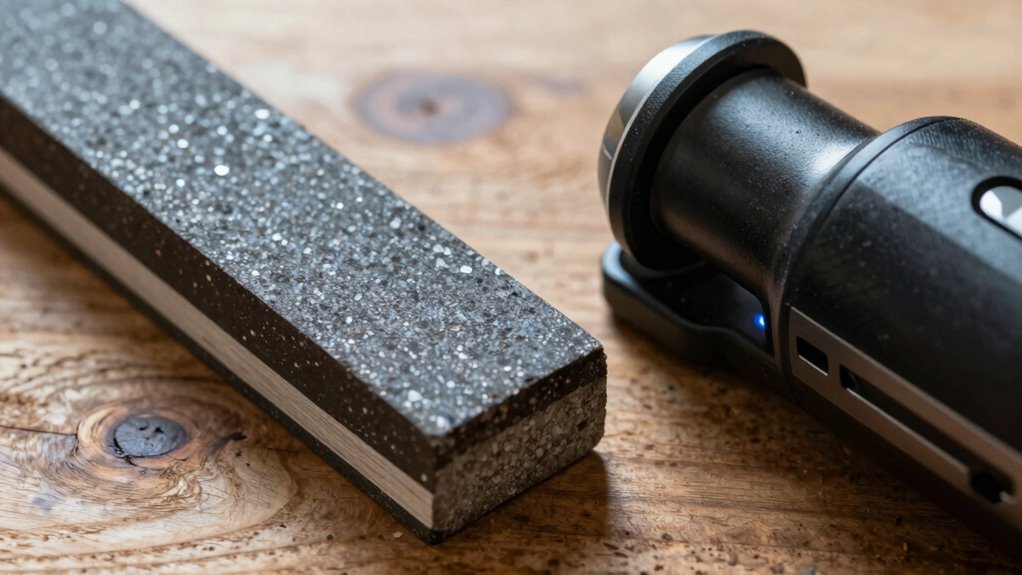
Choosing the right sharpening method depends on the type of blade you’re working with, as different blades require specific techniques to achieve ideal sharpness. For instance, high-carbon knives benefit from a whetstone to refine edges, especially for precise cooking techniques. Stainless steel blades are versatile and can be maintained with electric sharpeners, which are quick and easy. Gyuto and paring knives might need different approaches for best results. Proper knife storage also helps preserve sharpness longer. Here’s a quick comparison:
| Blade Type | Best Method | Notes |
|---|---|---|
| High-carbon knives | Whetstone | Use for fine edge refinement |
| Stainless steel | Electric sharpener | Quick, suitable for daily use |
| Santoku knives | Whetstone or electric | Depends on frequency of use |
| Serrated knives | Specialized sharpener | For effective sharpening |
| Paring knives | Whetstone | For detailed work |
Additionally, understanding blade material properties can help you choose the most appropriate sharpening technique.
How Easy Is It to Use a Whetstone Compared to an Electric Sharpener?
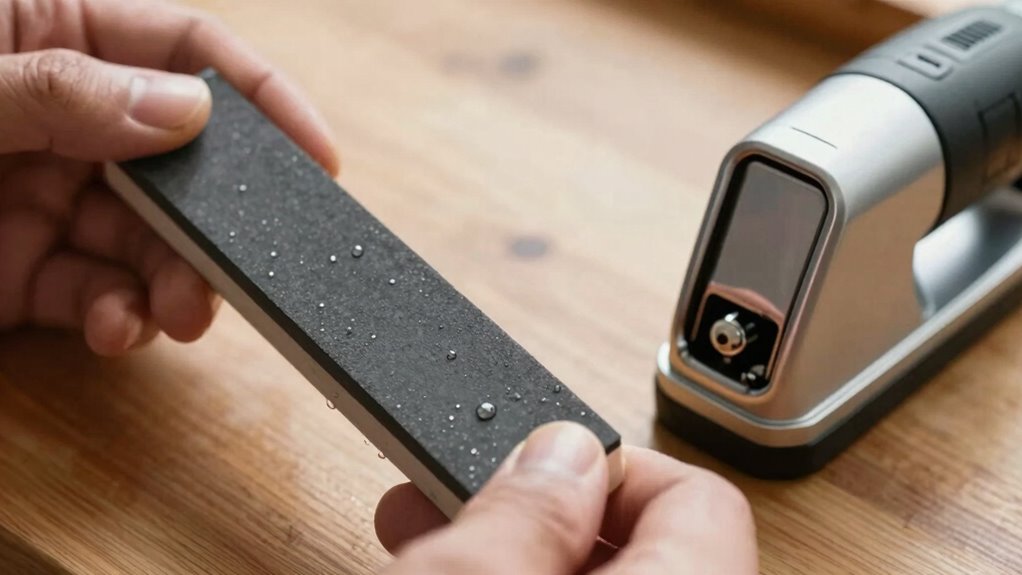
Using a whetstone requires more skill and patience compared to an electric sharpener, which is designed for quick and effortless use. While electric sharpeners simplify the process, honing your blades with a whetstone connects you to historical techniques with deep cultural significance.
Whetstones demand skill and patience, honoring traditional techniques with cultural significance over quick, effortless electric sharpening.
To master a whetstone, you’ll need to:
- Maintain consistent angle and pressure
- Use proper sharpening strokes
- Keep the stone lubricated
- Regularly check the blade’s edge
- Practice patience and finesse
These steps demand dedication, but they also offer a tactile, traditional experience. Electric sharpeners prioritize speed, but whetstones provide a nuanced approach that preserves craftsmanship and pays homage to age-old sharpening practices.
Factors to Consider When Choosing a Knife Sharpener
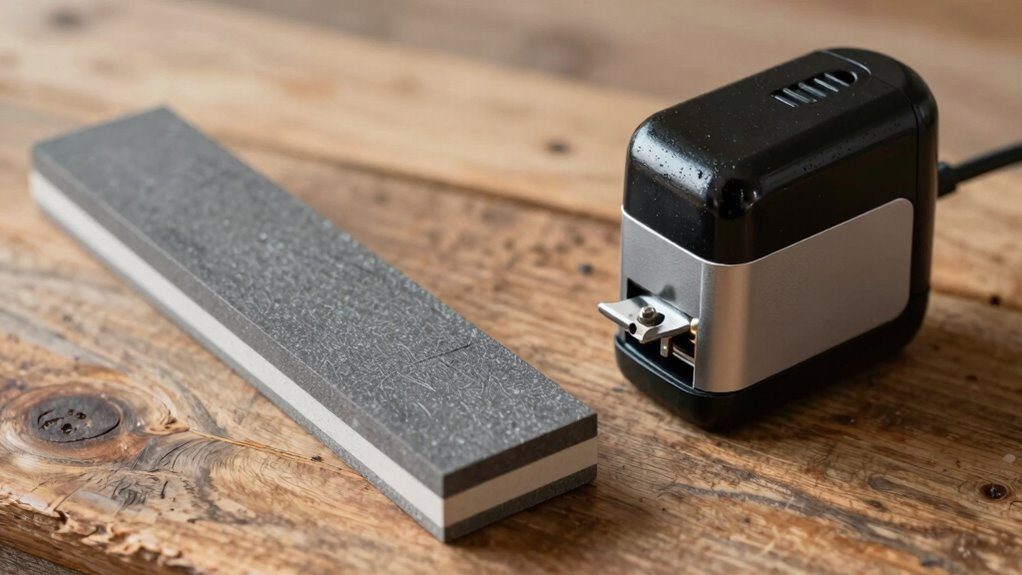
When selecting a knife sharpener, it’s important to take into account several key factors to guarantee you get the right tool for your needs. One vital aspect is understanding sharpening myths, so you’re not misled by false claims about how quickly or easily knives can be sharpened. Safety should also be a top priority; proper knife sharpening safety prevents accidents and ensures you don’t damage your blades or hurt yourself. Consider whether you prefer a quick, electric option or a traditional whetstone, which requires more skill but offers control. Think about the type of knives you have and how often you sharpen them. By weighing these factors, you’ll choose a sharpener that fits your skill level, safety requirements, and sharpening goals.
How Maintenance and Longevity Differ Between Whetstones and Electric Sharpeners
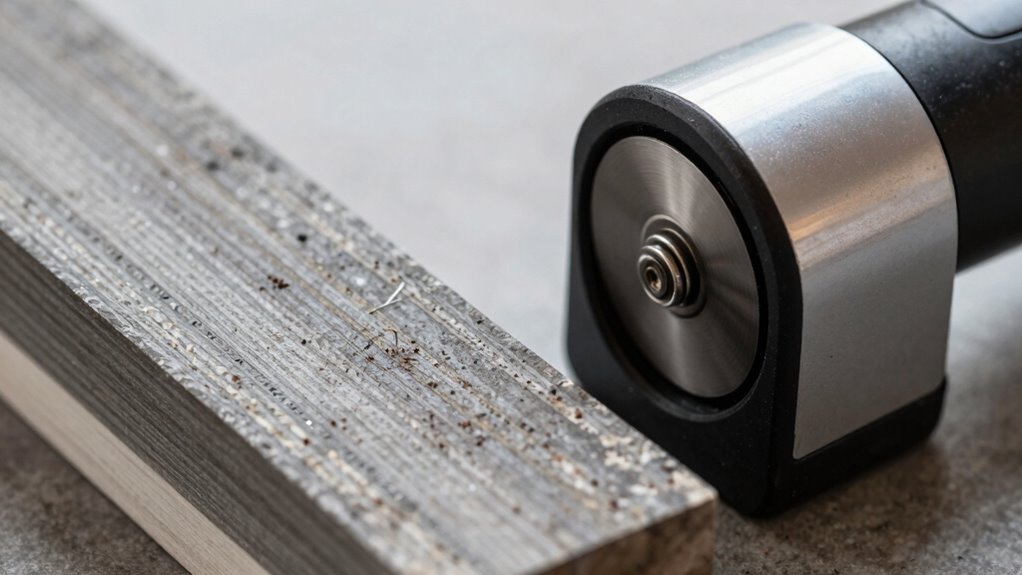
Whetstones generally have durable surfaces that can last for years with minimal maintenance, while electric sharpeners may need more frequent part replacements. You’ll find that whetstones require occasional cleaning and flattening, but electric models often demand regular motor and grinding wheel upkeep. Over time, the longevity of each depends on how well you care for their components and how often you use them.
Durability of Sharpening Surfaces
Durability of sharpening surfaces greatly influences how often you’ll need to replace or maintain your tools, and it varies between whetstones and electric sharpeners. Whetstones tend to last longer if properly cared for, offering high aesthetic appeal and sustained performance over time. Electric sharpeners, meanwhile, have surfaces made of synthetic abrasives that can wear out faster, requiring regular replacement.
- Whetstones maintain their surface quality longer, especially with proper cleaning
- Electric sharpener abrasives degrade more quickly under frequent use
- Whetstones offer a more cost-efficient option over the long term
- Aesthetic appeal remains high with quality whetstones due to their natural look
- Electric sharpeners may need replacement parts sooner, impacting overall cost efficiency
Choosing between them depends on your priorities for durability and style.
Maintenance Frequency and Ease
Maintenance requirements and ease of upkeep differ markedly between whetstones and electric sharpeners. Whetstones need regular cleaning and flattening to preserve their effectiveness, which involves simple sharpening techniques but requires consistent attention. You’ll need to soak and clean them after use, guaranteeing they stay flat to prevent uneven edges. Electric sharpeners, on the other hand, demand less frequent maintenance—mainly cleaning dust and debris from internal components. They’re generally easier to use safely, with built-in safety considerations like guards and automatic shut-offs. However, improper use or neglect can lead to safety risks. While electric sharpeners offer convenience, whetstones give you more control over sharpening techniques, but both require proper maintenance to ensure safe, effective, and long-lasting use.
Longevity of Equipment Parts
While both whetstones and electric sharpeners are designed for long-term use, their parts wear differently over time. Whetstones generally last longer since they’re simple, with minimal components prone to damage. Their longevity depends on maintaining proper sharpening angles and selecting the right stone for your knife material. Electric sharpeners, however, have moving parts like motors and abrasive belts that wear out faster, especially with frequent use. Sharpener parts may require replacement or repair sooner, impacting overall durability. Consider these factors:
- Motor lifespan and maintenance
- Wear on abrasive belts or wheels
- Impact of sharpening angles on part durability
- Knife material compatibility affecting wear
- Ease of replacing or repairing worn parts
Which Kitchen Setup Is Best for Your Knife Sharpening Needs?
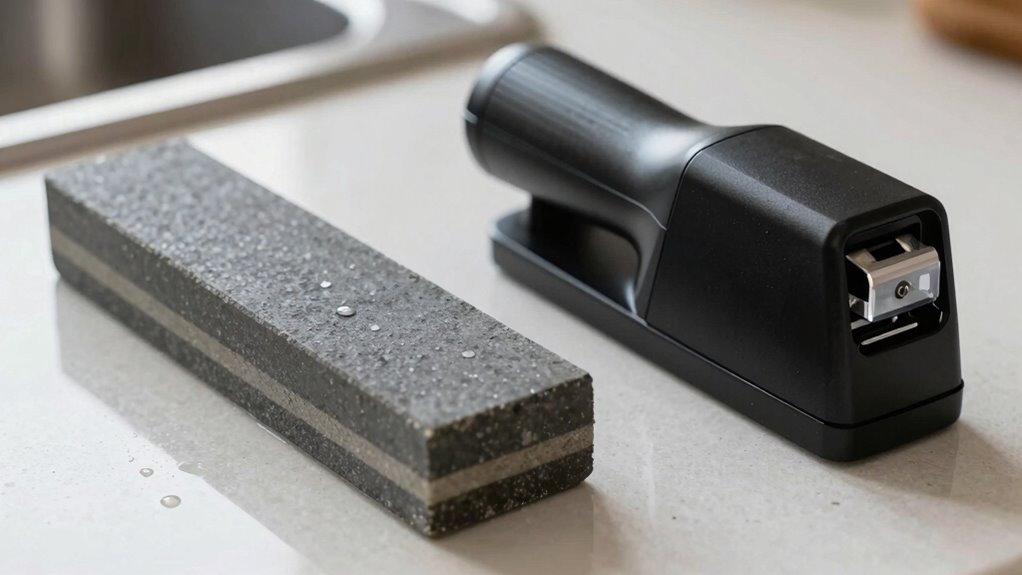
Are you wondering which kitchen setup is best for sharpening your knives? Your choice depends on your space and style preferences. If you value a sleek look, consider a dedicated sharpening station that blends with your kitchen aesthetics. A compact, organized setup keeps your tools accessible and reduces clutter. If storage solutions are a priority, opt for a sharpening drawer or cabinet with built-in slots for stones or electric sharpeners. For frequent use, a countertop setup with minimal disruption works best, while occasional sharpeners suit a hidden or tucked-away space. Remember, your setup should facilitate safety, ease of use, and maintenance, ensuring your knives stay sharp and your kitchen remains functional and stylish.
Frequently Asked Questions
Can You Sharpen Serrated Knives With a Whetstone or Electric Sharpener?
You can sharpen a serrated knife with a whetstone or electric sharpener, but it requires specific sharpening techniques. For a whetstone, you need a fine-grit stone and focus on honing each serration individually. Electric sharpeners typically aren’t designed for serrated knives, so you might risk damaging the blade. It’s better to use a sharpening rod or a specialized tool for serrations, ensuring you maintain the knife’s edge without harming the teeth.
How Long Does It Take to Sharpen a Knife Using Each Method?
How long does it take to sharpen a knife? With a whetstone, expect about 10-15 minutes, depending on the dullness and your skill. An electric sharpener is faster, usually under 2 minutes. You’ll need to take into account maintenance frequency—whetstones require regular cleaning and flattening, while electric sharpeners may need occasional replacement parts. Regarding cost comparison, whetstones are cheaper upfront, but electric sharpeners save time and effort.
Is There a Significant Difference in Sharpening Precision Between the Two?
You’ll notice a significant difference in sharpening precision between a whetstone and an electric sharpener. A whetstone allows you to control the angle precisely, which can improve blade durability over time. However, it requires more skill and effort. Electric sharpeners are quicker and often more consistent but may wear down blades faster, increasing sharpening costs. So, if precision matters most, a whetstone is your best bet.
Which Method Is More Suitable for Professional Chefs?
For professional chefs, precision comparison and ease of use are essential. Whetstones offer superior sharpness and control, allowing you to hone edges meticulously. However, electric sharpeners excel in efficiency, saving time with simple, swift strokes. If you prioritize precision and craftsmanship, a whetstone is better. But for speed and consistency during busy kitchen hours, an electric sharpener provides the practical, reliable ease of use that professionals need.
Are There Safety Concerns Associated With Each Sharpening Technique?
You should be aware of safety concerns with both sharpening methods. With a whetstone, you need to follow safety protocols to avoid cuts from sharp blades and handle the stone carefully. Electric sharpeners, on the other hand, can pose risks of accidental contact with moving parts. Your user experience improves when you stay attentive and use proper safety measures, ensuring safe and effective sharpening regardless of the technique you choose.
Conclusion
Choosing between a whetstone and an electric sharpener is like picking the right tool for a craft—each has its own strengths and quirks. I once watched a chef expertly glide a whetstone across a blade, transforming a dull edge into a razor-sharp line, like a painter finishing a masterpiece. Ultimately, your decision depends on your skills, patience, and how sharp you want your knives. Whichever you pick, it’s about finding the right fit for your culinary journey.