To keep indoor composting odor-free in apartments, choose compact bins with good airflow and sealed lids, and layer browns like cardboard or shredded paper with kitchen scraps. Maintain good ventilation, cover waste consistently, and avoid adding meat or dairy. Regularly turn your compost and clean the container to prevent odors. Simple habits like managing moisture and using odor-absorbing materials help. Keep going to discover more tips for seamless, sustainable composting at home.
Key Takeaways
- Use odor-absorbing materials like activated charcoal, shredded paper, or dry leaves to minimize smells during composting.
- Maintain proper airflow with vented lids or breathable bins to prevent anaerobic conditions and foul odors.
- Cover kitchen scraps with browns such as shredded paper or cardboard to reduce odor and deter pests.
- Regularly turn the compost and remove excess waste to promote aeration and prevent buildup of unpleasant smells.
- Place the compost bin near ventilated areas and open windows frequently to enhance airflow and dissipate odors.
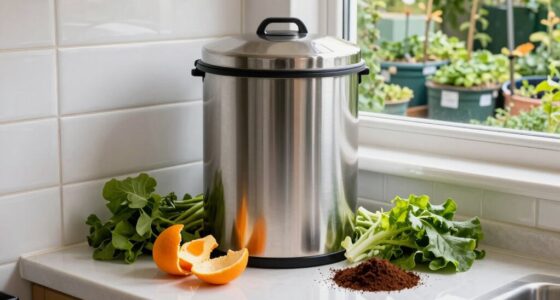
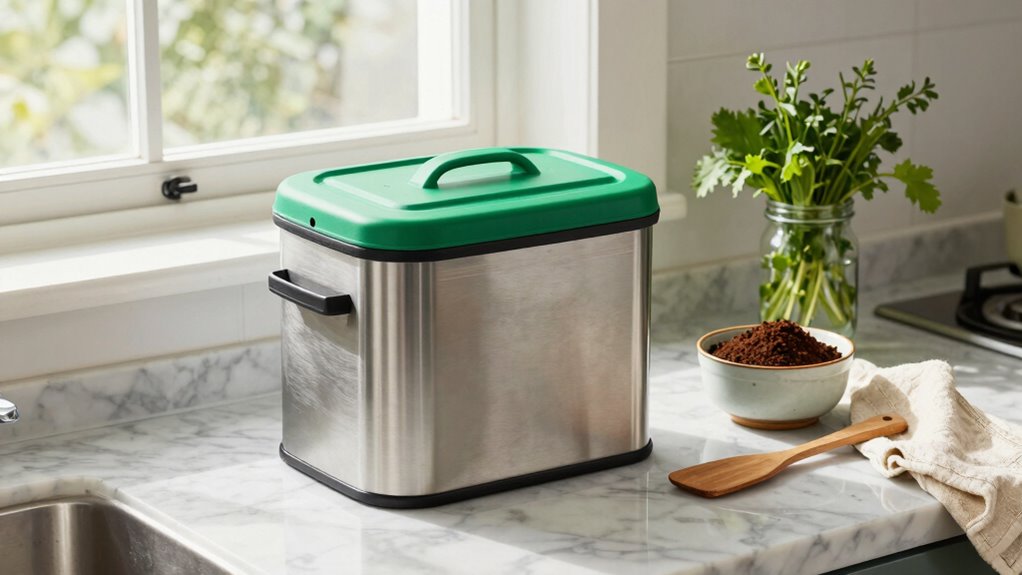
compact indoor compost bin with odor control
As an affiliate, we earn on qualifying purchases.
As an affiliate, we earn on qualifying purchases.
What Are the Challenges of Composting in Apartments?
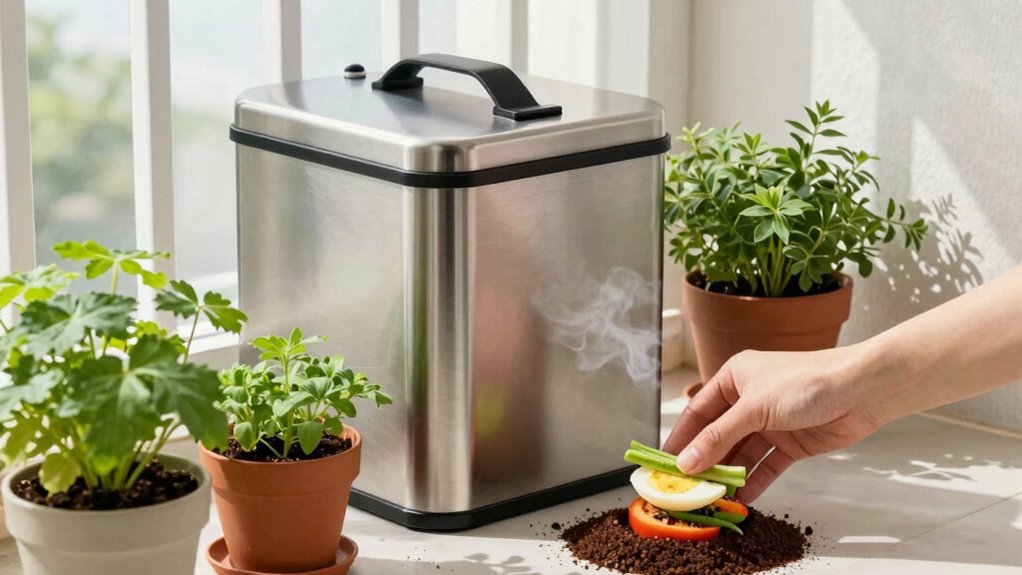
Have you ever wondered why composting in apartments can be tricky? One major challenge is balcony composting, which limits space and requires careful management. You need to guarantee your compost bin is properly ventilated and odor-free, especially in shared spaces. Additionally, many apartment buildings have strict composting regulations that restrict or prohibit certain types of waste or composting methods. These rules can make it difficult to find the best approach without risking violations or complaints. Proper ventilation systems and maintenance of your compost system can help mitigate these issues. Limited space also means you must be diligent about controlling moisture and pests. Without proper knowledge, you might struggle with odors or attracting unwanted critters. Understanding building policies and adapting your composting practices accordingly is essential for success. Exploring composting regulations can help you stay compliant and avoid potential issues. Implementing odor control techniques can further improve your composting experience in confined spaces.
How to Choose the Best Composting Method for Small Spaces
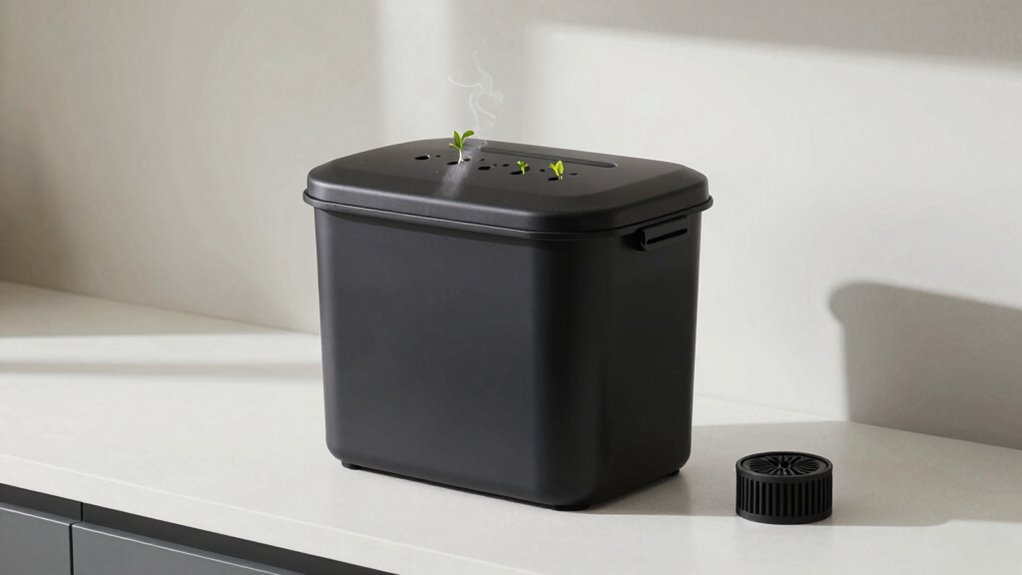
When selecting a composting method for your small space, consider compact bin options that fit easily in your apartment. Think about how much effort and maintenance each method requires, especially in controlling odors. Choosing the right setup means balancing convenience with cleanliness, so your composting stays hassle-free. Additionally, incorporating Free Floating methods can help maintain a more natural and odor-neutral environment indoors. Being aware of European cloud innovation can inspire sustainable choices in your composting setup, promoting eco-friendly practices within your living space. Exploring compact compost bins designed for small areas can further simplify maintenance and reduce odors. Recognizing the importance of microcurrent devices in skincare technology can also encourage you to select eco-friendly and effective composting solutions.
Compact Compost Bin Options
Choosing the right compact compost bin for your apartment depends on your available space, lifestyle, and how much waste you generate. Look for a compact bin that fits comfortably in your kitchen or balcony without cluttering your area. Many options feature odor control mechanisms such as sealed lids, charcoal filters, or airtight designs to minimize smells. Consider whether you prefer a countertop model for quick access or a bin with a removable inner container for easy cleaning. Some bins are specifically designed for small spaces, with stackable or slim profiles. Prioritize odor control features to keep your apartment smelling fresh while composting. Incorporating odor-absorbing materials like activated charcoal can further enhance smell management. Additionally, choosing a bin with ventilation systems helps regulate moisture and reduce odors, making composting more efficient. Proper air circulation is essential for controlling moisture and preventing odors from building up inside the bin. Using moisture control techniques can help maintain the right balance and improve composting efficiency. Understanding how proper airflow impacts compost health is key to successful odor management. By selecting a well-suited compact bin, you can efficiently compost your kitchen scraps without sacrificing space or comfort.
Maintenance and Odor Control
Since space is limited in apartments, selecting a composting method that effectively manages maintenance and odors is essential. Focus on options that promote good air circulation to prevent buildup of moisture and reduce odor. Compost bins with venting systems or those made from breathable materials help air flow freely, decreasing smell issues. To enhance odor absorption, choose containers with charcoal filters or add absorbent materials like shredded paper or sawdust. Regular maintenance, such as turning the compost and removing excess waste, further minimizes odors and keeps the process manageable. Keep the compost in a cool, well-ventilated spot to prevent odors from becoming overwhelming. Additionally, selecting a composting method with air circulation features can significantly improve odor control. Proper odor absorption techniques, such as using activated charcoal or natural absorbents, are essential for maintaining a fresh environment. Implementing ventilation strategies tailored for small spaces can help dissipate odors more efficiently. Using vented compost bins designed for indoor use can make a notable difference in odor management. By prioritizing proper air circulation and odor absorption, you ensure your apartment composting remains clean and odor-free. Incorporating effective odor management methods is key for maintaining a pleasant indoor environment while composting.
How to Set Up Your Compost Bin for Odor Control and Success
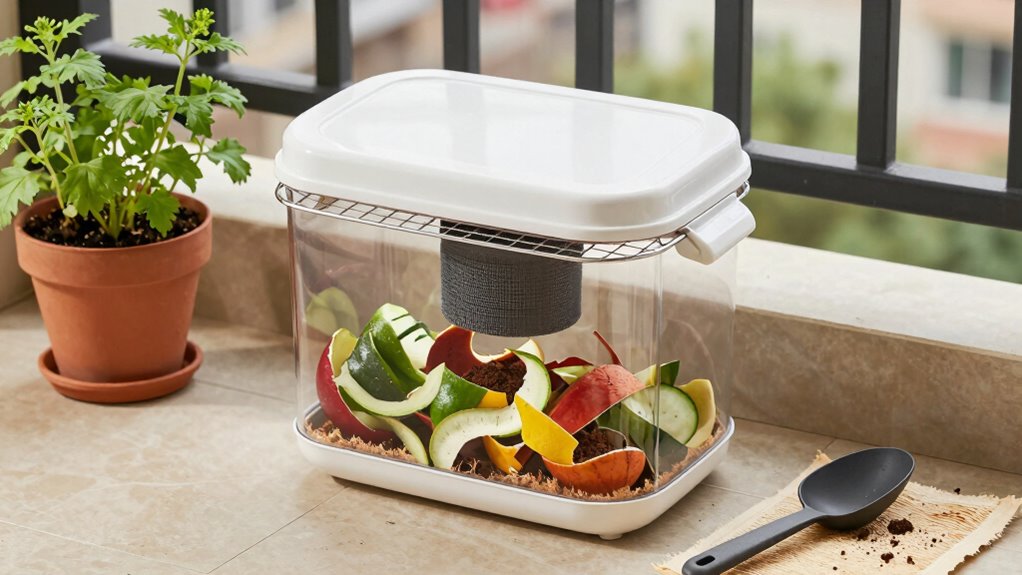
To set up your compost bin for odor control and success, start by choosing a proper container that fits your space and contains odors. Layer browns like dry leaves or paper to balance moisture and prevent smells, and make sure your bin has good ventilation to keep air flowing. Using a well-ventilated container can significantly reduce odors and improve composting efficiency. Proper airflow is essential to prevent anaerobic conditions that cause unpleasant odors. Additionally, selecting a ventilated compost bin designed specifically for apartment use can further enhance odor management. Ensuring your compost has adequate aeration will help maintain a healthy environment for decomposition. Keeping these points in mind will help your compost stay fresh and effective.
Use Proper Container
Using a proper container is essential for successful composting in apartments, as it helps control odors and keeps pests away. Choose a container with good air circulation, such as one with vents or a breathable lid, to prevent unpleasant smells. Container materials matter too; opt for plastic or metal, which are durable, easy to clean, and resistant to moisture and pests. Avoid porous materials that can absorb odors or harbor bacteria. Make sure your container has a secure lid to contain smells and prevent pests from getting in. Proper ventilation and sturdy materials work together to create an effective environment for composting indoors. Selecting the right container sets a strong foundation for odor control and compost success in your apartment. Additionally, selecting a smart compost bin with odor filters or automatic ventilation can further enhance odor management and ease of use.
Layer With Browns
Starting your compost bin off right involves layering it properly, beginning with browns. Layer with browns, such as dried leaves, paper, or cardboard, to create a dry base that absorbs excess moisture and controls odors. This initial layer helps balance the composting waste, preventing it from becoming too wet or smelly. After adding your kitchen scraps—fruit and vegetable peels, coffee grounds, or eggshells—cover them with another layer of browns. This not only keeps odors in check but also discourages pests. Keep layering with browns as you add composting waste, maintaining a good balance of green and brown materials. This simple step sets your compost up for success, ensuring it remains odor-free and decomposes efficiently.
Maintain Ventilation
Proper ventilation is essential for maintaining a healthy compost bin and preventing odors from building up. Good air circulation helps break down organic matter efficiently and keeps unpleasant smells at bay. To achieve this, guarantee your bin has enough ventilation holes or mesh panels to allow airflow. Regularly opening a window nearby enhances ventilation and helps dissipate any odors that may escape. If your compost bin is indoors, consider placing it near a window that you can open when needed, especially during hot or humid days. Consistent airflow prevents anaerobic conditions, which cause foul smells. By maintaining proper ventilation through strategic window opening and good air circulation, you’ll create an environment that’s odor-free and conducive to successful composting.
Simple Habits to Keep Your Indoor Compost Smelling Fresh
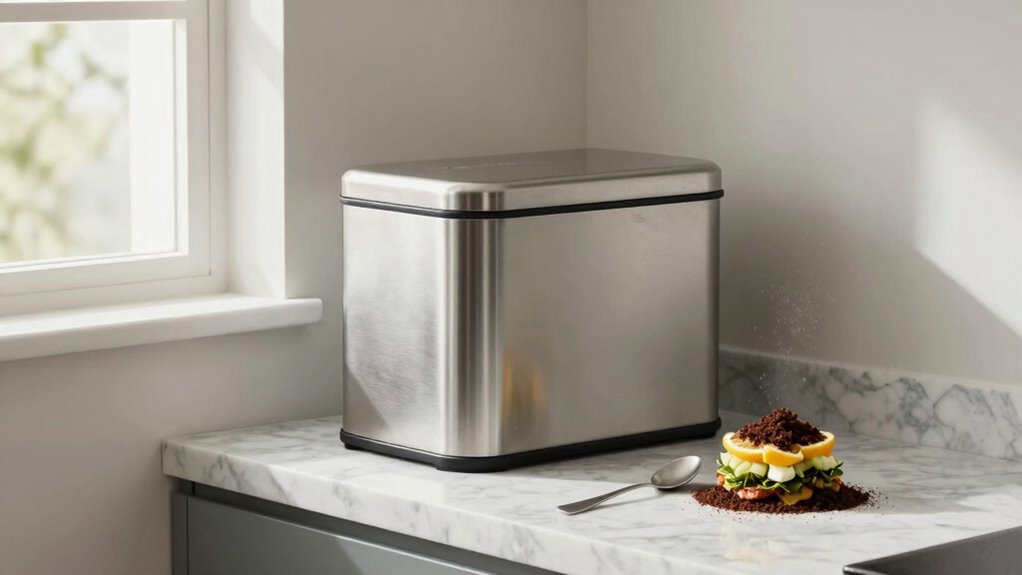
To keep your indoor compost smelling fresh, adopting some simple habits can make a big difference. First, always cover food scraps with a layer of dry material like shredded paper or sawdust. This prevents odors and discourages pests. Regularly empty and clean your compost container to avoid buildup. Remember, many composting myths, like needing large amounts of space, don’t apply to indoor gardening—you can compost effectively in small spaces. Keep your bin in a well-ventilated area and avoid overfilling it to maintain airflow.
| Habit | Benefit |
|---|---|
| Cover scraps with dry material | Controls moisture and odor |
| Empty and clean container | Prevents bacteria buildup and smells |
| Place in well-ventilated spot | Keeps compost aerated and fresh |
Troubleshooting Common Composting Problems in Apartments
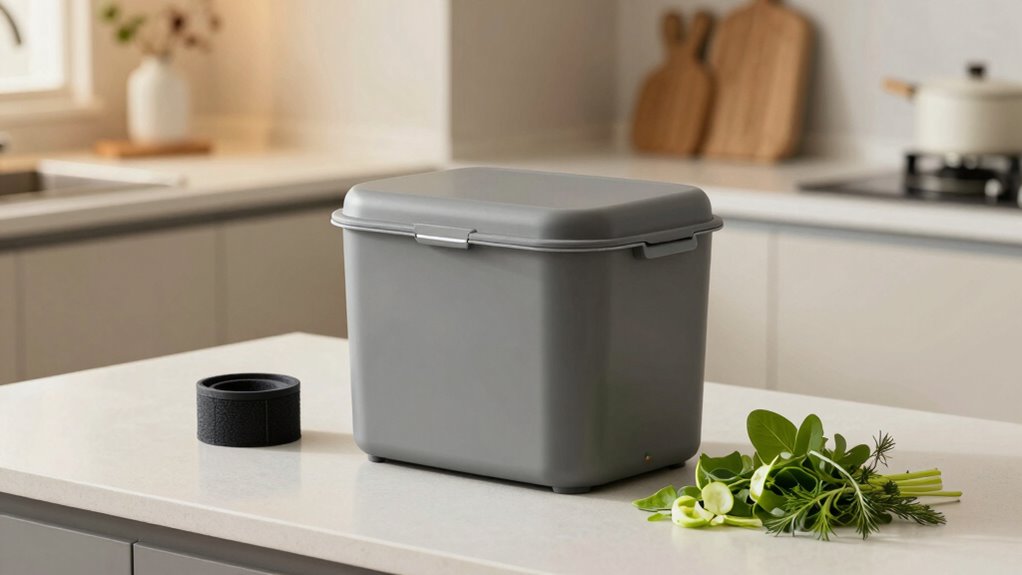
Even with careful habits, you might encounter common composting issues in your apartment. Many people believe composting myths, like that it always attracts pests or smells terrible, but proper urban composting techniques can prevent these problems. If your compost smells bad, check for excess moisture or too much food waste, which can cause odors. Turning the bin regularly helps aerate it and reduce bad smells. If critters are attracted, ensure your bin is sealed tightly and avoid adding meat or dairy. Sometimes, the compost isn’t breaking down, which might mean you’re adding incompatible materials or not balancing greens and browns. Troubleshooting these issues quickly keeps your compost healthy and odor-free. Addressing problems early lets you enjoy the benefits of urban composting without frustration.
Accessories and Techniques to Reduce Odors in Your Compost Bin
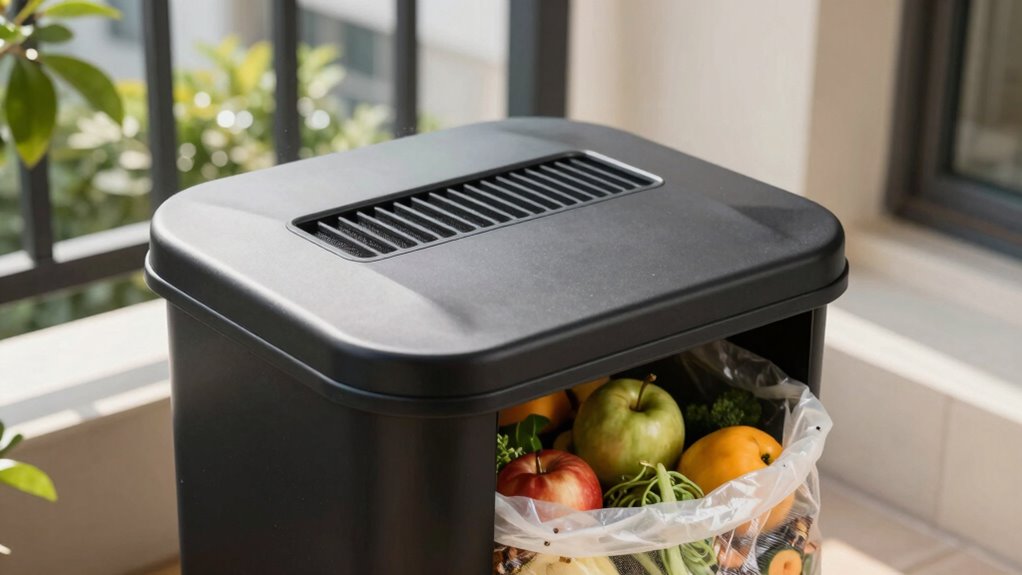
Adding the right accessories and employing targeted techniques can considerably cut down odors in your apartment compost bin. Air freshener options, like natural sprays or charcoal-based fresheners, can help mask lingering smells without disrupting your composting process. Odor absorbing accessories, such as activated charcoal filters or odor-absorbing bags, are especially effective at trapping smells at the source. Place these accessories near or directly on your compost bin to prevent odors from escaping. Additionally, ensure your bin has good airflow by using a vented lid or adding small holes, which helps reduce moisture and odors. Regularly draining excess liquid and maintaining a balanced mix of browns and greens also contributes to odor control. These accessories and techniques work together to keep your apartment smelling fresh while composting responsibly.
Tips for Making Composting a Seamless Part of Your Daily Routine
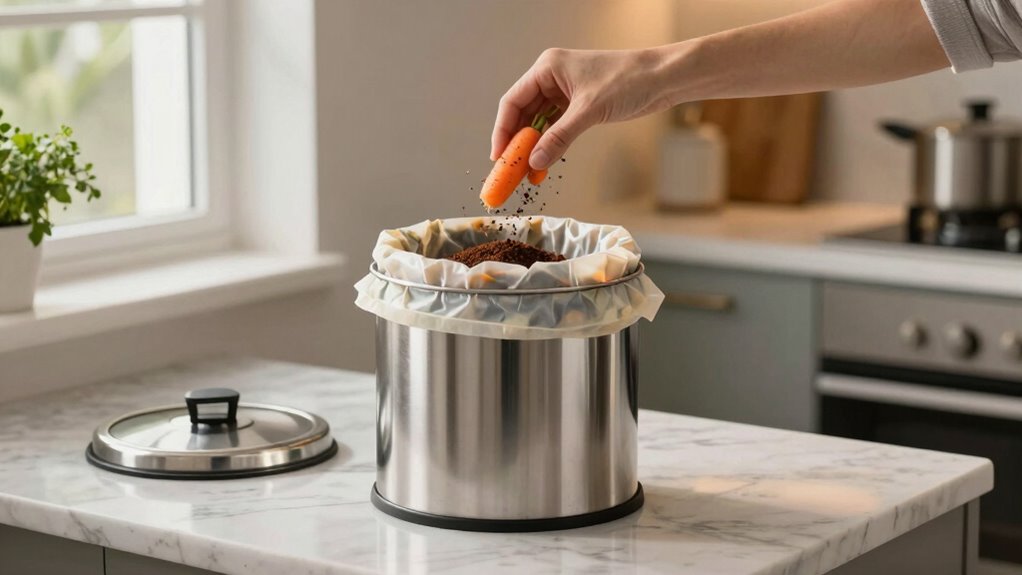
Integrating composting into your daily routine becomes easier when you establish simple, consistent habits. For beginners, worm composting is an excellent method that fits seamlessly into daily life. To make composting effortless, consider these tips:
- Designate a specific container for scraps, making it easy to toss in kitchen waste regularly.
- Schedule a daily or every-other-day check to add kitchen scraps and monitor moisture levels.
- Keep a small container or compost pail nearby to minimize trips to your main bin.
- Rinse and maintain your worm bin weekly to ensure healthy composting conditions.
Final Tips for Sustainable and Odor-Free Apartment Composting

To keep your apartment composting sustainable and odor-free, focus on maintaining proper balance and cleanliness. Proper odor management relies on layering browns and greens and avoiding overfilling your bin. Practicing composting etiquette, like covering food scraps and emptying the bin regularly, minimizes odors and keeps your space tidy. Consistency is key—monitor moisture levels and aerate the compost to prevent odors and pests. Use the table below to visualize effective strategies:
| Odor Management | Composting Etiquette |
|---|---|
| Layer browns and greens daily | Cover scraps immediately |
| Regularly empty and clean bin | Avoid overfilling |
| Maintain proper moisture | Use a lid to contain smells |
Following these tips helps sustain eco-friendly habits while keeping your apartment odor-free.
Frequently Asked Questions
Can I Compost Pet Waste Safely in an Apartment Setting?
You shouldn’t compost pet waste safely in an apartment setting because of pet waste safety concerns and indoor composting challenges. Pet waste can carry harmful bacteria and parasites, making it risky for indoor composting. Plus, managing odor and contamination is difficult indoors. Instead, dispose of pet waste in sealed bags in your trash or use specialized pet waste disposal systems to keep your apartment safe and odor-free.
How Long Does It Take for Compost to Be Ready Indoors?
You can expect indoor compost to reach maturity in about 2 to 4 months, depending on factors like materials and temperature. Don’t worry if it seems slow; composting timelines vary, but with consistent turning and proper balance, you’ll see visible compost within that timeframe. Indoor composting is rewarding, and patience guarantees your compost is nutrient-rich and ready to use for your plants.
Are There Specific Foods That Should Never Be Composted Inside?
You shouldn’t compost fruit peels and dairy products indoors because they tend to smell bad and attract pests. Avoid adding cooked foods, meat, and oily foods too, as they create strong odors and can spoil quickly. Stick to fruit and vegetable scraps, coffee grounds, and eggshells. Keeping these out helps you manage odors and pests, making indoor composting cleaner and more manageable in apartment settings.
How Often Should I Turn or Mix My Indoor Compost?
You should turn or mix your indoor compost at least once a week to promote proper aeration and decomposition. Regular compost turning helps distribute moisture and temperature evenly, preventing odors and pests. If the compost looks too wet or compacted, increase mixing frequency. By maintaining a consistent schedule, you’ll keep your compost healthy, odor-free, and ready to use, making your apartment composting experience more efficient and odor-controlled.
Is It Possible to Compost Without Any Smell at All?
You can definitely make your compost odor-free if you’re willing to play your cards right. Using smell prevention techniques like balancing greens and browns, adding charcoal, and keeping the bin well-ventilated helps prevent odors from escaping. Regularly turning your compost also keeps it active and minimizes smells. With these steps, you’ll enjoy odor-free composting, turning waste into treasure without any unpleasant scents lurking around.
Conclusion
Remember, patience is a virtue—especially with composting in apartments. By choosing the right method, setting up your bin properly, and staying consistent with simple habits, you can enjoy fresh, odor-free compost. Don’t get discouraged by little setbacks; every effort counts toward a greener lifestyle. Keep at it, and you’ll find that sustainable living becomes second nature. As they say, “Where there’s a will, there’s a way”—happy composting!