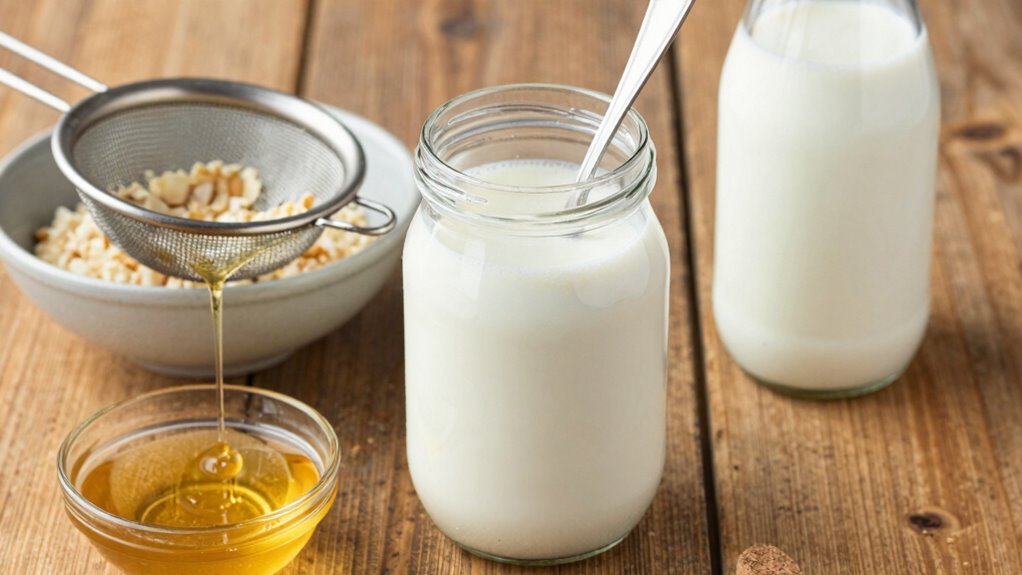

To make smooth, creamy nut milk at home, strain it using a fine nut milk bag or mesh strainer to remove pulp and prevent graininess. Sweeten naturally with honey, maple syrup, or blended dates, adding small amounts and adjusting to taste. Store your milk in airtight containers in a cool, dark spot, and consume within 3-5 days, or freeze portions for longer. Master these steps, and you’ll confidently craft delicious nut milk every time.

Get kitchen staples and gadgets delivered free — and shop member deals
- Fast, free delivery on millions of items
- Access to Prime Big Deal Days deals on October 6–7
- Prime Video, Amazon Music and more included
Key Takeaways
- Use appropriate tools like nut milk bags or fine mesh strainers to remove pulp for smooth, velvety milk.
- Add natural sweeteners such as honey, maple syrup, or dates gradually, tasting to achieve desired flavor balance.
- Transfer strained milk into airtight glass or BPA-free containers and store in a dark, cool place for up to 3-5 days.
- Rinse nuts thoroughly, soak adequately, and blend until silky smooth to ensure high-quality, creamy nut milk.
- Reuse pulp creatively in smoothies, baking, or snacks to minimize waste and boost nutritional value.
As an affiliate, we earn on qualifying purchases.
Why Straining Creates Smooth, Creamy Nut Milk
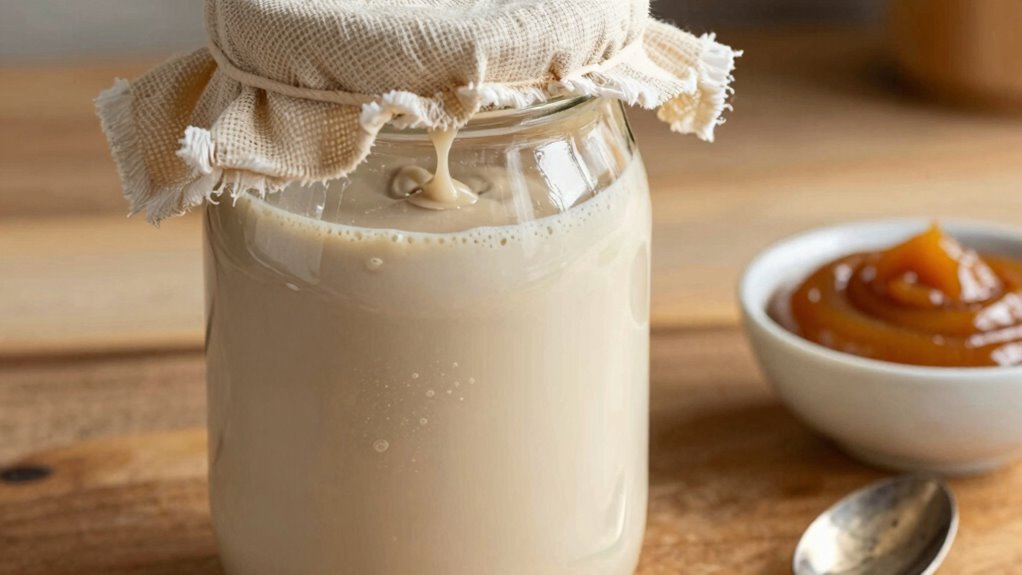
Straining is vital for achieving smooth, creamy nut milk because it removes solid particles that can cause a gritty texture. Without proper straining, the nut milk may feel grainy or uneven, affecting the overall nut milk consistency. Different nut varieties, such as almonds or cashews, release varying amounts of pulp and fiber, making straining even more crucial. For instance, almonds tend to produce a thicker, more textured milk if left unstrained, while cashews typically create a smoother result. Straining ensures you remove excess skins, pulp, and fibers, resulting in a velvety, luxurious milk. It also helps maintain a consistent texture every time you make nut milk, regardless of the nut variety used. Proper straining techniques are the key to that perfect, smooth drink, especially when considering the nut variety and its pulp content. Additionally, employing the right straining tools can make the process more efficient and ensure a better final product. Using appropriate equipment can further improve the texture and ease of straining your nut milk. To achieve optimal results, understanding the pulp content of different nuts can guide you in adjusting your straining process accordingly.
Essential Tools and Techniques for Straining Nut Milk
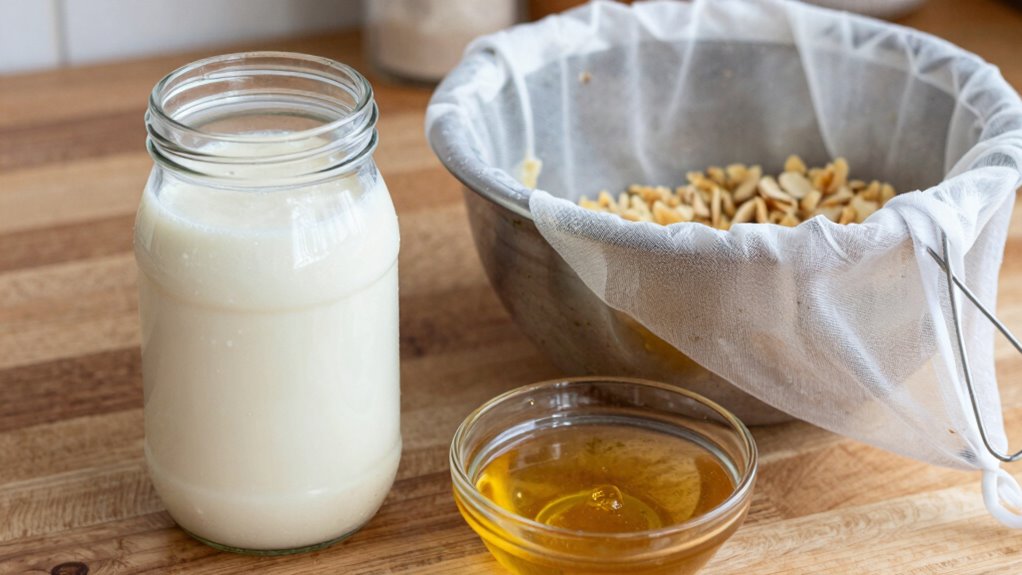
To achieve that perfectly smooth and creamy nut milk, using the right tools can make all the difference. Nut milk filters are essential for effective straining, helping you remove all pulp for a silky finish. Choose between fine mesh bags, nut milk bags, or stainless steel strainers, depending on your preference. When using nut milk filters, employ proper straining techniques: pour the blended mixture slowly, press gently to extract maximum liquid, and avoid forcing pulp through. For best results, fold and squeeze the bag or press the mesh gently to prevent tearing and ensure smooth milk. Investing in quality nut milk filters and mastering these straining techniques will give you consistently creamy, delicious homemade nut milk every time. Additionally, understanding the straining process can greatly improve the clarity and texture of your final product.
How to Properly Sweeten Your Nut Milk Naturally

To naturally sweeten your nut milk, you have several tasty options like honey, maple syrup, or agave nectar. It’s important to find the right balance so the sweetness enhances, rather than overpowers, the nutty flavor. Experimenting with small amounts helps you achieve a perfectly balanced, naturally sweetened drink.
Natural Sweeteners for Nut Milk
Sweetening your homemade nut milk naturally not only enhances its flavor but also keeps it free from added sugars and artificial ingredients. You can use natural sweeteners like dates, honey, or pure maple syrup to achieve the right level of sweetness. Dates are especially popular because their natural sugars blend smoothly and add a rich, caramel-like taste. When selecting nut milk varieties, choose nuts from high-quality sources to ensure a richer, more balanced flavor profile. Keep in mind that the flavor of your sweetener will influence the overall taste, so start with small amounts and adjust to your preference. Using natural sweeteners allows you to enjoy a healthier, more wholesome nut milk without compromising on flavor. Incorporating advanced filtration systems can also help ensure a cleaner, fresher final product. Additionally, selecting proper storage methods helps maintain freshness and flavor over time. Understanding consecration in the Bible can deepen your appreciation for the care and dedication involved in creating wholesome, natural foods like homemade nut milk.
Balancing Flavors Effectively
Ever wondered how to achieve the perfect balance of sweetness in your homemade nut milk? It’s all about flavor balance and ingredient harmony. Start by adding natural sweeteners gradually, tasting as you go, so the sweetness complements the nut’s inherent flavor without overpowering it. Focus on the harmony between the nut’s richness and the sweetener’s subtlety, avoiding overly sugary tastes. If the nut milk is too bland, a small amount of honey, maple syrup, or dates can enhance the flavor without disrupting harmony. Remember, less is often more; you can always add more, but you can’t take it out. Incorporating flavor balance is essential for creating a well-rounded and satisfying beverage. Practicing ingredient harmony can also help you refine your palate and improve your culinary skills, making the process more fun and rewarding. Developing a good sense of taste calibration can lead to more consistent and enjoyable results in your nut milk. Achieving net worth growth hacks can also inspire creative ways to elevate your culinary skills, making the process more fun and rewarding. Being mindful of creative storytelling can also help you craft a memorable experience around your homemade nut milk, making it more appealing to friends and family.
Best Practices for Storing Nut Milk to Keep It Fresh
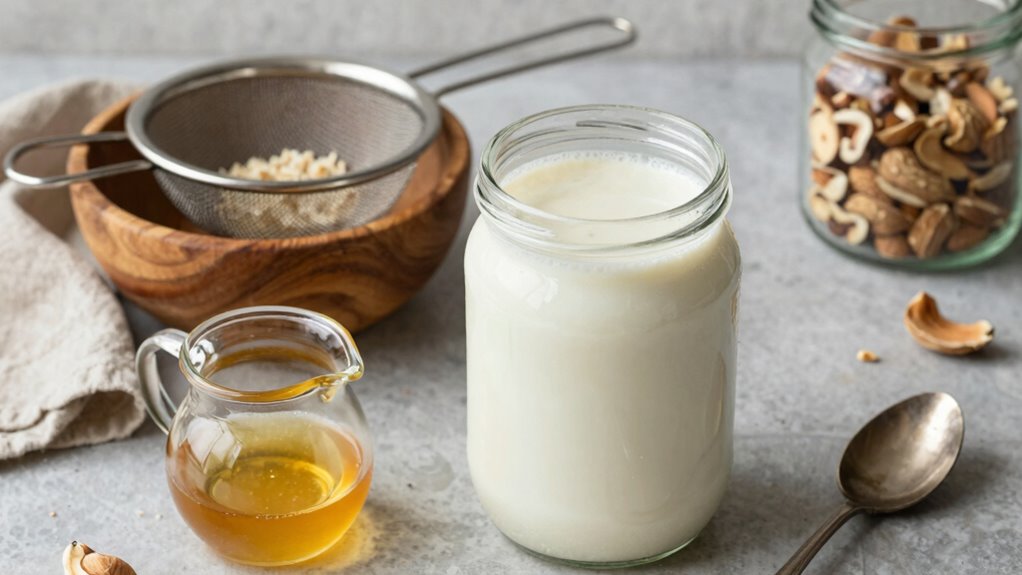
Choosing the right container is key to maintaining your nut milk fresh; airtight jars or bottles work best. You should also be aware of how long your nut milk stays good—usually up to four days in the fridge. Storing it properly ensures you enjoy fresh, delicious nut milk every time.
Proper Container Selection
Selecting the right container is essential to keep your homemade nut milk fresh and safe to drink. Use glass or BPA-free plastic nut milk containers with airtight lids to prevent spoilage and preserve flavor. Choose containers that are opaque or store them in a dark spot to minimize light exposure, which can degrade nutrients. After straining your nut milk using proper techniques, transfer it promptly into clean, dry containers. Avoid filling containers to the brim to allow room for expansion if the milk freezes. Proper container selection not only maintains freshness but also prevents contamination. Always clean your nut milk containers thoroughly before use to ensure no residual bacteria. Incorporating proper storage materials such as glass or BPA-free plastics helps maintain the quality and safety of your nut milk. Using containers that are food-safe and non-reactive further ensures your nut milk remains fresh and uncontaminated. Additionally, choosing containers with airtight seals can significantly extend shelf life by preventing air from entering. Incorporating local automation solutions, such as smart storage systems, can help monitor and maintain optimal conditions for your nut milk. With the right storage vessels, your homemade nut milk stays fresh longer and tastes its best.
Optimal Storage Duration
To keep your homemade nut milk fresh and safe to drink, it’s best to consume it within a few days of preparation. Generally, nut milk stays good for 3 to 5 days when stored in an airtight container in the refrigerator. Always check for signs of spoilage, like sour smell or mold. If you or someone you know has nut milk allergies, it’s vital to verify proper nut sourcing to avoid cross-contamination. Using fresh, high-quality nuts helps extend shelf life and prevents rapid spoilage. Keep in mind that nut milk can ferment quickly if left out too long, so plan to use it promptly. For longer storage, consider freezing small portions, but be aware that freezing may alter texture. Proper storage helps maintain flavor and safety. Proper storage methods are essential for preserving the quality and safety of your nut milk. Additionally, understanding food safety practices can help prevent potential health risks associated with spoiled dairy alternatives. Incorporating fresh, high-quality nuts can further improve shelf life and overall flavor. Ensuring your nut milk is prepared with appropriate hygiene reduces the risk of contamination and spoilage. Using sound healing science principles, like maintaining a clean environment, can also support the freshness of your homemade nut milk.
Troubleshooting Common Nut Milk Straining and Storage Problems
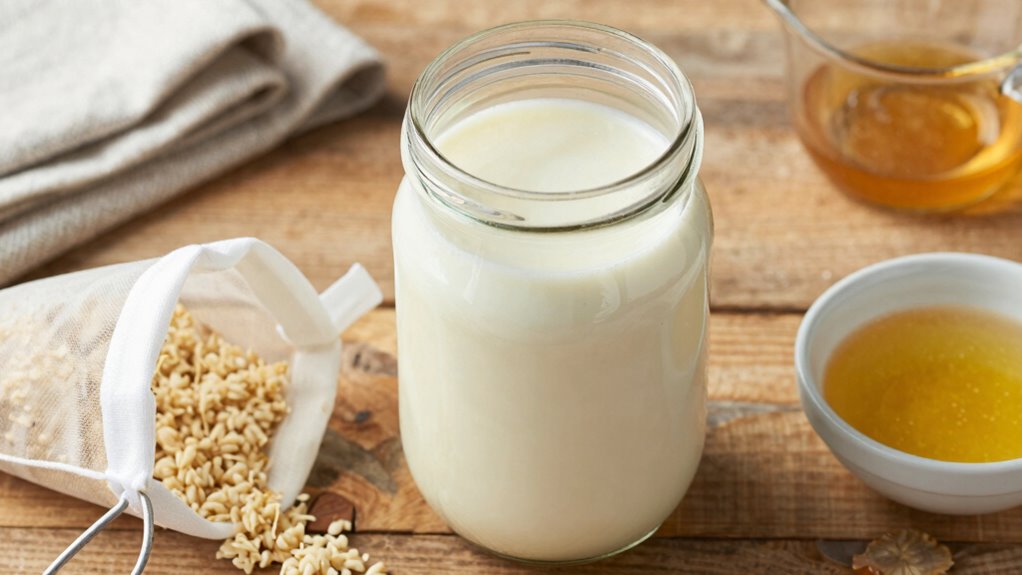
Even when you follow all the steps, straining and storing homemade nut milk can still present challenges. If your nut milk turns out too gritty or watery, it may be due to insufficient straining or using too much water during blending. To avoid nut milk allergies or sensitivities, verify your nut milk packaging clearly states ingredients and is properly sealed to prevent spoilage. If your milk separates quickly, stir it well before use, and consider adjusting the soaking or blending process. For storage issues, keep your nut milk in airtight containers and refrigerate promptly. If it develops an off smell or mold, discard it immediately. Proper nut milk preparation techniques can also help prevent these issues, ensuring your homemade nut milk remains fresh, safe, and enjoyable. Additionally, using clean equipment throughout the process can reduce the risk of contamination.
How to Reuse Nut Pulp for Other Recipes

After straining your homemade nut milk, don’t toss the leftover pulp. Instead, explore nut pulp reuse by incorporating it into a variety of creative recipes. You can add it to smoothies for extra fiber, blend it into oatmeal, or mix it into energy balls for added texture. It also works well as a base for vegan baking, such as muffins or cookies, or as a crust for pies and tarts. Using nut pulp in these ways prevents waste and boosts nutrition. Here are some ideas to get you started:
- Incorporate into smoothies or protein shakes
- Mix into oatmeal or yogurt
- Use as a base for vegan energy balls
- Add to baking recipes like muffins or cookies
- Make nut pulp crackers or granola
Customizing Nut Milk: Adjusting Sweeteners and Textures

Adjusting the sweetness and texture of your nut milk allows you to tailor it to your taste and dietary needs. To enhance flavor, add natural sweeteners like honey, maple syrup, or dates, mixing until fully integrated. For a smoother, creamier texture, blend in a small amount of coconut milk or a few soaked cashews. If you prefer a thinner consistency, simply dilute your nut milk with a splash of water or plant-based milk. Conversely, for a richer, more substantial texture, blend in more nuts or reduce the water content. These adjustments not only improve flavor enhancement but also enable you to modify the texture to match your preferences—whether you want a light, invigorating drink or a decadent, creamy beverage.
Quick Tips for Making Nut Milk at Home With Confidence

To make nut milk at home with confidence, start by choosing high-quality nuts and soaking them thoroughly, which helps guarantee a smooth blend and better flavor. Knowing the nut milk history can inspire your process, and understanding its role in plant-based nutrition encourages healthier choices. Keep these tips handy:
Choose high-quality, soaked nuts for smooth, flavorful homemade nut milk.
- Use fresh, raw nuts for better taste and nutrition
- Rinse soaked nuts thoroughly to remove impurities
- Blend on high speed until silky smooth
- Strain through a nut milk bag for a clean finish
- Store in airtight containers and refrigerate promptly
These simple steps ensure your homemade nut milk is delicious, nutritious, and consistent. Confidence comes from practice and understanding the benefits of plant-based nutrition, making your nut milk experience both satisfying and healthful.
Frequently Asked Questions
How Long Does Homemade Nut Milk Typically Last in the Refrigerator?
Homemade nut milk typically lasts about 3 to 5 days in your refrigerator. To guarantee freshness, keep an eye out for spoilage indicators like sour smell, curdling, or mold. Proper storage in a sealed container helps extend shelf life. If it develops any off odors or changes in texture, it’s best to discard it. Regularly check your nut milk to enjoy fresh, safe, and tasty drinks every time.
Can I Freeze Nut Milk for Longer Storage?
Yes, you can freeze nut milk for longer storage, turning your fridge’s gentle hug into a frozen fortress. Freezing nut milk preserves its freshness like a time capsule, extending its life beyond refrigeration. Just pour it into airtight containers, leaving space for expansion, and thaw when needed. This nut milk preservation method keeps your homemade blend fresh, ready to pour into smoothies or coffee whenever your craving strikes.
What Are Natural Alternatives to Sweeteners for Nut Milk?
You can use natural sweeteners like dates, honey, or maple syrup as alternatives, adding them to enhance flavor naturally. For a subtle sweetness, blend in flavor enhancers like vanilla or cinnamon. These options provide a healthier, less processed way to sweeten your nut milk while adding depth and richness. Experiment to find the right balance that complements your nut milk’s flavor without overpowering it.
How Can I Prevent Nut Pulp From Separating in Storage?
You gotta stay ahead of the game to prevent nut pulp separation and improve storage stability. Shake your nut milk well before pouring, as this helps keep the pulp evenly distributed. Using an airtight container also minimizes separation by reducing exposure to air. Additionally, adding a small pinch of natural stabilizer like lecithin or a splash of oil can help maintain consistency. Regular stirring or shaking extends the shelf life and keeps your nut milk fresh.
Is It Safe to Reuse Nut Pulp in Other Recipes?
Yes, you can reuse nut pulp in other recipes, but you should consider nut pulp reuse and how it affects your dish. Incorporate it into smoothies, baking, or energy bites, making recipe modifications like adjusting liquids or adding binding ingredients. Always check for spoilage before reuse, and store it properly in an airtight container. Reusing nut pulp is a smart way to minimize waste and add nutrition to new creations.
Conclusion
Just like Pandora’s box, once you master straining, sweetening, and storing your nut milk, endless delicious possibilities unfold. With a little practice, you’ll create silky-smooth, personalized nut milks that rival store-bought. Embrace the process, experiment with flavors, and reuse your pulp creatively—your kitchen becomes your own alchemist’s lab. Before long, you’ll find making nut milk at home is as natural as breathing, turning everyday ingredients into a nourishing, magical elixir.
NFL season / tailgating Picks
team gear
As an affiliate, we earn on qualifying purchases.