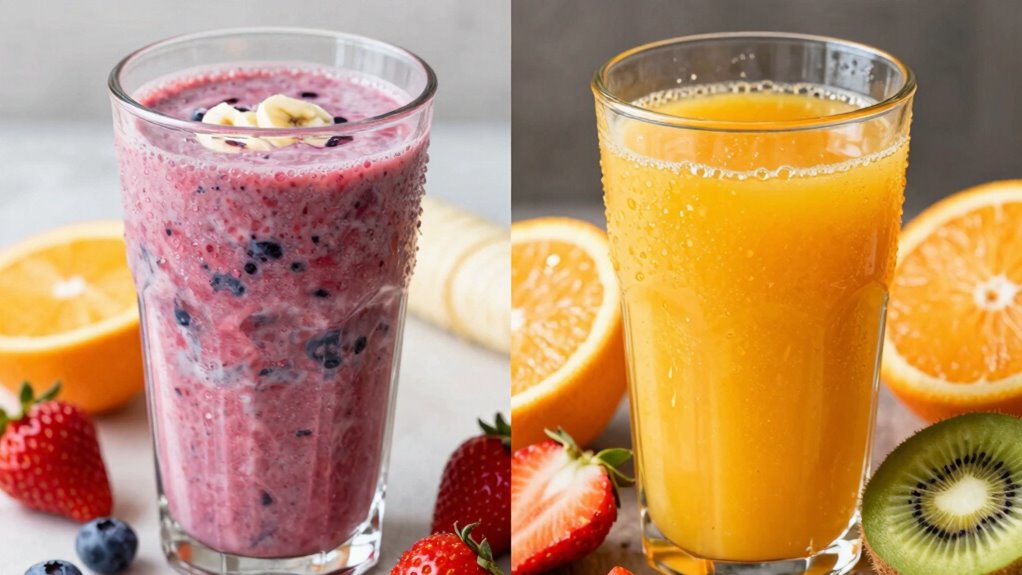

Choosing between a smoothie and juice depends on your goals. If you want sustained energy, better digestion, and fullness, go for a smoothie with whole fruits, vegetables, and fiber. If you need a quick vitamin boost or detox, juice can offer concentrated nutrients and easier absorption. Each has benefits, so matching your beverage to your needs is key. Keep exploring to find out which option best supports your health targets.
Listen free for 30 days with Audible
Thousands of audiobooks and originals — cancel anytime.
As an affiliate, we earn on qualifying purchases.
Key Takeaways
- Smoothies retain more fiber, supporting digestion, satiety, and sustained energy, making them ideal for weight management and gut health.
- Juices offer rapid vitamin absorption and detox benefits but lack fiber, leading to quicker sugar spikes and less long-term fullness.
- For digestive health, smoothies promote regularity and gut bacteria, whereas juices can be more suitable for quick nutrient boosts.
- Smoothies are calorie-dense, suitable for sustained energy and weight goals, while juices are lower-calorie options for quick nutrient intake.
- Choose based on your goals: smoothies for fullness and digestion, juices for quick detox and vitamin boosts.
Key Nutritional Differences Between Smoothies and Juices
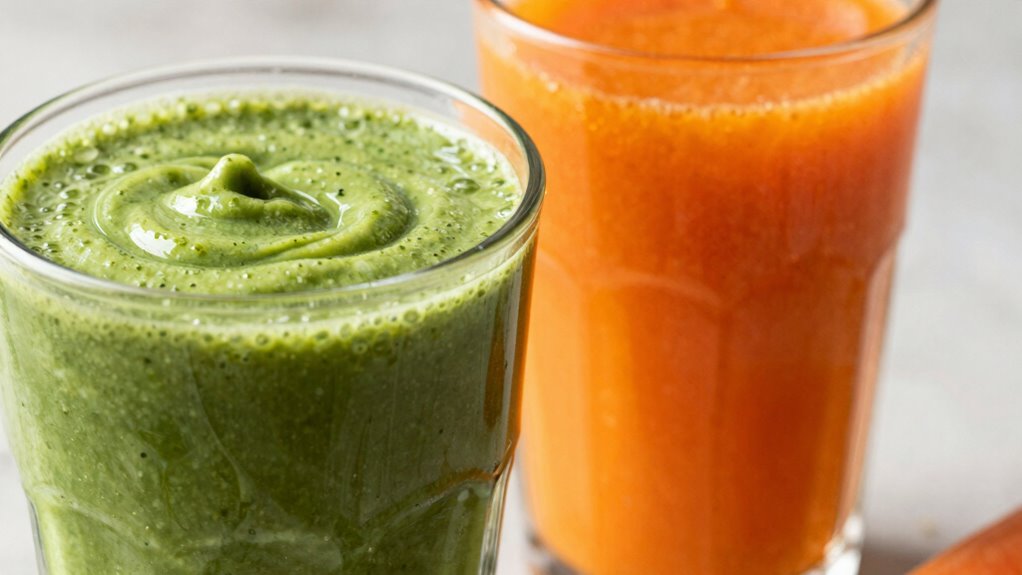
While both smoothies and juices are popular ways to enjoy fruits and vegetables, they differ markedly in their nutritional profiles. Smoothies typically retain more fiber and nutrients because they blend whole produce, providing a richer nutritional value. This fiber slows digestion, helping you feel full longer and supporting gut health. Juices, on the other hand, extract liquid from produce, often removing much of the fiber. While they deliver concentrated vitamins and minerals quickly, they may lack the satiety and health benefits fiber offers. If you’re seeking sustained energy and improved digestion, smoothies provide more extensive nutrition. Juices can boost your vitamin intake rapidly but may cause blood sugar spikes. Understanding these differences helps you choose what best aligns with your health goals.
Calories, Sugar, and Fiber: A Side-By-Side Comparison
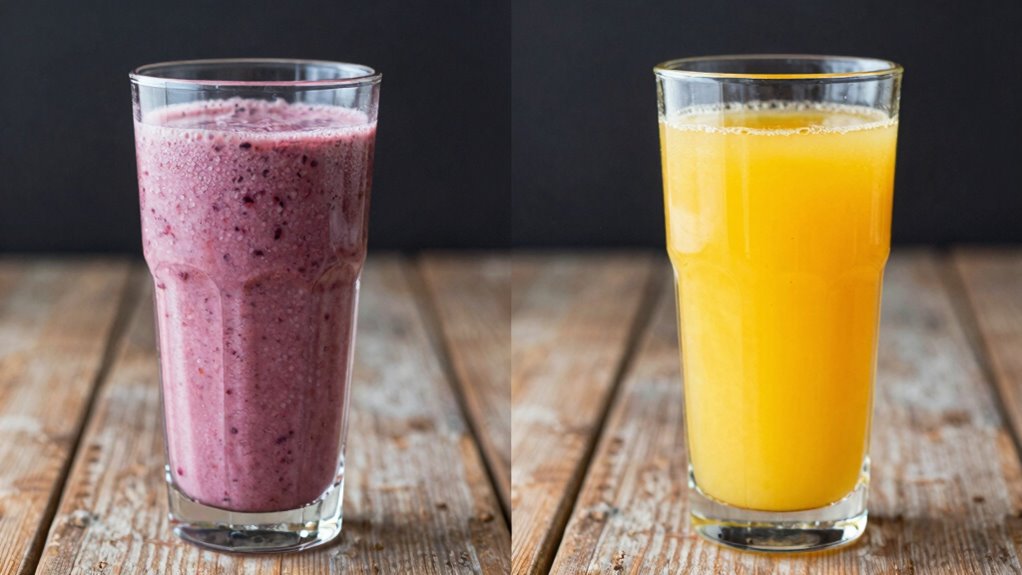
When comparing smoothies and juices, understanding their differences in calories, sugar, and fiber can help you make healthier choices. Smoothies often have more calories because they include whole fruit pairing, which retains fiber, aiding digestion and keeping you full longer. Juices, on the other hand, tend to be lower in calories but contain more concentrated sugar, leading to rapid blood sugar spikes. To preserve nutrients and prevent spoilage, proper storage techniques are essential—smoothies should be kept refrigerated and consumed quickly, while juices can last longer if sealed tightly. Additionally, color accuracy in the ingredients used can influence the visual appeal and perceived freshness of your beverages. Knowing these differences helps you align your beverage choices with your health goals effectively, especially when considering food storage to maintain quality over time. Being aware of nutrient retention methods can further optimize the health benefits of your beverages, ensuring that your drinks maximize their nutrient content. Incorporating proper preparation techniques can also help you retain more nutrients and improve the overall quality of your drinks.
How Smoothies Help With Weight Loss, Energy, and Feeling Full
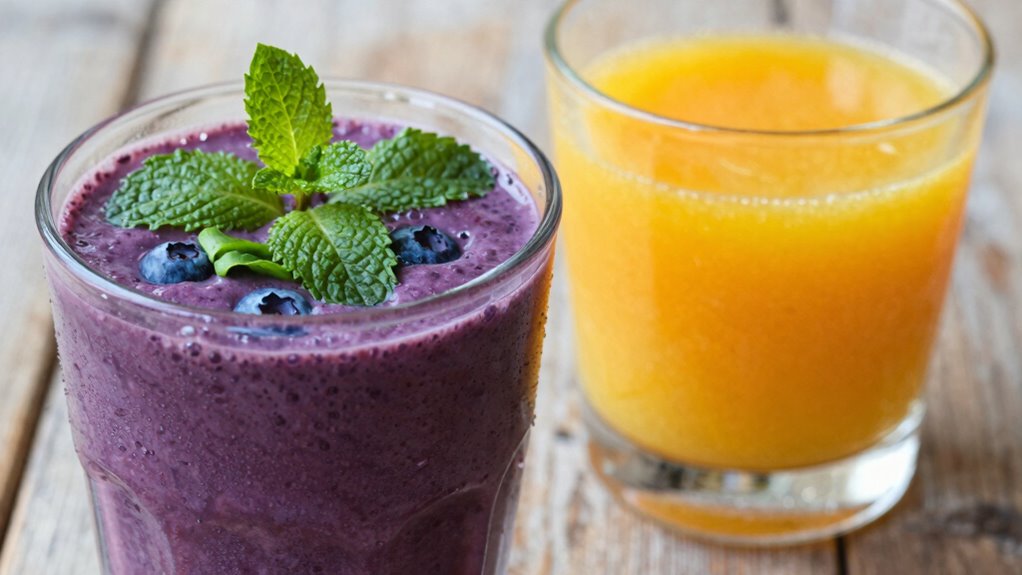
Smoothies can give you a natural energy boost, helping you stay alert throughout the day. They also support weight management by keeping you full longer and reducing cravings. By choosing nutrient-dense ingredients, you can enjoy these benefits while working toward your health goals. Additionally, incorporating balanced nutrition into your smoothies can enhance their effectiveness in achieving your fitness objectives. For example, adding a variety of essential oils such as peppermint oil can provide additional health benefits like improved digestion and alertness. Understanding a biography of influential figures can inspire you to pursue your health and wellness journey with dedication.
Boosts Energy Naturally
Since smoothies combine whole fruits, vegetables, and healthy proteins, they provide a steady release of energy throughout the day. This helps prevent crashes and keeps you alert. To boost your energy naturally, focus on selecting the right fruit combinations, such as berries with bananas or oranges with mangoes. These pairings maximize natural sugars and nutrients. Additionally, ingredient substitutions can enhance energy, like swapping spinach for kale or Greek yogurt for nut butter. Consider these tips:
- Use fiber-rich fruits for sustained energy release
- Incorporate protein sources to stabilize blood sugar levels
- Add natural sweeteners like honey or dates for quick energy boosts
- Understanding culinary fundamentals can help you craft more balanced and energizing smoothies.
Developing an understanding of nutritional science can further optimize your smoothie recipes for energy and health benefits. For example, learning about blood sugar regulation can help you choose ingredients that prevent energy dips.
Aids in Weight Management
Because they are rich in fiber and protein, smoothies can be a powerful tool for weight management. They help you control calories by promoting satiety, so you feel full longer and eat less throughout the day. Smoothies also support calorie control by allowing you to choose healthy, nutrient-dense ingredients, avoiding excess sugar intake often found in processed foods. By including ingredients like greens, berries, and protein sources, you can create a filling snack or meal that keeps your energy steady. Additionally, smoothies help curb cravings, reducing the temptation for unhealthy snacks. This combination of fiber and protein aids in maintaining a healthy weight, supporting your goals of fat loss or weight maintenance while keeping sugar intake in check. Incorporating nutrient-dense ingredients into your smoothies can further enhance their effectiveness for weight management. Using a high-quality vacuum blender can help preserve the nutrients and texture of your ingredients, making your smoothies even more beneficial. Selecting proper blending techniques can maximize nutrient retention and improve overall health benefits. Exploring evidence-based dietary practices can also help you make informed choices that support your weight management goals. Engaging in sustainable travel practices can also inspire eco-conscious choices in your daily routines.
Boost Detox and Digestion With Juices

Juices are a powerful way to boost your body’s detox and improve digestion. They help eliminate toxins and support gut health by providing easily absorbed nutrients. To maximize benefits, consider these tips:
- Choose fruit pairings that complement each other, such as citrus with berries, to enhance detox effects.
- Opt for seasonal varieties like watermelon in summer or pomegranate in fall, which offer peak freshness and nutrients.
- Incorporate ingredients like ginger or lemon to further stimulate digestion and cleansing.
- Regular consumption of fresh juices can contribute to overall pet health, especially when incorporating balanced diets and appropriate treats.
- Utilizing cookies preferences can help customize your juice recipes to suit your health goals and taste.
Which Preserves More Fiber? Why It Matters for Your Health
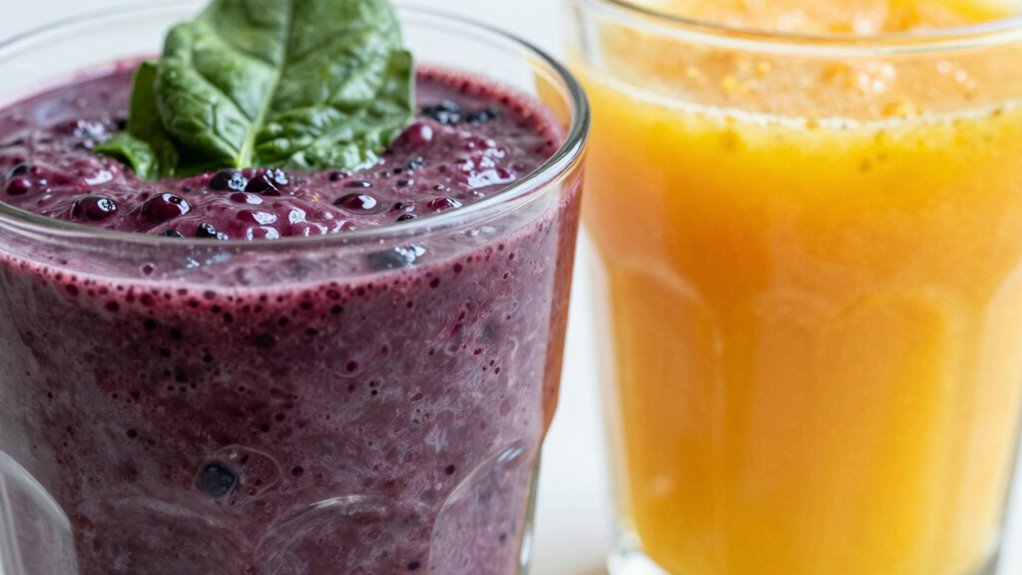
When choosing between a smoothie and juice, you’ll notice that smoothies usually keep more fiber intact. This fiber plays a key role in supporting healthy digestion and keeping you full longer. Understanding which method preserves more fiber helps you make better choices for your health. Additionally, using electric bike conversion kits can make your daily commuting more efficient, helping you incorporate healthier habits into your routine.
Fiber Content Retention
Whether you’re aiming to boost your fiber intake or improve digestive health, understanding which beverage retains more fiber is essential. Juices often lose fiber during extraction, especially if you strain out pulp or use high-speed blenders that break down fibers. Smoothies, on the other hand, typically retain more fiber because you blend whole fruits and vegetables, preserving natural fiber content. To maximize fiber retention, pay attention to:
- Fruit combinations – blending a variety of whole fruits keeps more fiber intact.
- Storage methods – consume smoothies promptly, as fiber can degrade over time.
- Processing techniques – minimal filtering and blending methods help preserve fiber and nutrients, especially when using gentle blending techniques that maintain fiber structure. Additionally, choosing whole fruit blends over juice extracts ensures you retain the full spectrum of fiber.
Choosing the right method helps you get the most fiber and health benefits from your beverage, especially when selecting processing techniques that maintain fiber structure.
Impact on Digestion
Choosing the right beverage can make a significant difference in how well your digestive system functions. Juices often strip away fiber, limiting their fermentation benefits and reducing the workload on your gut. In contrast, smoothies retain more fiber, which helps slow digestion and promotes healthy gut bacteria. This fiber also supports regularity and prevents bloating. Additionally, smoothies offer flavor variations that preserve natural nutrients and enzymes, aiding digestion further. Juices, while easier to digest quickly, lack this fiber boost, so they don’t provide the same long-term digestive benefits. If you want to optimize digestion and gut health, sticking with smoothies is a smarter choice. They keep fiber intact, support fermentation benefits, and offer diverse flavor options that contribute to overall wellness.
Should You Opt for a Smoothie or Juice? Decide Based on Your Goals
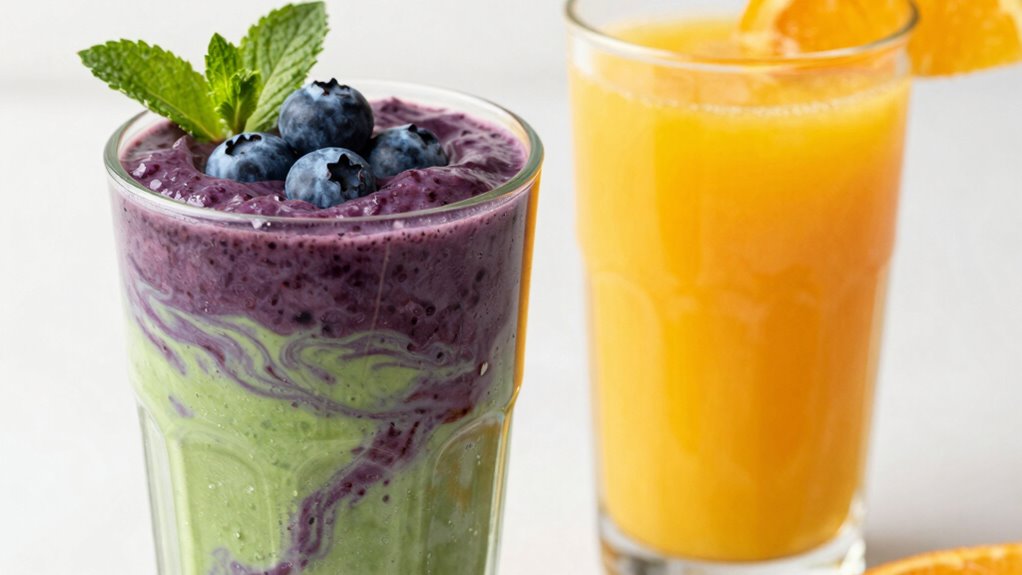
Deciding between a smoothie and juice largely depends on your health goals and nutritional needs. If you want quick energy and concentrated nutrients, juice might be better. If you prefer sustained fullness and fiber intake, go for a smoothie. When choosing, consider:
- The fruit combinations you enjoy, as they influence flavor and nutrients.
- How you’ll store your drinks — smoothies are best fresh, while juices can last longer if refrigerated properly.
- Your priority for fiber versus quick absorption, which guides whether you blend or juice.
- Understanding the different types of beverages can help you make more informed choices based on their nutritional profiles.
- Recognizing the nutritional differences between smoothies and juices can help align your beverage choice with your health objectives.
- Incorporating holistic SEO strategies such as relevant keywords and high-quality content can help you make better-informed dietary decisions and find credible sources more easily.
Keep in mind, smoothies retain more fiber and nutrients, but require proper storage tips to prevent spoilage. Juices are easier to store longer but lack fiber. Your choice hinges on your goals—whether it’s maximizing nutrients or convenience.
Common Mistakes to Avoid When Making Smoothies and Juices
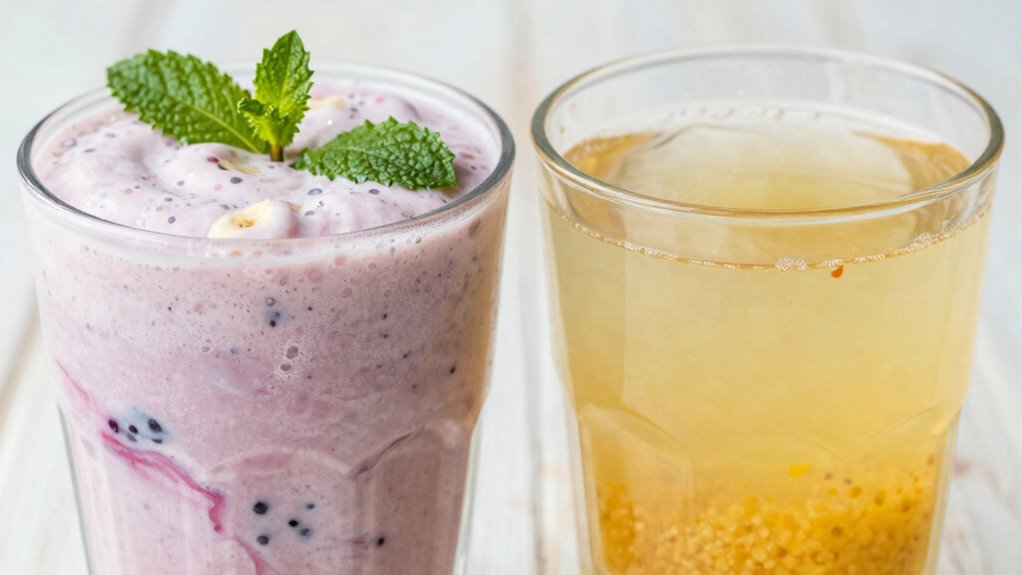
One common mistake when making smoothies and juices is neglecting to balance ingredients, which can lead to overly sweet, watery, or unappetizing drinks. Proper fruit pairing is key; combining sweet fruits like berries with tart ones like citrus creates a harmonious flavor. Also, avoid adding too much fruit or sweeteners, which can mask nutritional benefits. Storage tips matter too—store leftovers in airtight containers and consume within 24 hours to prevent nutrient loss and spoilage. Here’s a quick guide:
| Fruit Pairing | Storage Tips |
|---|---|
| Berries + citrus | Use airtight containers; refrigerate |
| Greens + apple | Freeze leftovers for later use |
| Tropical + berries | Keep away from direct sunlight |
Pay attention to these details to make your smoothies and juices both tasty and nutritious.
Tips for Blending Healthy, Goal-Focused Smoothies and Juices at Home
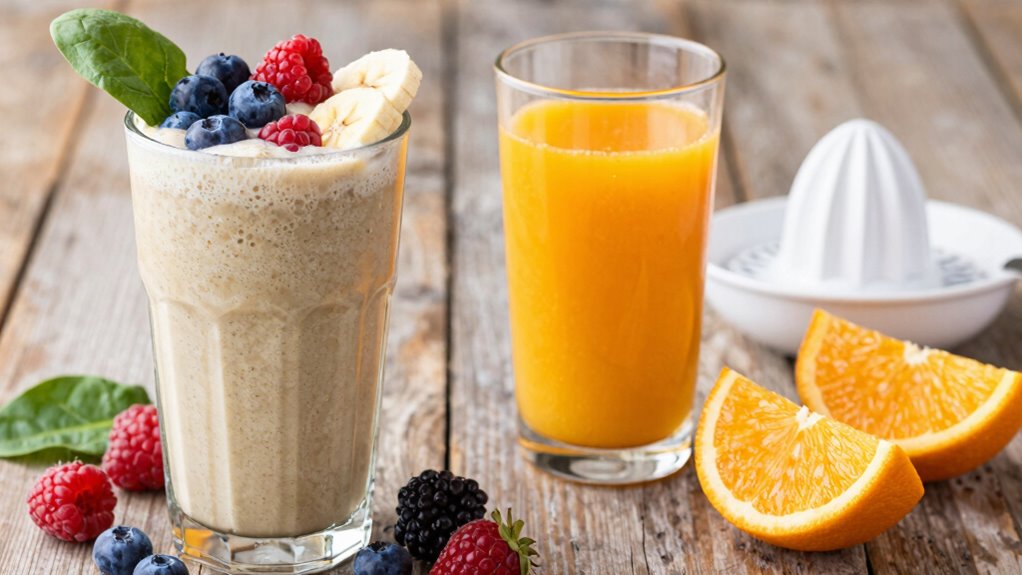
To create healthy, goal-focused smoothies and juices at home, start by defining your nutritional priorities, such as boosting energy, improving digestion, or supporting weight management. This clarity helps you select the right ingredients and avoid unnecessary additions. When blending, consider these tips:
- Use ingredient substitutions to tailor textures and nutrient profiles—swap bananas for avocado for creaminess or spinach for kale for variety.
- Focus on flavor balancing by combining sweet, tart, and earthy elements to create satisfying drinks without excess sugar.
- Keep your ingredients fresh and seasonally appropriate for maximum nutrient retention and taste.
Deciding Which Drink Is Right for Your Needs: A Practical Summary
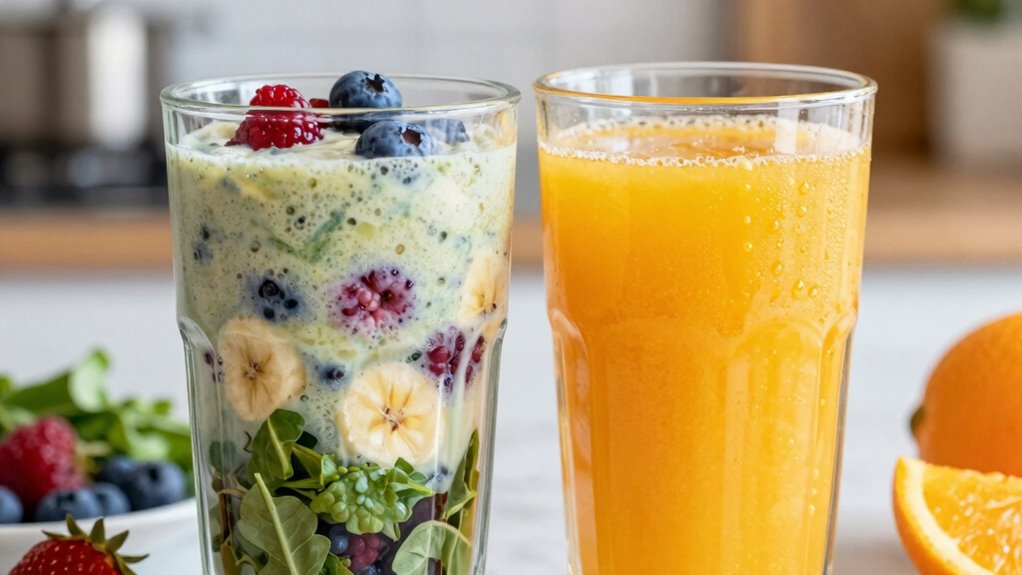
Choosing between a smoothie and a juice depends on your specific health goals and how your body responds to different nutrients. If you’re seeking more fiber and sustained energy, smoothies with whole fruit or fruit alternatives are ideal. Juices, on the other hand, provide quick absorption of vitamins and minerals but lack fiber. Consider storage methods: smoothies freeze well and can be prepared ahead, while juices are best consumed fresh to retain nutrients. Think about your lifestyle—if convenience is key, juices might suit you better, but if you want to maximize fiber intake, smoothies are the way to go. Ultimately, understanding your goals helps you choose the drink that supports your needs most effectively.
Frequently Asked Questions
Can Smoothies or Juices Help Improve My Skin Health?
Yes, smoothies and juices can help improve your skin health. They boost nutrient absorption and skin hydration by providing vitamins, antioxidants, and hydration-rich ingredients like fruits and vegetables. Smoothies, especially, retain fiber, supporting digestion and nutrient uptake, while juices deliver concentrated nutrients quickly. Regularly consuming these drinks can promote clearer, more radiant skin by fighting inflammation and keeping your skin moisturized from the inside out.
Are There Specific Fruits or Vegetables Best for Smoothies or Juices?
You should choose fruits like berries, oranges, and mangoes, and vegetables such as spinach, kale, and cucumber for your smoothies or juices. Combining these in different fruit combinations or vegetable choices boosts your nutrient intake. Berries add antioxidants, while leafy greens provide crucial vitamins. Experiment with different mixes to find what tastes best and supports your health goals, ensuring you get a variety of essential nutrients daily.
How Should I Store Smoothies and Juices to Maintain Freshness?
Surprisingly, you should store smoothies and juices in airtight containers to keep them fresh. Use glass bottles or jars, and fill them close to the top to minimize air exposure. Keep them in the fridge, ideally consumed within 24-48 hours. Proper storage techniques are essential for freshness preservation, preventing oxidation and spoilage. Don’t forget—if you want vibrant, nutritious drinks, storing them correctly is your secret weapon!
Do Smoothies or Juices Contain More Vitamins or Antioxidants?
You’ll find smoothies generally contain more fiber and antioxidants than juices, as they blend whole fruits and vegetables, preserving nutrients and fiber. Juices, however, are more concentrated in vitamins but often lack fiber, which can help with fullness and digestion. Regarding calories, smoothies tend to have more due to added ingredients like yogurt or nut butters, so choose based on your fiber needs and calorie goals.
Which Drink Is Better for Athletes or Active Individuals?
As an active individual, you’ll find smoothies better suited for an energy boost and hydration benefits. They contain fiber and healthy fats that sustain your energy levels longer, making them ideal for pre- or post-workout recovery. Juices, while hydrating and packed with vitamins, can be high in sugar and lack the sustained energy support that smoothies provide. Choose smoothies to fuel your activity and stay energized throughout your day.
Conclusion
Ultimately, choosing between a smoothie and juice depends on what you’re hoping to gently nurture within yourself. Whether you seek sustained fullness or a invigorating cleanse, both can be gentle companions on your health journey. Listen to your body’s subtle whispers and select what aligns best with your goals. With mindful choices, you’ll find the harmony that makes your wellness rhythm feel just right, guiding you toward balance and energetic vitality.
NFL season / tailgating Picks
team gear
As an affiliate, we earn on qualifying purchases.