To meet your kid’s nutritional needs on a plant-based diet, include meat alternatives made from soy, beans, or plants that mimic real meat’s flavor and texture. Add dairy-free snacks like nut-based yogurt or fortified plant milks, and include plenty of fruits, vegetables, and whole grains. Incorporate fortified foods or supplements if needed, and plan colorful, appealing meals. Keep a balanced variety to support healthy growth—continue exploring ways to optimize their plant-based nutrition.
Key Takeaways
- Incorporate meat alternatives like soy-based nuggets and lentil patties to provide essential protein and nutrients.
- Use dairy-free snacks such as nut-based yogurts and fortified plant milks to ensure calcium and vitamin D intake.
- Include colorful fruits, vegetables, whole grains, and legumes to boost fiber, antioxidants, and essential vitamins.
- Utilize fortified foods and supplements to fill nutritional gaps and support healthy growth.
- Plan diverse, appealing meals with creative presentation to encourage balanced, plant-based eating habits in kids.
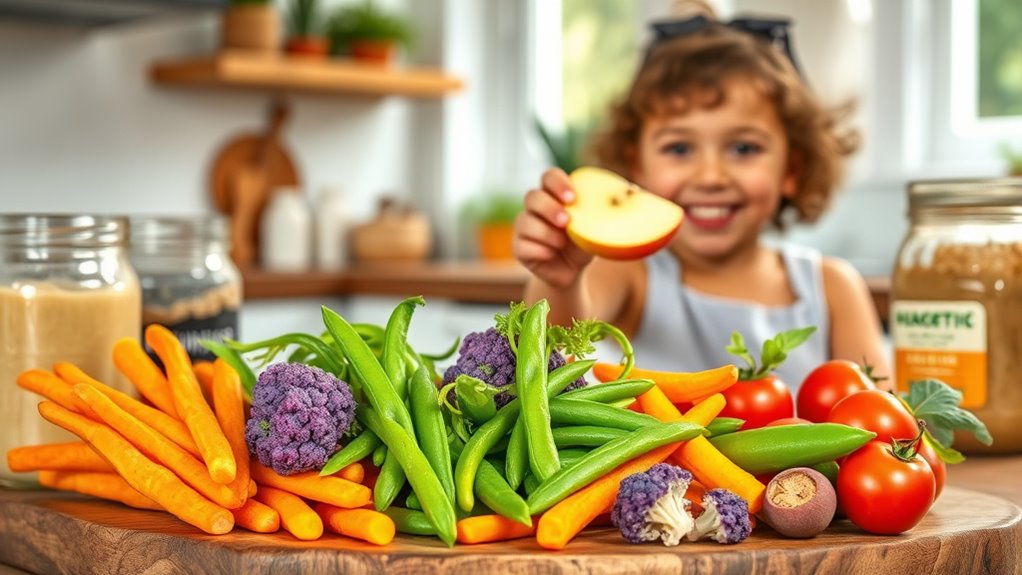
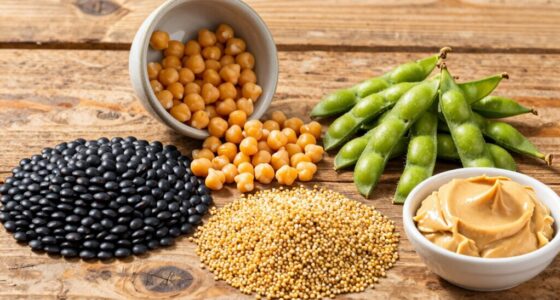
Are you wondering how to guarantee your kids get all the nutrients they need on a plant-based diet? It can seem challenging at first, but with a little planning, you can ensure they’re thriving. One effective way is to incorporate meat alternatives into their meals. These products, made from soy, beans, or other plant-based ingredients, mimic the flavor and texture of traditional meat, making them appealing to kids. Think beyond the usual veggie burger—try soy-based nuggets, lentil patties, or mushroom-based sausages. These options provide essential protein, iron, and zinc, which are essential for growth and development. Including a variety of meat alternatives not only boosts nutrient intake but also keeps meals interesting, preventing mealtime monotony.
Incorporate colorful meat alternatives like soy nuggets and lentil patties to boost nutrients and keep meals exciting.
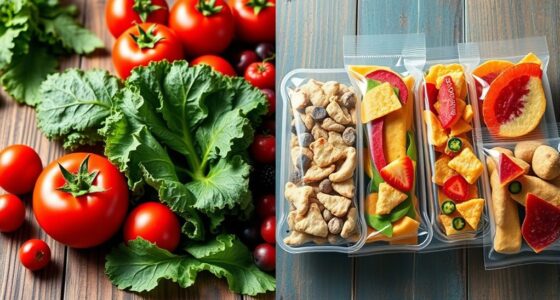
Dairy free snacks are another key element in maintaining a balanced plant-based diet for kids. Many traditional dairy products like cheese and yogurt can be replaced with plant-based alternatives made from nuts, coconut, or soy. These snacks are often fortified with calcium and vitamin D, indispensable for healthy bones and teeth. You can offer your kids dairy-free cheese slices, nut-based yogurt, or fortified plant-based milks as a quick snack or part of their lunch. These options are convenient, portable, and appealing, helping kids stay satisfied between meals. When choosing dairy free snacks, look for minimally processed options with added nutrients to guarantee they contribute to your child’s nutritional needs.
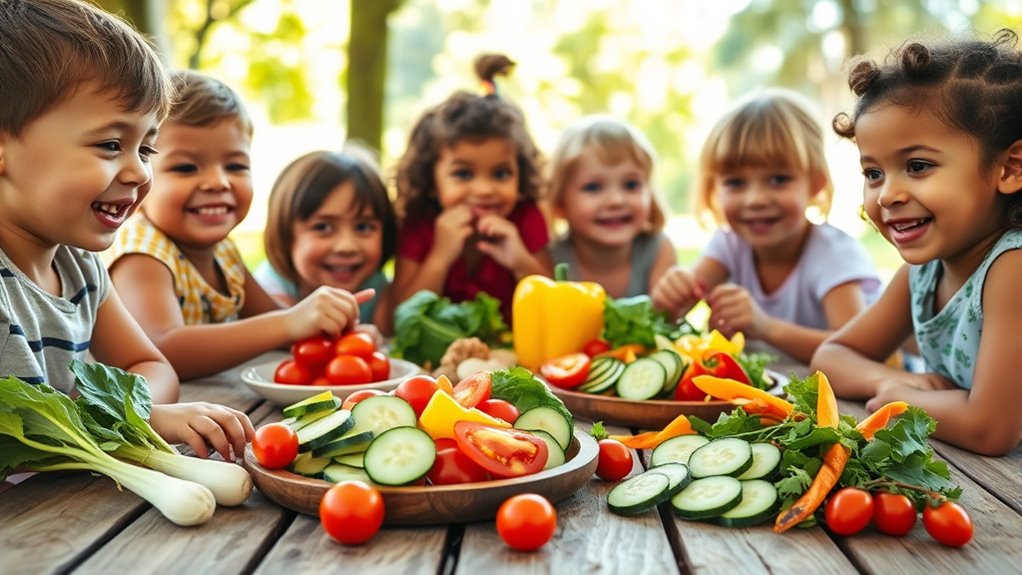
In addition to meat alternatives and dairy free snacks, focus on enriching their diet with a variety of fruits, vegetables, whole grains, and legumes. These foods supply fiber, antioxidants, vitamins, and minerals that support overall health. For example, adding lentils or chickpeas to pasta dishes boosts protein and fiber, while smoothies made with fortified plant milks provide calcium and vitamin D. Incorporating specialized nutrition from fortified foods and supplements can further help meet any specific dietary requirements. Remember that kids often prefer colorful, fun presentations—use cookie cutters for veggies or create fruit kabobs—to make nutritious foods more appealing. Ensuring a diverse intake of plant foods helps fill nutritional gaps and fosters healthy eating habits.
Lastly, staying mindful of fortified foods and possibly supplementing where needed will help cover any nutritional gaps. Regular check-ups with a healthcare professional can guarantee your child’s growth is on track and that they’re meeting their nutritional needs. With thoughtful meal planning and a variety of tasty, nutrient-rich options like meat alternatives and dairy free snacks, you can confidently provide your kids with a well-rounded plant-based diet that supports their growth and health.

Abbot’s Plant-Based Ground "Beef", Vegan, Gluten-Free, 10oz
- Made from 100% real food ingredients: Free from top 9 allergens, flavors, oils
- Protein-rich and nutrient-dense: Uses simple ingredients
- Paleo-friendly and Whole30 approved: Suitable for specific diets
As an affiliate, we earn on qualifying purchases.
As an affiliate, we earn on qualifying purchases.
Frequently Asked Questions
How Can I Ensure My Child Gets Enough Calcium on a Plant-Based Diet?
To guarantee your child gets enough calcium on a plant-based diet, include calcium-rich snacks like fortified plant milks and dairy alternatives such as tofu and leafy greens. Offer a variety of options like almonds, chia seeds, and calcium-fortified cereals. Make these part of their daily routine, and consider consulting a healthcare professional to monitor their intake and ensure they meet their nutritional needs.
Are Plant-Based Diets Suitable for Very Young Children and Toddlers?
Absolutely, early childhood nutrition benefits from balanced plant-based options, making plant-based diets suitable for toddlers and very young children. During plant-based shifting, you can provide plenty of fruits, vegetables, grains, and fortified foods to meet their growing needs. Just make certain you watch for key nutrients like iron, calcium, and vitamin B12. With proper planning and patience, you help your little one thrive on a tasty, nutritious plant-based path.
What Are the Best Plant Sources of Iron for Kids?
You should focus on iron-rich legumes like lentils, chickpeas, and beans, which provide a great plant-based source of iron. Dark leafy greens such as spinach, kale, and Swiss chard are also excellent options. To boost iron absorption, pair these foods with vitamin C-rich fruits like oranges or peppers. Incorporating a variety of these foods into your child’s diet helps guarantee they get enough iron for healthy growth and development.
How Do I Address Picky Eating With Plant-Based Nutrition?
Imagine your child’s taste preferences are a garden that needs tending. To address picky eating, you become the skilled gardener, experimenting with colorful meal presentation to make plant-based foods enticing. Offer a variety of textures and flavors, involving your child in choosing ingredients. Over time, this nurturing approach helps your little one develop a curiosity for new tastes, transforming their picky habits into a blossoming appreciation for plant-based nutrition.
Can Plant-Based Diets Support Athletic Children’s Energy Needs?
Yes, plant-based diets can support your athletic child’s energy needs. You should focus on providing balanced meals rich in complex carbs, healthy fats, and plant-based proteins to boost sports performance. Incorporate foods like beans, lentils, nuts, seeds, and whole grains. If necessary, consider nutritional supplementation, such as vitamin B12 or iron, to guarantee all nutrient needs are met and optimize energy levels for active kids.
Conclusion
By embracing plant-based nutrition for your kids, you’re giving them a vibrant future filled with health and vitality. Did you know that children who eat more plant-based foods tend to have higher energy levels and better immune systems? Imagine your child’s bright smile, fueled by colorful fruits and veggies, growing strong every day. Small changes now can lead to lifelong benefits, ensuring your little one thrives on a nutrient-rich, compassionate diet.