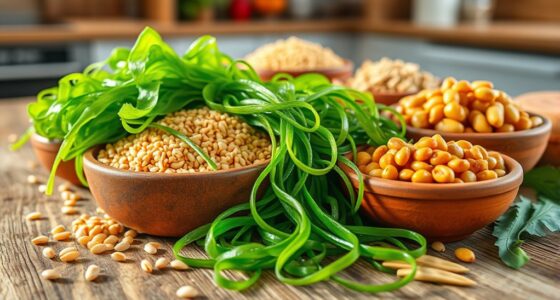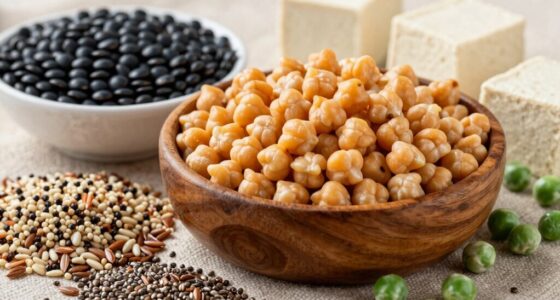
To optimize nutrition through food pairings, focus on combining foods that enhance nutrient absorption, like adding vitamin C-rich fruits to plant-based iron sources. Incorporate healthy fats with vegetables to boost fat-soluble vitamins, or use piperine from black pepper to increase turmeric’s benefits. Maintaining gut health with fermented foods also plays a key role. By understanding these scientifically-supported pairings, you can make smarter choices for your health—stay tuned to learn more about maximizing meal benefits.
Key Takeaways
- Proper food pairings, like vitamin C with plant-based iron, enhance nutrient absorption through biochemical interactions.
- Combining healthy fats with vegetables improves absorption of fat-soluble vitamins (A, D, E, K).
- Adding absorption enhancers such as black pepper increases bioavailability of compounds like curcumin.
- Fermented foods support gut health, which is vital for efficient nutrient uptake of magnesium, zinc, and vitamins.
- Strategic meal combinations optimize nutrient synergy, maximizing health benefits and overall nutritional value.
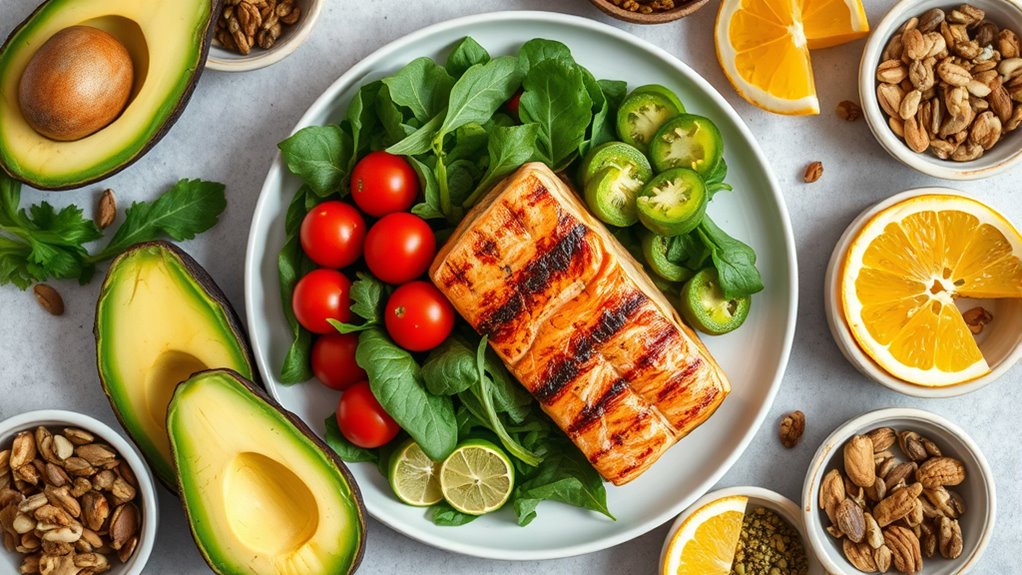
When it comes to optimizing your diet, choosing the right food pairings can considerably enhance your nutritional intake. The concept of nutrient synergy plays a crucial role here, where certain combinations of foods work together to boost each other’s benefits. By pairing foods strategically, you can maximize the absorption of vital nutrients and guarantee your body gets the most from what you eat. For instance, combining vitamin C-rich foods like citrus fruits with iron-rich plant-based items such as spinach helps your body absorb iron more efficiently. This is because vitamin C acts as an absorption enhancer, breaking down plant cell walls and converting iron into a form that’s easier for your body to use.
Understanding nutrient synergy isn’t just about adding more vitamins and minerals to your plate; it involves knowing which foods complement each other at a biochemical level. For example, pairing healthy fats like avocados or nuts with fat-soluble vitamins such as A, D, E, and K substantially improves their bioavailability. When you include a small amount of healthy fat with vegetables like carrots or kale, your body can better absorb these essential nutrients. Similarly, combining protein sources with specific amino acids can maximize muscle repair and overall health. Such pairings aren’t random—they’re based on scientific insights into how nutrients interact within your digestive system.
Absorption enhancers are key to making the most of your meals. These are foods or compounds that increase the bioavailability of nutrients. For instance, black pepper contains piperine, which can boost the absorption of curcumin in turmeric. Adding a dash of black pepper to a turmeric-based dish isn’t just for flavor—it’s a strategic move to unlock more health benefits. Likewise, consuming fermented foods like yogurt or sauerkraut can enhance digestion and nutrient absorption by introducing beneficial probiotics that improve gut health. A healthy gut is essential because it’s the gateway through which nutrients pass into your bloodstream. When your digestive system is functioning at its best, absorption of nutrients like magnesium, zinc, and vitamins becomes more efficient.
Being mindful of food pairings allows you to create meals that work smarter, not harder. Incorporating nutrient synergy and absorption enhancers into your diet isn’t complicated once you understand the principles. Simple strategies, like adding lemon juice to leafy greens or combining beans with rice, can markedly increase nutrient uptake. Ultimately, these mindful combinations not only improve your nutritional status but also make your meals more satisfying and flavorful. By paying attention to how foods interact, you’re giving your body the best chance to thrive, leveraging science to turn everyday eating into an effective tool for better health.

NATURELO Vegan Iron Supplement with Vitamin C and Organic Whole Foods – Gentle Iron Pills for Women & Men with Iron Deficiency Including Pregnancy, Anemia and Vegan Diets – 90 Mini Capsules
- Gentle Vegan Iron Formula: 25 mg Iron with Organic Vitamin C
- Organic Whole Food Blend: Includes Beet, Spinach, Kale, Swiss Chard, Pumpkin Seed
- Enhanced Absorption: Ferrous Bisglycinate Chelate with Vitamin C
As an affiliate, we earn on qualifying purchases.
As an affiliate, we earn on qualifying purchases.
Frequently Asked Questions
How Can Food Pairing Improve Nutrient Absorption?
Food pairing can improve nutrient absorption through bioavailability enhancement and nutrient synergy. When you combine foods wisely, you facilitate better absorption of vitamins and minerals, making your meals more nutritious. For example, pairing vitamin C-rich foods with iron sources boosts iron bioavailability. These combinations work together, activating nutrient synergy, so your body can efficiently utilize essential nutrients, ultimately enhancing your overall health and wellbeing.
Are There Any Common Food Combinations to Avoid?
You should avoid food pairing myths like combining high-calcium foods with oxalate-rich ones, which can hinder calcium absorption. Also, steer clear of pairing strong flavors that clash instead of creating harmony, as it can disrupt flavor balance. Focus on flavor harmony to enhance your meals, and don’t believe all food pairing myths. Thoughtful combinations improve taste and nutrient uptake, making your meals both delicious and nutritious.
What Role Do Cultural Preferences Play in Food Pairing?
Cultural influence and regional preferences shape your food choices by guiding what flavors and ingredients feel familiar and appealing. You naturally pair foods that align with your cultural background, creating enjoyable combinations rooted in tradition. These preferences might prioritize certain spices, textures, or cooking methods, impacting your nutritional balance. Embracing regional preferences can enhance your eating experience, making healthy choices more satisfying and culturally meaningful.
Can Food Pairing Influence Gut Health Positively?
Food pairing can positively influence your gut health by promoting fermentation benefits and flavor synergy. When you combine fiber-rich foods with probiotics, you encourage beneficial bacteria to thrive, supporting digestion and immunity. Thoughtful pairings, like yogurt with fruit or fermented vegetables with grains, enhance gut flora and foster overall well-being. By choosing harmonious combinations, you optimize digestion, boost nutrient absorption, and enjoy better gut health naturally and deliciously.
How Do Cooking Methods Affect Nutrient Retention in Pairings?
Cooking methods greatly impact nutrient retention in your food pairings. For example, gentle techniques like steaming and blanching preserve more vitamins by maintaining temperature preservation, while high-heat methods like frying or grilling can cause nutrient loss. By choosing appropriate cooking techniques, you guarantee your meals retain essential nutrients, supporting better digestion and overall health. Adjusting your methods helps maximize the nutritional value of your food pairings effectively.
Conclusion
By choosing food pairings that balance flavors, nutrients, and textures, you nourish your body and delight your senses. You build a plate that fuels your energy, supports your health, and satisfies your cravings. You create meals that strengthen your body, uplift your mood, and nurture your well-being. When you pair foods thoughtfully, you craft not just meals, but a lifestyle of vigor, balance, and enjoyment—making every bite a step toward your best self.