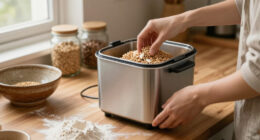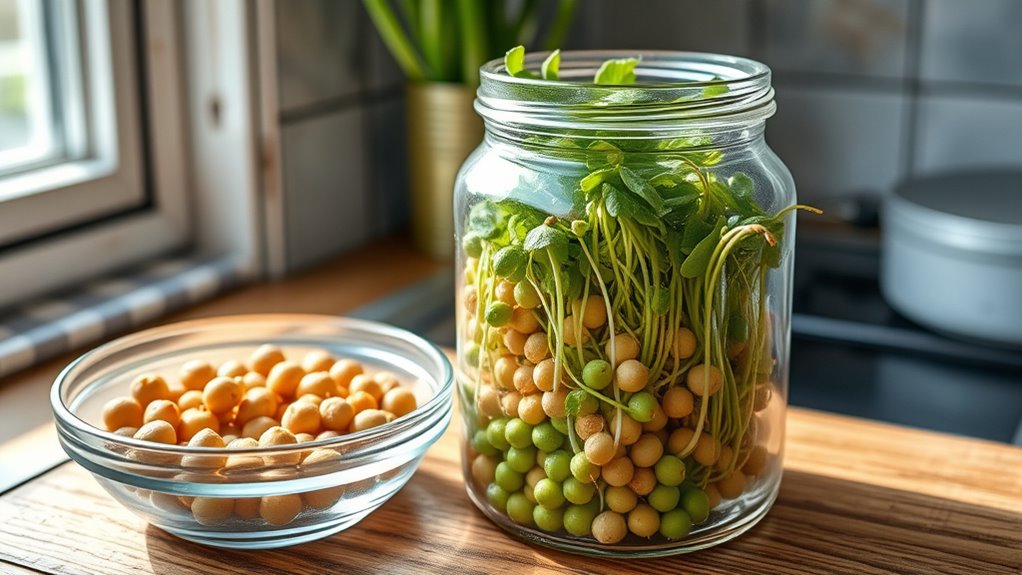

To start sprouting and soaking foods, rinse grains, beans, or seeds thoroughly and soak them in clean water for the recommended time, keeping them in a cool, dark place. Rinse and drain multiple times during sprouting, which usually takes 2-5 days. Store sprouts in the fridge soon after rinsing to keep them fresh and safe. Follow proper hygiene and discard any suspicious batches—if you keep exploring, you’ll gain some essential tips along the way.

Get kitchen staples and gadgets delivered free — and shop member deals
- Fast, free delivery on millions of items
- Access to Prime Big Deal Days deals on October 6–7
- Prime Video, Amazon Music and more included
Key Takeaways
- Rinse foods thoroughly before soaking or sprouting to remove dirt and bacteria.
- Use clean, breathable containers and keep soaked foods in a cool, dark place below 70°F.
- Soak beans and grains for 8-12 hours, and seeds for 4-6 hours, then drain and rinse well.
- Rinse sprouts at least twice daily and store in the refrigerator within 1-2 days for safety.
- Discard any sprouts showing spoilage signs like foul smell, sliminess, or discoloration.

Sprouting and soaking foods are simple yet effective ways to boost their nutrition and improve digestibility. When you sprout or soak grains, beans, seeds, or nuts, you access essential nutrients that might otherwise remain inaccessible. For example, soaking can reduce antinutrients like phytic acid, which normally hinder mineral absorption. Sprouting takes this a step further by activating enzymes that break down complex compounds, making vitamins, minerals, and amino acids more available to your body. It’s a straightforward process that can greatly enhance the nutritional benefits of your food, supporting better overall health and energy levels.
However, as you start incorporating sprouting and soaking into your routine, it’s vital to pay attention to safety precautions. These methods create an environment conducive to bacterial growth if not managed properly. To guarantee safety, always rinse your grains, beans, or seeds thoroughly before soaking, removing any dirt or debris. Use clean, food-grade containers and cover them with breathable cloths or mesh lids to allow airflow and prevent contamination. When soaking, keep your foods in a cool, dark place, ideally below 70°F (21°C), to inhibit bacteria proliferation. Soaking times vary depending on the food, but generally, beans and grains soak for 8-12 hours, while seeds may need only 4-6 hours. Always drain and rinse your foods well after soaking to wash away any residual bacteria or loosened debris.
Sprouting requires similar caution. After soaking, drain the water and rinse the sprouts thoroughly at least twice daily. Use clean utensils and containers to prevent cross-contamination. Once sprouts are ready—usually within 2-5 days depending on the type—give them a final rinse and store them in the refrigerator, ideally within a day or two. Remember, if you notice any foul smell, sliminess, or discoloration, discard the batch immediately. These signs indicate bacterial growth or spoilage, which could pose health risks.
As an affiliate, we earn on qualifying purchases.
Frequently Asked Questions
How Long Can Sprouted or Soaked Foods Be Stored Safely?
You can typically store sprouted or soaked foods safely for about 2 to 3 days in the refrigerator. Keep their shelf life in mind and always use airtight containers to maintain freshness. Storage tips include rinsing them daily and keeping them cold. If they develop a strange smell or slimy texture, it’s best to discard them to avoid foodborne illnesses. Stay mindful of their appearance and smell for safety.
Are There Any Foods That Shouldn’t Be Sprouted or Soaked?
Certain foods, like kidney beans, sprouts, and some grains, shouldn’t be soaked or sprouted because of toxicity risks and allergenic reactions. You avoid risking health issues by steering clear of these foods, as they can harbor harmful toxins or trigger allergies. Always research specific foods before sprouting or soaking, and when in doubt, consult a health professional to prevent potential problems.
What Are Common Signs of Spoilage in Sprouted Foods?
You’ll know your sprouted foods are spoiled if you see visual mold or notice a foul odor. Mold appears as fuzzy, discolored patches, while a strong, unpleasant smell indicates bacterial growth. If your sprouts look slimy or have an unusual texture, it’s best to discard them. Trust your senses—any signs of spoilage mean it’s unsafe to eat, so don’t take chances with compromised sprouted foods.
Can Soaking or Sprouting Alter the Nutritional Content?
Imagine sprouting almonds; soaking and sprouting can boost their nutritional content through enzyme activation. This process enhances nutrient availability, leading to nutritional enhancement. Soaking reduces antinutrients, making minerals more absorbable, while sprouting increases vitamin levels. You actively improve the food’s nutritional profile, making it more beneficial. So, yes, soaking or sprouting can markedly alter the nutritional content, making your foods healthier and more digestible.
Do Different Grains Require Unique Soaking or Sprouting Methods?
Yes, different grains require unique sprouting techniques and specific equipment. For example, lentils need less soaking time than wheat, and some grains like quinoa benefit from rinsing thoroughly before sprouting. Using grain-specific techniques guarantees ideal germination and prevents spoilage. You should also select appropriate sprouting equipment, such as jars with mesh lids or sprouting trays, to keep your grains clean and promote even sprouting.
Conclusion
Now that you know the basics of sprouting and soaking foods, it’s easier to incorporate nutritious, living foods into your diet. Imagine the vibrant sprouts and perfectly soaked grains transforming your meals—can you see how simple steps can lead to healthier choices? With just a little practice, you’ll enjoy fresher flavors and more energy. So, why not start today and watch your culinary world sprout and soak into something truly nourishing?
Fall Picks
fall essentials
As an affiliate, we earn on qualifying purchases.