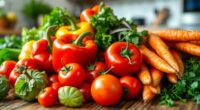
To create vegetarian meal plans that boost athletic performance, focus on including diverse plant-based proteins like beans, lentils, tofu, and tempeh. Prep large batches of grains and vegetables in advance to save time and keep your nutrition on track. Portion meals for sustained energy and incorporate snacks like nuts and energy balls. Stay creative with recipes to prevent boredom while maintaining nutrient balance. Keep exploring these strategies to enhance your plant-based athletic routine.

Get kitchen staples and gadgets delivered free with Prime
- Fast, free delivery on millions of items
- Prime Video, Amazon Music and more included
- Member-only deals all year
Key Takeaways
- Incorporate diverse plant-based proteins like beans, lentils, tofu, and tempeh to meet amino acid needs for athletic performance.
- Prepare batch-cooked grains and legumes weekly to streamline meal assembly and ensure consistent nutrient intake.
- Balance meals with complex carbs, healthy fats, and protein to sustain energy and support recovery during training.
- Portion meals and snacks in advance, such as energy balls or trail mix, for quick, on-the-go fueling options.
- Plan weekly menus to reduce decision fatigue, promote variety, and maintain high energy levels for optimal athletic results.

Switching to a vegetarian diet doesn’t mean sacrificing performance or energy levels. In fact, with the right approach, you can sustain, or even boost, your athletic performance while enjoying a plant-based lifestyle. One of the key components is guaranteeing you’re getting enough plant-based protein, which is essential for muscle repair and recovery. Foods like lentils, chickpeas, tofu, tempeh, and edamame pack a punch when it comes to protein content, and they’re versatile enough to fit into a variety of meals. Incorporating these into your diet is straightforward once you understand meal prep strategies that work for you. Planning ahead allows you to stock your kitchen with nutrient-dense ingredients, so you’re never caught off guard with a lack of options. For example, preparing large batches of cooked beans or grains at the start of the week means you can quickly assemble balanced meals without spending hours every day cooking from scratch.
Meal prep strategies are your best friend on a vegetarian athletic journey. You can prepare a week’s worth of quinoa salads, roasted vegetable bowls, or stir-fries packed with tofu and vegetables, ensuring you always have healthy, protein-rich meals ready to go. This saves you time and reduces the temptation to rely on less nutritious convenience foods. Additionally, portioning your meals in advance helps you track your intake, making sure you’re meeting your daily calorie and macronutrient needs without over- or under-shooting. Incorporate snacks like trail mix with nuts and seeds, or energy balls made from oats, nut butter, and dried fruit, to keep your energy levels stable throughout the day. These snacks are easy to prepare in bulk and can be portioned for quick, on-the-go refueling.
Another tip is to diversify your sources of plant-based protein to ensure you receive a broad spectrum of amino acids and other nutrients. Combining different foods—such as beans with whole grains or hummus with whole wheat pita—creates complete proteins that support your athletic goals. Meal prep strategies also extend to experimenting with new recipes and flavors, so you stay motivated and enjoy your meals. By dedicating some time each week to prepping meals, you reduce decision fatigue and eliminate the stress of last-minute cooking, making it easier to stick with your vegetarian plan. With a little planning and creativity, you’ll find that maintaining high energy levels and peak performance is entirely achievable on a plant-based diet.
vegetarian protein powder for athletes
As an affiliate, we earn on qualifying purchases.
As an affiliate, we earn on qualifying purchases.
Frequently Asked Questions
How Do Vegetarian Athletes Meet Their Protein Requirements?
You meet your protein requirements by including plenty of plant-based protein sources like beans, lentils, tofu, and quinoa in your diet. Incorporate iron-rich foods such as spinach, chickpeas, and fortified cereals to boost your energy and recovery. Combining different plant proteins throughout the day guarantees you get all essential amino acids. Eating diverse, nutrient-dense foods helps you stay strong, energized, and on top of your athletic performance.
Are Vegetarian Diets Suitable for High-Performance Athletes?
Think of a vegetarian diet as a well-tuned engine—powerful and efficient. Yes, it’s suitable for high-performance athletes, especially when combined with strategies like vegetarian fasting and plant-based weight loss. You can meet your energy and nutrient needs by choosing diverse, nutrient-dense foods. With careful planning, your performance won’t just stay afloat; it’ll surge ahead, proving plant power can fuel greatness.
What Are the Best Plant-Based Protein Sources?
You should focus on plant-based proteins like lentils, chickpeas, tofu, tempeh, and edamame, which are excellent sources of essential amino acids. Incorporate vegan options such as quinoa, chia seeds, hemp seeds, and spirulina into your meals for variety and nutrition. These plant-based proteins support your athletic performance, help with recovery, and guarantee you meet your daily protein needs while maintaining a vegan or vegetarian diet.
How Can Vegetarians Ensure Adequate Iron Intake?
To guarantee adequate iron intake, you should focus on consuming iron-rich foods like leafy greens, beans, and fortified cereals. Pair these with vitamin C-rich foods such as citrus or peppers to enhance absorption. Avoid drinking tea or coffee around mealtime, as they can hinder iron absorption. Incorporating these strategies helps you meet your iron needs effectively and supports your athletic performance.
Do Vegetarian Meal Plans Support Muscle Recovery Effectively?
Yes, vegetarian meal plans support muscle recovery effectively when you include vegan protein supplements and optimize vegetarian meal timing. Consuming plant-based proteins like beans, lentils, and tofu after workouts helps repair muscles. Pair these with snacks or meals rich in nutrients at regular intervals to enhance recovery. Stay consistent with your meal timing, and you’ll provide your body with the essential amino acids and energy needed to bounce back quickly.
Conclusion
Switching to a vegetarian meal plan might seem challenging at first, but with the right choices, you’ll fuel your body just as effectively. Imagine feeling energized during every workout, your muscles recovering quickly, and your performance reaching new heights—all without meat. Plant-based foods can provide all the nutrients you need to excel as an athlete. Embrace this journey, and you’ll discover that a vegetarian diet isn’t a limit but a powerful advantage in your athletic pursuits.
NFL season / tailgating Picks
team gear
As an affiliate, we earn on qualifying purchases.