
To start your vegan protein journey, focus on soy products like tofu, tempeh, and edamame, which are rich in essential amino acids and versatile for many dishes. Include legumes like lentils, chickpeas, and beans to boost fiber and nutrients while keeping meals interesting and budget-friendly. Combining different plant proteins helps guarantee you’re getting all the amino acids your body needs. Keep exploring to discover how these options can fit into your daily meals seamlessly.
Key Takeaways
- Incorporate soy products like tofu, tempeh, and edamame for versatile, protein-rich vegan options.
- Use legumes such as lentils, chickpeas, and black beans to add fiber and essential nutrients to meals.
- Combine different plant-based proteins to ensure a complete amino acid profile and balanced nutrition.
- Include quick-cooking options like lentils and canned beans for easy, time-efficient meals.
- Explore diverse recipes like stir-fries, salads, and stews to keep your vegan diet varied and satisfying.
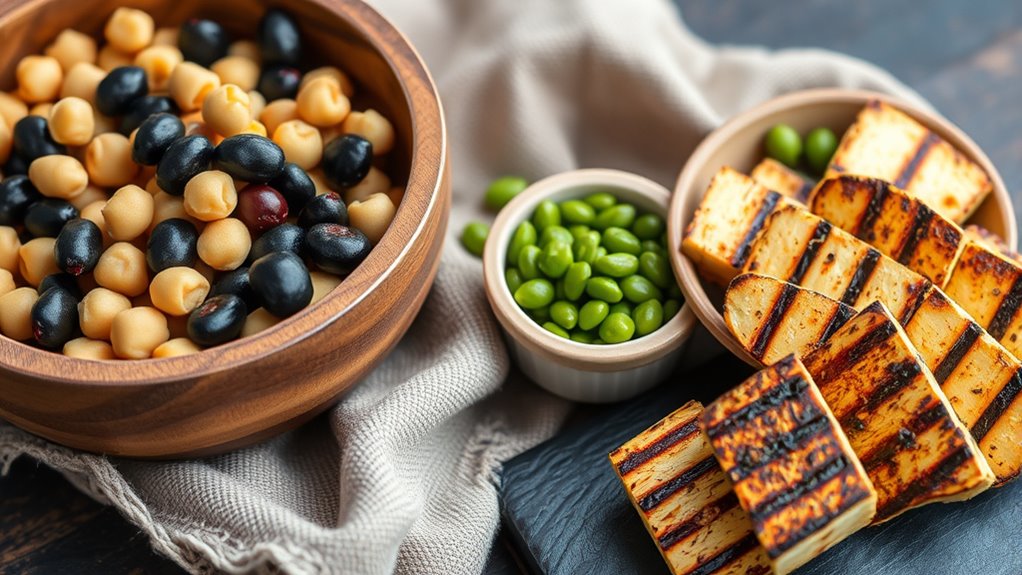
Are you wondering how to meet your protein needs on a vegan diet? Luckily, there are plenty of plant-based options that can help you hit your daily targets without relying on animal products. One of the most versatile and popular sources of vegan protein is soy products. Tofu, tempeh, and edamame are rich in protein and can be prepared in countless ways to keep your meals exciting. Tofu absorbs flavors well, making it perfect for stir-fries, scrambles, or grilled dishes, while tempeh offers a firmer texture that works great in salads or sandwiches. Edamame, which are young soybeans, make for a nutritious snack or addition to soups and grain bowls. Incorporating soy products into your diet not only boosts your protein intake but also provides essential amino acids, iron, and calcium, especially when consumed in minimally processed forms.
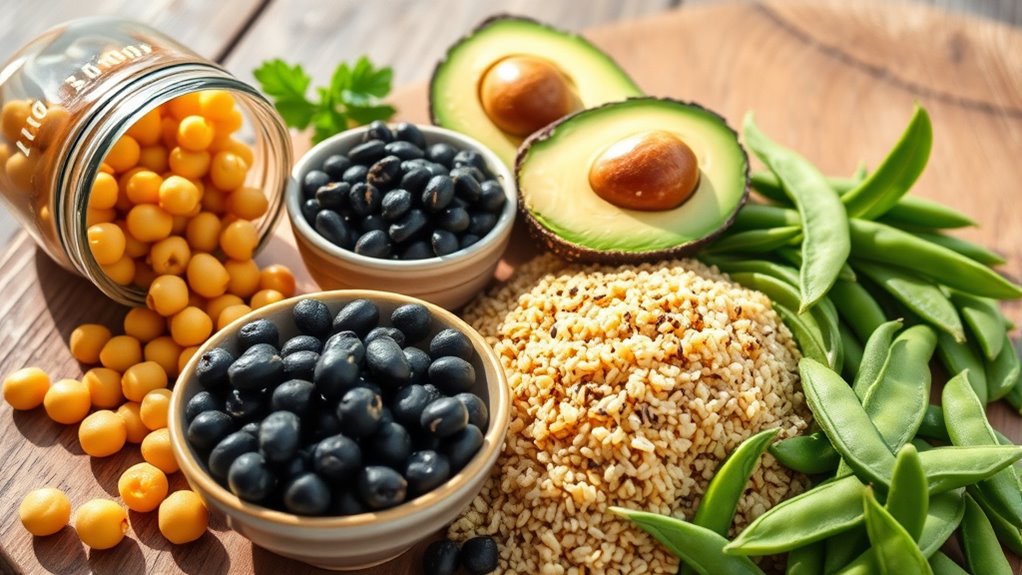
Beyond soy, legume varieties are another cornerstone of vegan protein sources. Legumes include lentils, chickpeas, black beans, kidney beans, and many others, and they’re packed with protein, fiber, and important nutrients. These beans and pulses are incredibly versatile—you can toss them into salads, make hearty stews, or blend them into spreads like hummus. Lentils cook quickly and are an excellent choice for quick meals, while chickpeas work well in curries or as the base for veggie burgers. The variety of legumes means you can enjoy different flavors and textures, helping you avoid meal fatigue. They’re also budget-friendly, widely available, and easy to prepare, making them an ideal staple for any vegan diet.
Incorporating a range of soy products and legume varieties ensures you get a broad spectrum of amino acids, supporting muscle repair and overall health. You don’t have to rely on just one type of plant-based protein—mixing and matching these options helps you meet your nutritional needs while keeping your meals interesting. For example, you could start your day with a tofu scramble, enjoy a chickpea salad for lunch, and add a lentil soup to your dinner. These plant-based proteins are not only nutritious but also sustainable choices that reduce your environmental footprint. As you become more familiar with these foods, you’ll find that meeting your protein goals on a vegan diet becomes easier and more enjoyable. Remember, variety is key—so explore different soy products and legume dishes to keep your diet balanced, satisfying, and nourishing.

5.29oz Freeze Dried Tofu Cubes – 1cm Bite-Sized High Protein Dehydrated Tofu – Instant Vegan Food for Ramen Toppings, Miso Soup, Hiking & Emergency Keto Meals
No Additives: This dehydrated tofu is made solely from soybeans, with no added sugar, preservatives, or artificial ingredients….
As an affiliate, we earn on qualifying purchases.
As an affiliate, we earn on qualifying purchases.
Frequently Asked Questions
Are Vegan Proteins Complete Proteins?
Vegan proteins are often not complete on their own because they may lack certain essential amino acids. However, you can easily produce complete proteins by combining plant sources with different amino acid profiles, like rice and beans or hummus and whole wheat bread. These plant combinations ensure you get all the essential amino acids your body needs, making your vegan diet balanced and nutritious.
How Much Protein Do I Need Daily?
You need about 0.8 grams of protein per kilogram of body weight daily, but this varies with activity level. Think of your body as a busy factory, efficiently absorbing protein through well-timed meals. Spreading intake throughout the day enhances protein absorption and supports muscle repair. To meet your needs, plan balanced meals, and consider your activity, age, and goals for a personalized approach that keeps your energy flowing smoothly.
Can Vegans Get Enough B12 From Plant Foods?
You can get enough B12 from plant foods if you choose fortified foods like cereals, plant milks, and nutritional yeast regularly. However, since natural plant sources are scarce, supplementation options are highly recommended to prevent deficiency. Taking a B12 supplement guarantees you meet your daily needs reliably, making it easier to maintain ideal health on a vegan diet. Always check labels and consider consulting a healthcare professional for personalized advice.
Are Vegan Protein Powders Safe and Effective?
Vegan protein powders are generally safe and effective, but think of them as a tool in your toolbox, not the whole workshop. To maximize benefits, focus on supplement quality and protein absorption. Choose reputable brands with transparent ingredients, and incorporate them into a balanced diet. When selected wisely, these powders can boost your protein intake, supporting your plant-based goals without compromising safety or nutritional value.
How Do I Combine Plant Proteins for Complete Amino Acids?
To achieve complete amino acids, you should focus on protein pairing, combining different plant proteins like beans with rice or hummus with whole wheat bread. This creates amino acid synergy, where one protein’s deficiencies are balanced by another’s strengths. You don’t need to eat them simultaneously; just include a variety of plant-based proteins throughout the day to guarantee you get all essential amino acids efficiently.

50 Vegan Tempeh Delights – A Plant-Powered Culinary Exploration: Infuse Flavor and Wellness. Turn ordinary tempeh into extraordinary plant-based delicacies.
As an affiliate, we earn on qualifying purchases.
As an affiliate, we earn on qualifying purchases.
Conclusion
Now that you’ve uncovered a world of plant-based proteins, you’re like a modern-day Hercules ready to conquer your nutrition goals. With these sources, you’re equipped to build strength and vigor without the need for mythical ambrosia. Embrace these vegan options and forge your own legendary path toward wellness. Remember, just as the hero’s journey transforms, so will yours—one delicious, protein-packed bite at a time.

Goya Foods Chick Peas, Garbanzo Beans, 15.5 Ounce (Pack of 8)
PLUMP CHICKPEAS | These creamy and delicious garbanzo beans are perfectly whole and plump to bring out the…
As an affiliate, we earn on qualifying purchases.
As an affiliate, we earn on qualifying purchases.

Seapoint Farms Dry Roasted Crunchy Edamame, Plant Based Snack, 14g Protein, 2 Ingredients, Vegan, Gluten Free, Kosher, Keto Friendly, Non-GMO, Healthy Snacking, Sea Salt, 27 oz Jar (Pack of 1)
High Protein-Packed Anytime Snack – Each serving of our Dry Roasted Edamame delivers a hearty 14g boost of…
As an affiliate, we earn on qualifying purchases.
As an affiliate, we earn on qualifying purchases.