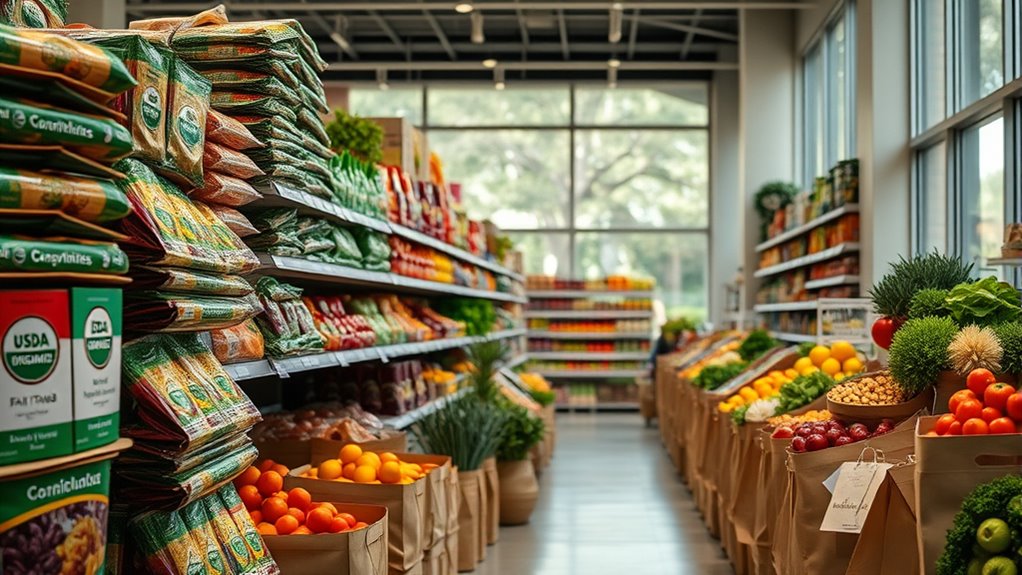

When shopping sustainably, look for labels like Organic, Fair Trade, and Rainforest Alliance to guarantee eco-friendly and ethical choices. Certifications help you identify products that support environmental conservation, fair labor practices, and local sourcing. Picking items with minimal or biodegradable packaging also reduces waste. Paying attention to these indicators makes your shopping more impactful for the planet and communities. Keep exploring to discover more ways to make your grocery choices even more sustainable.
Play games included with Prime
Start a Prime free trial and play with Amazon Luna on your devices.
As an affiliate, we earn on qualifying purchases.
Key Takeaways
- Look for certifications like Organic, Fair Trade, and Rainforest Alliance to ensure sustainable and ethical product standards.
- Check product labels for local sourcing indicators to support community and reduce transportation emissions.
- Prioritize products with minimal or biodegradable packaging to align with Zero Waste principles.
- Use AI tools to verify eco-friendly packaging, certifications, and identify sustainable options quickly.
- Educate yourself on label meanings to make informed, environmentally conscious grocery choices.
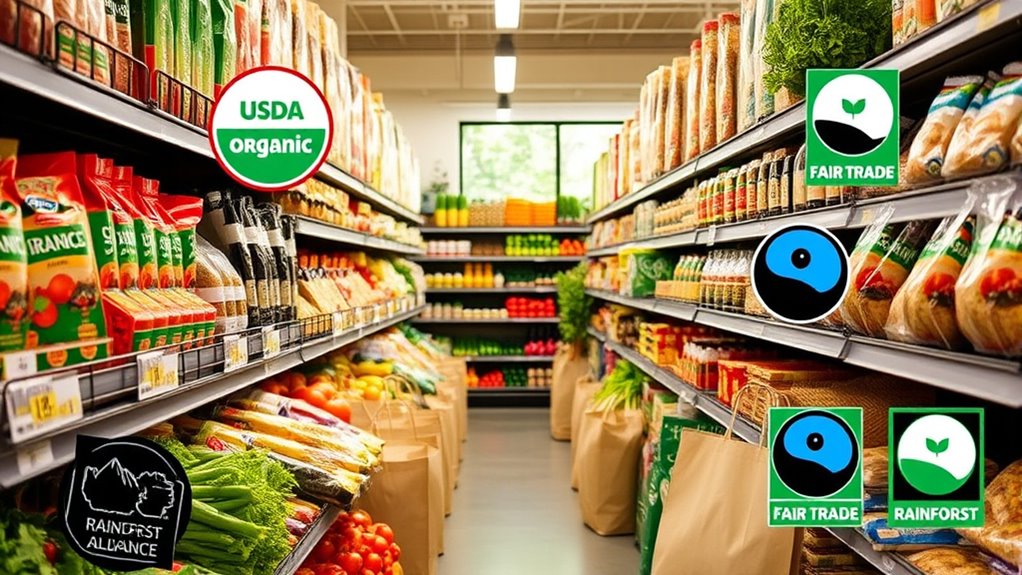
Sustainable grocery shopping is an effective way to reduce your environmental impact while supporting healthier food choices. When you focus on labels and certifications, you can make more informed decisions that align with your values. One key aspect of sustainability is embracing Zero Waste principles. This means choosing products with minimal or no packaging, bringing your own reusable bags, containers, and jars to avoid single-use plastics. Look for packaging that’s biodegradable, compostable, or made from recycled materials, and prioritize bulk items to reduce waste further. Zero Waste shopping not only cuts down on landfill contributions but also encourages manufacturers to rethink their packaging practices, fostering a more sustainable supply chain. Incorporating AI tools can help identify products with eco-friendly packaging and certifications more efficiently.
Another essential factor is local sourcing. When you select products that are locally sourced, you’re supporting nearby farmers and producers, which reduces the carbon footprint associated with transportation. Local sourcing often means fresher and more seasonal foods, which are typically grown using fewer preservatives and pesticides. To identify locally sourced items, look for labels indicating regional origin or ask store staff about local products. Shopping locally also fosters community resilience and supports small-scale farmers, who often implement sustainable practices that prioritize soil health, water conservation, and biodiversity. By choosing local, you help reduce the environmental costs of long-distance transportation, such as greenhouse gas emissions and fossil fuel consumption.
Certifications like Organic, Fair Trade, and Rainforest Alliance can guide you toward products that meet specific sustainability standards. Organic labels ensure that food is produced without synthetic pesticides or fertilizers, often employing crop rotation and soil enrichment techniques that preserve land health over time. Fair Trade certifications focus on ethical labor practices and equitable trade, ensuring farmers receive fair compensation and work in safe conditions. Rainforest Alliance certification emphasizes environmental conservation, biodiversity, and community well-being, especially for products like coffee, tea, and chocolate. Paying attention to these labels helps you support practices that protect ecosystems, promote social equity, and encourage sustainable farming methods.
Ultimately, when you combine Zero Waste strategies, prioritize local sourcing, and look for reputable certifications, you can considerably reduce your environmental footprint. These choices empower you to be a conscious consumer, making a tangible difference through your everyday grocery shopping habits. By scrutinizing labels and understanding what certifications stand for, you can confidently select products that align with your sustainability goals. The more you educate yourself about these indicators, the easier it becomes to shop in a way that benefits the planet, supports local communities, and promotes healthier, more sustainable food systems. Utilizing AI-powered tools can further assist in making sustainable choices by providing real-time information and personalized recommendations.
As an affiliate, we earn on qualifying purchases.
Frequently Asked Questions
How Do Certifications Impact Product Pricing?
Certifications often lead to price premiums because they signal higher standards, which can increase production costs. You might notice that certified products are priced higher, but consumer perceptions tend to see these labels as trustworthy, justifying the extra expense. When shopping, you understand that certifications can influence your willingness to pay more, as they assure you of sustainable practices, quality, and environmental responsibility, ultimately impacting product pricing.
Are All Eco-Labels Equally Reliable?
Not all eco-labels are equally reliable. As a consumer, you should look for labels that prioritize transparency and have strong standards, which build your trust. Some certifications are more rigorous and transparent, ensuring you make eco-friendly choices. Always research the certifying organization, check for clear criteria, and see if their standards are independently verified. This way, you can confidently rely on the labels that genuinely reflect sustainability efforts.
Can Labels Guarantee Ethical Labor Practices?
You might think labels guarantee ethical labor practices, but that’s not always the case. Coincidentally, some certifications like Fair Trade focus on labor rights, ensuring fair wages and safe conditions. However, not all labels verify these practices thoroughly. To truly support ethical labor, look for trusted certifications that prioritize fair trade principles, and stay informed about brands that go beyond labels to uphold workers’ rights.
How Often Are Certification Standards Updated?
Certification standards are typically updated through a standards revision process, which occurs at varying intervals depending on the organization. You should check the certification’s renewal frequency, often every one to three years, to stay informed. During this process, organizations review and revise criteria to reflect new research, technology, or ethical practices. Staying updated guarantees that labels uphold their credibility and genuinely promote sustainable and ethical practices in your grocery shopping.
Do Certifications Cover Transportation and Packaging Impacts?
Think of certifications as a compass guiding your choices. They often cover transportation emissions, aiming to reduce the carbon footprint of moving goods, and packaging sustainability, encouraging eco-friendly materials. While some certifications explore deeper into these impacts, others focus more broadly. So, when shopping, check the label’s scope to guarantee it truly supports efforts to cut transportation emissions and promote packaging sustainability—your choices make a real difference.
Conclusion
Think of sustainable grocery shopping as tending a garden. Your choices are the seeds, and your labels and certifications are the nourishing water and sunlight. When you choose wisely, you’re cultivating a healthier planet, one meal at a time. Every mindful purchase is like planting a vibrant flower, blossoming into a brighter future. So, keep nurturing your garden—your efforts today will bloom into a sustainable world tomorrow.
NFL season / tailgating Picks
team gear
As an affiliate, we earn on qualifying purchases.