Adding pulses to your vegetarian soups and stews enhances flavor, boosts nutrition, and creates a hearty, satisfying dish. Pulses are packed with fiber, protein, vitamins, and minerals, supporting your health and digestion. They also add a rich, comforting texture and absorb spices well, making your meals more delicious. Plus, using pulses is eco-friendly and budget-conscious. Keep exploring to discover tasty recipes and tips for incorporating pulses into your favorite vegetarian dishes.

Get kitchen staples and gadgets delivered free with Prime
- Fast, free delivery on millions of items
- Prime Video, Amazon Music and more included
- Member-only deals all year
Key Takeaways
- Pulses like lentils, chickpeas, and beans add rich flavor, texture, and essential nutrients to vegetarian soups and stews.
- They create hearty, satisfying dishes that enhance satiety and reduce snacking urges.
- Proper preparation of dried pulses ensures optimal nutrition and flavor absorption from herbs and spices.
- Canned pulses offer quick, convenient options for nutritious vegetarian soups and stews.
- Incorporating pulses supports sustainable eating by reducing reliance on animal proteins and lowering environmental impact.
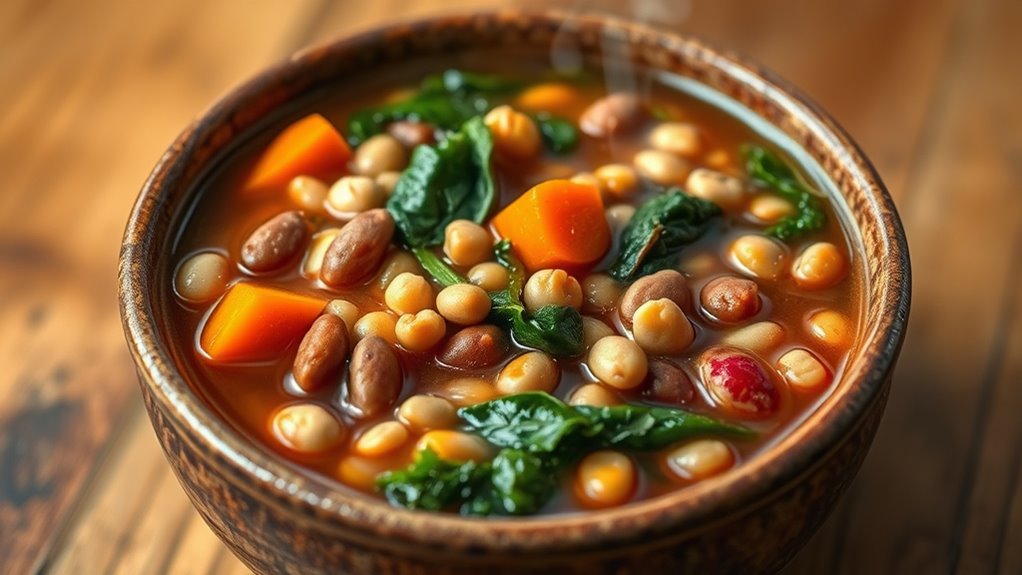
Vegetarian soups and stews with pulses are hearty, nutritious options that can easily become staples in your meal rotation. Pulses, which include lentils, chickpeas, beans, and peas, are known for their impressive pulses nutrition profile. They pack a punch of essential nutrients such as fiber, vitamins, minerals, and antioxidants, making them a smart choice for anyone looking to boost their health. Most importantly, pulses are an excellent source of plant-based proteins, providing a substantial protein boost in vegetarian dishes. Incorporating these into your soups and stews means you get the satisfaction of a filling meal while meeting your dietary needs without relying on animal products.
Vegetarian soups with pulses are nutritious, hearty, and packed with plant-based proteins and essential nutrients.
When you add pulses to your recipes, you’re not just enhancing flavor; you’re also improving nutritional value. These ingredients are low in fat but high in complex carbohydrates, which help sustain your energy levels. Their high fiber content promotes digestive health and keeps you feeling full longer, reducing the temptation for snacking between meals. Because pulses are rich in plant-based proteins, they serve as a crucial protein source for vegetarians and vegans, ensuring your body gets the amino acids it needs for muscle repair, immune function, and overall vitality. You’ll find that using pulses in your soups and stews makes for a balanced meal that’s both satisfying and nourishing.
Preparing soups and stews with pulses is straightforward, and they adapt well to various flavor profiles. Whether you prefer a spicy lentil curry, a hearty chickpea stew, or a bean-filled vegetable soup, pulses lend a thick, comforting texture while absorbing the flavors of your herbs and spices. You can cook them from dried, which allows you to control salt and additives, or use canned varieties for quick meals. To maximize their nutritional benefits, it’s best to rinse canned pulses thoroughly and cook dried ones properly to eliminate any anti-nutrients that can interfere with mineral absorption. Additionally, incorporating pulses into your diet can support sustainable food systems by reducing reliance on animal-based proteins.
Incorporating pulses into your vegetarian soups and stews isn’t just about nutrition; it’s also about versatility and sustainability. Pulses have a low environmental footprint compared to animal-based proteins, making them an eco-conscious choice. Plus, their affordability allows you to enjoy nutritious, plant-based meals without breaking the bank. By making pulses a regular part of your culinary repertoire, you not only nourish your body with essential nutrients but also contribute to a more sustainable food system. So, next time you’re planning a hearty, satisfying meal, reach for pulses—your body and the planet will thank you.
As an affiliate, we earn on qualifying purchases.
Frequently Asked Questions
Can Pulses Be Substituted With Other Protein Sources in Soups?
Yes, you can definitely substitute pulses with other plant-based proteins in soups. Legume alternatives like tofu, tempeh, seitan, or even textured vegetable protein (TVP) work well. These options provide similar protein content and can absorb flavors nicely. By trying different plant-based proteins, you add variety and nutrition to your soups, making them satisfying and wholesome without relying solely on pulses.
Are There Specific Pulses Better for Stews Than Soups?
You’ll notice that kidney beans and chickpeas excel in stews, creating hearty textures that hold their shape beautifully. Their robust pulse varieties bring a satisfying bite, perfect for thick, comforting stews. For soups, softer pulses like lentils dissolve into the broth, blending flavors seamlessly. So, choose kidney beans or chickpeas for stews to enjoy that meaty, substantial feel, while lentils work wonders in lighter, more delicate soups.
How Do I Prevent Pulses From Causing Digestive Discomfort?
To prevent pulses from causing digestive discomfort, soak them using techniques like overnight soaking or quick soak methods, which help reduce enzyme inhibitors. Rinse the pulses thoroughly after soaking, and cook them well to break down complex sugars that cause gas. You can also try adding spices like ginger or cumin, which aid digestion. These steps make pulses easier to digest and minimize discomfort during your meals.
What Are the Best Spices to Enhance Pulse-Based Soups?
Oh, you’re about to turn humble pulses into a flavor fiesta! Toss in herb pairings like thyme, rosemary, and bay leaves, and sprinkle in flavor enhancers such as cumin, smoked paprika, or coriander. These spices don’t just boost taste—they dance around your palate, masking any earthy undertones. So, get creative and let your soup sing with aromatic magic. Your taste buds will thank you!
Can Pulse-Based Soups Be Made Gluten-Free?
Yes, pulse-based soups can be made gluten-free by using gluten-free grains like rice or quinoa instead of wheat-based thickeners. You can also substitute soy-based ingredients with soy alternatives such as coconut aminos or tamari labeled gluten-free. Just guarantee all your added ingredients, broths, and seasonings are gluten-free, and you’ll have a hearty, safe, gluten-free pulse soup ready to enjoy.
Conclusion
By embracing these vegetarian soups and stews with pulses, you’ll unleash flavors so incredible, they’ll make your taste buds dance and your soul sing! These dishes aren’t just meals; they’re culinary masterpieces that can turn any gloomy day into a celebration. With every spoonful, you’ll feel unstoppable, like a superhero of healthy eating. So go ahead—dive in and discover a world where pulses reign supreme, transforming your mealtime into an unforgettable feast for your senses!
Halloween Picks
halloween
As an affiliate, we earn on qualifying purchases.