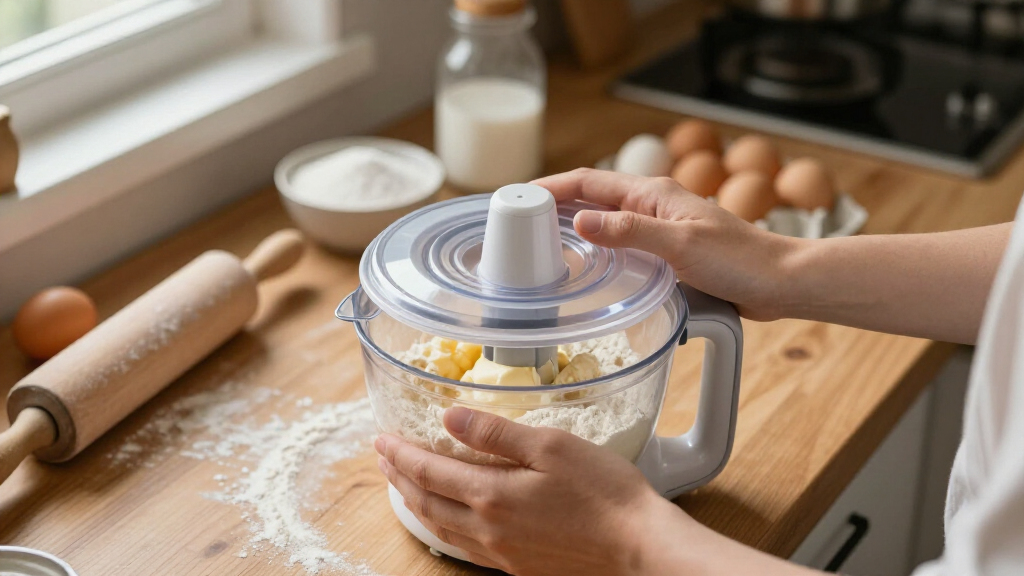

A food processor for baking needs to do two things well: cut cold butter into flour without melting it and knead dough without straining the motor. That’s why the Cuisinart 14-Cup Food Processor with 720-Watt Motor earns my best overall pick — its combination of a large bowl and a powerful motor handles pie dough, cookie batches, and yeast breads with room to spare. The Ninja Professional Plus BN601 stands out for serious dough work on a budget, while the Hamilton Beach 10-Cup is the value pick for occasional bakers. The main tradeoff in this category is power and capacity versus price and counter space, and mini models simply can’t knead dough. Read on for the full breakdown of all 13 models.

Get kitchen staples and gadgets delivered free with Prime
- Fast, free delivery on millions of items
- Prime Video, Amazon Music and more included
- Member-only deals all year
Complete the kit


Key Takeaways
- Motor wattage was the single biggest differentiator: models under 500W (like the BLACK+DECKER 8-Cup and Hamilton Beach 3-Cup) can cut butter into flour but struggle or stall on yeast doughs.
- Only three models in this lineup are genuinely dough-capable for bread baking: the Cuisinart 14-Cup, Ninja BN601, and Ninja BZ601 — everything else is better treated as a pastry and cookie processor.
- Dedicated dough blades and dough modes (found on both Ninjas) noticeably reduce the risk of overworking dough compared to running a standard S-blade on high.
- Mini 3-4 cup models (Cuisinart Mini, Hamilton Beach 3-Cup, Cuisinart 4-Cup) excel at small-batch tasks like graham cracker crumbs, nut flour, and a single crust, but cannot handle cookie dough for a full batch.
- Bowl capacity scales with baking ambition: 12-14 cup models suit weekly bakers and batch cookie production, while 7-9 cups is the sweet spot for most home kitchens.
| BLACK+DECKER 8-Cup Food Processor |  | Best Budget Workhorse | Capacity: 8 cups | Motor Power: 450W | Blade: Stainless steel S-blade | VIEW LATEST PRICE | See Our Full Breakdown |
| Cuisinart Mini Food Processor, Reversible Blade, 3-Cup Capacity |  | Best Mini for Small-Batch Prep | Capacity: 3 cups | Motor Power: 250 watts | Blade Type: Reversible stainless steel | VIEW LATEST PRICE | See Our Full Breakdown |
| Hamilton Beach 3-Cup Electric Vegetable Chopper & Mini Food Processor |  | Best for Effortless One-Button Use | Capacity: 3 cups | Power: 350 watts | Blade Material: Stainless steel | VIEW LATEST PRICE | See Our Full Breakdown |
| Cuisinart 5-Cup Chop & Shred Food Processor, Silver FP-5 |  | Best Compact Pick with Shredding | Capacity: 5 cups | Color: Silver | Work Bowl: 5-cup with ergonomic handle | VIEW LATEST PRICE | See Our Full Breakdown |
| Ninja PrecisionPro Food Processor & Dough Mixer, 1000PW, 9-Cup, BZ601 |  | Best Overall for Baking | Power: 1000-peak-watt | Capacity: 9 cups | Included Components: Motor base, processing bowl, chopping blade, dough blade, slicing/shredding disc, feed chute lid with pusher, recipe guide | VIEW LATEST PRICE | See Our Full Breakdown |
| BLACK+DECKER Food Processor and Vegetable Chopper, 8-Cup Capacity, 450W |  | Best Budget Pick | Capacity: 8 cups | Power: 450W | Blade Type: Stainless steel S-blade | VIEW LATEST PRICE | See Our Full Breakdown |
| Hamilton Beach Food Processor & Vegetable Chopper, 10 Cups, Stainless Steel |  | Best for Big Batches | Capacity: 10 cups | Motor Power: 450 watts | Speeds: 2 speeds plus pulse | VIEW LATEST PRICE | See Our Full Breakdown |
| Ninja Professional Plus Food Processor, 1000PW, 9-Cup, Grey, BN601 |  | Best for Dough Making | Motor Power: 1000 peak watts | Capacity: 9 cups | Blade Type: Stainless steel | VIEW LATEST PRICE | See Our Full Breakdown |
| Cuisinart 7-Cup Pro Classic Food Processor, 600-Watt Motor, Vegetable Chopper & Blender |  | Best Classic All-Rounder | Capacity: 7 cups | Motor Power: 600 watts | Included Discs: Medium shredding disc, 4mm medium slicing disc | VIEW LATEST PRICE | See Our Full Breakdown |
| Cuisinart Small Food Processor, 4-Cup, Auto-Reversing Smart Power Blade |  | Best Compact Helper | Capacity: 4 cups | Blade: Auto-reversing SmartPower blade | Controls: Touchpad | VIEW LATEST PRICE | See Our Full Breakdown |
| KitchenAid 7-Cup Food Processor – KFP0718 |  | Best for Small-Batch Baking | Brand: KitchenAid | Model: KFP0718CU | Capacity: 7 cups | VIEW LATEST PRICE | See Our Full Breakdown |
| Hamilton Beach 12 Cup Stack & Snap Food Processor and Vegetable Chopper |  | Best Budget Big-Bowl Option | Brand: Hamilton Beach | Capacity: 12 cups | Motor Power: 450 watts | VIEW LATEST PRICE | See Our Full Breakdown |
| Cuisinart 14-Cup Food Processor with 720-Watt Motor |  | Best for Serious Dough Work | Brand: Cuisinart | Capacity: 14 cups | Motor Power: 720 watts | VIEW LATEST PRICE | See Our Full Breakdown |
| food processor for baking | Capacity | Motor Power |
|---|---|---|
| BLACK+DECKER 8-Cup Food Proces | 8 cups | 450W |
| Cuisinart Mini Food Processor | 3 cups | 250 watts |
| Hamilton Beach 3-Cup Electric | 3 cups | — |
| Cuisinart 5-Cup Chop & Shred F | 5 cups | — |
| Ninja PrecisionPro Food Proces | 9 cups | — |
| BLACK+DECKER Food Processor an | 8 cups | — |
| Hamilton Beach Food Processor | 10 cups | 450 watts |
| Ninja Professional Plus Food P | 9 cups | 1000 peak watts |
| Cuisinart 7-Cup Pro Classic Fo | 7 cups | 600 watts |
| Cuisinart Small Food Processor | 4 cups | — |
| KitchenAid 7-Cup Food Processo | 7 cups | — |
| Hamilton Beach 12 Cup Stack & | 12 cups | 450 watts |
| Cuisinart 14-Cup Food Processo | 14 cups | 720 watts |
More Details on Our Top Picks
BLACK+DECKER 8-Cup Food Processor
For bakers who need a full-size bowl without the full-size price, this BLACK+DECKER is the entry point that makes the most sense. The 450W motor and 8-cup capacity put it closer to the Cuisinart 7-Cup Pro Classic in capability than its price suggests, and the stainless S-blade creams butter into sugar and cuts cold butter into flour for pie dough well enough for occasional bakers. Compared with the Ninja PrecisionPro, you give up dough presets and raw power, so stiff bread doughs will strain it. The reversible shred/slice disc handles nuts and chocolate blocks for toppings, but assembly is more fiddly than the stack-and-press designs elsewhere in this lineup. It’s a capable budget pick, not a lifetime appliance.
Pros:- 8-cup bowl handles standard cookie and pastry batches
- 450W motor is strong for the price point
- Reversible shred/slice disc adds versatility for toppings and mix-ins
- Simple assembly with a clear locking lid
Cons:- No dough-specific blade or presets, so kneading is limited
- Louder than premium models under load
- Basic feature set with no variable speed control
Best for: Occasional bakers and budget-conscious cooks who want an 8-cup bowl for cookie doughs and pastry work without spending much
Not ideal for: Frequent bread bakers — the 450W motor lacks the torque for stiff yeast doughs that the Ninja PrecisionPro handles easily
- Capacity:8 cups
- Motor Power:450W
- Blade:Stainless steel S-blade
- Additional Features:Reversible shred and slice disc
- Assembly:Easy assembly with smart locking lid
- Functions:Chopping, pureeing, mixing, shredding, slicing
Our verdict“Buy it if you bake occasionally and want real capacity cheap; skip it if kneading bread dough is a weekly routine.”
Cuisinart Mini Food Processor, Reversible Blade, 3-Cup Capacity
Not every baking job needs a big machine. The Cuisinart Mini-Prep Plus earns its place as the small-batch specialist, grinding nuts for flour, emulsifying a single batch of frosting, or pulsing graham crackers for a crust. The reversible blade shifts between chopping and grinding, something the Hamilton Beach 3-Cup chopper doesn’t offer, and the dishwasher-safe bowl and lid make it the easiest cleanup in this roundup. Compared with the BLACK+DECKER 8-Cup, capacity is the obvious sacrifice — one cup of crumbs at a time — and the 250W motor rules out anything involving dough. For bakers whose main use is garnishes, crusts, and small emulsions, this model is better suited than a bulkier machine that mostly sits idle.
Pros:- Reversible blade switches between chopping and grinding modes
- Dishwasher-safe bowl and lid
- Compact 9-inch footprint stores in a cabinet or drawer
- Includes recipe book and spatula
Cons:- Blade requires hand washing to stay sharp
- Very limited 3-cup capacity means multiple batches for anything substantial
- Not powerful enough for coffee beans or hard grinding jobs
Best for: Apartment bakers and dessert-makers who need small-batch grinding, chopping, and emulsifying without counter clutter
Not ideal for: Anyone making cookie or bread dough — the 3-cup bowl and 250W motor can’t handle batter or kneading tasks
- Capacity:3 cups
- Motor Power:250 watts
- Blade Type:Reversible stainless steel
- Height:9 inches
- Body Material:Plastic
- Dishwasher Safe:Yes (bowl and lid)
- Warranty:18 months
Our verdict“This pick makes the most sense as a second processor for detail work — not as your only baking tool.”
Hamilton Beach 3-Cup Electric Vegetable Chopper & Mini Food Processor
This Hamilton Beach stands out for dead-simple operation: stack the parts, press the lid, and it runs. There’s no locking arm to align or dial to interpret, which makes it friendlier for baking with kids or impatient cooks than the twist-lock Cuisinart Mini-Prep Plus. Its 350W motor is noticeably stronger than the Cuisinart’s 250W, so it powers through nuts and frozen butter chunks for small pastry jobs with less stalling. The tradeoff is control — no variable speeds and a 3-cup ceiling, so it’s a chopper first and a food processor second. Compared with the BLACK+DECKER 8-Cup, it trades capacity and shred discs for simplicity and price. If your baking prep is mostly nuts, chocolate, and small amounts of crumbs, this covers it.
Pros:- Stack & press design with zero learning curve
- 350W motor handles tough ingredients like nuts and frozen butter
- Dishwasher-safe parts
- Very affordable and compact
Cons:- No variable speed settings — pulsing is imprecise
- 3-cup capacity limits it to small jobs
- No slicing or shredding capability
Best for: Beginners, families baking with kids, and anyone who wants press-and-go chopping of nuts, chocolate, and small mix-ins
Not ideal for: Bakers prepping in volume — the 3-cup bowl forces batch after batch for anything beyond garnishes
- Capacity:3 cups
- Power:350 watts
- Blade Material:Stainless steel
- Dishwasher Safe:Yes
- Operation:Stack & press one-button design
- Functions:Chop, puree, emulsify
Our verdict“The right choice if simplicity matters more than capacity; choose a bigger bowl if you bake in batches.”
Cuisinart 5-Cup Chop & Shred Food Processor, Silver FP-5
The FP-5 occupies a useful middle ground: more capacity than the Cuisinart Mini-Prep Plus, far less counter presence than the Ninja PrecisionPro. Its standout feature for bakers is the reversible shredding disc — fine for chocolate and coconut, medium for apples destined for cake batter — something neither 3-cup chopper in this roundup can do. The self-nesting storage design and integrated cord wrap mean the whole unit tucks into a cabinet as one piece, which matters in a small kitchen. The compromises are real: the motor can bog down on dense ingredients where the Ninja’s 1000-peak-watt base wouldn’t blink, and 5 cups means a standard cookie recipe still needs two rounds. This model is better suited to space-constrained bakers than to volume producers.
Pros:- Reversible fine/medium shredding disc for chocolate, coconut, and fruit
- Parts nest inside the work bowl with integrated cord storage
- Ergonomic handle makes pouring batters easier
- Wide-mouth feed tube reduces pre-cutting
Cons:- Motor struggles with dense or tough ingredients
- 5-cup bowl requires multiple batches for standard recipes
Best for: Small-kitchen bakers who want shredding capability and a 5-cup bowl that stores as a single compact unit
Not ideal for: High-volume bakers — capacity and motor strength both fall short for full recipes in one pass
- Capacity:5 cups
- Color:Silver
- Work Bowl:5-cup with ergonomic handle
- Motor:High-performance
- Discs:Reversible fine and medium shredding
- Feed Tube:Wide-mouth
- Storage:Removable parts nest in bowl; integrated cord storage
Our verdict“A smart compromise if storage space drives your decision; pay more for the Ninja if batch size does.”
Ninja PrecisionPro Food Processor & Dough Mixer, 1000PW, 9-Cup, BZ601
This is the pick where the roundup’s title promise actually gets fulfilled. A dedicated dough blade, a 1000-peak-watt motor, and Auto-iQ presets mean the Ninja can knead bread dough, cream room-temp butter, and process a double batch of scone mix — jobs that expose the limits of the BLACK+DECKER 8-Cup and are simply impossible in the 3-cup choppers. Compared with the Cuisinart 5-Cup FP-5, you’re trading away storage elegance for genuine power and a 9-cup bowl that fits a full recipe. The slicing/shredding disc covers mix-ins and toppings, and the feed chute lets you add liquid mid-run for emulsions. The honest tradeoffs: it’s loud, it claims serious counter space, and all that capability costs roughly what two budget processors do.
Pros:- Dedicated dough blade kneads bread and pizza dough properly
- 1000-peak-watt motor powers through stiff doughs and frozen butter
- 9-cup bowl fits full recipes without batching
- Auto-iQ presets remove guesswork on timing and pulsing
Cons:- Takes up substantial counter and cabinet space
- Loud during operation, especially under heavy load
- Higher price than every budget model in this roundup
Best for: Serious and frequent bakers who knead dough, work in large batches, and want one machine for the entire baking workflow
Not ideal for: Small kitchens and light users — it’s bulky on the counter and overpowered for occasional garnish-level prep
- Power:1000-peak-watt
- Capacity:9 cups
- Included Components:Motor base, processing bowl, chopping blade, dough blade, slicing/shredding disc, feed chute lid with pusher, recipe guide
- Presets:Auto-iQ preset programs
- Functions:Chop, slice, shred, puree, dough mixing
- Model:BZ601
Our verdict“If baking is your primary use case and you want one machine that does it all, this is the one to buy.”
BLACK+DECKER Food Processor and Vegetable Chopper, 8-Cup Capacity, 450W
For the price of a few bags of flour, this BLACK+DECKER covers the baking basics: chopping nuts, crumbling cold butter into dry mixes, and shredding blocks of cheese for savory bakes. The 8-cup bowl is roomy enough for a single batch of pie dough, which puts it a step above the Cuisinart 4-Cup ECH-4SV when recipes scale up. What keeps it in budget territory is the feature set — there’s no dough blade, no preset programs, and the reversible slicing/shredding disc needs to be flipped by hand between tasks. Compared with the Hamilton Beach 10-Cup, it also lacks a bowl scraper, so you’ll stop to spatula down the sides mid-recipe. Still, for bakers who need occasional prep help rather than a workhorse, this pick makes sense without straining the wallet.
Pros:- Very affordable entry point for food processing
- 8-cup bowl handles standard single-batch recipes
- 450W motor chops nuts and butter into dry mixes efficiently
- Straightforward assembly with simple touchpad controls
Cons:- No dough blade or preset programs for baking-specific tasks
- Reversible disc must be flipped manually between slicing and shredding
- Dishwasher safety of parts is not specified, so cleanup may be manual
Best for: Casual or occasional bakers who want basic chopping and shredding capability at the lowest possible price
Not ideal for: Bread and pizza dough makers — the 450W motor and absence of a dedicated dough blade make kneading a struggle
- Capacity:8 cups
- Power:450W
- Blade Type:Stainless steel S-blade
- Included Discs:Reversible slice/shred disc
- Controls:Touchpad
- Functions:Chop, slice, shred, puree
Our verdict“A sensible budget buy for light-duty baking prep, as long as you don’t expect it to knead dough or match pricier models on features.”
Hamilton Beach Food Processor & Vegetable Chopper, 10 Cups, Stainless Steel
The standout feature here is the built-in bowl scraper — a rotating arm that pushes ingredients back toward the blade without lifting the lid. For bakers, that means butter stays cold during pastry work because you’re not constantly opening the bowl to scrape down flour pockets. With a 10-cup capacity, it out-sizes the Ninja BN601’s 9 cups and comfortably doubles most cookie or scone recipes. The tradeoff is power: the same 450 watts as the BLACK+DECKER 8-Cup, so dense doughs will labor where the Ninja’s 1000-peak-watt motor powers through. It also ships without a dough blade, positioning it more as a prep and mixing machine than a bread-making tool. For volume-focused bakers who value convenience over raw muscle, this model is better suited than most in its price band.
Pros:- Unique built-in scraper eliminates stopping to hand-scrape the bowl
- 10-cup capacity is the largest in this batch, ideal for doubled recipes
- Dishwasher-safe parts speed up post-baking cleanup
- Two speeds plus pulse give decent control for texture-sensitive tasks
Cons:- 450W motor strains on stiff doughs compared with higher-wattage rivals
- No dough blade or specialty attachments included
- Footprint is bulky for apartment kitchens
Best for: Bakers who frequently double recipes and want maximum bowl capacity plus scraper convenience without a premium price
Not ideal for: Kneading-focused bakers — the modest 450W motor and lack of a dough blade make it a poor fit for yeast doughs
- Capacity:10 cups
- Motor Power:450 watts
- Speeds:2 speeds plus pulse
- Blade Type:Chopping blade, slicing/shredding discs
- Material:Stainless steel
- BPA-Free:Yes
- Dishwasher Safe:Yes
Our verdict“Choose this if batch size and scraper convenience matter more to you than dough-kneading power.”
Ninja Professional Plus Food Processor, 1000PW, 9-Cup, Grey, BN601
This is the only machine in the batch built with bread bakers firmly in mind. The 1000-peak-watt motor and included dough blade let it knead yeast doughs in minutes — a task that visibly overwhelms both the Hamilton Beach 10-Cup and BLACK+DECKER 8-Cup at 450 watts each. Auto-iQ preset programs remove guesswork by timing and pulsing automatically, which is genuinely helpful for beginners who over-process dough into toughness. The flip side: experienced bakers may find those same presets restrictive, since manual control is limited compared with the simple dial-and-lever approach of the Cuisinart 7-Cup Pro Classic. The 9-cup bowl sits between the Hamilton Beach and Cuisinart options, big enough for two loaves’ worth of dough. Cleanup is easy with dishwasher-safe BPA-free parts, though the base takes up real counter space.
Pros:- 1000-peak-watt motor kneads dense doughs other budget models can’t handle
- Dedicated dough blade included
- Auto-iQ presets prevent over-processing for novice bakers
- Dishwasher-safe BPA-free parts simplify cleanup
Cons:- Preset-driven operation restricts manual control advanced bakers may want
- Bulky base demands significant counter or cabinet space
Best for: Bread, pizza, and cinnamon roll bakers who need serious kneading power and guided presets
Not ideal for: Small kitchens and control-focused bakers — the footprint is large and Auto-iQ limits hands-on speed adjustments
- Motor Power:1000 peak watts
- Capacity:9 cups
- Blade Type:Stainless steel
- Included Attachments:Dough blade, chopping blade, discs
- Programs:Auto-iQ presets for chop, slice, puree, dough
- Material:BPA-free plastic
- Color:Grey
Our verdict“If kneading is the core job you’re buying for, this is the clear power leader of the group.”
Cuisinart 7-Cup Pro Classic Food Processor, 600-Watt Motor, Vegetable Chopper & Blender
The Pro Classic represents the traditional food processor formula done well: a quiet 600-watt motor, a proper dough blade, and the slicing and shredding discs serious bakers actually use. Compared with the Ninja BN601, it gives up raw power but gains something the Ninja lacks — full manual control with no preset interruptions, which matters when you’re judging pie dough by feel. Its extra-large feed tube with small insert accepts whole potatoes or a slender stream of oil for emulsifying, a detail the BLACK+DECKER 8-Cup simply doesn’t offer at its price. The 7-cup bowl is the middle ground of this lineup: enough for a double crust, not enough for catering-scale batches. Drawbacks are real — the body is bulky for the capacity it delivers, and warranty coverage on some components runs shorter than buyers expect from the Cuisinart name.
Pros:- Quiet 600-watt motor handles pastry and dough work without the noise
- Includes dedicated dough blade plus slicing and shredding discs
- Extra-large feed tube with small insert handles whole vegetables and thin oil streams
- Full manual control suits texture-sensitive baking
Cons:- Large footprint for a 7-cup capacity machine
- Shorter warranty coverage on some components
Best for: Traditionalists who want hands-on control and a proven design for pastry, dough, and everyday prep
Not ideal for: Space-constrained kitchens — it’s bulky relative to its 7-cup capacity, and tinkerers who prefer preset convenience should look at the Ninja
- Capacity:7 cups
- Motor Power:600 watts
- Included Discs:Medium shredding disc, 4mm medium slicing disc
- Blade Type:Chopping/mixing/dough blade
- Feed Tube:Extra-large with small insert
- Functions:Food processor, blender, vegetable chopper
Our verdict“A dependable, control-first choice for bakers who trust their own judgment over preset programs.”
Cuisinart Small Food Processor, 4-Cup, Auto-Reversing Smart Power Blade
Not every baking job needs a big machine, and that’s exactly where this 4-cup Cuisinart earns its place. The auto-reversing SmartPower blade spins one direction for chopping and reverses for grinding, so it handles everything from chopping chocolate to grinding oats into flour for gluten-free bakes. Compared with the Cuisinart 7-Cup Pro Classic, it obviously can’t tackle dough or shredding — no discs here — but it wins on footprint, sitting easily in a cabinet or corner of a small counter. Against the Hamilton Beach 10-Cup, the tradeoff reverses: you gain storage-friendly size and simple touchpad operation while giving up all batch capacity beyond small-quantity work. One quirk to know: the lid and blade must be properly locked before it will run, which frustrates impatient users but prevents messy accidents.
Pros:- Compact footprint stores easily in small kitchens
- Auto-reversing blade handles both chopping and grinding tasks
- Dishwasher-safe removable parts make cleanup fast
- Includes spatula and recipe book for getting started
Cons:- 4-cup capacity limits it to small-quantity prep
- Lid and blade must be precisely locked or the unit won’t operate
- No slicing, shredding, or dough capability
Best for: Small-kitchen bakers and minimalists who mainly chop nuts, chocolate, and small quantities of garnishes or crumbs
Not ideal for: Anyone making full recipes — 4 cups can’t hold a standard batch of dough, batter, or shredding work
- Capacity:4 cups
- Blade:Auto-reversing SmartPower blade
- Controls:Touchpad
- Includes:Spatula, recipe and instruction book
- Removable Parts:Dishwasher safe
- Voltage:120V
- Warranty:18-month limited warranty
Our verdict“A smart secondary processor — or primary one for tiny kitchens — as long as your baking stays small-batch.”
KitchenAid 7-Cup Food Processor – KFP0718
This KitchenAid model stands out as the tidiest pick for bakers with modest counter space. The 7-cup bowl is roomy enough for a single batch of pie dough or a few cups of crumbs, and the all-in-one blade and disc storage solves the problem that plagues most processors in this roundup — the Cuisinart 14-Cup, for instance, leaves you hunting for loose discs in a drawer. Three speed options give more control than the simpler Hamilton Beach 12-Cup when pulsing cold butter into flour. Where it falls short is muscle and batch size: compared with the Cuisinart 14-Cup’s 720-watt motor, this machine is better suited to occasional dough work than weekly bread baking, and the 1-year warranty is thinner coverage than Cuisinart’s 5-year motor guarantee.
Pros:- All-in-one storage keeps blades and discs organized and out of drawers
- Three speeds plus pulse give fine control for cutting butter into flour
- Snap-and-go work bowl with dishwasher-safe parts makes cleanup quick
- Compact footprint fits kitchens where a 14-cup machine won’t
Cons:- 7-cup capacity limits batch sizes for serious baking projects
- Only a 1-year warranty, far shorter than the Cuisinart’s motor coverage
- Controls are less intuitive than simpler twist-dial competitors
Best for: Casual bakers and small households who make single batches of pastry, crumb crusts, or cookie dough and value organized storage
Not ideal for: Frequent bread bakers — the modest capacity and lighter motor make multi-loaf kneading sessions slow and frustrating
- Brand:KitchenAid
- Model:KFP0718CU
- Capacity:7 cups
- Speeds:3 (plus pulse)
- Included Components:Chopping Blade, Dough Blade, Shredding Disc, Slicing Disc
- Warranty:1 year
- UPC:883049473840
Our verdict“A smart buy for small-kitchen bakers who prioritize tidy storage and occasional dough work over raw power.”
Hamilton Beach 12 Cup Stack & Snap Food Processor and Vegetable Chopper
For bakers who want large-bowl capacity without a premium price, this Hamilton Beach delivers the most bowl per dollar in this lineup. The sealed 12-cup bowl handles a double batch of scone dough or a mountain of shredded carrots for cake, and the Stack & Snap assembly means you won’t fight with twisting the base into place the way you sometimes do with the KitchenAid 7-Cup. The tradeoff is power: at 450 watts, it lags well behind the Cuisinart 14-Cup’s 720-watt motor, so stiff doughs need pulsing in smaller quantities and patience. The big mouth chute is genuinely useful for feeding zucchini or apples whole, though serious pastry bakers may find the single reversible disc limiting compared with machines that include dedicated blades for each task.
Pros:- 12-cup sealed bowl rivals machines costing considerably more
- Stack & Snap design assembles correctly without alignment guesswork
- Big Mouth chute accepts whole vegetables for faster prep
- All dishwasher-safe, BPA-free parts keep cleanup simple
Cons:- 450-watt motor struggles with very stiff doughs and tough ingredients
- Bulky footprint is a poor fit for small kitchens
- Reversible disc replaces, rather than complements, dedicated blades
Best for: Budget-conscious home bakers who process large volumes of shredding and chopping prep and only occasionally make dough
Not ideal for: Bread and pizza dough makers — the 450-watt motor strains against stiff, heavy doughs that the Cuisinart handles easily
- Brand:Hamilton Beach
- Capacity:12 cups
- Motor Power:450 watts
- Attachments:Chopping/pureeing blade, reversible slicing/shredding disc
- Chute:Big Mouth and small chute
- Disc Material:Stainless steel
- Features:Stack & Snap assembly, dishwasher-safe parts, BPA-free
Our verdict“The most capacity you can get on a budget, as long as heavy dough kneading isn’t the main job.”
Cuisinart 14-Cup Food Processor with 720-Watt Motor
When the job is kneading bread dough or processing double batches of pastry, this Cuisinart is the strongest performer in this trio. The 720-watt motor roughly matches the power of Ninja’s 1000PW processors while offering a larger 14-cup bowl, and it embarrasses the Hamilton Beach 12-Cup’s 450 watts when a stiff bagel dough hits the blade. The 5-year motor warranty also signals confidence neither the KitchenAid 7-Cup nor the Hamilton Beach can match — meaningful for a machine you’ll run hard every week. The compromises are real, though: fixed slicing and shredding discs mean you can’t adjust thickness, so bakers who want paper-thin apple slices for a galette will need a mandoline anyway, and the footprint demands serious counter or cabinet real estate.
Pros:- 720-watt motor powers through stiff bread and pizza doughs without stalling
- 14-cup bowl accommodates double batches of dough and large-volume prep
- 5-year motor warranty and 3-year limited warranty offer long-term protection
- Dishwasher-safe stainless steel accessories simplify cleanup after messy dough
Cons:- Slicing and shredding discs are fixed thickness with no adjustment
- Large footprint consumes substantial counter or storage space
- Higher price point than the budget alternatives in this roundup
Best for: Regular bread and pastry bakers who need a powerful motor and big bowl for frequent, heavy dough work
Not ideal for: Apartment bakers with limited counter space — this is one of the bulkiest machines in the roundup
- Brand:Cuisinart
- Capacity:14 cups
- Motor Power:720 watts
- Blade Material:Stainless steel
- Included Discs:Slicing (4mm), Shredding
- Functions:Chop, slice, shred, puree, knead dough
- Warranty:3-year limited, 5-year motor
Our verdict“The pick for bakers who knead dough weekly and need motor strength and capacity that smaller machines can’t provide.”
How We Picked
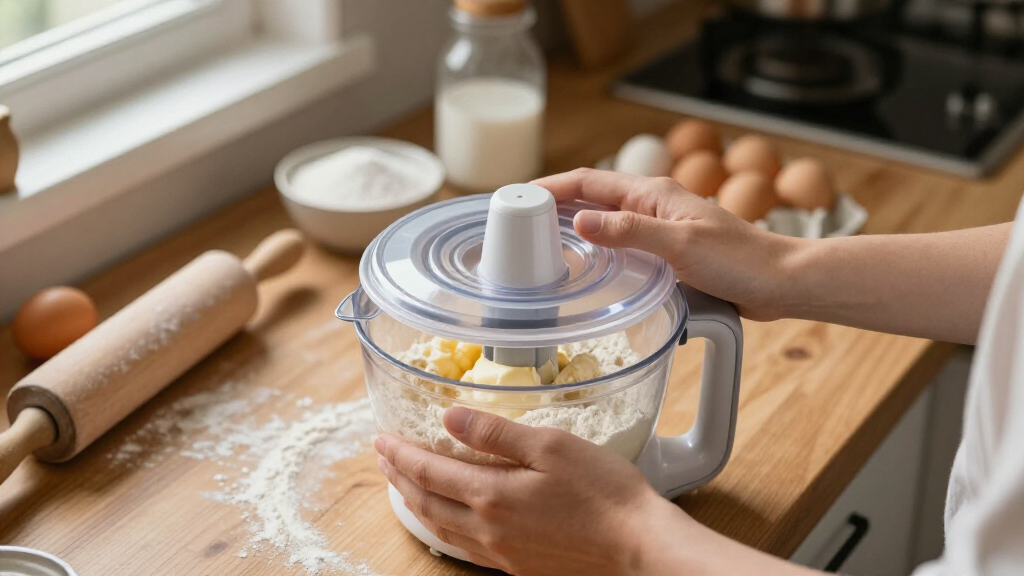
I judged every model in this lineup against the specific demands of baking rather than general food prep. The criteria that mattered most were dough performance (motor power, blade design, and whether the machine can knead yeast dough without overheating), butter-cutting ability (pulse control quality and blade geometry for even, cold butter distribution), and bowl capacity relative to realistic batch sizes. I also weighed build quality, because dough kneading puts more stress on a processor than any other task, and cleanup ease, since sticky dough and flour paste are the worst messes to scrub.
The ranking logic follows a simple hierarchy: full-size machines with proven dough capability sit at the top, mid-size versatile models fill the middle, and compact choppers rank lower for baking specifically — not because they’re bad appliances, but because their motors and bowls limit them to pastry-adjacent tasks. Where two models have similar specs, like the two Ninja 9-cup units, I separated them by their dough-specific features. Price-to-performance was the final tiebreaker at every tier.
Factors to Consider When Choosing Food Processor For Baking
Before settling on a model, it helps to understand what actually separates a good baking processor from a mediocre one. These are the factors that shaped my ranking — and the ones most buyers get wrong.Motor Power and Dough Duty Cycle
The most common mistake bakers make is buying a processor rated for chopping and expecting it to knead bread dough. Kneading is sustained, high-load work, unlike the short bursts of chopping vegetables, and underpowered motors heat up, slow down, or trip their thermal cutoff mid-batch. A good rule of thumb: under 500 watts is fine for pie dough and cookie crumbs, 600-700 watts handles most yeast doughs, and 700+ watts gives you headroom for stiff breads and double batches. Also check the duty cycle guidance in the manual — many budget models limit continuous run time to under a minute, which means pausing mid-knead and restarting, a frustration that compounds over time. If bread baking is a weekly habit, this single factor should drive your budget more than any other feature.
Bowl Capacity and Realistic Batch Sizes
Capacity ratings are misleading because a processor works best at half to two-thirds full, especially with dough, which needs space to ride the blade. A 14-cup bowl realistically handles a double cookie batch or two loaves of dough, while a 9-cup bowl comfortably handles a single batch of most recipes. Going too small means processing in shifts and losing the even texture that makes a processor worth using; going too large wastes counter and cabinet space and can leave small amounts of flour stranded at the bowl edges. Think about your typical recipe yield, not your biggest one — an occasional holiday baking marathon doesn’t justify a 14-cup machine if you mostly make single crusts. One underappreciated point: wider, shallower bowls incorporate flour better than tall narrow ones at the same capacity rating.
Dough Blade Versus Multipurpose Blade
Many buyers don’t realize the S-blade that comes standard with most processors isn’t designed for kneading. A dedicated dough blade is usually plastic with blunt arms, and it develops gluten without tearing the dough or overworking the outer layer. Models that include one, or that offer a dough mode with automatic speed cycling, remove guesswork from the process. You can knead with a metal blade in a pinch, but you risk uneven gluten development and hotter dough from friction, which affects rise and crumb. When comparing similarly priced models, the inclusion of a dough blade or dough program is often worth more than an extra cup of capacity.
Pulse Control for Butter and Pastry
Pulse control is the difference between pea-sized butter chunks and greasy paste, and it’s where cheap machines quietly fail. A responsive short-duration pulse lets you add butter gradually and stop the moment the texture looks right, while mushy or laggy pulse buttons overshoot every time. This matters more for pastry than anything else you’ll make, because once butter is overworked there’s no undoing it. Look for a distinct, tactile pulse button rather than a pulse position on a dial — the latter tends to ramp up too slowly. If pie crusts and scones are your priority, test this in-store or read reviews specifically mentioning pastry, not just salsa or hummus.
Bowl Design, Sealing, and Cleanup
Flour and sticky dough expose every design flaw in a bowl and lid. Models with fewer crevices and sealed feed-tube assemblies clean up in half the time, while heavily gasketed lids trap paste in places a sponge can’t reach. Check whether the parts are dishwasher-safe and top-rack compatible — repeated dishwasher cycles on bottom racks can warp plastic bowls over the years, ruining the seal. Wide, flat bowls wipe clean easily; tall bowls with narrow bases collect dough at the bottom corners. Also consider whether the base has smooth touchpads or creviced buttons, because flour dust infiltrates mechanical switches and becomes nearly impossible to remove.
When to Pay More — and When Not To
The price jumps in this category follow a pattern: budget machines under $50 do one thing (chopping and pastry cutting) acceptably, mid-range models add capacity and reliability, and premium machines add power and longevity. Paying more is justified when you bake weekly or work with yeast doughs, because motor stress is cumulative and cheap machines fail at the gearbox, not the motor. It’s not justified if your use case is nut crusts, crumb toppings, and the occasional cookie dough — a compact chopper will serve you fine and save counter space. A useful lens: divide the price by your realistic annual baking sessions. A $180 machine used 40 times a year costs less per use than a $40 machine replaced twice. Buy for the baker you actually are, not the one you plan to become.
Frequently Asked Questions
Can a food processor actually replace a stand mixer for baking?
For many tasks, yes — but not all. A food processor cuts butter into flour faster and more evenly than a stand mixer, making it the better tool for pie dough, scones, biscuits, and shortbread. It can also knead yeast dough, though only powerful models like the Cuisinart 14-Cup or the Ninja BN601 handle stiff bread doughs reliably, and even then the batch size is smaller than a stand mixer bowl. Where a stand mixer wins is volume and gentleness: whipping egg foams, creaming butter and sugar for large cake batches, and long kneads at low speed. If you bake mostly pastry and cookies, a good processor can genuinely be your only machine; if you bake bread and cakes in volume, you’ll want both.
Is a mini food processor good enough for baking tasks?
It depends entirely on what you bake. Mini processors in the 3-4 cup range handle graham cracker crumbs, nut flours, small amounts of frostings, and a single 9-inch pie crust adequately, and they do it with minimal cleanup. Where they fall short is any dough with structure — cookie dough for a full batch will overwhelm the motor, and kneading is off the table entirely. They also struggle to incorporate flour evenly because ingredients spin past the small blade without mixing. My take: a mini makes sense as a second machine for a dedicated baker, or as the only machine for someone whose baking is mostly crusts, crumb toppings, and garnishes.
How many watts do I actually need for dough?
Wattage is a useful shorthand but not the whole story. As a baseline, 500 watts handles soft cookie doughs and pastry, 600-700 watts covers most yeast doughs at single-batch scale, and 700+ watts gives comfortable headroom for stiff bread doughs, bagels, and double batches. However, two motors with identical wattage can perform differently depending on gearing, blade design, and thermal protection — which is why a well-engineered 600-watt machine sometimes outperforms a cheap 800-watt one. What matters practically is whether the machine maintains speed under load without the motor bogging down or the unit walking on the counter. Read reviews mentioning dough specifically, since that’s where weak machines reveal themselves.
Do I need a dough blade, or is the regular blade fine?
For occasional cookie dough, the standard metal S-blade works, but for yeast breads a dedicated dough blade is meaningfully better. A dough blade’s blunt plastic arms fold and stretch the dough to develop gluten without cutting it, producing a smoother, more evenly kneaded result and less friction heat — and heat is the enemy of dough that needs to rise. Metal blades can overwork the outer surface of a dough ball while leaving the center under-kneaded, and they occasionally tear the gluten strands you’re trying to build. If you compare the two Ninja models in this lineup, the BZ601’s dough-focused design exists precisely because of these limitations. If bread is even a monthly habit, insist on a model that includes or offers a dough blade.
Why did the big Cuisinart 14-cup rank above the cheaper 9-cup options?
Three reasons, all baking-specific. First, the 720-watt motor has more headroom than the 9-cup machines, which means it maintains speed under heavy dough loads and lasts longer under that stress. Second, the 14-cup bowl lets you process a double batch of pie dough or a full bread recipe in one go — with a 9-cup bowl, large recipes need splitting, and split batches mix less evenly. Third, the larger machine’s build quality suits the sustained load that kneading imposes, where smaller units often develop gearbox wear. That said, the 9-cup models aren’t wrong choices: they cost less, take less counter space, and are plenty for single-batch baking. The 14-cup earns the top spot for bakers who batch; smaller households can save the difference without regret.
Conclusion
The right pick here depends less on specs and more on what you actually bake and how often. For the best overall choice, the Cuisinart 14-Cup with 720-watt motor is the machine that does everything in this category well — pastry, cookies, and serious bread dough — with the capacity and durability to back it up. Bakers wanting best value should look at the Ninja Professional Plus BN601, which brings genuine dough capability at a mid-range price, or the Hamilton Beach 10-Cup for lighter-duty pastry work at a lower cost still. The best premium pick for dedicated dough work is the Ninja PrecisionPro BZ601, whose dough-focused design justifies its price for weekly bread bakers. For beginners, the Cuisinart 7-Cup Pro Classic offers intuitive operation and reliable results without overwhelming capacity or cost. And for specific needs: small kitchens and small-batch bakers get real value from the Cuisinart 4-Cup or Mini models for crusts and crumbs, while the Hamilton Beach 12-Cup Stack & Snap suits large families doing batch cookie production. Whatever you choose, match the motor and capacity to your baking habits — that single decision predicts satisfaction more than any other.
NFL season / tailgating Picks
team gear
As an affiliate, we earn on qualifying purchases.