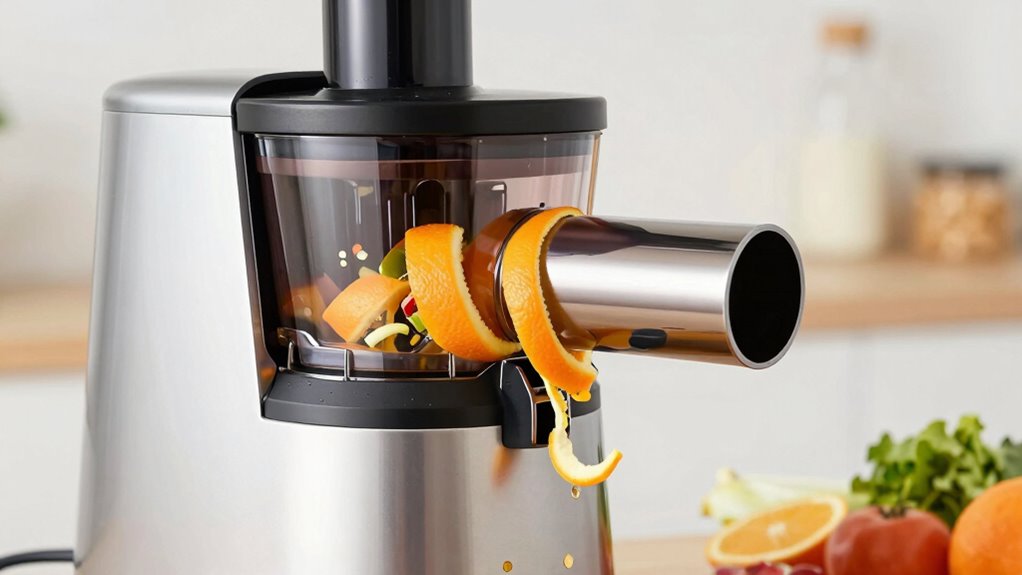
The myth that wide chutes automatically make juicing faster isn’t true. While larger openings let you add bigger pieces without chopping, your speed depends more on motor power, blade sharpness, and how you prepare your produce. Using smaller pieces and choosing a juicer with a strong motor can actually speed up the process. If you want to learn what truly impacts juicing speed, keep exploring the factors that matter most.
Key Takeaways
- Wide chute juicers don’t process produce faster; motor power and blade quality are more critical factors.
- Processing speed depends on motor wattage, RPM, and blade sharpness, not just the size of the feed chute.
- Smaller, well-prepared produce pieces reduce strain and improve juicing speed regardless of chute width.
- Proper maintenance, high-quality blades, and efficient design enhance juicing speed more than chute size alone.
- Wide chutes mainly reduce prep time, but overall speed is influenced by motor efficiency and food handling techniques.
Do Wide Chutes Really Make Juicing Faster? The Truth

Many people assume that wide chute juicers automatically speed up the juicing process, but is that really the case? Chute size alone doesn’t guarantee faster juice extraction. While larger chutes let you add bigger pieces of fruit and vegetables without chopping, they don’t necessarily cut down on the time it takes to extract juice. The efficiency of juice extraction depends more on the juicer’s motor, blade design, and how well it handles different produce. A wide chute might reduce prep time, but it won’t necessarily make the actual extraction faster. If you want quicker results, focus on the overall design and power of the juicer rather than just the chute size. Juicer efficiency is influenced by multiple factors beyond just the size of the chute. Additionally, advancements in motor technology can significantly impact overall processing speed and effectiveness.
What Actually Affects Juicing Speed: Beyond Chute Size

While chute size matters, other factors play a bigger role in juicing speed. The quality and sharpness of your blades determine how quickly fruits break down, and a powerful motor can speed up the process even more. Pay attention to these aspects if you want a faster, more efficient juicing experience. Additionally, selecting a trusted market with reputable brands can ensure you get durable and high-performance appliances that enhance your juicing efficiency. Focusing on motor power can significantly reduce processing time, making your juicing routine quicker and more effective. Moreover, blade design can influence how efficiently produce is processed, further impacting overall speed. Proper maintenance and cleaning of your juicer also contribute to consistent performance and faster operation.
Blade Quality and Sharpness
The quality and sharpness of your blender’s blades play a crucial role in how quickly and efficiently you can juice. High-quality blades with good blade durability cut through fruits and vegetables more effectively, reducing processing time. The material composition of the blades matters too; stainless steel is common for its strength and corrosion resistance, ensuring consistent performance over time. Dull blades force the motor to work harder, slowing down the juicing process and putting unnecessary strain on your machine. Sharp, well-made blades break down produce faster, extracting juice more thoroughly while minimizing pulp. When choosing a blender or juicer, investing in blades with superior blade durability and essential material composition directly impacts how swiftly and smoothly your juicing experience will be. Additionally, understanding the definition of haute couture and its emphasis on craftsmanship can inspire the design quality and precision in your kitchen tools, ensuring optimal performance. Proper blade maintenance and regular sharpening can further enhance efficiency and prolong the lifespan of your equipment.
Motor Power and Speed
Blade quality and sharpness certainly influence how efficiently your juicing machine processes produce, but motor power and speed are equally vital. A wider chute can help, but without sufficient motor wattage, your juicer won’t process tough or fibrous produce quickly. Higher motor wattage provides the necessary power to handle larger quantities and denser ingredients without stalling or slowing down. Speed settings also matter; faster motors can juice more quickly, but only if they maintain consistent torque. Advanced motor features also contribute to more efficient juicing by optimizing performance under various conditions. Additionally, motor durability ensures long-term efficiency and consistent operation. Ultimately, motor power and speed determine how swiftly your juicing machine can turn produce into juice, making them essential factors beyond just chute size.
How Food Size Impacts Juicing Time and Efficiency
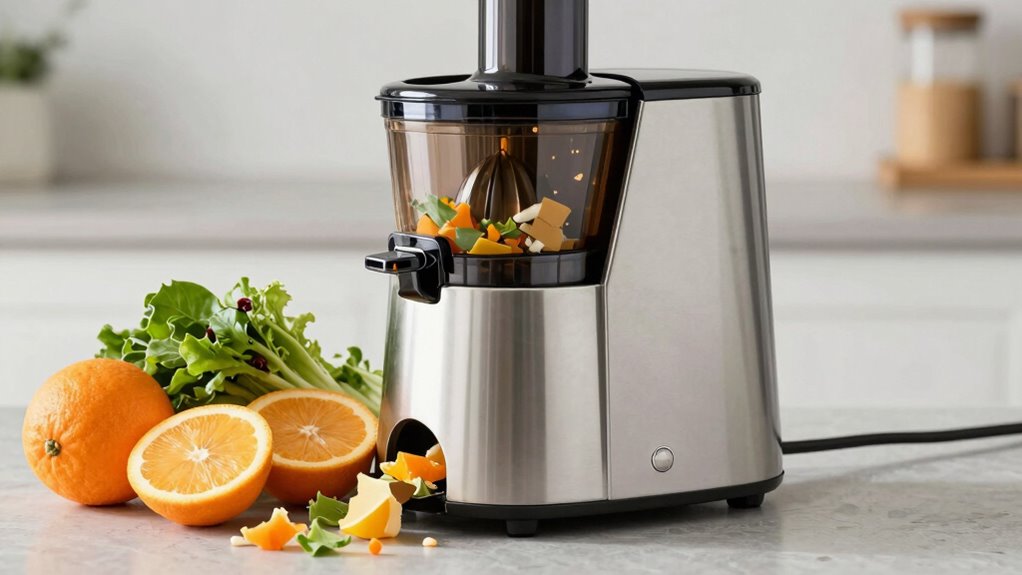
Smaller pieces of fruit and vegetables tend to juice more quickly and efficiently than larger chunks. When you cut produce into manageable sizes, you reduce the strain on the juicer’s motor, resulting in faster processing. Food size directly affects pulp extraction, as smaller pieces allow the machine to break down material more thoroughly, leading to a smoother juice with better yield. Higher fruit density in smaller pieces means the juicer can extract more liquid and nutrients from each piece, improving overall efficiency. Larger chunks can clog or slow down the juicing process, requiring more effort and time. Additionally, the design of the juicer influences how effectively it handles different food sizes, making proper prep even more important. By prepping your produce into uniform, smaller sizes, you optimize pulp extraction and speed up the entire juicing session.
Key Features That Help You Juice Faster and Easier
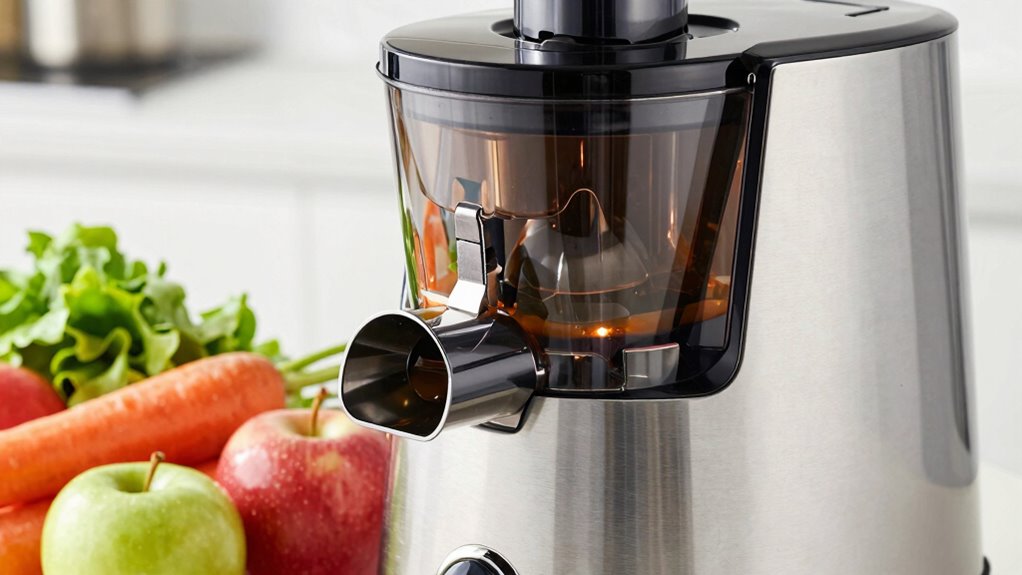
To juice more quickly and smoothly, look for a model with a sharp blade design that cuts through produce easily. A powerful motor speed guarantees consistent results without stalling, saving you time. Additionally, features like easy pulp removal make cleanup simple, so you spend less effort and get back to your day faster. To optimize your juicing experience, consider choosing a unit with efficient blade technology that enhances cutting performance and reduces processing time. Incorporating motor power can further improve your juicing efficiency by handling tougher produce effortlessly. Furthermore, selecting a model with reliable safety features ensures safe operation during busy mornings or extended use. For best results, also look for user-friendly controls that make operation straightforward and quick. Knowing about Youngster Choice can also help you understand the importance of choosing trusted brands for reliable juicing equipment.
Sharp Blade Design
A sharp blade design is essential for making your juicing process quicker and more efficient. It ensures you can cut through fruits and vegetables smoothly, reducing processing time. A durable blade maintains its sharpness over many uses, so you won’t need to replace it frequently, saving you money and hassle. Sharp blades also improve chute safety by minimizing the need to exert force, which can cause slips or accidents. When the blade is precisely engineered, it reduces clogging and jamming, keeping your juicer running steadily. This means less downtime and more juice in less time. Overall, a well-designed, sharp blade makes your juicing experience safer, faster, and less frustrating. It’s a key feature for anyone serious about quick, efficient juicing.
Powerful Motor Speed
A powerful motor speed is essential for speeding up your juicing process and reducing effort. It ensures that even tough fruits and vegetables are processed quickly and smoothly. A high-speed motor can handle larger loads without straining, making your juicing faster and more efficient. While a strong motor boosts performance, consider the chute design—it should complement motor power for seamless feeding. Additionally, note noise levels; a powerful motor can be loud, but some models feature noise reduction technology. Here’s a quick comparison:
| Feature | Benefit |
|---|---|
| High RPM motor | Faster juice extraction |
| Noise reduction | Quieter operation during use |
| Chute design | Easier feeding, less clogging |
| Overall efficiency | Less time and effort for better results |
A robust motor accelerates your juicing, but Motor performance plays a crucial role in overall juicing speed and quality. Considering motor durability can also ensure your juicer maintains performance over time. The integration of advanced motor technology is contributing to even greater efficiency and quieter operation. Incorporating solar-powered components in juicers is an emerging trend, promoting eco-friendly operation and energy savings. Additionally, advancements in motor technology continue to improve efficiency and longevity.
Easy Pulp Removal
Efficient pulp removal is key to speeding up your juicing process and keeping cleanup simple. When your juicer handles pulp consistently, it reduces clogging and minimizes the need for frequent stops. Look for models with a design that makes removing pulp straightforward—such as a wide chute or removable pulp container—so you spend less time cleaning and more time enjoying fresh juice. Additionally, pulp consistency plays a role; smoother pulp flows easily through the machine, decreasing juicing noise and preventing jams. A quieter juicer not only makes the process more pleasant but also indicates smooth operation. Proper appliance maintenance can further extend the lifespan of your juicer and ensure consistent performance. Choosing a juicer with features that facilitate easy pulp removal helps streamline your workflow, reduce mess, and enjoy faster, more efficient juicing sessions.
Common Juicer Myths About Speed Debunked
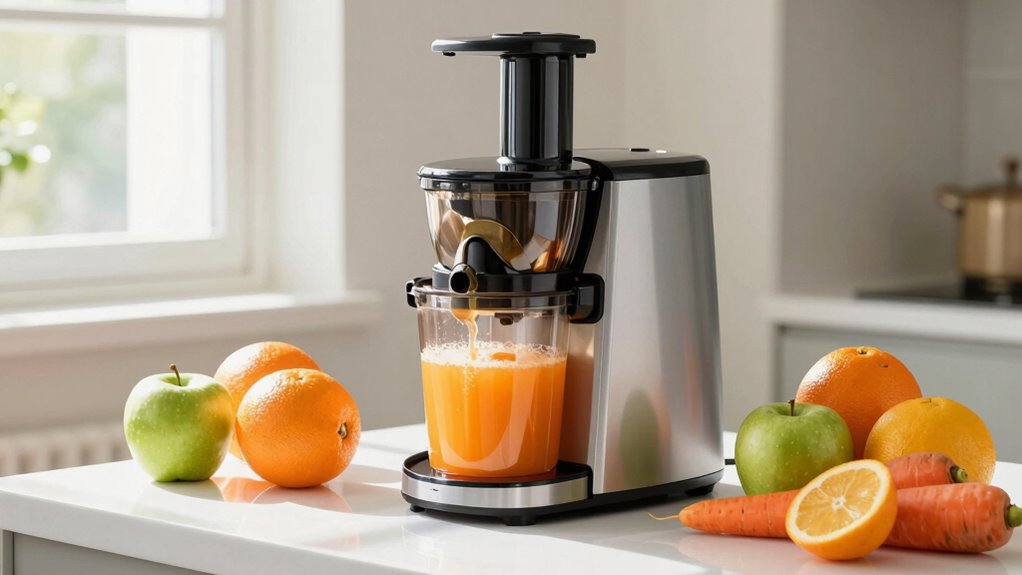
Many people believe that faster juicers automatically produce better juice, but this isn’t always true. For example, some assume that a high-speed juicer, whether electric or with a wide chute, will extract more nutrients or flavor. However, speed doesn’t guarantee quality. A citrus juicer, often used for manual operation, can be slow but effective, especially with delicate fruits. Rushing through juicing can lead to less juice extraction and poorer taste. Speed might save time, but it can also cause heat buildup, damaging enzymes and nutrients. Don’t fall for the myth that faster equals better. Instead, focus on how well the juicer handles your specific fruits and vegetables, regardless of its speed. Quality and efficiency depend on the design, not just the speed settings.
Tips for Choosing a Fast, Efficient Juicer
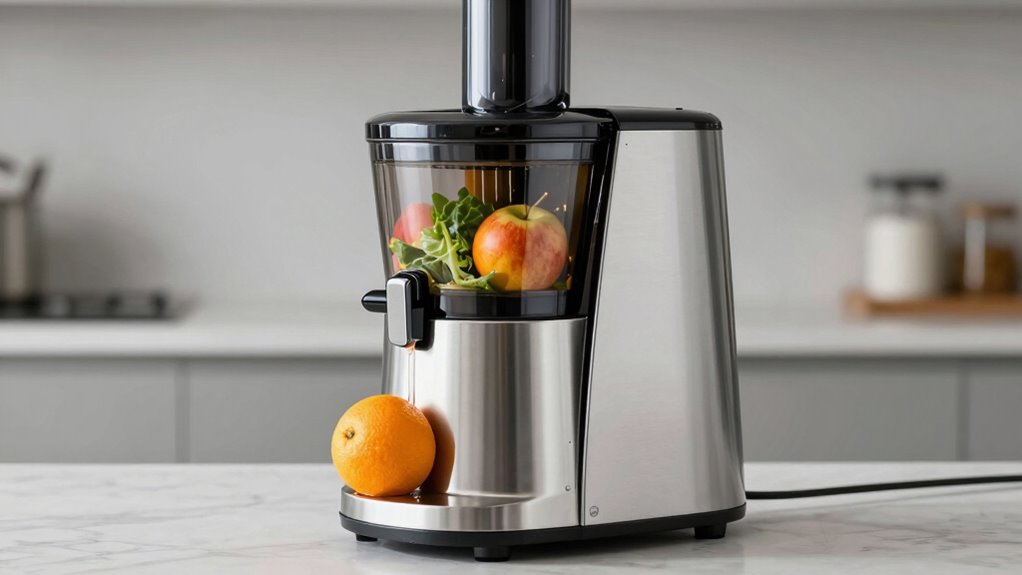
Choosing a fast juicer that still delivers quality results starts with understanding what features make it both quick and effective. Look for models with high RPMs, but also consider how they manage juicing noise—quieter machines allow for more convenience. Additionally, check warranty coverage; a longer warranty indicates confidence in durability and can save you money on repairs.
| Feature | Importance |
|---|---|
| Juicing noise | Quieter machines create less disturbance |
| RPM speed | Higher RPMs generally mean faster juicing |
| Warranty coverage | Ensures reliability and peace of mind |
How Preparation and Technique Can Speed Up Your Juicing

Preparing your fruits and vegetables properly can considerably speed up the juicing process. Start by organizing your produce through proper fruit storage; keep ingredients fresh and ready to go, reducing prep time. Develop efficient cleaning routines—wash produce promptly and remove any dirt or debris before juicing. This prevents delays caused by last-minute scrubbing. Cut fruits and vegetables into uniform pieces to ensure smooth feeding into the juicer, minimizing jams and blockages. Keep your workspace tidy and within reach of cleaning tools to streamline the process. The more organized your prep and cleaning routines, the faster you’ll get through your juicing session. These small steps make a big difference in reducing overall prep time, helping you enjoy fresh juice more quickly and effortlessly.
Final Tips: How to Pick a Juicer That Saves You Time

To save time in your juicing routine, focus on selecting a juicer designed for efficiency and ease of use. Look for models that handle a variety of juicing recipes swiftly, with simple assembly and cleaning. A powerful motor and wide feed chute can reduce prep time, but don’t overlook storage solutions that keep your equipment accessible and organized. Consider how easy it is to clean your juicer after use—quick cleanup saves minutes each day. Also, choose a machine that accommodates different produce textures, so you can juice everything from soft berries to hard carrots without hassle. The right juicer streamlines your process, letting you enjoy fresh juice faster and more often without sacrificing quality or convenience.
Frequently Asked Questions
Do Motor Power Levels Influence Juicing Speed More Than Chute Size?
Motor power has a bigger impact on juicing speed than chute size. A more powerful motor can handle tougher fruits and vegetables quickly, reducing the time it takes to juice. While a wide chute helps avoid pre-cutting, it doesn’t necessarily speed up the process if the motor isn’t strong enough. So, if you want faster juicing, prioritize a high motor power over just a large chute size.
Can Blending Be Faster Than Traditional Juicing Methods?
Blending can be faster than traditional juicing because it combines matting efficiency and pulp consistency in one step. You blend ingredients quickly, breaking down fibers and softening pulp, which speeds up the process. Unlike juicers that separate juice and pulp separately, blending lets you process everything at once, saving time. So, if you want rapid results and a smooth texture, blending often outpaces conventional juicing methods.
How Does Juice Extraction Method Impact Overall Speed?
Your juice extraction method impacts speed through pulp density and feed consistency. Using a high-speed juicer with a loose pulp density allows you to process ingredients quickly, reducing prep time. Consistent feed ensures smooth operation, preventing jams or slowdowns. Masticating juicers, which handle denser pulp more gently, may be slightly slower but preserve nutrients. Choose a method that balances speed and juice quality based on your preferred pulp density and feed consistency.
Are There Specific Fruits or Vegetables That Juice Faster?
You’ll find that certain fruit varieties, like berries or citrus, juice faster because they’re less dense and easier to process. Lighter, less dense produce speeds up your juicing, while denser vegetables like carrots or beets take longer. To maximize speed, choose fruits and vegetables with softer textures and lower produce density, making your juicing quicker and more efficient overall.
Does Cleaning Time Affect Overall Juicing Efficiency?
Cleaning speed definitely impacts your overall juicing efficiency. When you prep your fruit quickly and clean your juicer promptly, you save time and keep the machine running smoothly. Proper fruit prep reduces mess and clogs, making cleaning easier and faster. If you delay cleaning, it stacks up and slows down your process. So, streamline your cleaning speed and fruit prep to maximize your juicing efficiency and enjoy fresh juice without hassle.
Conclusion
Remember, choosing the right juicer is like finding the magic wand in your kitchen. Don’t fall for the “wide chute” myth—speed comes from smart features and your prep. By understanding what really speeds up juicing, you become the wizard of your own healthy potion. So, pick wisely, prep well, and enjoy the swift, smooth flow—your own personal quest for quick, fresh juice is just a decision away.