Choosing between water bath and pressure canning depends on your food’s acidity and safety needs. Water bath works best for high-acid foods like jams or pickles, while low-acid foods like vegetables or meats require pressure canning to prevent bacteria and spores. Guessing can be risky and dangerous. To guarantee your preserves are safe and shelf-stable, it’s vital to understand the differences and proper techniques—keep going to get all the essential details.

Get kitchen staples and gadgets delivered free with Prime
- Fast, free delivery on millions of items
- Prime Video, Amazon Music and more included
- Member-only deals all year
Key Takeaways
- Use water bath canning for high-acid foods like jams, jellies, and pickles; pressure canning is necessary for low-acid foods like vegetables and meats.
- Properly select the canning method based on food pH to prevent foodborne illnesses such as botulism.
- Follow tested recipes and exact processing times; guessing can lead to unsafe preservation or spoilage.
- Ensure equipment is in good condition with accurate gauges and sterilized jars to guarantee safety and quality.
- Understand that improper method choice risks contamination, spoilage, and health hazards; don’t rely on guesswork.
As an affiliate, we earn on qualifying purchases.
How Do Water Bath and Pressure Canning Differ?
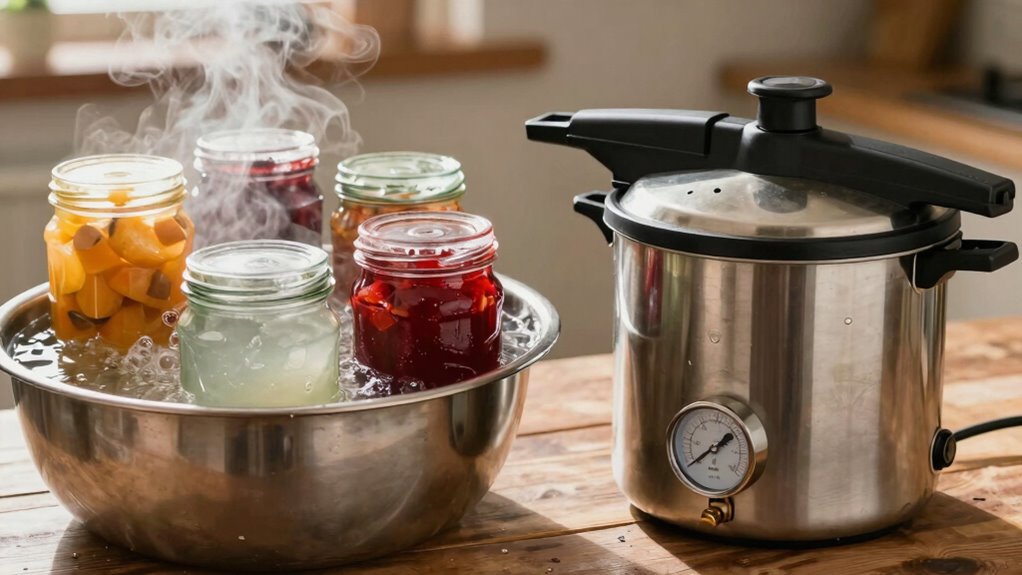
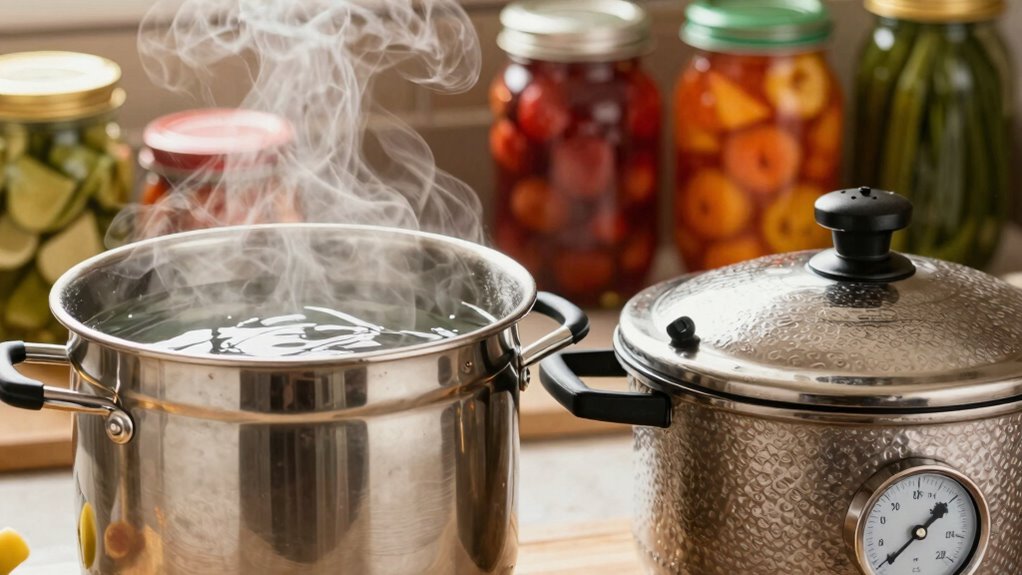
Water bath and pressure canning differ mainly in their methods of heat application and the types of foods they’re suited for. Water bath canning uses boiling water to heat jars, making it ideal for high-acid foods like jams, jellies, and pickles. Pressure canning involves steam under pressure, reaching higher temperatures necessary for low-acid foods such as vegetables and meats. This difference impacts flavor preservation, as pressure canning helps retain more natural flavors in low-acid foods. Additionally, jar labeling becomes essential; with water bath, you can easily mark processing dates on the lid, while pressure canning requires careful record-keeping due to its complexity. Understanding these distinctions guarantees your preserved foods stay safe and flavorful, guiding you to choose the right method for your specific canning needs. Proper technique can also improve your focus and confidence during the canning process, reducing mistakes and enhancing overall success.
How to Decide Which Canning Method Is Right for You
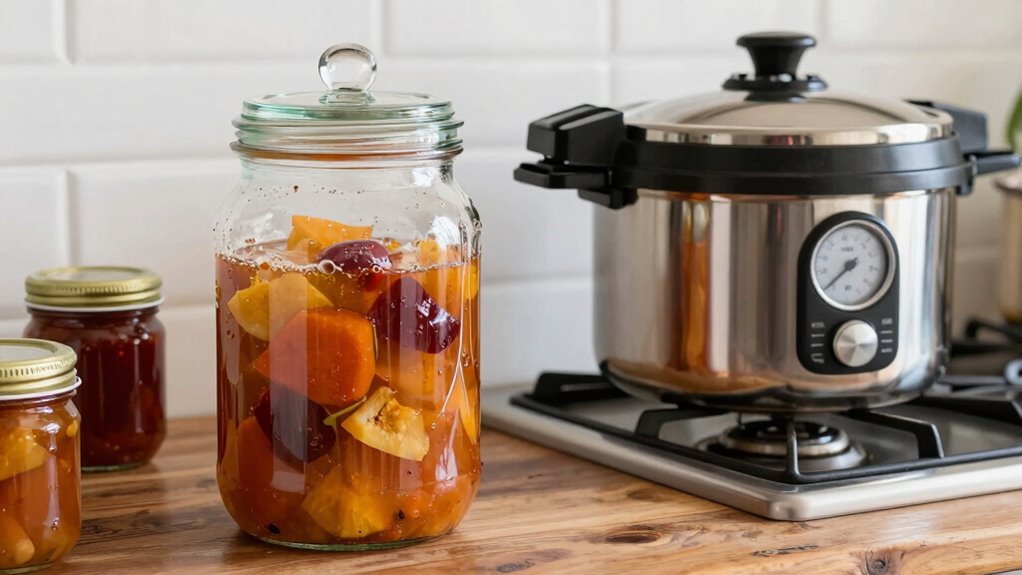
Choosing the right canning method depends on the types of foods you’re planning to preserve and your equipment. Consider these factors to make an informed choice:
Selecting the proper canning method ensures safe preservation and delicious, authentic flavors.
- Food safety: For low-acid foods, pressure canning is essential to prevent botulism; water bath isn’t safe for these.
- Flavor preservation: Water bath canning often better preserves delicate flavors and textures, especially for jams and fruits. Additionally, proper temperature control during canning can help maintain the quality and safety of your preserved foods.
- Canning myths: Some believe water bath is always easier, but it’s unsuitable for everything. Knowing when to use each method avoids risking flavor loss or safety issues. Understanding contrast ratio can also help you evaluate the clarity and visual appeal of your preserved products.
- Understanding food safety guidelines ensures you select the proper canning method to protect your health and preserve your food properly. Additionally, being aware of water-based preservation techniques can help you choose the optimal method based on your specific food type.
Your equipment and the acidity of your food will guide your choice. Proper method selection guarantees safety and retains the authentic taste of your preserved foods.
When Should You Use Water Bath Canning?
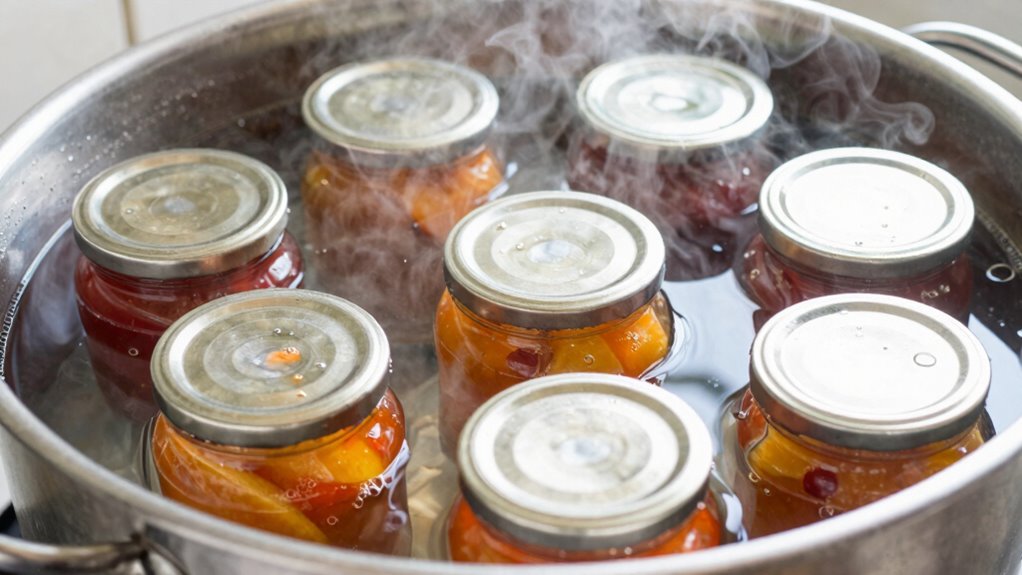
Wondering when water bath canning is the best choice? If you’re focusing on fruit preservation or jam making, water bath canning is ideal. It works well for high-acid foods like jams, jellies, fruit sauces, and pickles. The process uses boiling water to create a sterilized environment, ensuring safe storage without the need for specialized equipment. You should use water bath canning whenever your recipes contain plenty of natural acidity, which prevents bacterial growth. It’s quick, simple, and effective for preserving fruits at home, especially if you’re making small batches. Additionally, understanding the pH level of your foods can help determine the appropriate canning method for safety and quality. For optimal safety, it’s important to consider the comogenic ratings of ingredients, as some foods or additives may require different preservation techniques. However, avoid water bath methods for low-acid foods or anything that requires higher temperatures for safety. For fruit-based products high in acidity, water bath canning offers a reliable and accessible preservation method.
Why Is Pressure Canning Necessary for Low-Acid Foods?
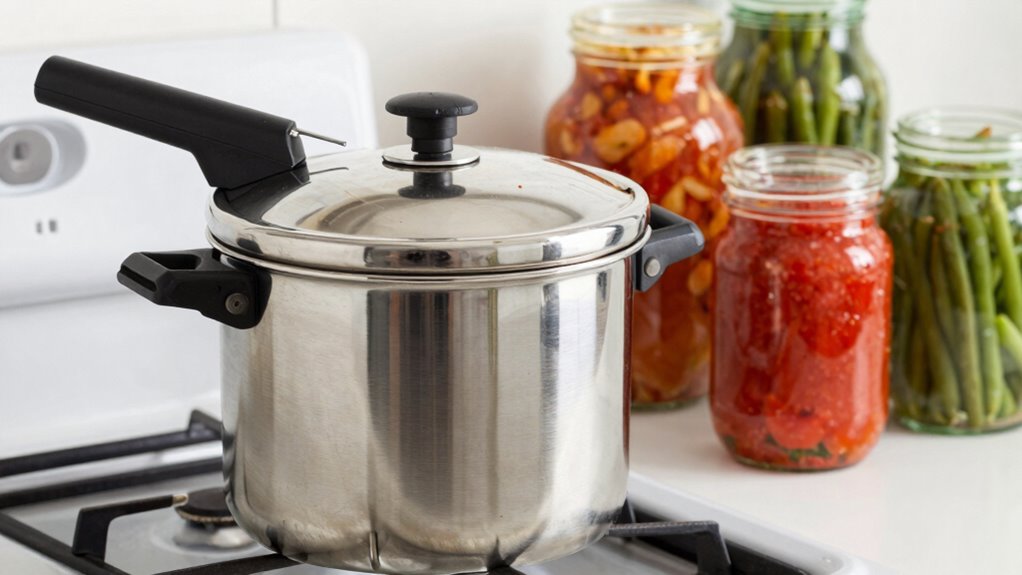
Low-acid foods, such as vegetables, meats, and most dairy products, require higher temperatures to guarantee safety because they can harbor dangerous bacteria and spores that thrive in less acidic environments. Pressure canning reaches temperatures of 240°F (116°C), vital for destroying these harmful microorganisms. Without this, spores like Clostridium botulinum can survive, risking foodborne illness. Using pressure canning ensures proper food preservation and maintains canning safety. Proper temperature control during canning is essential to prevent the growth of hazardous bacteria and ensure food safety. Relying on pressure canning for low-acid foods isn’t just recommended; it’s crucial for safe, effective food preservation. Additionally, understanding food acidity levels is key to determining whether pressure canning or water bath methods are appropriate for different foods. Recognizing the danger of spores is essential to fully grasp the importance of proper canning techniques.
Safety Tips for Water Bath Canning
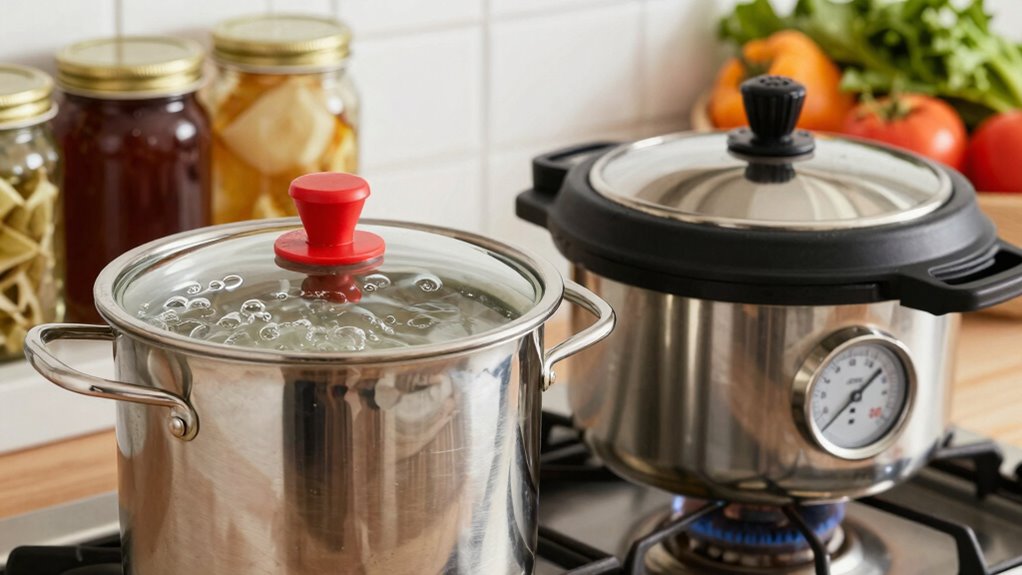
To guarantee safe water bath canning, you need to focus on proper jar sterilization, correct processing times, and accurate sealing. Make certain your jars are thoroughly cleaned and heated before filling, and follow recommended processing durations for each food type. Pay close attention to headspace and sealing techniques to prevent spoilage and ensure your preserved foods stay safe. Additionally, understanding proper sterilization methods can significantly reduce the risk of contamination and spoilage. Incorporating landscaping to enhance natural beauty can also help create a more inviting and functional outdoor space for your canning setup, making the process more enjoyable and efficient.
Proper Jar Sterilization Techniques
Ensuring your jars are properly sterilized is essential for safe water bath canning. Start by washing your jars and lids with hot, soapy water, then rinse thoroughly. To sterilize, place the jars in a boiling water bath for 10 minutes, ensuring they’re fully submerged. Keep jars hot until filling to prevent breakage. When labeling your jars, wait until they’re cooled and dry to avoid smudging. Use canning supplies like tongs or jar lifters to handle hot jars safely. Remember to inspect jars for cracks or chips before sterilizing, as damaged jars can break during processing. Proper sterilization helps prevent bacterial growth and spoilage, ensuring your preserved foods are safe and delicious.
Correct Processing Times and Methods
Accurate processing times are essential for safe water bath canning because they guarantee that heat penetrates the jars sufficiently to destroy harmful bacteria and pathogens. The canning history emphasizes precise timing to prevent spoilage and assure safety. When selecting processing times, follow tested recipes that specify the correct duration based on jar size, fruit acidity, and altitude. Proper methods also protect flavor pairing, preserving the taste and quality of your preserved foods. Deviating from recommended times risks underprocessing or overprocessing, which can lead to spoilage or compromised texture. Always use a reliable, tested process to maintain safety and flavor integrity. Remember, proper timing isn’t just about safety—it’s about enjoying your canned goods with confidence, knowing they’re safe and delicious.
Accurate Headspace and Sealing
Getting the headspace right and sealing jars properly are essential steps in safe water bath canning. Accurate headspace ensures a proper vacuum seal, preventing spoilage and ensuring effective food preservation. When filling canning jars, leave the recommended space—usually ¼ to ½ inch—depending on the recipe. Use a clean, damp cloth to wipe the rims before sealing to remove any food residue that could prevent proper sealing. Secure the lids firmly but not too tight to allow air escape during processing. Proper sealing is vital for long-term food preservation, as it keeps bacteria out and maintains jar integrity. Remember, well-sealed jars indicate a successful process, helping you confidently store and enjoy your canned goods safely.
Essential Pressure Canning Safety Tips
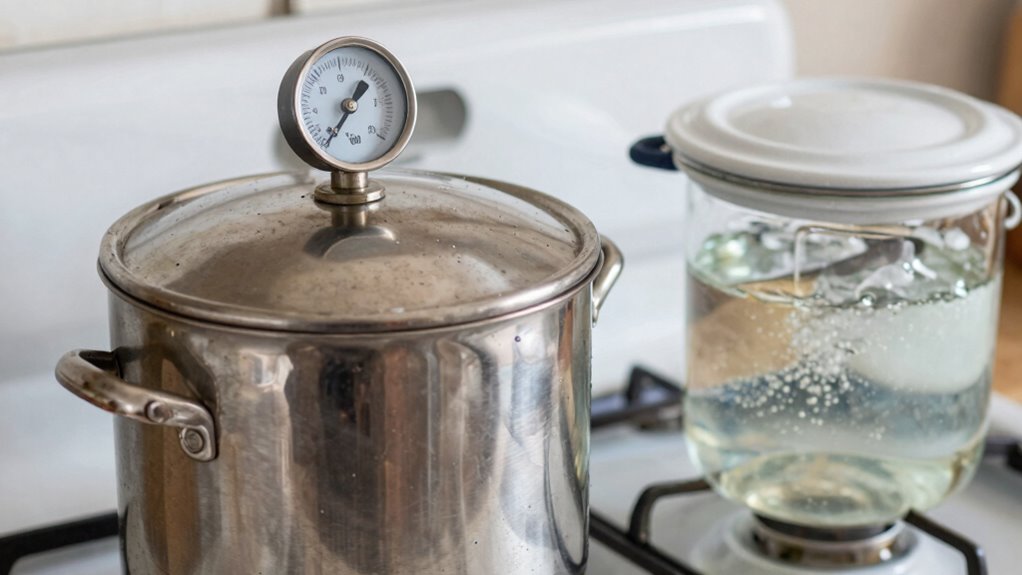
Choosing the right equipment is essential for safe pressure canning, so make sure your pressure canner is properly rated and in good condition. You also need to follow accurate processing times for each type of food to prevent spoilage or foodborne illnesses. Paying attention to these safety tips keeps your canned goods safe and shelf-stable. Additionally, understanding cybersecurity tactics can help you protect your digital information from threats related to the dark web and side-channel attacks. Proper calibration of your measurement tools, such as pH meters, can further ensure that your food is processed under optimal conditions. Regularly inspecting and maintaining your canner gauges helps prevent equipment failure during processing, and using mount leveling kits can ensure your canner is stable and properly aligned during operation. Maintaining equipment safety standards is also vital for preventing accidents and ensuring consistent results during canning.
Proper Equipment Selection
Selecting the right equipment is essential for safe and successful pressure canning. You need canning jars that are sturdy and designed for high-temperature use, guaranteeing they can withstand the pressure process. Pay attention to food acidity; low-acid foods require proper pressure to prevent spoilage, so your equipment must support accurate pressure regulation.
When choosing your equipment, consider:
- A reliable pressure canner with a dial or weighted gauge for precise pressure control
- Proper canning jars that are free of cracks or chips
- Accurate thermometers and gauges to monitor pressure and ensure safety
- Solar-powered security cameras can be a useful addition to your canning setup if you’re monitoring outdoor storage areas, ensuring safety and security during your food preservation process.
Using the correct equipment helps maintain safe food acidity levels and prevents spoilage or foodborne illnesses. Proper gear makes all the difference in achieving safe, shelf-stable results, especially when considering pressure regulation techniques to ensure consistent processing.
Accurate Processing Times
To assure your canned foods are safe and shelf-stable, you must follow precise processing times for each type of food. Accurate processing ensures harmful bacteria and spores are destroyed, preventing spoilage. Using the correct time also helps maintain flavor enhancement, so your preserved foods taste just as good as fresh. Pressure canning times vary based on food acidity, jar size, and altitude, so always consult a trusted recipe or chart. Rushing or guessing can compromise safety and reduce storage longevity. Following established guidelines guarantees that your foods stay safe to eat for months or even years. Invest the time to process correctly, and you’ll enjoy delicious, safe, and long-lasting preserved foods every time.
Common Canning Mistakes and How to Avoid Them

Have you ever wondered why your canned goods didn’t turn out as expected? Common canning mistakes often stem from overlooking key details rooted in canning history and proper techniques, which impact shelf life. To avoid pitfalls, pay attention to:
- Not adjusting processing times for altitude, risking spoilage
- Using outdated jars or lids, which compromise seal integrity
- Failing to follow tested recipes, reducing safety and shelf life
- Ignoring nanotech fabrication challenges, which highlight the importance of precise procedures and quality materials in preservation methods
These errors can lead to spoilage or unsafe food, so it’s crucial to understand the importance of proper procedures. Canning history shows how safety standards evolved to prevent foodborne illnesses. Ensuring correct processing times and quality containers helps preserve your food’s freshness and safety, extending its shelf life. Avoid guesswork—stay informed and precise.
Troubleshooting Canning Problems: Solutions and Tips
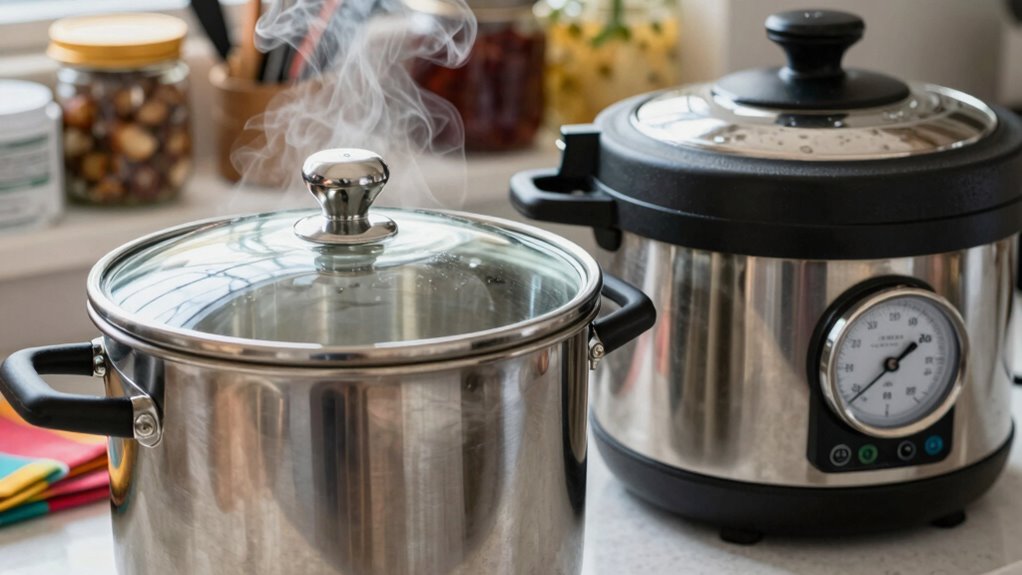
When canning, problems can arise despite careful preparation, but many common issues have straightforward solutions. If your jars aren’t sealing properly, double-check your lid placement and confirm the rims are clean and dry before ingredient prep. For cloudy or discolored liquids, review your canning recipes to verify correct processing times and temperatures. Overflows or foaming often result from overly full jars or insufficient headspace, so measure carefully and leave the recommended space. If you encounter spoilage, discard affected jars immediately and review your ingredient prep to remove any damaged produce. Always follow trusted recipes and processing guidelines. Troubleshooting canning problems quickly becomes easier when you stay attentive to ingredient prep details and maintain proper technique throughout the process. Incorporating proper equipment, such as a reliable water bath or pressure canner, can significantly reduce these issues.
Frequently Asked Questions
Can I Reuse Canning Jars and Lids Multiple Times Safely?
Yes, you can reuse canning jars multiple times if they’re in good condition. Check jar durability—look for cracks, chips, or warping before reuse. Lid reusability is limited; most canning lids are single-use, but some brands offer reusable lids designed for multiple uses. Always make certain jars are properly sterilized and lids are intact to maintain a safe seal. When in doubt, replace lids to ensure food safety.
How Long Can Preserved Foods Be Stored Without Spoilage?
You can typically store preserved foods for about one year if kept in a cool, dark place. After that, check for spoilage indicators like bulging lids, leaks, foul odors, or mold. Proper storage duration depends on the food type and canning method. Always inspect jars before consuming, and when in doubt, discard to avoid health risks. Regularly monitoring guarantees your preserved foods stay safe and flavorful.
Are There Specific Altitudes That Affect Canning Procedures?
Yes, altitude adjustments affect canning procedures because higher altitudes lower the boiling point of water. When you’re at higher elevations, you need to increase processing times or modify the pressure to guarantee food safety. For boiling water bath canning, add extra minutes to your processing time. For pressure canning, increase the pressure level accordingly. Always follow tested guidelines for altitude modifications to prevent spoilage or foodborne illnesses.
What Are the Signs of a Failed or Spoiled Canned Product?
You should toss canned products if you notice bulging lids, foul odors, or discoloration, as these spoilage indicators reveal botulism risks. A cloudy or foamy liquid and mold are also signs of spoilage. Always trust your senses—if anything seems off, avoid consuming the contents. Proper canning techniques reduce botulism risks, but recognizing spoilage indicators helps prevent health hazards and ensures your preserved foods are safe to eat.
Is It Safe to Can Low-Acid Foods Without a Pressure Canner?
No, it’s not safe to can low-acid foods without a pressure canner. Low-acid foods have higher pH levels, which can promote bacterial growth if not processed properly. Using the right canning techniques, like pressure canning, guarantees sufficient heat to destroy harmful bacteria. Always follow trusted guidelines to maintain safety, as improper canning can lead to foodborne illnesses. Never skip the proper processing method for low-acid foods.
Conclusion
Choosing the right canning method is like walking a tightrope—you need to know your options and their limits. Water bath and pressure canning each have their place, but safety should always come first. Follow guidelines carefully, and don’t cut corners. When in doubt, remember that a stitch in time saves nine—taking the extra step now keeps your preserves safe and delicious later. Trust your tools and instincts, and enjoy the fruits of your labor guilt-free.
Halloween Picks
halloween
As an affiliate, we earn on qualifying purchases.