To bake vegan without eggs, use substitutes like mashed bananas, applesauce, or flaxseed gels to add moisture and act as binders. Incorporate baking powder or baking soda to help with leavening since eggs provide lift. Adjust liquids to prevent overly dense or crumbly textures and mix thoroughly to develop batter structure. Experimenting with different options and techniques will help you perfect your baked goods—stay tuned for more tips on making your vegan treats perfect every time.
Key Takeaways
- Use fruit purees like mashed bananas or applesauce to add moisture and sweetness, but adjust to prevent dense textures.
- Incorporate 1 tablespoon ground flaxseed or chia seed mixed with water as effective binders for structure.
- Add a teaspoon of baking powder or baking soda to compensate for eggs’ leavening role in recipes.
- Reduce other liquids slightly when using moist egg substitutes to maintain proper batter consistency.
- Experiment with different substitutes and document results to refine textures and develop successful vegan baked goods.
Many people assume that baking without eggs is challenging, but with the right substitutes, you can create delicious, moist treats that satisfy any craving. The key lies in understanding egg substitutes and adapting your baking techniques accordingly. Eggs serve multiple purposes in baking: they act as binders, leaveners, and moisture providers. When you eliminate eggs, you need to replace these functions carefully to guarantee your baked goods turn out just as good—if not better.
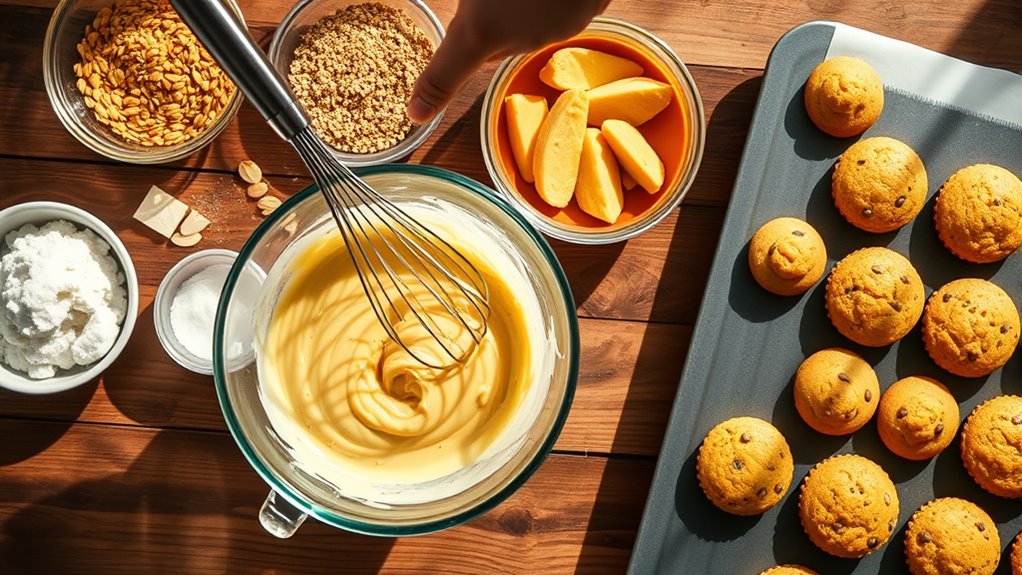
Start by choosing effective egg substitutes. Popular options include mashed bananas, applesauce, flaxseed or chia seed gels, and commercial egg replacers. Mashed bananas and applesauce add moisture and sweetness, making them ideal for muffins, quick breads, and cakes. Flaxseed or chia seed gels work well as binders; simply mix one tablespoon of ground flax or chia seeds with three tablespoons of water and let it sit until it thickens. Commercial egg replacers often come in powder form, designed specifically for baking, and can be a reliable choice for muffins, cookies, and pancakes.
Next, pay attention to your baking techniques. Since eggs contribute to leavening, you might need to adjust your leavening agents. Baking soda or baking powder can often help provide the lift that eggs would normally supply. For instance, if your recipe calls for eggs as a leavening agent, you can add a teaspoon of baking powder along with your egg substitute to achieve the same rise. Furthermore, mixing your ingredients thoroughly is vital, especially when using binders like flaxseed or chia seed gels. Proper mixing ensures the batter develops the right structure and consistency.
Another tip is to consider the moisture content of your egg substitutes. Many fruit-based options, such as bananas and applesauce, can make baked goods denser if used excessively. To counter this, reduce other liquids in your recipe slightly or balance the proportions to prevent overly moist or crumbly results. Understanding egg functions in baking can help you better tailor your substitutions for optimal results. Experimentation is often necessary to find the perfect ratio and technique for your specific recipes.
Finally, remember that practice makes perfect. Baking without eggs may require a few trial runs to get the texture and taste just right. Keep notes on what works best for different recipes, and don’t be afraid to try various egg substitutes and techniques until you find the perfect combination. With some patience and attention to detail, you’ll discover that vegan baking without eggs isn’t just possible—it’s an opportunity to create healthier, plant-based treats that everyone will enjoy.
Frequently Asked Questions
Can Vegan Egg Substitutes Affect Baking Time?
Yes, vegan egg substitutes can affect baking time because they may alter ingredient interactions and how heat is transferred during baking. You might notice your baked goods need slightly longer or shorter baking temperatures or times, depending on the substitute used. To get the best results, keep an eye on your items and adjust baking temperature and time as needed, since different substitutes can behave differently in the oven.
Are There Any Flavors to Avoid When Substituting Eggs?
You should definitely avoid overly strong flavors like garlic or cayenne when substituting eggs, as they can overpower delicate baked goods. Stick to mild, complementary flavor combinations and ingredient pairings such as vanilla, cocoa, or fruit purees. These won’t clash or dominate, allowing your baked treats to shine. By carefully selecting subtle flavors, you’ll create perfectly balanced desserts that impress everyone without risking flavor disasters.
How Do Egg Replacements Impact Cake Texture?
Egg replacements influence cake texture by mimicking plant-based textures and providing binding properties. When you use alternatives like flaxseed or applesauce, they help create a moist, tender crumb, but may result in a slightly denser or softer cake compared to eggs. You’ll notice a difference in rise and structure, so experimenting with different substitutes guarantees you attain the desired texture while maintaining the cake’s integrity.
Are Homemade Egg Substitutes as Effective as Commercial Ones?
Homemade egg substitutes can be quite effective, but commercial alternatives often provide more consistent results. You might find that commercial options like store-bought egg replacers are easier and more reliable in achieving the right texture and binding in your baked goods. However, if you prefer natural ingredients, homemade substitutes like flaxseed or applesauce work well, though they may require some adjustment for best results.
Can Vegan Egg Alternatives Be Used in Savory Baked Goods?
Think of vegan egg alternatives as the secret ingredient that turns your savory baked goods into culinary masterpieces. Yes, you can use plant-based proteins like tofu-based options to add moisture and structure, just like eggs do. They blend seamlessly into dishes like quiches or savory muffins, offering the same binding power. Your baked creations will have a delightful texture and flavor, proving that vegan substitutes can shine just as brightly in savory treats.
Conclusion
Now that you’re armed with these tips, vegan baking without eggs becomes a breeze. Think of it as turning a blank canvas into a masterpiece—you have all the colors (or ingredients) you need. With a little experimentation and confidence, you’ll craft delicious, egg-free treats that impress every time. So, go ahead, embrace the challenge, and let your baking journey blossom like a garden in full bloom. Happy baking!