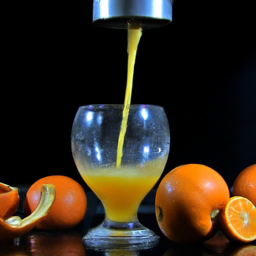

Using juice pulp in your recipes is a smart way to boost nutrition and reduce waste. You can add pulp to smoothies, bake muffins, or make energy balls for extra fiber and flavor. Dried and ground pulp works well as a natural powder for soups, sauces, or baked goods. Experimenting with spices and herbs helps customize the taste. Continue exploring creative ways to upcycle pulp and make your meals more sustainable and nutritious.
Key Takeaways
- Incorporate pulp into smoothies, muffins, or energy balls for added fiber and flavor.
- Dry and grind pulp into powder to use as a natural flavor enhancer and nutritional boost.
- Add pulp to soups, stews, or sauces for depth, texture, and increased vegetable intake.
- Use pulp in baking by replacing some flour or adding it to batter for subtle sweetness and moisture.
- Experiment with spices or herbs, such as cinnamon or ginger, to customize flavor profiles of upcycled pulp recipes.
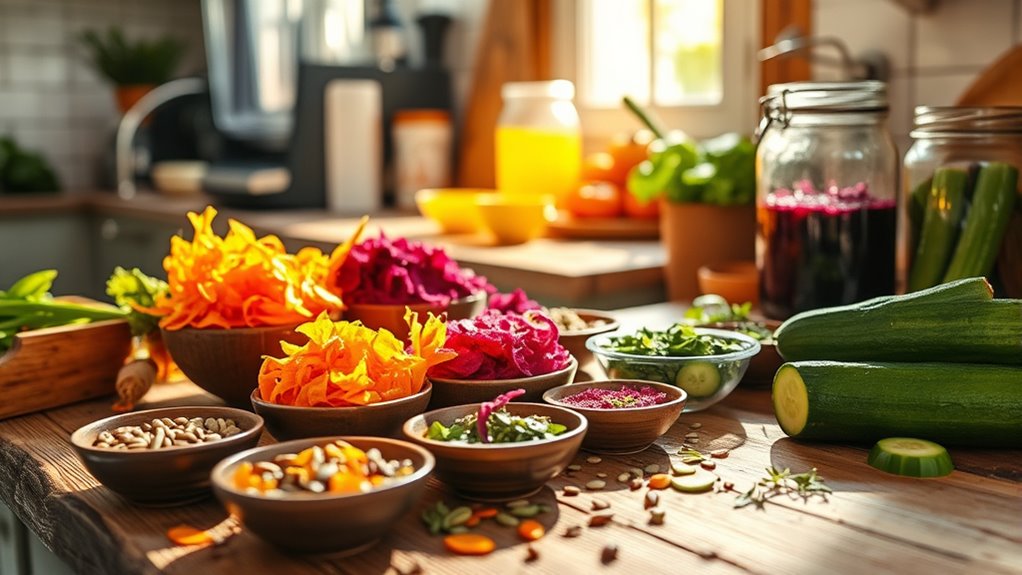
Have you ever wondered how to make the most of your juice pulp instead of tossing it out? The truth is, that leftover pulp is a treasure trove of nutrition and flavor potential. Instead of letting it go to waste, you can transform it into a variety of tasty, healthful ingredients. One of the best ways to do this is by using pulp as a fiber alternative in your cooking and baking. It’s an easy way to boost the fiber content of your meals without adding processed or artificial ingredients. For example, blending pulp into smoothies, muffins, or energy balls can give your recipes a hearty texture and extra nutritional punch. Because pulp is rich in dietary fiber, it helps improve digestion, stabilize blood sugar levels, and promote feelings of fullness, making your meals more satisfying. Plus, it’s a natural, wholesome addition that keeps your recipes wholesome and minimally processed.
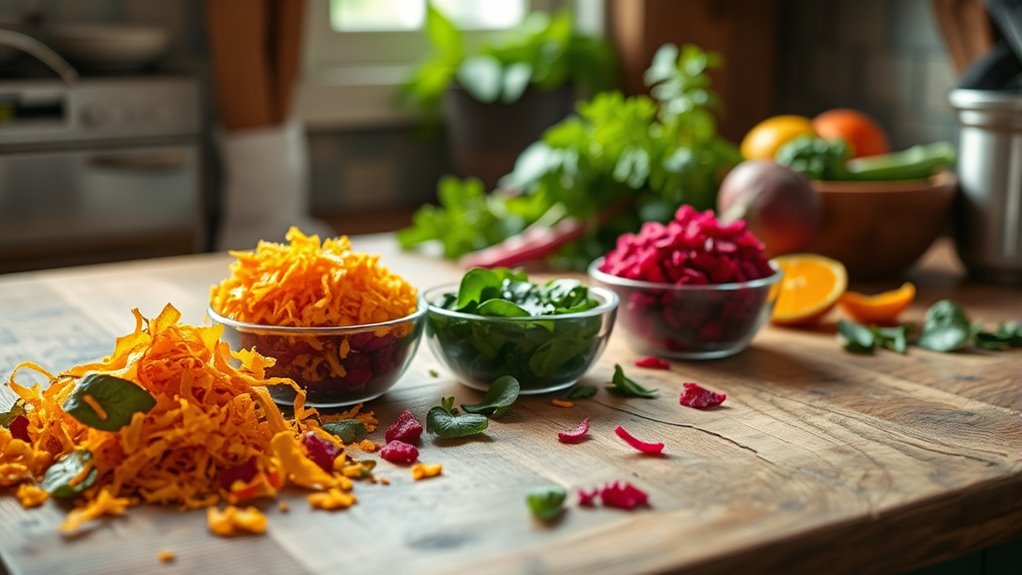
Incorporating pulp also opens up opportunities for flavor enhancements. Depending on the type of fruit or vegetable you juice, the pulp can add subtle sweetness, earthiness, or even a hint of tang. For instance, carrot pulp can bring a mild sweetness to baked goods, while berry pulp can add a vibrant, fruity flavor to yogurt or oatmeal. You can also use pulp as a flavor enhancer in soups, stews, or sauces, giving depth and richness without relying on artificial flavorings. When you repurpose your pulp, you’re not only reducing waste but also enriching your dishes with natural, fresh flavors. To maximize flavor, consider drying the pulp and grinding it into a powder. This powder can be sprinkled into recipes for an extra boost of taste and texture, or used as a natural coloring agent.
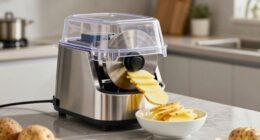
Another tip is to experiment with different combinations of pulp and spices or herbs. For example, apple pulp pairs well with cinnamon and nutmeg, creating a warm, comforting flavor perfect for baked treats. Citrus pulp can be combined with ginger or mint to add bright, lively notes. These flavor enhancements help you create unique, customized recipes that highlight the natural qualities of your juice pulp. Additionally, using best equipment for upcycling pulp can make this process more efficient and enjoyable. By thinking creatively, you can turn what might seem like kitchen scraps into versatile ingredients, saving money and reducing your environmental impact. So next time you juice, consider how you can turn that pulp into a nutritious, flavorful component of your meals. With a little imagination, your leftover pulp can become a key ingredient in delicious, wholesome recipes that support your health and sustainability goals.
Frequently Asked Questions
How Long Does Juice Pulp Stay Fresh in the Refrigerator?
Your juice pulp stays fresh for about 2 to 3 days in the refrigerator. To maximize shelf life and pulp preservation, store it in an airtight container or resealable bag. Make sure to keep it chilled at or below 40°F (4°C). Check the pulp for any signs of mold or spoilage before using it. For longer storage, consider freezing the pulp to extend its freshness.
Can Juice Pulp Be Frozen for Later Use?
Think of juice pulp as a treasure chest of flavor waiting to be rediscovered. Yes, you can freeze pulp for later use, which helps with pulp preservation and keeps flavor retention intact. To do this, store it in airtight containers or ice cube trays. When you’re ready to use it, just thaw and incorporate it into your recipes. Freezing extends its life and preserves its vibrant taste for future creations.
Are There Any Foods to Avoid Mixing With Juice Pulp?
You should avoid mixing juice pulp with foods that have strong or conflicting flavors, as pulp flavor combinations might clash. Also, consider allergen considerations—if you have sensitivities, steer clear of pulp from fruits or vegetables that could trigger reactions, like nut or citrus pulp. By being mindful of flavor clashes and allergens, you can enjoy creative, safe upcycled recipes that maximize your pulp’s potential without any issues.
What Are the Best Storage Containers for Juice Pulp?
You should store juice pulp in airtight containers to keep it fresh and prevent odors from seeping in. Glass jars are ideal because they’re non-reactive, easy to clean, and let you see what’s inside. Make sure to fill the container to minimize air exposure, and store it in the fridge if you’ll use it within a few days. Proper storage guarantees your pulp stays flavorful and safe to use later.
How Do I Prevent Mold Growth on Stored Juice Pulp?
To prevent mold growth on stored juice pulp, you should focus on mold prevention and follow proper storage tips. Make sure to refrigerate the pulp in airtight containers and consume it within 1-2 days. Keep the pulp dry and avoid exposing it to air or moisture. If you notice any signs of mold, discard the pulp immediately. These steps will keep your pulp fresh and safe to use.
Conclusion
By using juice pulp in your recipes, you’re not only reducing waste but also creating delicious, nutritious meals. Imagine a family saving money and helping the environment by turning leftover pulp into muffins or smoothies. For instance, a small café in Portland started upcycling juice pulp, delighting customers with tasty treats while cutting waste. You can make a difference too—embrace upcycling and turn what’s leftover into something wonderful, one recipe at a time.