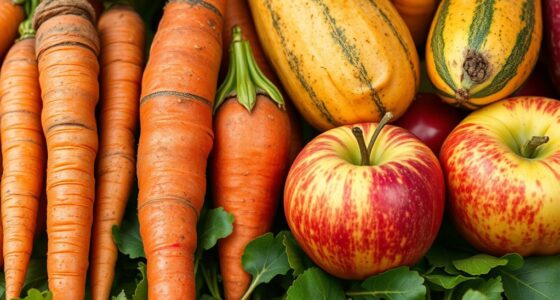
A flexitarian diet combines the benefits of plant-based eating with the flexibility to include meat occasionally. It encourages making smarter food choices, like eating more vegetables, fruits, legumes, and grains, while still allowing for meat when you want. This approach helps you enjoy variety, improve your health, and stick with it long-term without feeling restricted. If you’re curious about how to start or adapt it to your lifestyle, there’s more to discover below.
Key Takeaways
- Flexitarian diets emphasize plant-based foods while allowing occasional meat consumption for a balanced, sustainable approach.
- They promote incremental meat reduction through strategies like meatless days and plant-based substitutes.
- Focus on increasing intake of vegetables, fruits, legumes, grains, and nuts for health benefits.
- The diet offers flexibility, helping individuals gradually adopt healthier eating habits without feeling restricted.
- Flexitarianism supports improved heart health, weight management, and long-term dietary adherence through versatility.

Have you ever considered reducing your meat consumption without giving it up entirely? Many people do, and exploring a flexitarian diet could be a practical way to achieve that goal. This approach emphasizes plant-based benefits while allowing for occasional meat intake, making it flexible and easier to stick with long-term. By adopting a flexitarian lifestyle, you can enjoy the health benefits associated with eating more vegetables, fruits, legumes, grains, and nuts, without feeling restricted or deprived. It’s about making smarter choices rather than eliminating foods completely.
Embrace a flexible diet that boosts health by incorporating more plant-based foods without giving up meat entirely.
One effective way to start is by incorporating meat reduction strategies into your daily routine. For example, you might designate certain days of the week as “meat-free” days. These are commonly known as “Meatless Mondays,” but you can tailor the schedule to fit your preferences. Substituting meat with plant-based proteins like beans, lentils, tofu, or tempeh not only aligns with the principles of meat reduction strategies but also enhances your diet’s diversity. Over time, these small adjustments can lead to noticeable improvements in your health, such as better digestion, lower cholesterol, and increased energy levels.
Understanding the plant-based benefits is essential when shifting to a flexitarian diet. Plant-based foods are rich in fiber, vitamins, and antioxidants, which contribute to improved heart health and reduced risk of chronic diseases. They’re often lower in calories and saturated fats compared to meat, helping you manage your weight more easily. Plus, incorporating more plant foods can boost your overall nutrient intake, making your meals more colorful and flavorful. The flexibility of the diet lets you enjoy your favorite dishes with a health-conscious twist, whether that’s adding more vegetables to your pasta or choosing a veggie burger instead of a beef patty.
Another advantage of flexitarian eating is that it’s adaptable to your lifestyle and preferences. You don’t have to give up meat entirely, which can make the shift less intimidating. Instead, you can gradually increase your intake of plant-based options while reducing meat portions. This approach helps you develop sustainable habits without feeling overwhelmed. It also opens the door to experimenting with new recipes and ingredients, expanding your culinary horizons.
Frequently Asked Questions
Can Flexitarian Diets Help With Specific Health Conditions?
Yes, flexitarian diets can help with specific health conditions by improving nutrient balance through varied meal planning. You can focus on incorporating more plant-based foods while still including lean meats, which may reduce inflammation and support heart health. This flexible approach allows you to tailor your diet to your needs, making it easier to manage conditions like diabetes or hypertension while enjoying diverse, nutrient-rich meals.
What Are the Environmental Impacts of a Flexitarian Lifestyle?
Like a gentle breeze easing through trees, adopting a flexitarian lifestyle benefits the environment. You reduce your carbon footprint by eating less meat, which cuts greenhouse gases from livestock. This approach supports sustainable agriculture by encouraging diverse crop production and responsible farming practices. As a result, you help preserve ecosystems, conserve resources, and promote a healthier planet, all while enjoying a flexible and balanced diet.
How Do Flexitarian Diets Compare to Vegetarian or Vegan Diets?
You find that flexitarian diets are more flexible than vegetarian or vegan plans, allowing you to enjoy plant-based alternatives and occasional dairy consumption without strict restrictions. While vegetarians and vegans eliminate all animal products, you mainly reduce meat intake, making it easier to stick with. This balance helps you enjoy the health benefits of plant-based eating while still having the flexibility to indulge in dairy and other animal-derived foods when desired.
Are There Any Common Nutritional Deficiencies in Flexitarian Diets?
You might face nutrient gaps and deficiency risks with a flexitarian diet, especially if you don’t plan meals carefully. Common issues include potential shortages of iron, vitamin B12, omega-3 fatty acids, and calcium. To avoid these deficiencies, you should include plenty of plant-based sources and occasionally consume animal products or fortified foods. Regularly tracking your nutrient intake helps guarantee you maintain a balanced, nutrient-rich diet.
How Can I Transition Gradually to a Flexitarian Diet?
To shift gradually to a flexitarian diet, start by incorporating more plant-based meals into your week. Use meal planning to replace a few meat-based dishes with vegetarian options each week, and gradually increase these as you get comfortable. Focus on a gradual reduction of meat intake, making small, manageable changes over time. This approach helps your palate adapt while maintaining variety and ensuring nutritional balance.
Conclusion
Embracing a flexitarian diet can transform your life in ways you never imagined. By choosing more plant-based foods and reducing meat, you’re not just making a change—you’re revolutionizing your health and the planet’s future. It’s a simple step, but its impact is monumental, like sparking a movement that could save the world. So, take that first bite today—your future self will thank you more than words can say.