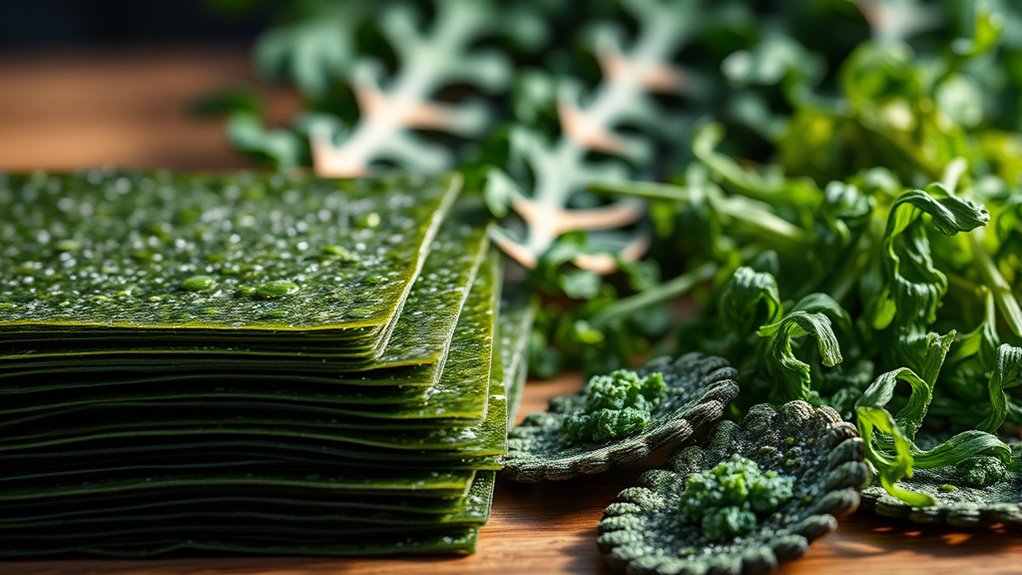
The rise of seaweed-based vegan products reflects a shift toward sustainable, nutrient-rich ingredients that support both your health and the environment. Seaweed grows quickly and naturally in the ocean, reducing resource use and helping marine ecosystems thrive. Its versatile use in foods promotes responsible harvesting practices and encourages eco-friendly consumption. As this trend continues, you’ll discover how seaweed contributes to healthier living and a greener planet—stay with us to learn more.
Key Takeaways
- Seaweed offers a sustainable, nutrient-rich ingredient that supports the growth of vegan products and reduces environmental impact.
- Its rapid growth and minimal resource needs make seaweed an eco-friendly alternative to land-based crops.
- Incorporating seaweed in vegan foods promotes marine biodiversity and helps address oceanic issues like nutrient pollution.
- The industry shift towards seaweed reflects a broader move to responsible harvesting and sustainable resource management.
- Seaweed-based vegan products exemplify innovation in eco-conscious consumption, aligning health benefits with environmental preservation.

Have you ever considered how seaweed is transforming vegan products? This fascinating marine plant is at the forefront of sustainability innovations, reshaping how we think about plant-based foods and environmental impact. As consumers become more conscious of their ecological footprint, companies are turning to seaweed not just for its nutritional qualities but also for its ability to promote marine biodiversity. Unlike land-based crops that often require vast amounts of water, fertilizers, and land, seaweed grows quickly and naturally in the ocean, offering a sustainable alternative that minimizes environmental strain. This shift helps preserve marine ecosystems and reduces the need for resource-intensive farming practices on land, making seaweed a key player in the movement toward more eco-friendly food production.
Seaweed is revolutionizing vegan foods by promoting sustainability and marine biodiversity.
By integrating seaweed into vegan products, manufacturers are tapping into its rich nutritional profile, which includes proteins, vitamins, minerals, and antioxidants. But beyond health benefits, seaweed’s role in fostering sustainability innovations is equally significant. Its cultivation supports cleaner oceans by absorbing excess nutrients, which can help combat issues like algal blooms and ocean dead zones. As a result, seaweed farming can contribute to healthier marine biodiversity, ensuring a more balanced and resilient ecosystem. When you choose products made with seaweed, you’re not only supporting your health but also endorsing a method of food production that actively benefits marine environments.
The rise of seaweed-based vegan products also signifies a broader shift in how industries view marine resources. Instead of seeing them as mere ecosystems to exploit, there’s a growing recognition of their potential as sustainable resource hubs. This awareness encourages responsible harvesting and innovative farming techniques that prioritize marine biodiversity. Such practices ensure that seaweed cultivation doesn’t disrupt local habitats or deplete wild populations. Instead, it complements conservation efforts by offering an alternative to overfished or endangered terrestrial crops. You can feel confident that by choosing seaweed-infused vegan foods, you’re making a decision that supports ecological balance and promotes marine health.
Furthermore, understanding the compatibility of marine resources with sustainable development goals highlights the importance of responsible cultivation practices. In essence, seaweed’s emergence in vegan products exemplifies how sustainable innovations can align with environmental preservation. Its ability to bolster marine biodiversity while providing nutritious, eco-friendly ingredients showcases the potential for a more sustainable future. As you explore these products, remember that your choices can help support marine ecosystems and promote responsible resource use. Seaweed isn’t just a superfood; it’s a crucial part of a broader movement toward healthier, more sustainable living that respects our planet’s oceans.
Frequently Asked Questions
Are Seaweed-Based Products Suitable for People With Shellfish Allergies?
Seaweed-based products are generally suitable for people with shellfish allergies, but you should be cautious due to potential seaweed allergenicity. Some seaweed varieties may carry cross-contamination risks or traces of shellfish, so it’s essential to verify labels carefully. Always consider shellfish allergy considerations, and consult with an allergist if you’re uncertain. Being vigilant helps prevent allergic reactions and ensures safe consumption of seaweed-based foods.
How Sustainable Is Large-Scale Seaweed Farming for Vegan Products?
Think of large-scale seaweed farming as tending a vast, vibrant garden beneath the waves. It can be quite sustainable if managed well, with minimal environmental impact and a positive effect on ecological balance. By avoiding overharvesting and choosing eco-friendly practices, you help guarantee these underwater farms thrive without disrupting marine life. Responsible farming supports both your vegan lifestyle and the health of our oceans for generations to come.
What Is the Shelf Life of Seaweed-Based Vegan Foods?
Seaweed-based vegan foods generally have a shelf life of several months when properly stored. Shelf stability depends on the preservation methods used, like drying, vacuum sealing, or refrigeration. To maximize freshness, keep products in airtight containers and avoid exposure to moisture and light. Proper storage extends shelf life, ensuring you enjoy nutritious, sustainable seaweed foods over time without spoilage.
Do Seaweed Products Contain Any Harmful Heavy Metals?
Did you know that about 60% of seaweed tested worldwide contains some level of heavy metal contamination? You should be aware that seaweed products can sometimes have toxic element levels, including arsenic, cadmium, and lead. While generally safe in moderation, consuming large quantities may expose you to harmful heavy metals. Always choose reputable brands that regularly test for contaminants to minimize your risk.
Can Seaweed-Based Ingredients Replace All Animal-Derived Additives?
Yes, seaweed-based ingredients can replace many animal-derived additives, especially as marine protein and other plant-based alternatives. They offer a sustainable, nutrient-rich option that mimics the function of traditional animal-based ingredients in recipes. While they may not cover every application, incorporating seaweed can markedly reduce reliance on animal products, making your meals more eco-friendly and innovative. Keep exploring different seaweed varieties to optimize your plant-based culinary creations.
Conclusion
As seaweed-based vegan products gain popularity, you might wonder if they’ll become your new go-to for nutritious, sustainable eating. With their rich umami flavor and environmental benefits, these products offer a delicious way to support a greener planet. Will you embrace the wave of seaweed and help shape a more sustainable food future? It’s a tasty choice that benefits both your health and the environment—so why not give it a try today?