TL;DR

Get kitchen staples and gadgets delivered free with Prime
- Fast, free delivery on millions of items
- Prime Video, Amazon Music and more included
- Member-only deals all year
A Lemmy post titled “Thawing out this frozen shrimp” is the only identifiable development in the supplied material. Its image data is unreadable, so the shrimp’s condition, thawing method and any safety concern cannot be verified; standard food-safety guidance is included as general context, not as a description of the post.
A post on Lemmy.world titled “Thawing out this frozen shrimp” contains an image, but the image data supplied with the report is unreadable, leaving the shrimp’s condition and the circumstances of thawing unverified. No author statement, safety warning, recall notice or other details accompany the material, so it does not establish that the shrimp is unsafe or that a food-safety incident occurred.
The source identifies a Lemmy post and links to an image hosted on the site’s image service. The accompanying data in the supplied material appears corrupted or otherwise not available in a readable visual form. It does not provide an accessible caption, a description of the image, or a readable account of what happened.
There is also no information about when the post was made, who posted it, where the shrimp came from, how long it had been frozen, or what thawing method was used. The material contains no documented illness, inspection finding, product label or notice from a retailer or public-health authority. Those absences limit what can responsibly be reported: the post title is identifiable, but its subject cannot be independently assessed from the provided source.
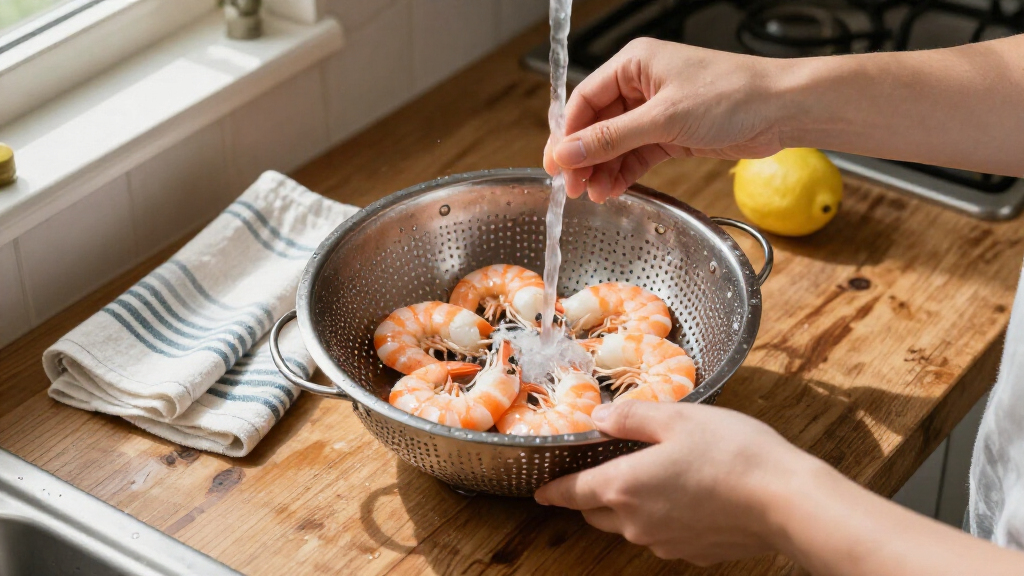
General food-safety guidance can help readers handle frozen shrimp, but it should not be mistaken for a finding about the item shown in the post. The U.S. Food and Drug Administration advises thawing seafood in a refrigerator, or sealing it in a plastic bag and submerging it in cold water, changing the water every 30 minutes. Seafood thawed in cold water should be cooked promptly; microwave thawing is also an option when the food will be cooked immediately. Do not thaw shrimp at room temperature.
Safe Handling Depends on Temperature
Shrimp is perishable seafood, so the time it spends at temperatures where bacteria can grow matters more than whether it looks fully thawed. The FDA’s general seafood guidance is to keep seafood refrigerated at 40°F (4°C) or below and not leave perishable food at room temperature for more than two hours—or more than one hour when the ambient temperature is above 90°F (32°C). These are general handling rules, not a judgment about the shrimp in the post.
For readers preparing shrimp at home, a slow refrigerator thaw is a practical option when planned ahead. Put the shrimp in a covered container or leak-resistant bag on a plate or tray to contain drips, and keep it in the refrigerator. If time is short, keep the shrimp sealed and use cold water, replacing the water every half-hour. Avoid warm or hot water, which can warm the surface while the center remains frozen. Cook promptly after a cold-water thaw.
Food-safety advice cannot confirm whether a particular package stayed cold through transport and storage. If shrimp has been held at room temperature beyond the recommended limit, or its handling history is uncertain after a temperature-control failure, appearance and smell cannot reliably establish that it is safe. Follow package directions and advice from local food-safety authorities where relevant.
Products Worth Considering

Breville Bambino Espresso Machine, Brushed Stainless Steel

Instant Pot InstantChill Ice Cream Maker with Rolled Ice Cream Cold Plate, 2-Pint

Breville Barista Pro Espresso Machine with Grinder, Brushed Stainless Steel
As an affiliate, we earn on qualifying purchases.
What the Post Actually Shows
The source is a short social-media item on Lemmy.world, rather than a reported account from a food regulator, retailer, seafood supplier or named eyewitness. Its title suggests a person is thawing shrimp, but a title alone does not establish the method, the product’s origin or whether the image depicts a problem. The linked file is represented in the supplied source as unreadable data, so visual details cannot be checked.
No broader event is documented in the material. It does not identify a batch, brand, country of origin, date of purchase or distribution area, and it does not mention a recall or public-health investigation. Without those specifics, the post cannot be connected to a wider product issue, and it would be inaccurate to present it as evidence of contamination or unsafe commercial handling.
For household use, the relevant distinction is between thawing method and storage history. A safe thaw does not undo time spent warm before freezing, and freezing does not remove every food-safety risk. Conversely, a photo or a terse post title cannot show that shrimp has been mishandled. The source supports only the existence of the post title and linked image—not conclusions about safety.
Key Details Are Not Available
The supplied material does not identify the poster or provide a readable image, a publication date, or an account of how the shrimp was thawed. It is unknown whether the shrimp was raw or cooked, whether it was still frozen when pictured, how it had been stored, or whether anyone ate it or became ill. No authority or business is quoted, and no recall, test result or investigation is cited.
It is also unclear whether the unreadable image reflects a problem in the source copy or in the original post. The original page and image would need to be reviewed in a usable format to verify what is shown. Until then, no safety conclusion about the particular shrimp is supported.
Verify the Image and Handling
The immediate next step for anyone seeking to verify the post is to inspect the original Lemmy entry and image in a readable form, and check for any accompanying comments or later correction. The supplied material does not indicate that the poster, a seller or a food-safety agency has issued an update, so no further development can be confirmed at this time.
Readers handling their own shrimp should follow the package instructions, keep seafood cold, thaw it in the refrigerator or by the sealed-bag cold-water method, and cook it promptly after a quick thaw. Shrimp should be cooked to an internal temperature of 145°F (63°C), measured at the thickest part, in line with FDA seafood guidance. Anyone who suspects a product is subject to a recall should check official recall notices and contact the seller or relevant food-safety authority rather than relying on an unverified social-media image.
Key Questions
What is confirmed about the Lemmy post?
The supplied source identifies a Lemmy.world post titled “Thawing out this frozen shrimp” and provides a link to an image. The image data is unreadable in the material, and no other details are confirmed.
Does the post show that the shrimp is unsafe?
No. The supplied material does not allow the image to be reviewed and gives no details about storage, thawing, testing or illness. It supports no conclusion about the shrimp’s safety.
What is a safe way to thaw frozen shrimp?
Thaw it in the refrigerator, or keep it sealed in a plastic bag and submerge it in cold water, changing the water every 30 minutes. Cook promptly after cold-water thawing. Do not leave shrimp to thaw on the counter.
How long can shrimp sit out at room temperature?
General FDA guidance says not to leave perishable food out for more than two hours, or more than one hour when the temperature is above 90°F (32°C). Use stricter package or local public-health instructions if they apply.
What information is still missing?
The source does not provide the post date, the poster’s account, a readable image, the shrimp’s origin or storage history, or any official finding. It also does not report an illness, recall or investigation.
Source: fediverse