
To make excellent tempeh, keep your incubation temperature steady between 86°F and 88°F, which supports healthy mold growth and fermentation. Use a reliable thermometer and choose a warm, draft-free space like an insulated cabinet or oven with the light on. Monitor twice daily and adjust your setup if temperatures fluctuate. Managing humidity and airflow also matter. Want to master every step? The details ahead will help you confidently produce homemade tempeh.
Key Takeaways
- Maintain a steady incubation temperature between 86°F and 88°F (30°C to 31°C) for optimal mold growth.
- Use a reliable incubator or warm, draft-free environment to keep the temperature consistent.
- Regularly monitor with a thermometer, checking twice daily, and avoid opening the incubator to prevent fluctuations.
- Regulate temperature by adjusting placement—move to warmer or cooler spots as needed—and use insulation if necessary.
- Keep humidity balanced and airflow controlled to support healthy mold development without contamination.
What Is the Ideal Incubation Temperature for Tempeh?

To produce successful tempeh, maintaining the right incubation temperature is essential. Temperature stability ensures the fermentation process proceeds smoothly, preventing unwanted mold development or bacterial growth. The ideal temperature range for incubation is between 86°F and 88°F (30°C to 31°C). Staying within this range allows the Rhizopus mold to grow steadily, giving your tempeh its characteristic texture and flavor. If the temperature fluctuates too much, mold development can become uneven or mold overgrowth might occur, ruining the batch. Using a reliable incubator or keeping your environment consistently warm helps maintain this suitable temperature. Temperature regulation plays a crucial role in achieving optimal fermentation conditions. Consistent temperature management is vital for successful fermentation, ensuring your tempeh develops the desired qualities. Proper temperature control can also help prevent contamination from other microorganisms that thrive outside the ideal range. Remember, steady temperature control is key to achieving a successful, high-quality tempeh every time.
Why Does Temperature Control Matter for Tempeh Success?
Maintaining the right temperature creates an ideal environment for fermentation, helping your tempeh develop properly. It also minimizes the risk of contamination by keeping unwanted bacteria and molds at bay. Additionally, consistent temperature control ensures the mold grows evenly, giving you a successful batch every time. Proper temperature regulation can be supported by understanding the contrast ratio in your environment, ensuring optimal conditions for mold development. Using temperature-sensitive equipment can further aid in maintaining steady incubation conditions. Being aware of the appropriate pinball machine weight can also be beneficial if you are considering home installation or transport of equipment. Moreover, monitoring the ambient humidity levels can significantly influence fermentation success, making it an important factor to consider.
Ideal Fermentation Environment
Temperature control is crucial for successful tempeh fermentation because it directly influences the growth of the mold, Rhizopus oligosporus. Maintaining a stable environment ensures the mold develops properly, resulting in firm, uniform tempeh. Fluctuations in temperature can hinder mold activity or promote unwanted bacteria, compromising quality. To create the perfect fermentation environment, choose suitable fermentation vessels that promote even heat distribution. Keep the temperature consistent within the ideal range of 86-88°F (30-31°C). Consider environmental factors like room temperature and humidity to minimize temperature fluctuations. Properly regulating these elements helps mold colonize evenly, producing consistent, delicious tempeh. Remember, an ideal environment balances heat, humidity, and airflow, which are essential for successful fermentation.
Prevents Contamination Risks
Why does controlling temperature matter so much for preventing contamination during tempeh fermentation? If temperatures aren’t just right, you risk cross contamination from unwanted bacteria or mold. Keeping the temperature steady helps create an inhospitable environment for harmful microbes while promoting beneficial mold growth. Here’s a quick view:
| Contamination Risk | Effect | Prevention Strategy |
|---|---|---|
| Cross contamination | Spoils flavor & safety | Maintain clean workspace |
| Mold overgrowth | Unwanted mold formation | Control humidity & temp |
| Harmful bacteria | Food safety hazard | Use proper incubation temps |
Proper temperature regulation is essential. It minimizes risks, ensures mold grows correctly, and keeps your tempeh safe and delicious. Free Floating
Ensures Proper Mold Growth
Controlling temperature is crucial because it directly influences mold growth, which is essential for successful tempeh fermentation. Proper temperature ensures the right mold develops while preventing unwanted mold contamination. If the temperature is too high or too low, mold prevention becomes difficult, risking spoilage. Accurate temperature control helps you identify mold early, allowing prompt actions to maintain the desired mold growth. Key factors include:
- Maintaining consistent incubation temperatures to foster beneficial mold growth
- Recognizing mold identification signs that indicate healthy or problematic mold
- Preventing mold contamination by avoiding temperature fluctuations that encourage unwanted molds
- Utilizing smart home technology to monitor and regulate incubation conditions for optimal results, ensuring a stable environment for mold development.
- Consistent temperature monitoring is vital for early detection of deviations that could impact mold quality. Additionally, understanding temperature stability can help prevent sudden changes that might disrupt mold growth or introduce contaminants. Regularly checking and adjusting your environment based on temperature requirements ensures your fermentation stays on track.
How Can I Monitor and Maintain the Right Incubation Temperature?
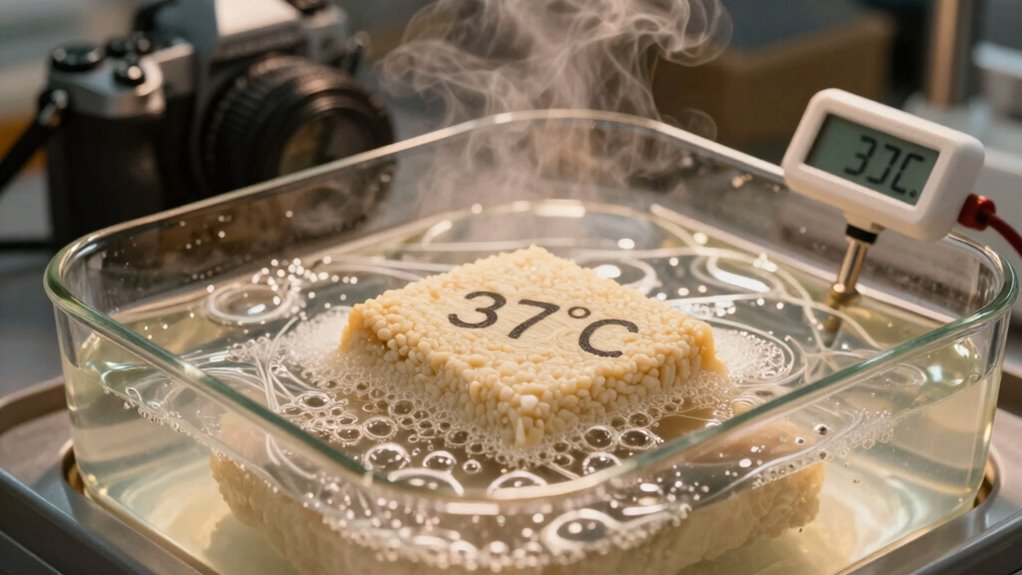
Ever wonder how to keep your tempeh developing properly? Monitoring and maintaining the right incubation temperature is key. Fluctuations can hinder mold growth, so consistent conditions matter. Use a reliable thermometer to check your incubator’s temperature regularly—at least twice a day. Keep an eye on incubation timing; generally, 24-48 hours at 86-88°F works best. To help you stay on track, here’s a simple reference:
| Time Frame | Recommended Temp | Tips |
|---|---|---|
| Day 1-2 | 86-88°F | Avoid opening the incubator |
| Day 3-4 | 86-88°F | Adjust if temp drops |
| Fluctuations | Minimize | Use a stable heat source |
| Incubation | Consistent | Check temp daily |
Maintaining stable temperature ensures proper mold development and ideal incubation timing. Monitoring incubation temperature closely helps prevent setbacks and promotes healthy fermentation. Additionally, understanding temperature stability can make a significant difference in successful tempeh cultivation. Regularly calibrating your thermometer can also improve temperature accuracy, ensuring your incubation conditions stay optimal. Being aware of thermal regulation techniques can further enhance your control over the fermentation process. Incorporating temperature management strategies can lead to more consistent and successful results in your tempeh-making journey.
What Are the Best Methods to Keep Tempeh at the Perfect Temperature?
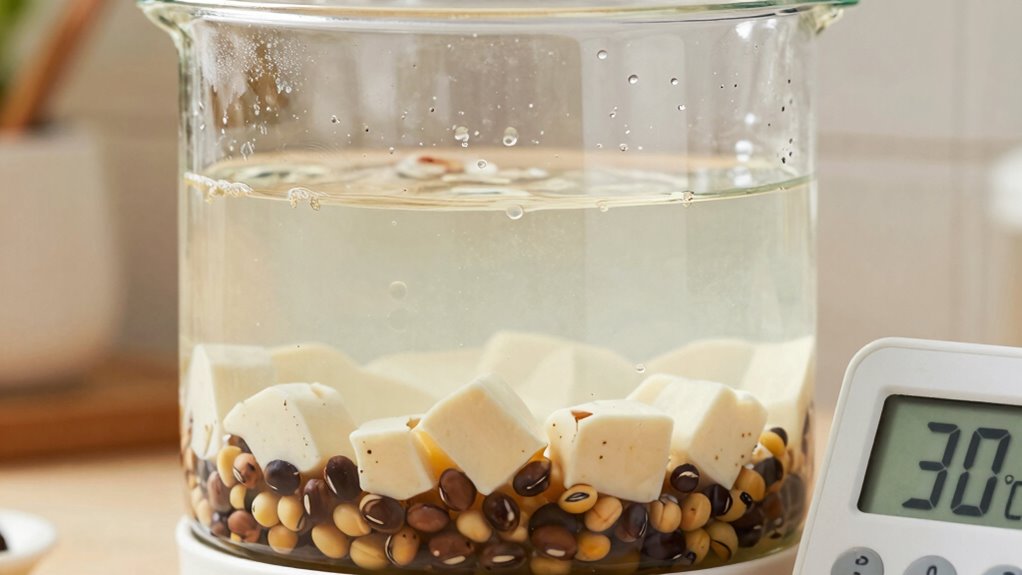
Finding the right method to keep tempeh at the perfect temperature is essential for successful fermentation. Ensuring temperature stability during incubation helps promote consistent mold growth and ideal flavor development. To achieve this, consider these effective methods:
- Use a temperature-controlled incubator or thermos that maintains steady heat without fluctuations.
- Place your tempeh in a warm, draft-free area such as inside an oven with the light on or a proofing box.
- Employ a heating pad set on low, combined with a thermometer to monitor incubation timing and prevent temperature swings.
- Regularly monitor temperature to ensure consistent conditions and adjust your setup as needed. Maintaining the correct incubation temperature is crucial, and some advanced temperature regulation devices can further improve your process.
- Additionally, understanding the ambient temperature of your environment can help you choose the most suitable method for consistent results. Using a reliable thermometer can help you track and maintain the precise temperature needed for optimal fermentation.
These approaches help you regulate temperature, reduce risks of overheating or cooling, and support proper fermentation. Consistent incubation timing ensures your tempeh develops the right texture and flavor, making your process more predictable and successful.
What Should I Do If My Incubation Temperature Is Too High or Too Low?
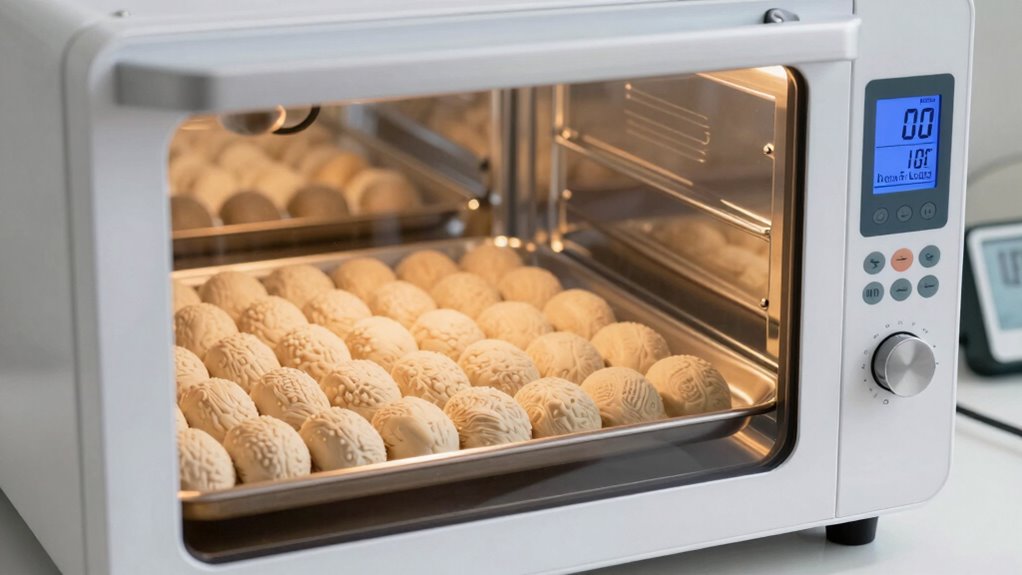
If your incubation temperature is too high or too low, quick action can help preserve your fermentation process. Temperature fluctuations can lead to uneven fermentation and increase the risk of mold development. If it’s too high, move your tempeh to a cooler spot or turn on a fan to lower the temperature gradually. Ensuring proper temperature control is essential for consistent results. If it’s too low, place it in a warmer area or wrap it with a towel to retain heat. Check the environment frequently to prevent further fluctuations. Consistent temperature is key to healthy fermentation, so avoid sudden changes. Monitoring closely allows you to catch issues early and maintain the ideal conditions for mold growth—necessary for proper tempeh formation. Acting promptly helps ensure a successful, safe batch.
How Can I Adjust Incubation Temperature for My Environment?
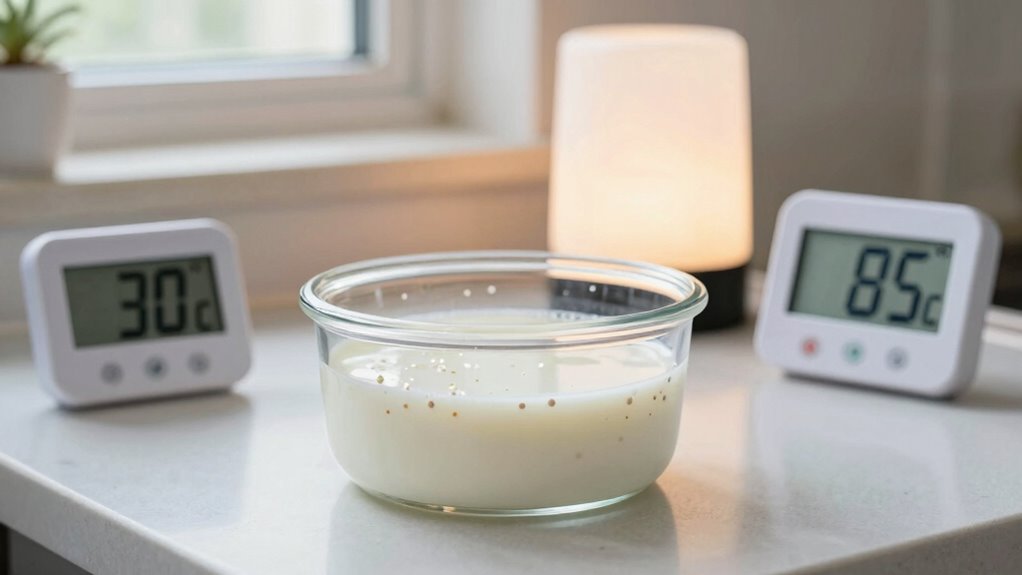
Adjusting the incubation temperature to suit your environment is essential for successful fermentation. Environmental factors like room temperature fluctuations can impact temperature stability, so you need to adapt. To maintain consistent conditions:
Maintaining consistent incubation temperature is key for successful fermentation; adapt with thermostats, insulation, and stable placement.
- Use a thermostat-controlled incubator or heating pad to regulate temperature precisely.
- Place your incubator in a draft-free, stable environment away from direct sunlight or vents.
- Insulate your setup with a towel or foam to minimize temperature swings caused by external changes.
How Do Humidity and Airflow Affect Tempeh Incubation?
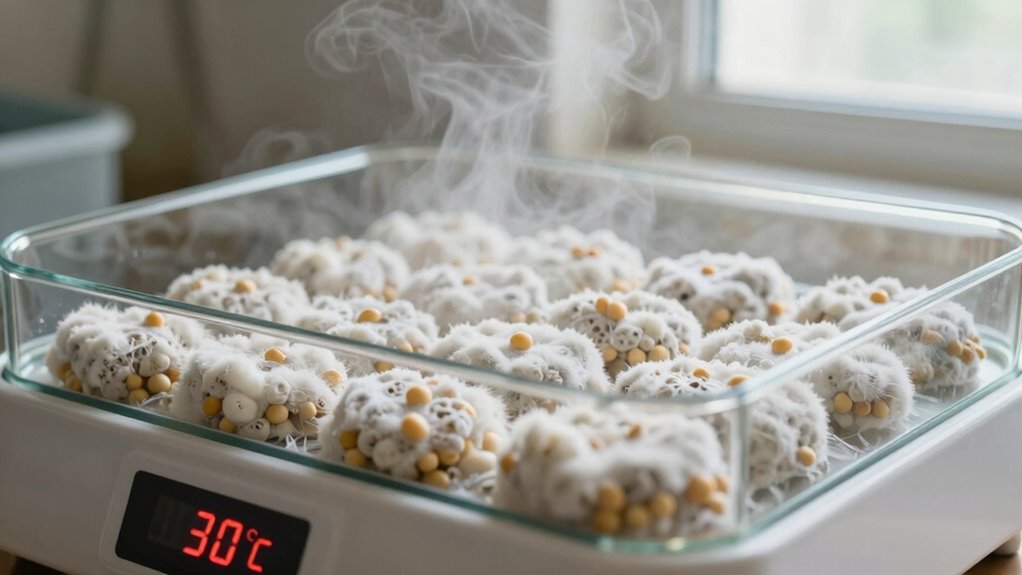
Humidity and airflow play critical roles in the success of your tempeh incubation process. Proper humidity regulation ensures the mold spores thrive without becoming overly damp or dry, which can hinder fermentation. Maintaining ideal humidity levels encourages even mold growth on the soybeans. Airflow management is equally important; good ventilation prevents excess moisture buildup and reduces the risk of mold or unwanted bacteria. It also supplies fresh oxygen, supporting healthy mold development. Too little airflow can cause stagnant conditions, leading to uneven fermentation or spoilage. Conversely, excessive airflow might dry out the soybeans or disrupt the mold growth. Striking a balance with proper humidity regulation and airflow management creates favorable conditions for consistent, successful tempeh fermentation.
Tips for Consistently Maintaining the Correct Incubation Temperature at Home
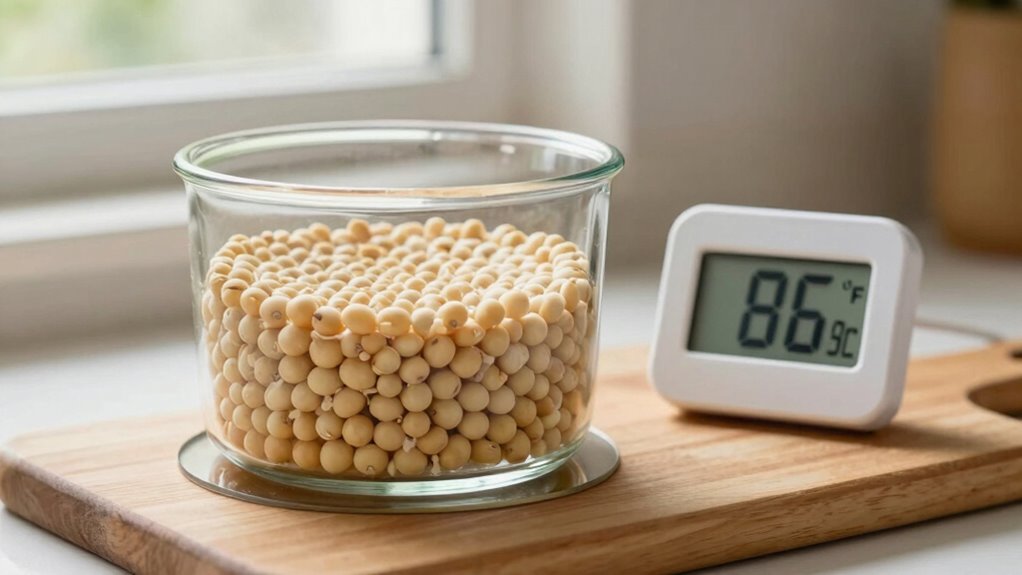
To keep your tempeh incubating at the right temperature, use a reliable thermometer to monitor conditions closely. Make sure your setup stays away from drafts that can cause fluctuations, and aim to keep the environment consistent. These steps will help guarantee your tempeh develops properly every time.
Use a Reliable Thermometer
Ensuring your incubation temperature stays consistent is crucial for successful tempeh fermentation, and using a reliable thermometer makes all the difference. Proper thermometer placement helps you accurately monitor temperature, preventing fluctuations that could hinder growth. Invest in a digital or analog thermometer with good accuracy to track conditions effectively. Regularly check the thermometer to catch any temperature fluctuations early. Keep the device away from direct sunlight or drafts for precise readings. Accurate measurements help you maintain a stable environment, ensuring your tempeh ferments properly.
- Place the thermometer at the same level as the tempeh for consistent readings
- Use a thermometer with a probe for continuous monitoring
- Calibrate your thermometer periodically for accuracy
Keep Away From Drafts
Drafts can cause temperature fluctuations that disrupt your tempeh fermentation, so it’s essential to keep your incubator in a draft-free area. Drafting can lead to inconsistent temperatures, making it harder to maintain the ideal environment for mold growth. To prevent this, brainstorm locations in your home where drafts are minimal, such as inside closets or away from windows and vents.
| Location | Advantages | Tips |
|---|---|---|
| Closet | Stable temperature | Keep door closed |
| Near Wall | Reduced airflow | Use barrier if needed |
| Away from Windows | Minimize drafts | Cover gaps |
| Inside Cabinet | Consistent heat | Ventilate properly |
| Basement | Cooler drafts | Use insulation |
Stick to draft-free zones for reliable tempeh incubation.
Maintain Consistent Environment
Maintaining a consistent incubation temperature is essential for successful tempeh fermentation, and it requires paying close attention to your environment. Temperature stability is key to ensuring the fermentation process proceeds smoothly. To achieve this, you should:
- Choose a stable spot away from direct sunlight and drafts
- Use a thermometer to monitor the incubation environment regularly
- Keep the incubator or container in a room with a steady temperature
Frequently Asked Questions
Can Temperature Fluctuations Affect Tempeh Fermentation Quality?
Yes, temperature fluctuations can affect your tempeh fermentation quality. When temperature stability is compromised, it can hinder mold development, leading to uneven fermentation or contamination. Fluctuating temperatures might slow down or accelerate mold growth unexpectedly, impacting texture and flavor. To guarantee consistent results, keep your incubation environment stable, maintaining the ideal temperature for perfect mold development and a successful, high-quality tempeh.
How Long Should Tempeh Incubation Typically Last?
Did you know that ideal tempeh fermentation lasts between 24 to 48 hours? To guarantee the best results, maintain temperature consistency throughout this period. The fermentation duration depends on factors like temperature and humidity, but generally, you should incubate your tempeh for about 24 to 48 hours. Keep a steady environment and check for a firm, white mycelium coating before removing it from the incubator.
Is It Safe to Incubate Tempeh Outdoors?
Yes, you can incubate tempeh outdoors, but you need to prioritize outdoor safety and temperature control. Make sure the environment stays consistently warm, ideally between 86-88°F, and protect it from direct sunlight, pests, and sudden temperature changes. Use a covered, insulated container or place it in a sheltered spot. Regularly check the temperature to prevent spoilage or contamination, ensuring a safe and successful fermentation process.
What Signs Indicate Improper Incubation Temperature?
Imagine a symphony where each instrument must stay in tune; improper incubation temp disrupts fermentation signs. If your tempeh develops a foul smell, slimy texture, or unusual mold, it signals poor temperature control. These are clear signs of improper incubation temperature. To avoid this, monitor your temperature closely, aiming for consistent warmth. Proper control guarantees your fermentation progresses smoothly, producing delicious, well-formed tempeh every time.
How Does Ambient Room Temperature Impact Incubation?
Your room temperature directly affects incubation by influencing fermentation speed. If it’s too warm, the tempeh ferments quickly, risking overgrowth or spoilage. Conversely, a cooler room slows fermentation, leading to uneven or delayed mold development. Maintaining a stable, moderate room temperature around 85-90°F helps guarantee ideal fermentation speed, resulting in properly cultured tempeh with good texture and flavor. Keep your environment steady for best results.
Conclusion
Mastering tempeh incubation might seem tricky, but with the right temperature control, you’ll unlock flavors and textures that blow your mind—it’s like turning simple soy into a culinary masterpiece. Stay vigilant, monitor closely, and adjust as needed, because perfect tempeh isn’t just a goal—it’s your new reality. With patience and precision, you’ll create tempeh so incredible, it’ll make your taste buds dance with joy every time.