

Sustainable omega-3 sources like algae, flaxseeds, and chia are great choices if you want to support your health while protecting the environment. Algae provide direct EPA and DHA, reducing fishing pressure on oceans. Flax and chia are plant-based and rich in ALA, offering a versatile, eco-friendly option. Choosing these alternatives helps promote sustainability and supports marine life. Keep exploring to discover how these sources can fit into your diet and benefit your wellbeing.
Key Takeaways
- Algae provide a direct, renewable source of EPA and DHA, reducing reliance on marine fish oils.
- Flaxseeds and chia seeds are plant-based, rich in ALA, and promote sustainable, eco-friendly diets.
- Cultivating algae minimizes ocean pollution and overfishing, supporting marine ecosystem health.
- Incorporating flax and chia into diets offers additional fiber and antioxidants, enhancing nutritional value.
- Using algae, flax, and chia aligns with environmentally responsible lifestyles and reduces environmental impact.
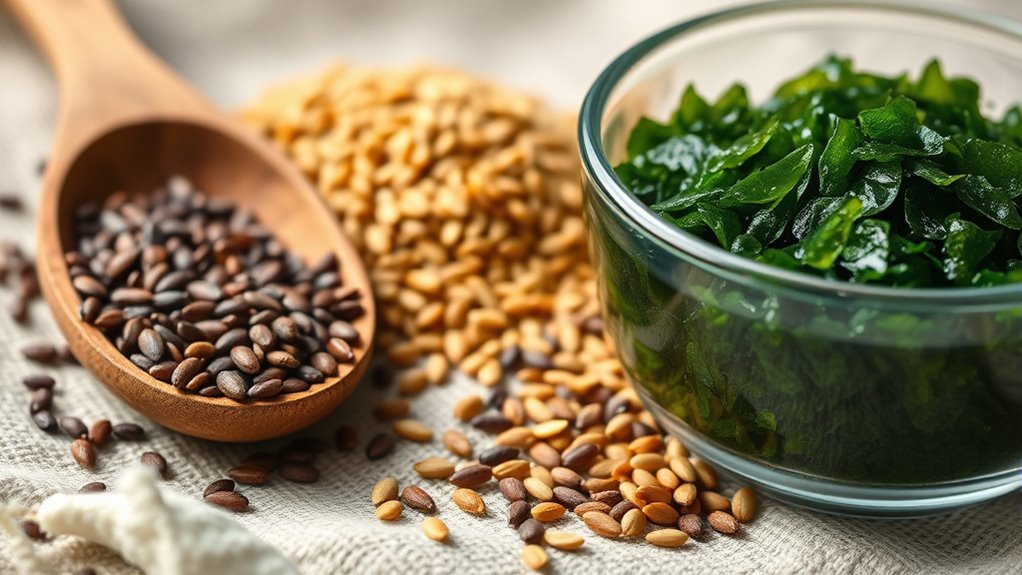
Have you ever wondered where you can find omega-3 fatty acids? If you’re looking to boost your intake without relying on traditional fish oils, there are plenty of plant-based alternatives and marine derived supplements that offer sustainable options. These sources not only support your health but also promote environmental responsibility by reducing overfishing and pollution associated with conventional omega-3 production.
Plant-based alternatives like flaxseeds, chia seeds, and walnuts are excellent sources of alpha-linolenic acid (ALA), a type of omega-3 fatty acid that your body can convert into the more active forms, EPA and DHA. Incorporating these into your diet is simple—sprinkle flax or chia seeds on yogurt, blend them into smoothies, or add walnuts to salads. While they may not provide the immediate benefits of marine-derived supplements, they are a sustainable, accessible way to increase your omega-3 intake, especially if you’re vegetarian or vegan. These options also come with added nutritional benefits, such as fiber, antioxidants, and other essential nutrients, making them a well-rounded addition to your diet.
Speaking of marine-derived supplements, algae-based omega-3 oils are gaining popularity as a sustainable and direct source of EPA and DHA. Unlike traditional fish oils, algae supplements are cultivated in controlled environments, eliminating concerns about overfishing and ocean pollution. Algae are actually the primary producers of omega-3s in the marine ecosystem, so taking supplements derived from algae is a way to tap directly into this natural process. These supplements deliver the omega-3s your body needs without the environmental impact associated with harvesting fish for oils. They’re also suitable for those with fish allergies or sensitivities, making them a versatile choice. Sustainable marine sources provide a renewable option that supports both your health and the health of our oceans.
Frequently Asked Questions
How Do Algae-Based Omega-3 Supplements Compare in Cost?
Algae-based omega-3 supplements tend to be more expensive than flax or chia seed options due to production costs. However, when you compare the cost comparison, you’ll find that algae supplements offer a more concentrated source of EPA and DHA, enhancing supplement affordability over time. While initial costs are higher, their potency and sustainability make them a worthwhile investment for your health and eco-conscious choices.
Are There Any Environmental Concerns With Large-Scale Algae Farming?
You should consider that large-scale algae farming can have environmental impacts, including potential ecosystem disruption and resource use. While algae cultivation is generally eco-friendly, it may affect local ecosystems if not managed properly, such as through water consumption or nutrient runoff. To minimize these concerns, look for sustainably operated farms that prioritize environmental impact, ensuring your omega-3 source is both healthy for you and environmentally responsible.
Can Flax and Chia Provide Enough Omega-3 for All Diets?
Did you know plant-based omega-3 sources like flax and chia can meet about 60% of recommended intake? While they contribute notably to dietary omega-3 balance, relying solely on them may not be enough for everyone’s needs. To guarantee plant-based omega-3 adequacy, consider combining these with other sources or supplements. This approach helps you maintain a healthy, balanced intake, especially in vegetarian or vegan diets.
What Are the Best Ways to Incorporate These Sources Into Daily Meals?
You can easily incorporate flax and chia into your daily meals with simple cooking tips and creative recipe ideas. Add ground flax or chia seeds to smoothies, oatmeal, or yogurt for a boost. Mix them into pancake or muffin batter, or sprinkle over salads and cereals. These versatile seeds blend well in baking and can be used as egg replacements in recipes, making it easy to enjoy omega-3 benefits every day.
Are There Any Potential Allergies Associated With Algae, Flax, or Chia?
You might notice allergy symptoms like itching, swelling, or breathing issues when trying algae, flax, or chia. While rare, cross reactivity concerns exist, especially if you’re allergic to nuts or seeds. It’s wise to start with small amounts and monitor your body’s reaction. Consulting an allergist can give you peace of mind and help identify any sensitivities beforehand, ensuring you enjoy these omega-3 sources safely.
Conclusion
By choosing algae, flax, or chia, you’re planting seeds for a healthier planet and your well-being. These sources are like gentle rivers flowing sustainably, nourishing your body without draining Earth’s treasures. Embrace these plant-based omega-3s and become a steward of the seas and soils alike. Together, you’re crafting a vibrant tapestry of health and sustainability—one seed, one bite at a time—making sure the future blooms bright and green.