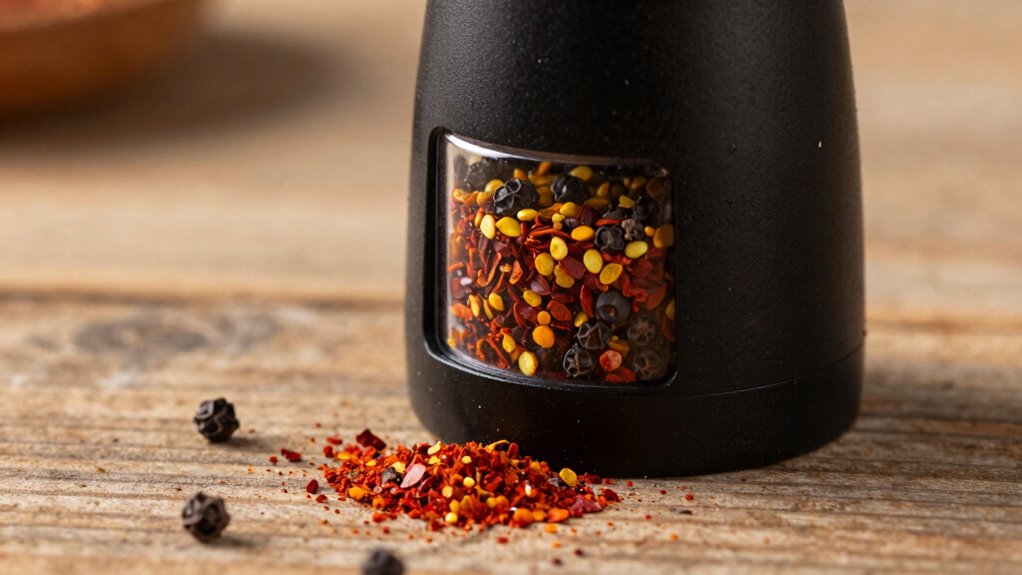

Clumping in your spice grinder happens mainly because of oils, moisture, and leftover particles from spices that stick to surfaces. Oils from spices create a sticky build-up, making it harder to grind smoothly and reducing flavor. Moisture from seeds or the environment can also cause clumping and residue buildup. If you want to keep your grinder clean and working efficiently, understanding how oils and seeds affect your spices is key—learn more to keep your grind perfect.
Key Takeaways
- Oils and moisture from spices cause sticking, clumping, and residue buildup, reducing grinder efficiency and affecting spice texture.
- High oil content and moist seeds increase stickiness, making spices harder to grind smoothly.
- Regular cleaning and proper storage in airtight, cool, dark containers prevent moisture exposure and clumping.
- Using small batches, dry ingredients, and pulse grinding helps minimize oil release and clumping during processing.
- Choosing high-quality grinders and adjusting techniques based on spice type optimize grinding results and longevity.
Why Does My Spice Grinder Clump, and How Can I Fix It?

If your spice grinder keeps clumping, it’s usually because moisture or oil from the spices causes them to stick together. When oils coat the spices, they create a sticky surface that clumps, hindering the grinder’s performance and affecting the spice aroma. This buildup can also impact the grinder’s durability over time, especially if residues aren’t cleaned regularly. To fix this, try drying your spices thoroughly before grinding to reduce moisture. Using whole spices rather than pre-ground options can also help maintain consistent grinding and preserve the spice aroma. Additionally, choose a grinder with durable blades and a sturdy construction to withstand frequent use and prevent clumping issues caused by oily residues. Proper maintenance guarantees your grinder remains effective and long-lasting. Incorporating energy-efficient technology into your grinder can further reduce operational issues and promote sustainable use. Regular cleaning with appropriate tools can prevent residue buildup and keep your grinder functioning smoothly. Furthermore, selecting a grinder with anti-clumping features can help minimize the chances of spices sticking together during grinding.
How Oils and Seeds Affect Spice Grinding and Clumping
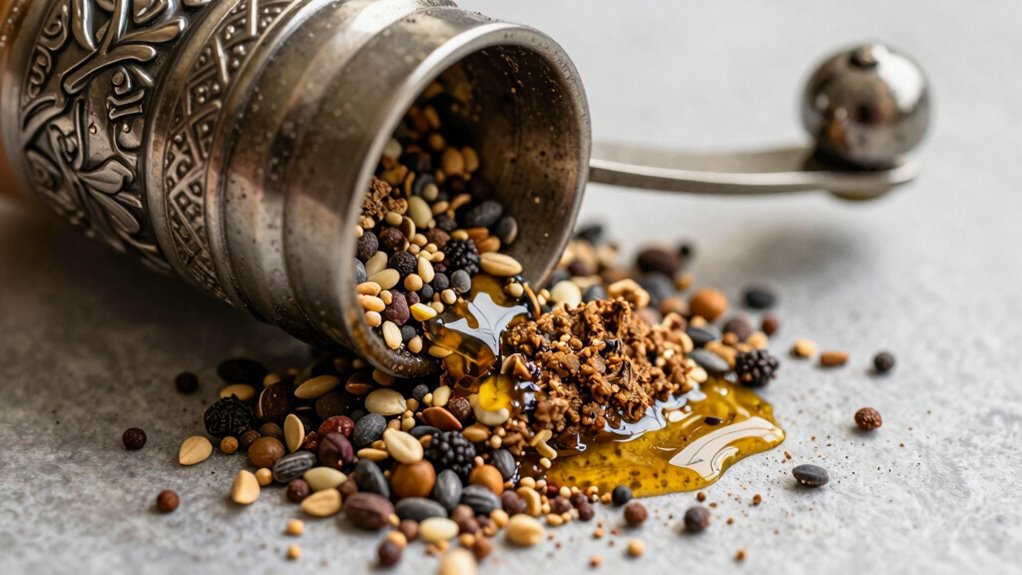
Oils and seeds can influence how spices grind and whether they clump together. High oil content or moist seeds make spices stickier and harder to process smoothly. To prevent clumping, it’s helpful to manage moisture levels and choose dry, oil-free ingredients whenever possible. Additionally, using a cleaning and maintenance routine for your spice grinder can help ensure consistent performance and reduce buildup that may contribute to clumping. Regularly inspecting and cleaning the grinder can also remove residual oils and particles that promote clumping. Understanding moisture control techniques can further improve grinding results and prevent clumping issues. Proper storage methods also play a crucial role in maintaining spice quality and reducing moisture-related clumping. Employing clumping prevention strategies such as storing spices in airtight containers can significantly enhance grinding consistency and spice longevity.
Oil Content Impact
The oil content in spices considerably influences how they grind and how they clump together. Higher oil levels make spices more prone to sticking and forming clumps during grinding. When oils are abundant, they act as a binding agent, causing the particles to stick together, especially if seed moisture is also present. This can lead to uneven grinding or clogging in your spice grinder. To manage this, you might need to adjust your grinding method or process smaller batches. Keep in mind that spices with low oil content tend to grind more smoothly and produce finer powders. Monitoring the oil levels helps you predict clumping tendencies and choose the right grinding technique for consistent, fluffy spice powders. Additionally, understanding the natural properties of different spices can help you optimize your grinding process and minimize clumping. Recognizing how oil distribution within the spices can further enhance your ability to prevent clumping and achieve an even grind. For example, the moisture content of seeds and spices also plays a significant role in their grinding behavior. Recognizing how oil content affects spice behavior allows for better control over the grinding process and improved final product quality.
Seed Moisture Levels
Seed moisture levels play a significant role in how spices grind and tend to clump together. When seeds have high seed moisture, they can create a sticky texture that hampers achieving consistent grinding consistency. Excess moisture causes seeds to stick or clump, making it difficult to produce fine, uniform powder. Conversely, very dry seeds grind more smoothly and evenly, resulting in better consistency. It’s essential to check seed moisture before grinding and, if needed, dry seeds slightly to improve results. Proper moisture balance ensures your spice grinder operates efficiently and produces a fine, uniform grind. Additionally, understanding how seed moisture influences the clumping tendency can help you adjust your process to prevent clumping and achieve ideal spice texture. Monitoring seed moisture levels also helps prevent potential damage to your grinder, as excessive moisture can lead to corrosion or buildup inside the machine. Ensuring consistent moisture levels is crucial for maintaining the quality and flavor of your spices throughout the grinding process. Maintaining proper moisture levels can also help reduce wear and tear on your grinder components, extending its overall durability.
Clumping Prevention Tips
Since oils naturally present in seeds and spices can cause clumping during grinding, managing their effect is essential for a smooth, consistent powder. To prevent this, keep your ingredients dry and store fresh herbs properly to preserve their aroma. Use small batches for better control, and consider adding a dry, absorbent substance like rice to your grinder. This helps absorb excess oils, maintaining a fine spice aroma. Additionally, pulse the grinder instead of continuous grinding to avoid overheating and oil release. Proper spice storage can also minimize moisture and oil exposure, further reducing clumping. Maintaining good kitchen air quality can also help in preserving spice freshness and preventing moisture buildup. Incorporating proper storage techniques can significantly extend the shelf life of your spices and reduce clumping issues.
Best Tips to Prevent Clumping When Grinding Spices
To prevent clumping when grinding spices, make sure they stay dry before use. Proper storage in airtight containers keeps moisture out and maintains freshness. Keeping your spices dry and well-stored helps guarantee a smooth, even grind every time. Additionally, using a high-quality grinder with sharp blades can improve consistency and reduce the likelihood of clumping. It is also beneficial to understand spice composition to select the best grinding method and avoid moisture absorption. Incorporating sound vibration techniques during grinding can also help break down clumps more effectively. Understanding vetted dog products can help you choose the best tools and accessories for your kitchen.
Keep Spices Dry
Keeping spices dry is essential for preventing clumping and ensuring smooth grinding. Moisture causes spices to stick together, reducing their freshness and making them harder to grind evenly. To maintain spice freshness, always store your spices in airtight containers away from humidity. Before grinding, ensure your grinder is clean and dry; leftover moisture or residue can introduce unwanted moisture. Regular grinder maintenance helps remove residual oils and particles that attract moisture, keeping the blades and chamber dry. When handling spices, avoid sprinkling wet fingers or spoons into the grinder. Using dry utensils and storing spices in a cool, dry place preserves their quality and prevents clumping, making your grinding process more efficient and your spices more flavorful.
Use Proper Storage
Using proper storage is essential for preventing spice clumping and maintaining their freshness. When spices are stored in airtight containers, you protect their spice freshness and prevent moisture from seeping in, which can cause clumping. Keep spices away from direct sunlight and heat sources, as these elements degrade flavor preservation. Choose cool, dark places like a pantry or cupboard to extend shelf life. Avoid storing spices near the stove or dishwasher where humidity levels fluctuate. Label your containers clearly to prevent unnecessary handling, which can introduce moisture. By maintaining a consistent environment, you ensure your spices stay dry, flavorful, and easy to grind. Proper storage not only prevents clumping but also preserves the vibrant flavors you rely on in every dish.
How to Grind Different Spices for Maximum Flavor and Freshness
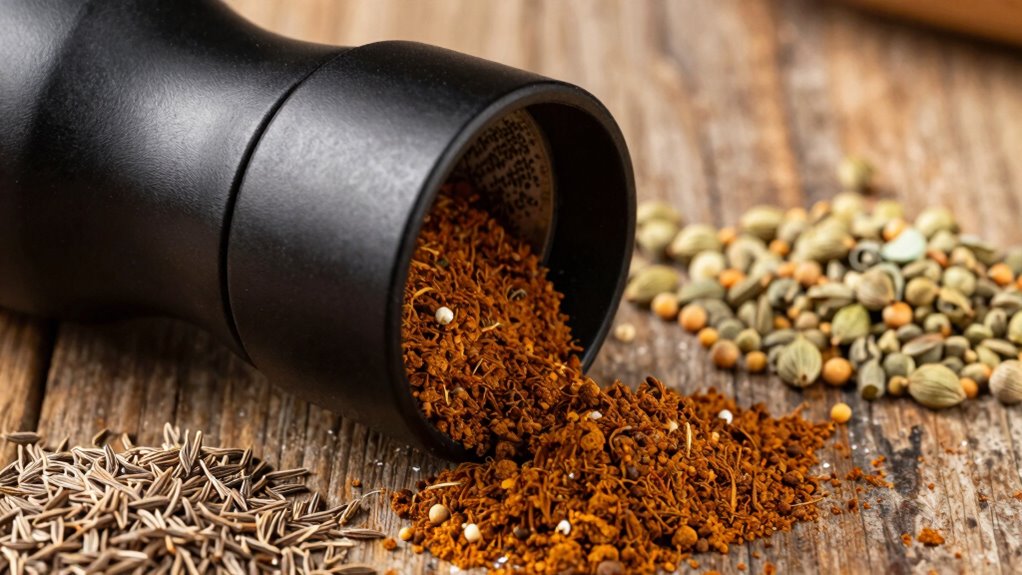
Grinding spices just before cooking releases their full flavor and aroma, so it’s worth understanding how to do it properly. To maximize spice freshness and flavor extraction, consider these tips:
Grinding spices just before cooking unlocks their full flavor and aroma for vibrant, aromatic dishes.
- Use the right grind size—coarse for marinades, fine for powders—to suit your recipe.
- Grind spices in small batches to prevent flavor loss and preserve freshness.
- Store ground spices in airtight containers and grind only what you need to guarantee maximum flavor.
Different spices require different approaches; seeds like cumin or coriander benefit from a coarser grind, while dried herbs should be ground finely. Properly grinding your spices enhances flavor extraction and assures each dish is vibrant and aromatic.
Using and Maintaining Your Manual and Electric Spice Grinders
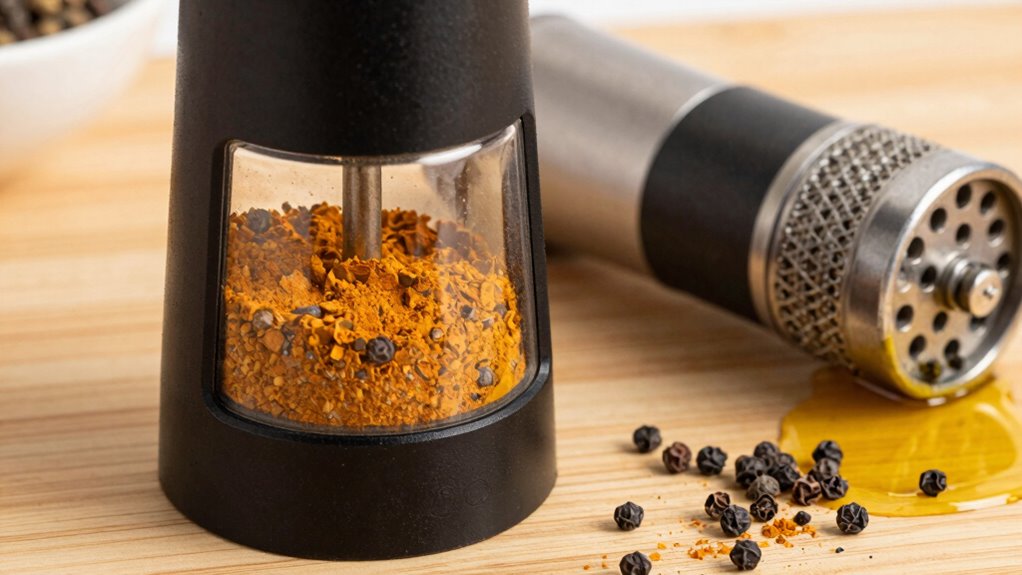
To keep your spice grinder in top shape, you need to regularly clean it properly and adjust the grind settings for different spices. Proper cleaning prevents flavor transfer and maintains performance, whether you use a manual or electric grinder. Adjusting the settings guarantees you get the perfect consistency every time you grind.
Proper Cleaning Techniques
Proper cleaning is essential to keep your spice grinder functioning at its best and to prevent flavor transfer between batches. Regular cleaning maintains the spice aroma and preserves grinder durability. To do this effectively:
- Use a dry brush or cloth to remove loose particles after each use, preventing buildup.
- For electric grinders, run a small amount of rice or dry grains to absorb residual oils and remove clumps.
- Occasionally, disassemble and wash removable parts with warm water and mild soap, ensuring they’re completely dry before reassembly.
Avoid harsh chemicals that could damage the grinder or alter flavors. Proper maintenance keeps your grinder in top shape, ensuring consistent grind quality and prolonging its lifespan.
Adjusting Grind Settings
Adjusting the grind settings on your spice grinder is key to achieving the perfect texture for your recipes. Whether you want a coarse grind for rubs or a fine powder for seasoning, proper adjustment helps you control grind consistency. For manual grinders, turn the adjustment knob or screw to increase or decrease coarseness, testing small amounts until you reach the desired texture. Electric grinders often feature dial settings or digital controls—simply select the setting that matches your preferred grind. Consistent grind size enhances flavor extraction, ensuring your spices release their full aroma and taste. Regularly check and adjust your grinder to maintain ideal performance, especially when switching between different spices or batch sizes. Precise adjustments make your spice blends more flavorful and tailored to your culinary needs.
How to Grind Oily and Seeded Spices Without Causing Clumps
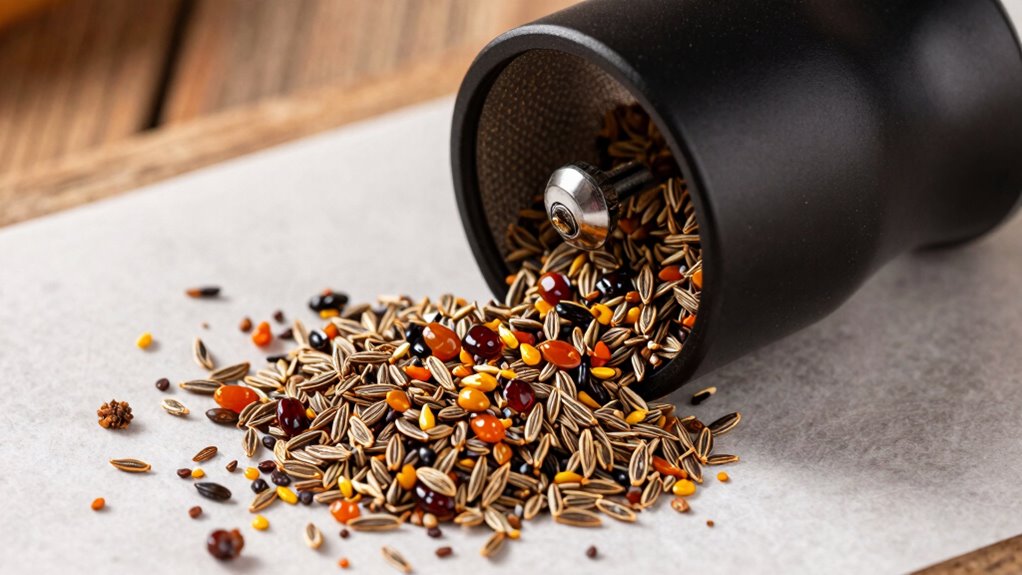
Oily and seeded spices can be tricky to grind because their moisture and natural oils tend to cause clumping. To prevent seed clumping and guarantee a smooth grind, try these tips:
- Dry your spices thoroughly before grinding—they should be at room temperature and free of excess moisture.
- Use a pulse setting on your grinder, pulsing in short bursts to avoid overheating and sticking.
- Add a dry ingredient, like rice or dried herbs, to absorb excess oils and keep the spices separate.
These strategies help reduce seed clumping and keep oily spices from forming clumps. Proper preparation and technique are key to achieving a fine, even grind without mess or frustration.
Troubleshooting Clumping in Your Spice Grinder: Quick Solutions
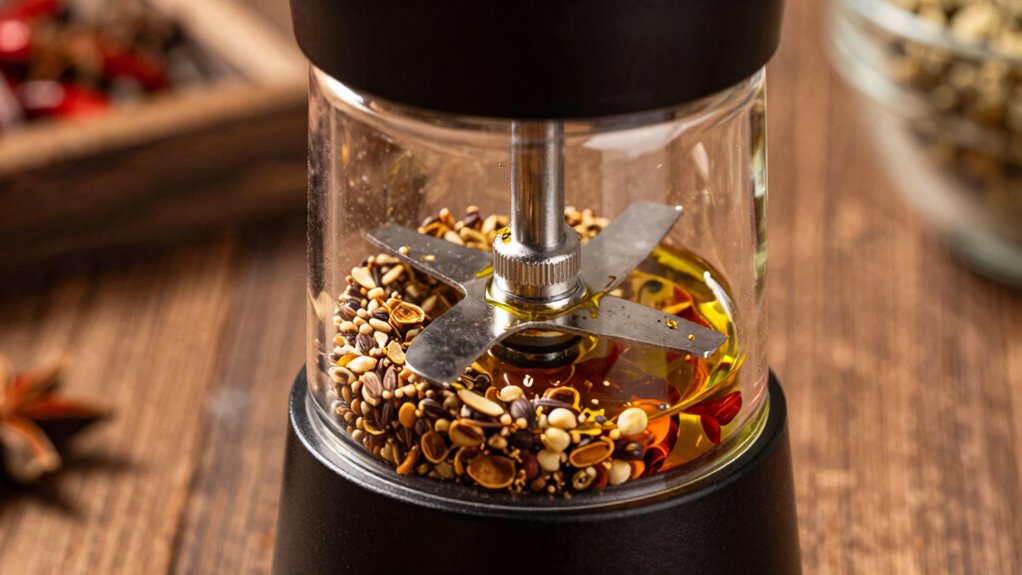
Even with the best techniques, clumping can still occur during grinding, making it frustrating to achieve a consistent powder. To troubleshoot quickly, start by checking moisture control—damp spices are a common cause of clumping. Ensure your spices are completely dry before grinding, and store them in airtight containers to prevent moisture absorption. Regular grinder maintenance also helps; clean your grinder thoroughly after each use to remove residual oils and particles that can cause sticking. If clumps form during grinding, pause and give your grinder a quick brush or wipe to remove buildup. Using small batches at a time can also reduce moisture-related clumping. These simple steps can restore smooth grinding and improve your spice consistency without much hassle.
Choosing the Right Spices and Ingredients to Avoid Texture Problems
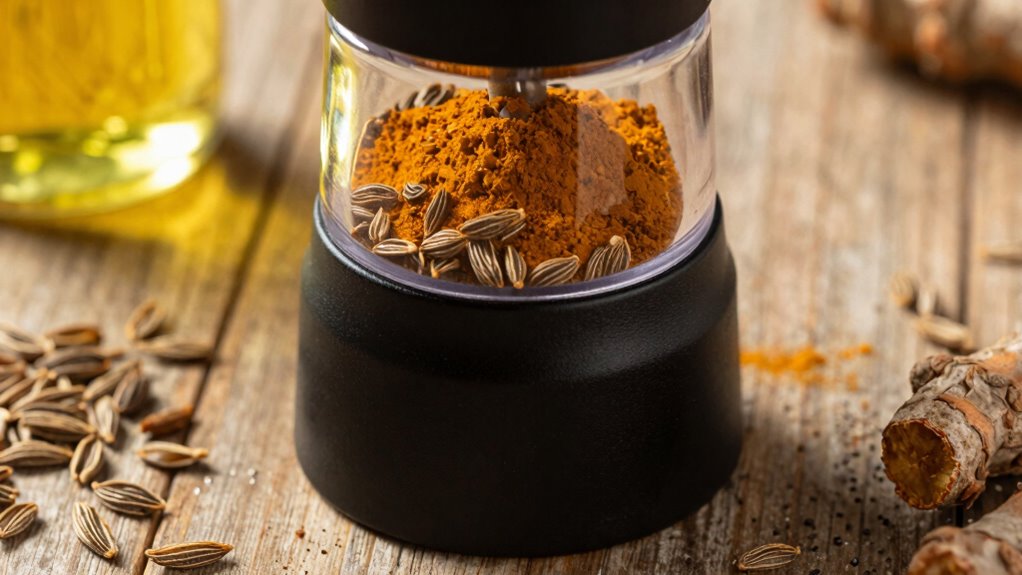
Choosing the right spices and ingredients is essential for achieving a smooth, consistent grind. Fresh spices guarantee ideal flavor enhancement, preventing moisture buildup that can cause clumping. To avoid texture problems, consider these tips:
Fresh, dry spices and whole seeds ensure smooth, clump-free grinding for perfect flavor.
- Use spices with high spice freshness; stale spices tend to clump and grind unevenly.
- Keep ingredients dry; moisture is a primary cause of clumping and inconsistent texture.
- Opt for whole seeds or larger pieces over pre-ground spices, which can be more prone to moisture absorption and texture issues.
Perfect Your Spice Grinding Technique for Consistent Results

Mastering your spice grinding technique is key to achieving uniform, flavorful results every time. To do this, focus on consistent pressure and pulse rather than continuous grinding. This helps maintain the ideal spice texture, preventing over-processing or uneven grounds. For flavor preservation, grind spices in small batches, avoiding excessive heat buildup. Visualize your process with this imagery:
| Technique Step | Effect |
|---|---|
| Gentle, even pressure | Consistent spice texture |
| Short pulses | Prevents heat, preserves flavor |
| Small batches | Maintains freshness and aroma |
| Steady grind motion | Ensures uniform results |
| Cool, dry environment | Avoids clumping and flavor loss |
Easy Cleaning and Storage Tips to Stop Clumping in Your Spice Grinder

To prevent clumping and keep your spice grinder performing at its best, regular cleaning and proper storage are essential. Effective storage solutions keep moisture out, reducing clumping. When it’s time to clean, use simple cleaning methods like wiping with a damp cloth or brushing out residual spices. Here are three tips to help:
- Store spices in airtight containers away from humidity.
- Clean your grinder after each use to remove oils and seed remnants.
- Use dry, lint-free cloths or brushes instead of water for quick cleanups.
Frequently Asked Questions
Can I Grind Spices With Added Liquids in My Spice Grinder?
You shouldn’t grind spices with added liquids in your spice grinder because it can harm the appliance and affect its performance. Liquid spice blending can cause clumping and clog the grinder, making it less effective. Check your grinder compatibility first; most are designed for dry ingredients only. If you want to incorporate liquids, consider using a mortar and pestle or blending in small batches to avoid damage and ensure proper grinding.
How Often Should I Clean My Spice Grinder to Prevent Clumping?
You should clean your spice grinder after every few uses to prevent moisture buildup and clumping. Regular cleaning guarantees no residual oils or moisture stick around, which can cause spices to clump and affect performance. If you grind wet or oily spices, consider cleaning more frequently. Use a dry brush or damp cloth, then dry thoroughly. Consistent cleaning keeps your grinder in peak condition and prevents clumping issues.
Are There Specific Spices That Are More Prone to Causing Clumps?
Certain spices, like cinnamon, nutmeg, and coriander, are more prone to causing clumps because they contain moisture-prone seeds or oils. Clump causing spices often have higher oil content or moisture levels, making them stick together easily. To prevent clumping, keep your grinder dry and clean, especially after grinding moisture prone seeds or oily spices. Regular maintenance helps ensure smooth grinding and consistent flavor.
What Size Grind Is Best for Different Types of Recipes?
Think of your spice grinder as a painter’s brush, and the grind size as the brush’s bristle thickness. For vibrant, fresh flavors in curries or marinades, go for a coarse grind to preserve texture. For smooth sauces or rubs, a medium grind creates better consistency. Use a fine grind for baking or delicate dishes. Adjust your grind size to match each recipe’s desired consistency, ensuring your spices enhance each dish perfectly.
Can Using a Different Type of Grinder Reduce Clumping Issues?
Yes, using a different type of grinder can reduce clumping issues. A grinder with a durable material like ceramic or metal often provides a more consistent grind, preventing uneven particles that cause clumping. Additionally, choosing a grinder that offers adjustable settings helps you control the grind consistency, so your spices don’t stick together. Switching to a high-quality grinder improves overall performance and keeps your spices fresh and free-flowing.
Conclusion
Think of your spice grinder as a tiny garden. When you plant the right seeds, water, and care, it flourishes with vibrant, fresh flavors. But neglect or overloading can cause weeds—clumps—that hinder growth. By maintaining your grinder and choosing your spices wisely, you’ll cultivate a flavorful, consistent harvest every time. With patience and proper care, your spice garden will always yield the perfect, aromatic treasures you crave.