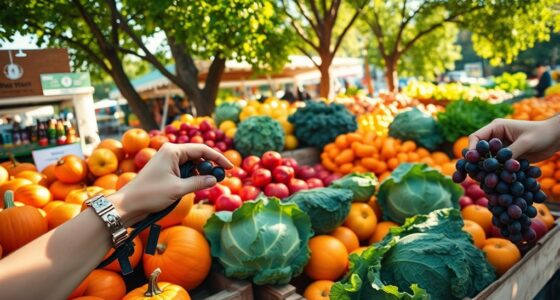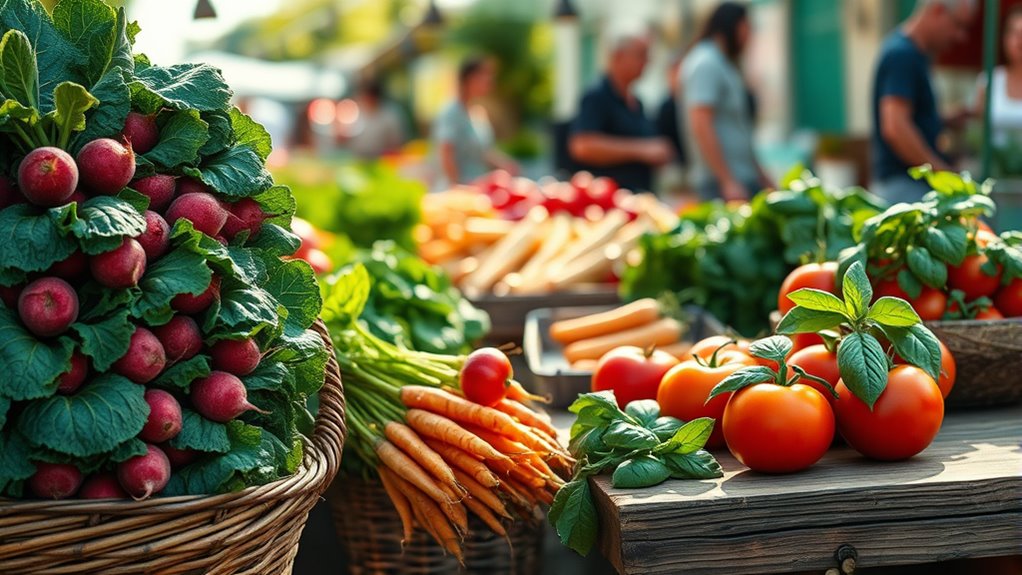

Sourcing local and organic produce sustainably helps you support healthier communities and reduce environmental impact by cutting down on transportation and promoting eco-friendly farming practices. It encourages transparency and ethical treatment of land, workers, and animals while offering fresher, flavorful foods. By choosing CSA programs and farm-to-table options, you make a positive difference for your health and the planet. To discover how you can make more sustainable choices, keep exploring the benefits and methods involved.
Key Takeaways
- Engage directly with local farmers through farm-to-table and CSA programs to ensure fresh, organic, and sustainably sourced produce.
- Prioritize purchasing from certified organic farms that use eco-friendly practices like crop rotation and natural pest control.
- Support regional markets and community-supported initiatives to reduce transportation emissions and preserve local biodiversity.
- Advocate for transparency in food sourcing, ensuring products are produced sustainably and ethically.
- Incorporate seasonal eating habits to minimize environmental impact and maximize flavor and nutritional value.
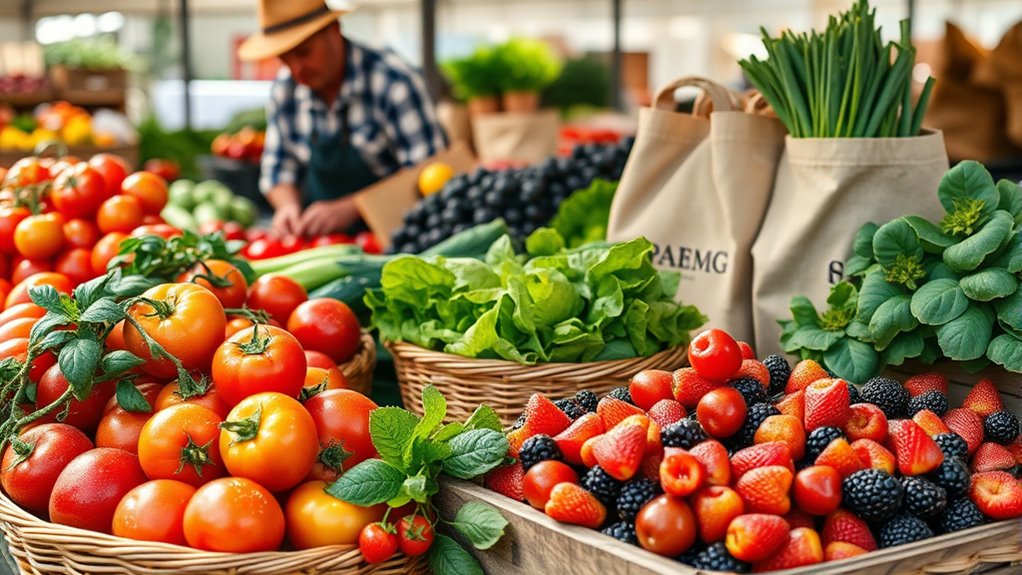
Choosing to source local and organic produce allows you to support sustainable farming practices while enjoying fresher, healthier foods. When you prioritize farm to table approaches, you bridge the gap between farmers and consumers, ensuring that your meals come directly from nearby farms. This connection reduces the carbon footprint associated with long-distance transportation and preserves the integrity of seasonal produce. By focusing on farm to table, you not only get fresher fruits and vegetables but also promote transparency in how your food is grown, cultivated, and harvested. It encourages a more conscious approach to eating, where quality and sustainability take precedence over convenience and mass production.
Community supported agriculture (CSA) programs are an excellent way to deepen your commitment to local, organic sourcing. When you join a CSA, you fundamentally become a partner in a farm’s success. You pay upfront for a share of the harvest, which guarantees you access to seasonal produce directly from the farm. This arrangement benefits both parties: farmers receive reliable income, allowing them to invest in sustainable practices, while consumers receive fresh, nutrient-dense foods. CSA shares often include a variety of vegetables, fruits, and even herbs, giving you a chance to diversify your diet and explore seasonal flavors. Plus, supporting local farms through CSA helps maintain agricultural land and promotes biodiversity, ensuring these practices continue for future generations.
Opting for local and organic produce also means you’re lessening your reliance on heavily processed foods laden with preservatives, pesticides, and artificial additives. Organic farming methods emphasize soil health, crop rotation, and natural pest control, reducing environmental impact and enhancing the nutritional quality of your food. When combined with local sourcing, these practices foster a more resilient and sustainable food system. You become part of a community that values transparency and ethical treatment of the land, workers, and animals. This mindset encourages you to ask questions about where your food comes from and how it’s produced, fostering a more mindful approach to consumption.
Incorporating farm to table and CSA into your lifestyle means making intentional choices that benefit your health, the environment, and local economies. You’re not just eating; you’re supporting a system rooted in sustainability and community. This approach reduces waste, shortens supply chains, and minimizes environmental degradation. Additionally, choosing local and organic produce supports sustainable farming practices that help conserve water and protect soil health. Over time, these small, deliberate actions add up, creating a significant impact. By choosing local and organic produce, you’re actively contributing to a healthier planet while enjoying the freshest, most flavorful foods available. It’s a simple yet powerful way to align your eating habits with your values and promote a more sustainable future.
Frequently Asked Questions
How Can Consumers Verify the Organic Certification of Produce?
You can verify the organic certification of produce by checking the organic labels on packaging, such as USDA Organic or other trusted certifications. Always look for a certification seal, and if you’re unsure, ask the seller for proof of certification. Certification verification involves contacting the certifying agency directly or visiting their website to confirm that the product’s label matches their records, ensuring you’re buying genuinely organic produce.
What Are the Main Challenges Farmers Face When Switching to Organic Methods?
When switching to organic methods, you’ll face challenges like managing pests without synthetic chemicals and maintaining soil fertility naturally. You need to adopt pest management strategies such as crop rotation and biological controls, which require more time and knowledge. Additionally, rebuilding soil health takes patience and effort, as organic practices depend on organic matter and composting. These hurdles demand dedication, but they ultimately lead to healthier soil and produce.
How Does Local Sourcing Impact Community Economy and Social Equity?
You see that local sourcing boosts your community economy by encouraging community investment and supporting small businesses. It strengthens economic resilience, making your area less dependent on distant supply chains. When you buy locally, you help create jobs and foster social equity, ensuring more equitable opportunities for everyone. This direct connection between consumers and producers builds a stronger, more resilient community where everyone benefits from a thriving local economy.
Are There Seasonal Limitations to Sourcing Local and Organic Produce?
Yes, there are seasonal limitations to sourcing local and organic produce. Seasonal variations affect what’s available, so you might find certain fruits and vegetables only during specific times of the year. Supply chain constraints can also restrict availability, especially outside peak harvest seasons. This means you may need to adapt your choices and consider preservation methods or alternative options when local and organic produce isn’t in season.
What Policies Support Sustainable Local and Organic Farming Practices?
Policies propel sustainable practices by providing government incentives that encourage eco-friendly farming and prioritizing land use planning. These policies promote preservation of farmland, support organic standards, and incentivize local sourcing. You benefit as these initiatives make it easier to access fresh, organic produce while helping the environment. When governments back these practices, they foster a future of flourishing farms and food systems rooted in responsibility and resilience.
Conclusion
By choosing local and organic produce, you support sustainable farming and diminish your carbon footprint. Did you know that buying locally can cut food miles by up to 90%? Imagine the impact of small choices—each meal becomes a step toward a healthier planet. So next time you shop, think about how your decision can make a difference, helping to preserve the earth’s resources and ensure fresh, nutritious food for generations to come.