Soda makers let you carbonate water at home using CO₂ canisters, which pressurize and create bubbles. They typically use PET plastic or glass bottles—glass lasts longer and is more eco-friendly but heavier. Costs start around $50 for basic models, with refillable CO₂ canisters being more cost-effective over time. You can personalize flavors, adjust carbonation levels, and choose reliable brands like SodaStream or Aarke. If you want to master everything about soda makers, keep exploring these key details.
Key Takeaways
- Soda makers carbonate water by pressurizing CO₂, with bottle sealing and temperature affecting fizz quality.
- Common bottle types include lightweight PET plastic and eco-friendly glass, each with pros and cons for durability and sustainability.
- CO₂ canisters are refillable or disposable, impacting long-term costs, convenience, and environmental impact.
- Typical costs range from $50 to $200, with ongoing expenses for CO₂ refills and maintenance affecting overall savings.
- Reliable brands like SodaStream and Aarke offer durability and performance, while proper operation and regular maintenance extend equipment lifespan.
What Is a Soda Maker and Why Use One?
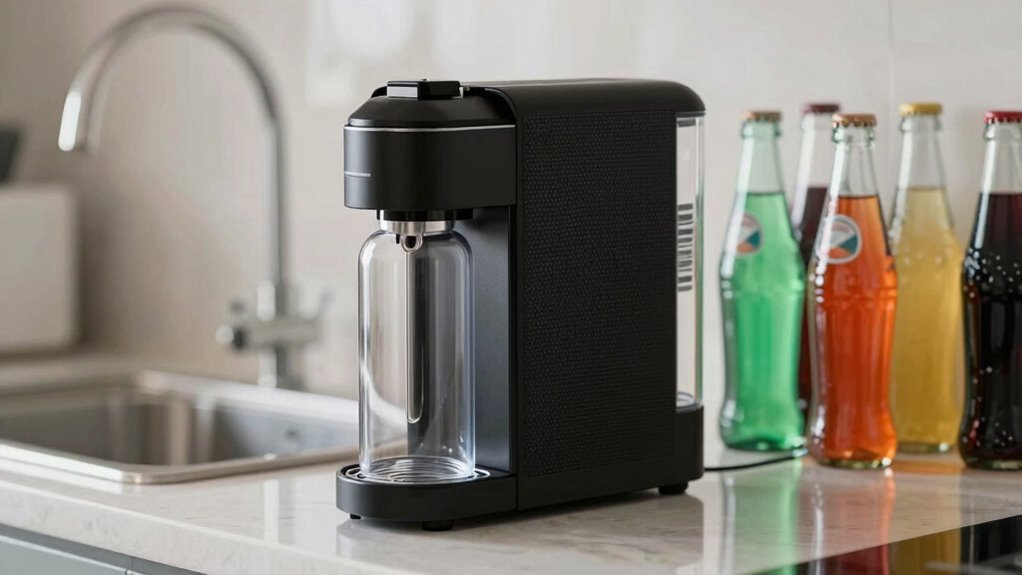
Ever wondered how you can enjoy fresh, fizzy drinks at home without buying store-bought soda? A soda maker makes that possible by allowing you to carbonate water easily. Using one is simple and cost-effective, especially if you frequently consume sparkling drinks. Plus, it reduces waste from plastic bottles, helping lower your environmental impact. Proper soda maker maintenance ensures your machine works efficiently and lasts longer, saving you money over time. By making your own soda, you control the ingredients, avoiding unwanted additives and sugar. It’s a convenient way to enjoy personalized drinks while being eco-conscious. Additionally, selecting suitable carbonation levels can enhance your drinking experience, making each beverage just the way you like it. Incorporating smart home technology features, such as automated reminders for refilling CO₂ canisters, can further streamline your soda-making process and improve convenience. To extend the lifespan of your soda maker, it’s important to follow recommended maintenance schedules and use quality replacement parts. Regular cleaning can prevent oil buildup, ensuring your machine remains in optimal condition and continues to produce high-quality fizzy drinks. Furthermore, being aware of CO₂ supply management can help you avoid unexpected interruptions during your soda preparation.
How Do Soda Makers Carbonate Water With Co₂?
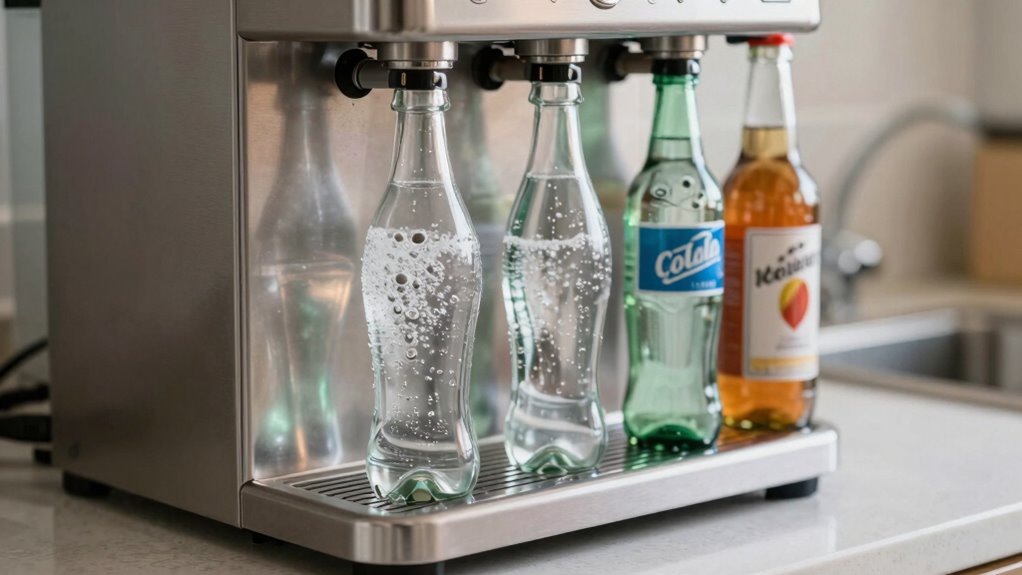
When you carbonate water with a soda maker, CO₂ is pressurized into the liquid, creating bubbles. The process involves sealing the bottle tightly and injecting CO₂ at the right pressure to guarantee consistent carbonation. The quality of the bottle type used can influence how well the carbonation is retained and how long the bubbles last. Achieving the perfect fizz depends on proper sealing and precise CO₂ injection techniques. Additionally, understanding modern kitchen technology can help optimize the carbonation process for better results. Incorporating energy-efficient appliances can further enhance sustainability during use. Proper storage of the carbonated water in a sealed container also helps retain the carbonation longer. Monitoring pressure levels during carbonation can ensure optimal results and prevent over-pressurization.
CO₂ Pressurization Process
Soda makers carbonate water by rapidly releasing pressurized CO₂ into the liquid, creating the fizzy bubbles you enjoy. The process relies on precise pressure regulation to dissolve carbon dioxide efficiently. When you press the button, the device opens a valve, allowing CO₂ to flow into the water at high pressure. This sudden influx creates a sparkling effect that’s both satisfying and invigorating. The key to perfect carbonation is maintaining the right balance of pressure—too much, and it can overflow; too little, and it won’t fizz enough.
Feel the excitement of creating your own bubbly drinks:
- Effortless control over fizziness
- Freshness with every pour
- Satisfaction of DIY craft
- Customizable carbonation levels
Sealing and CO₂ Injection
Sealing the bottle properly is key to ensuring the CO₂ stays dissolved in the water during carbonation. Your soda maker’s sealing mechanisms, like screw caps or snap-fit closures, create a tight barrier that traps the gas inside. CO₂ injection methods vary; some machines inject gas directly into the liquid under pressure, while others use a carbonation block or diffuser to disperse CO₂ evenly. When you pressurize the bottle, the CO₂ dissolves into the water, forming bubbles that give your soda its fizz. Proper sealing techniques are essential to prevent leaks and ensure a consistent level of carbonation. Additionally, maintaining the correct pressure levels during carbonation helps keep the CO₂ dissolved effectively. Understanding how gas solubility is affected by temperature and pressure can help optimize carbonation results. Temperature control plays a crucial role in how much CO₂ the water can absorb, making it an important factor during carbonation. Proper sealing and the right injection method work together to produce consistently fizzy, invigorating drinks every time.
Achieving Perfect Fizz
Achieving perfect fizz depends on how effectively your soda maker introduces CO₂ into the water. To get the ideal carbonation levels, you need to control the pressure and timing carefully. A well-carbonated drink not only feels lively but also enhances flavor infusion, making your beverages more enjoyable. When you carbonate correctly, you release a sparkling sensation that elevates your homemade sodas. Keep in mind, too much CO₂ can create an overly fizzy drink, while too little leaves it flat. To perfect your process, consider these key points:
- Adjust pressure settings for desired carbonation levels
- Shake or gently agitate to evenly distribute CO₂
- Chill water beforehand for better absorption
- Experiment with flavor infusion for custom taste
- Understand Free Floating concepts to optimize carbonation techniques
Master these steps, and you’ll consistently create fizzy drinks that excite your palate. Additionally, understanding how pressure and timing influence carbonation can help you fine-tune your method for perfect results. Recognizing the importance of proper technique ensures consistent and satisfying carbonation outcomes.
What Types of Bottles Do Soda Makers Use, and Which Is Best?
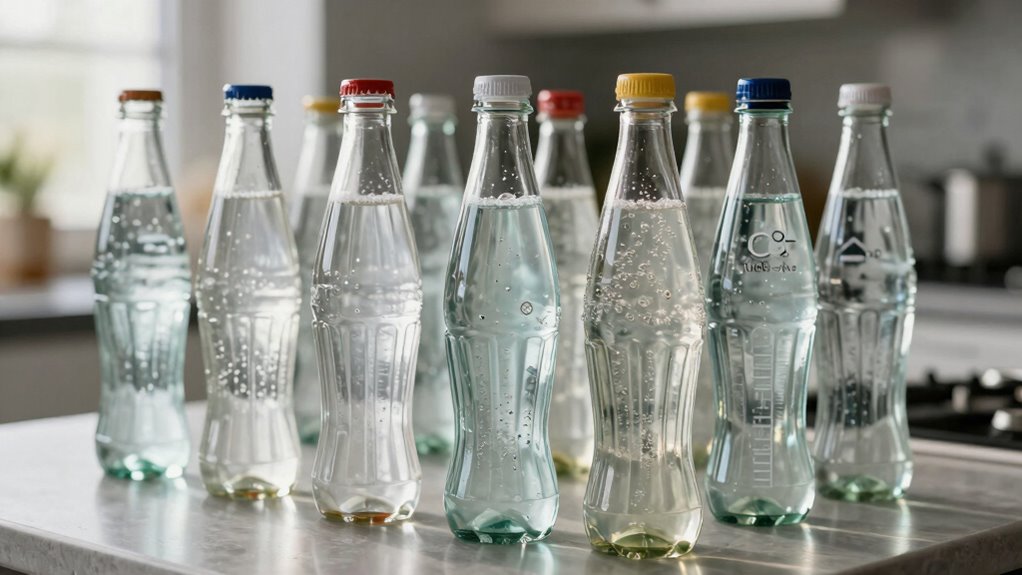
Different soda makers use various types of bottles, primarily designed to withstand the pressure of carbonated beverages. The most common bottle material is plastic, often PET, which is lightweight and durable. Some soda makers also use glass bottles, valued for their recyclability options and ability to maintain carbonation longer. Recyclability options vary: plastic bottles are recyclable but may contribute to environmental waste if not reused properly. Glass bottles are fully recyclable and eco-friendly, making them a popular choice for sustainability-conscious users. When choosing the best bottle type, consider durability, ease of use, and environmental impact. Plastic bottles are convenient and lightweight but less eco-friendly, while glass bottles are more sustainable but heavier and more fragile. Your choice depends on your priorities for convenience and environmental responsibility. Additionally, the horsepower of electric dirt bikes can influence how efficiently a bike can power a generator, which may be relevant for DIY energy projects. Moreover, using eco-friendly recycling options for bottles can help reduce environmental waste and promote sustainability, especially when considering the recyclability of different materials, which varies depending on local facilities and consumer practices. Incorporating eco-conscious bottle collection and reuse methods can further enhance sustainability efforts.
How Much Do Soda Makers Cost, and What Are the Maintenance Expenses?

Soda makers vary widely in price, with basic models starting around $50 and more advanced or feature-rich units costing upwards of $200 or more. When exploring pricing options, consider the potential for long-term savings—reducing store-bought soda costs and waste. Maintenance expenses are minimal but include replacing CO₂ canisters and occasional bottle replacements. Keep in mind:
- Affordable entry-level models for casual users
- Mid-range options with extra features
- Premium units with customizable settings
- Ongoing costs of CO₂ and bottle replacements
Investing in a soda maker can be cost-effective over time, especially if you enjoy soda regularly. While upfront costs differ, the savings on store-bought drinks make it a smart choice for many households. To ensure safe operation, it’s important to follow recommended safety guidelines and properly maintain your equipment. Additionally, understanding the CO₂ supply options and replacement procedures can help prevent interruptions in your soda-making. Regularly inspecting your equipment and staying informed about maintenance costs can further prolong its lifespan and efficiency, especially when considering the durability of different bottle types used in soda makers.
Are Refillable or Disposable CO₂ Canisters More Cost-Effective?

When deciding between refillable and disposable CO₂ canisters, cost-effectiveness depends on how often you use your soda maker. Refillable canisters typically have a higher upfront cost but lower ongoing expenses, making them ideal for frequent users. Disposable cartridges are cheaper initially but can add up over time if you soda often. To help compare, here’s a quick look:
| Refillable Canisters | Disposable Cartridges |
|---|---|
| Higher initial cost | Lower initial cost |
| Reusable for many refills | Single-use, replaced often |
| Lower long-term cost | Higher cumulative expense |
| Environmentally friendly | Less eco-friendly |
If you soda daily, refilling refillable canisters saves money. For occasional use, disposable cartridges might be more convenient.
How Can You Customize Flavors and Volume in Your Soda Maker?

Wondering how to make your soda more personalized? You can easily customize flavors and volume with your soda maker. Flavor customization lets you experiment with syrups, fruit extracts, or natural flavor drops to create unique drinks. For volume control, adjust the carbonation level and serve sizes to suit your mood or occasion. Here are some tips to elevate your experience:
Create personalized sodas by experimenting with flavors, carbonation, and serving sizes for a fun, unique beverage experience.
- Mix different syrup flavors for a custom blend
- Add fresh fruit or herbs for natural flavor boosts
- Use the volume control to set your preferred carbonation level
- Refill your bottle to make larger or smaller servings
With these options, you can craft exactly the soda you crave, whether it’s a lightly sparkling water or a strongly carbonated treat. Personalization makes every sip more satisfying and fun.
Which Soda Maker Brands Offer the Best Value and Reliability?
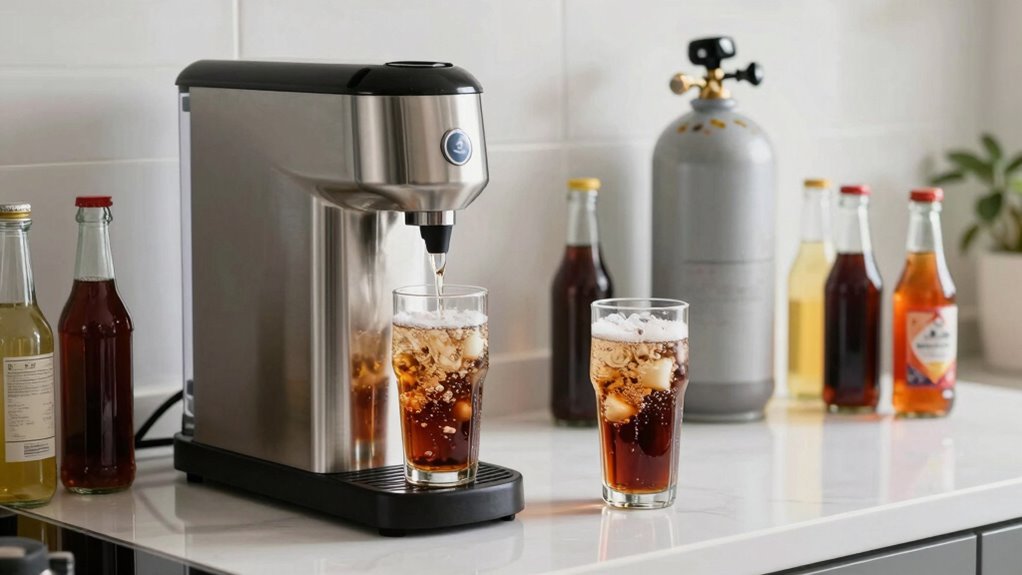
Choosing the right soda maker depends on balancing cost, durability, and performance. Brands like SodaStream and Aarke stand out for their strong reputation and consistent reliability. You’ll find that customer reviews often highlight their durability and ease of use, making them trusted choices. SodaStream offers a wide range of models at various price points, providing good value for most households. Aarke, while slightly pricier, is praised for its sleek design and sturdy build, which can justify the investment if you want long-term reliability. Cheaper brands may cut costs but often lack durability or consistent performance, as noted in customer reviews. Ultimately, sticking with well-reviewed brands guarantees you get the best bang for your buck and a soda maker that stands the test of time.
Frequently Asked Questions
Can Soda Makers Be Used to Carbonate Beverages Other Than Water?
Yes, you can use soda makers to carbonate beverages beyond water. This allows you to enjoy flavor customization and expand your beverage versatility. Just make sure the drink isn’t too thick or sugary, as it might clog the machine. Experiment with different juices, flavored waters, or even tea to create a variety of fizzy drinks. Remember to adhere to your soda maker’s guidelines to ensure safe and effective carbonation.
What Safety Precautions Should I Follow When Using a Soda Maker?
When using a soda maker, you should handle pressure carefully by following the manufacturer’s instructions to prevent accidents. Always sanitize the equipment before use to guarantee cleanliness and safety. Avoid over-pressurizing the bottle, as it can burst. Keep the device on a stable surface, and don’t attempt repairs yourself. By handling pressure properly and sanitizing your equipment, you minimize risks and enjoy safe, fizzy beverages.
How Long Does a Co₂ Canister Typically Last With Regular Use?
On average, a CO₂ canister lasts about 60 to 130 refills, depending on your usage. If you make two to three sodas daily, expect the lifespan to be around 2-3 months before needing a refill. Keep track of your refill frequency to avoid running out unexpectedly. Regular use impacts the CO₂ canister lifespan, so monitoring your consumption helps you plan ahead and maintain your soda-making routine smoothly.
Are There Environmental Benefits to Using Soda Makers Over Store-Bought Soda?
Yes, using soda makers offers environmental benefits like reducing plastic waste and boosting recycling benefits. When you make soda at home, you cut down on single-use bottles and cans, which helps lessen landfill waste. Plus, you can reuse bottles multiple times, decreasing the demand for new plastics. This simple switch supports eco-friendly habits and contributes to a healthier planet by minimizing your overall plastic footprint.
Can Soda Makers Be Used in Commercial or High-Volume Settings?
You can use soda makers in commercial or high-volume settings, but they aren’t ideal for large-scale production. For commercial scalability, you’d need high-volume equipment designed specifically for that purpose. Home soda makers are built for small batches and personal use, so they might not meet the demands of a busy café or event. Investing in commercial-grade equipment guarantees consistent quality and efficiency for high-volume needs.
Conclusion
Choosing a soda maker is like planting a seed—you nurture it with care, and it blooms into endless bubbly possibilities. With each fizzy pour, you’re crafting your own invigorating oasis amid the chaos. The right bottle, CO₂ canister, and flavor choices become your tools, shaping your personal fountain of refreshment. Embrace this journey, and let your sparkling creations symbolize a simple joy—an ongoing celebration of your own bubbly spirit.