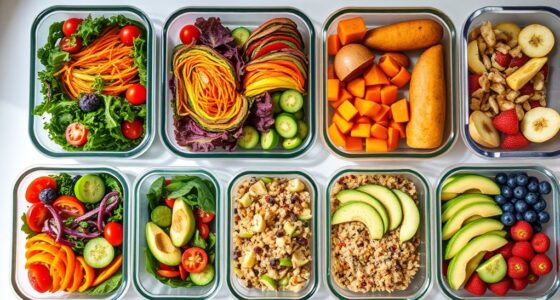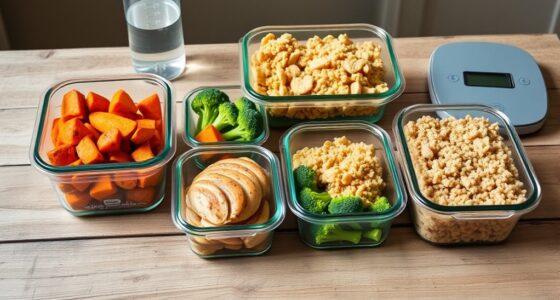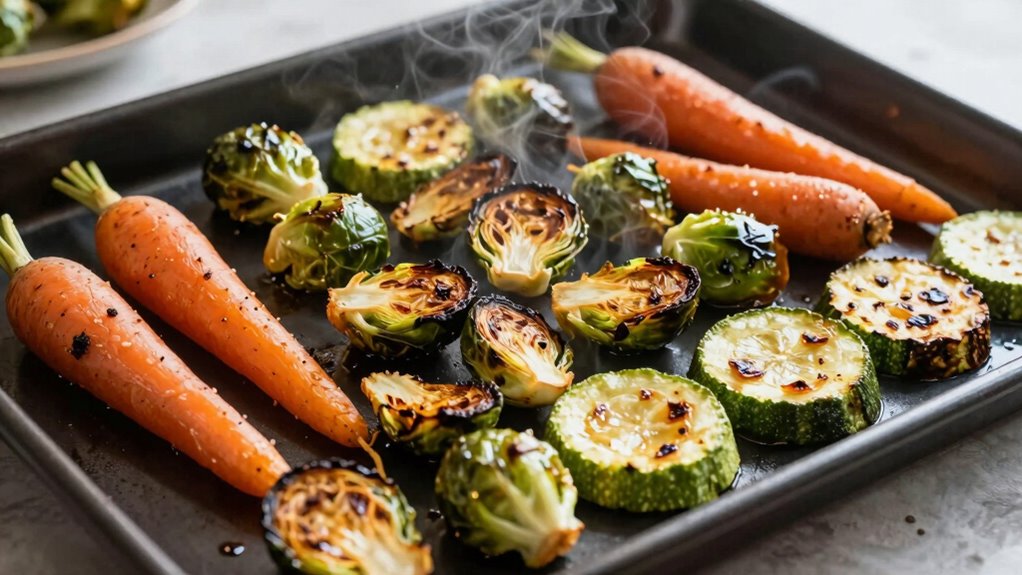

To prevent soggy roasted veggies on your sheet pan, make certain your oven is hot enough—around 400°F or higher—to evaporate moisture. Avoid overcrowding the pan so air can circulate and dry out the veggies properly. Toss your vegetables lightly with oil and season just before roasting to minimize moisture. Use uniform pieces for even cooking and turn them halfway through. For more tips on crisp, flavorful veggies, keep exploring the best techniques.
Key Takeaways
- Roast vegetables at a high temperature (around 400°F or higher) to promote moisture evaporation and crispness.
- Avoid overcrowding the sheet pan; leave space between veggies for proper air circulation.
- Cut vegetables into uniform pieces for even cooking and consistent moisture release.
- Toss veggies with oil and season just before roasting to prevent excess moisture absorption.
- Cool fully before storing and reheat in the oven or skillet to maintain crispness and prevent sogginess.
Why Do Roasted Veggies Turn Soggy, and How Does It Affect Your Meal Prep?
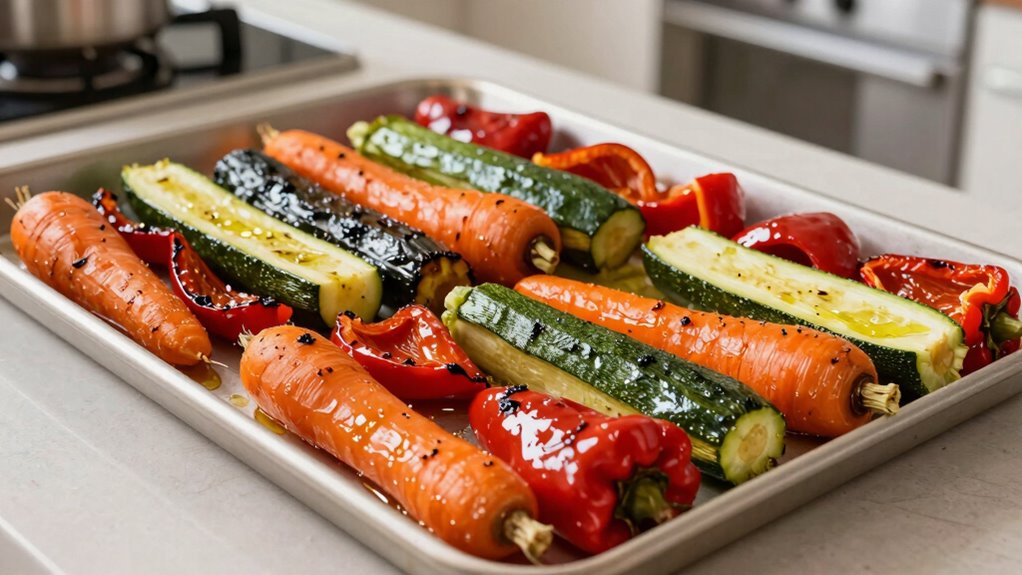
Roasted veggies often turn soggy when steam gets trapped around them, causing excess moisture to build up during the cooking process. This usually happens if the oven temperature isn’t high enough, preventing proper moisture evaporation. When the oven isn’t hot enough, veggie moisture escapes slowly, creating a humid environment that makes veggies steam rather than roast. As a result, they lose their crispness and develop a soggy texture. To avoid this, make certain your oven is set to a sufficiently high temperature—around 400°F or higher—so moisture evaporates quickly. Proper oven temperature helps dry out the veggies, allowing them to develop a crispy exterior. Using moisture management techniques such as not overcrowding the pan can also help prevent sogginess. Additionally, choosing the right cookware that promotes air circulation can improve roasting results. Ensuring proper heat distribution within your oven can further enhance even cooking and crispiness. Proper oil application can also aid in achieving crispiness by preventing sticking and promoting even browning. Managing veggie moisture and heat is key to achieving perfectly roasted, crisp veggies for your meal prep. Incorporating advanced oven technology can further enhance temperature accuracy and consistency during roasting.
How to Prep Veggies for Crispy, Caramelized Roasts
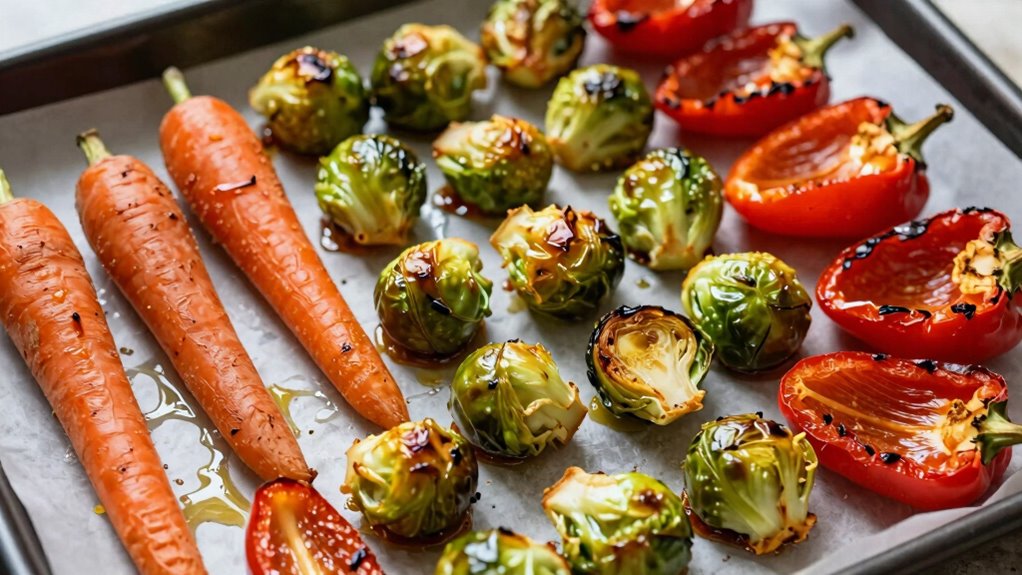
To get veggies crispy and caramelized, proper prep is key. Start with fresh veggie selection; choose hearty options like carrots, Brussels sprouts, or potatoes. For seasoning tips, toss your veggies with olive oil and a pinch of salt, then add herbs or spices to boost flavor. Guarantee even coating, which promotes caramelization. Avoid overcrowding the pan, as it traps moisture and prevents crisping. Use a sharp knife for uniform pieces, helping them cook evenly. Additionally, understanding modern kitchen technology such as smart ovens and precision timers can further enhance your roasting results. Here’s a quick guide to prep:
| Veggie Type | Seasoning Tips | Texture Goal |
|---|---|---|
| Root vegetables | Olive oil, thyme, salt | Crispy outside, tender inside |
| Cruciferous | Olive oil, garlic, pepper | Slightly charred, flavorful |
| Starchy veggies | Oil, paprika, salt | Caramelized, sweet notes |
| Green veggies | Light oil, lemon zest | Slightly roasted, vibrant |
Proper prep guarantees a delicious, crispy roast every time.
Easy Techniques to Keep Your Roasted Veggies Crispy and Delicious
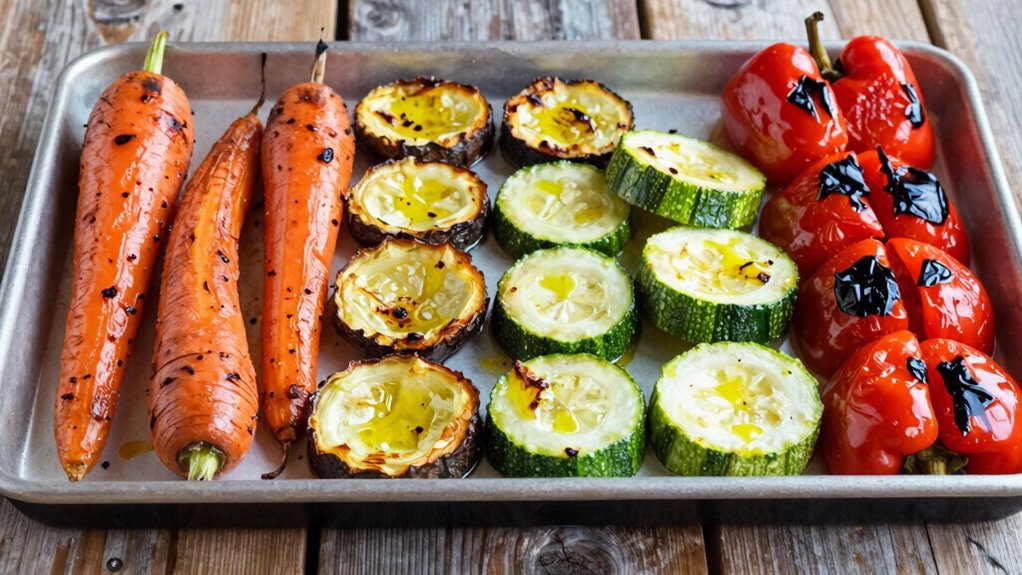
Achieving crispy, delicious roasted veggies often comes down to simple techniques that you can easily incorporate into your meal prep. One key is using seasoning techniques that enhance flavor without adding moisture, which can cause sogginess. Toss your veggie variety in a light coat of oil, then season with herbs, spices, or salt just before roasting. Avoid overcrowding the pan to ensure proper air circulation, helping veggies crisp up evenly. Cutting veggies into uniform pieces promotes consistent cooking. Additionally, choosing sturdier veggie varieties like carrots, potatoes, or Brussels sprouts naturally helps them stay crispy. Using high heat and turning the veggies halfway through roasting also prevents sogginess, ensuring you end up with veggies that are flavorful, tender on the inside, yet perfectly crispy on the outside. Incorporating AI tools can also streamline your meal prep process, saving time and ensuring perfect results every time.
The Best Ways to Store and Reheat Roasted Veggies Without Sogginess
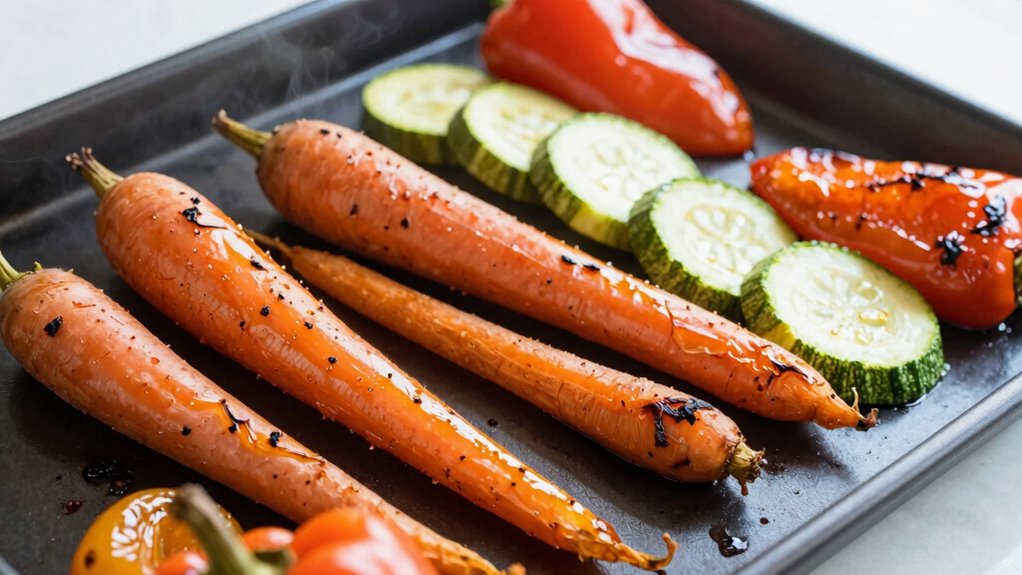
Storing and reheating roasted veggies can easily lead to sogginess if you don’t follow the right methods. To prevent this, use proper storage containers—preferably ones that are airtight and shallow, which help retain texture. Allow the veggies to cool completely before sealing, as trapping steam can make them soggy. When reheating, avoid microwave methods that steam the veggies; instead, opt for reheating methods like oven or skillet. Reheat at a moderate temperature, spreading the veggies evenly on a baking sheet or in a hot skillet, and avoid overcrowding. This helps restore crispiness without overcooking. Additionally, choosing the right reheating method can make a significant difference in maintaining texture. Proper storage techniques are essential to keep your roasted veggies flavorful and crisp, ensuring they taste almost as good as fresh out of the oven. For even better results, consider using moisture control tools, which can help absorb excess moisture and maintain crispness during storage.
Common Roasting Problems and How to Fix Them for Perfect Results
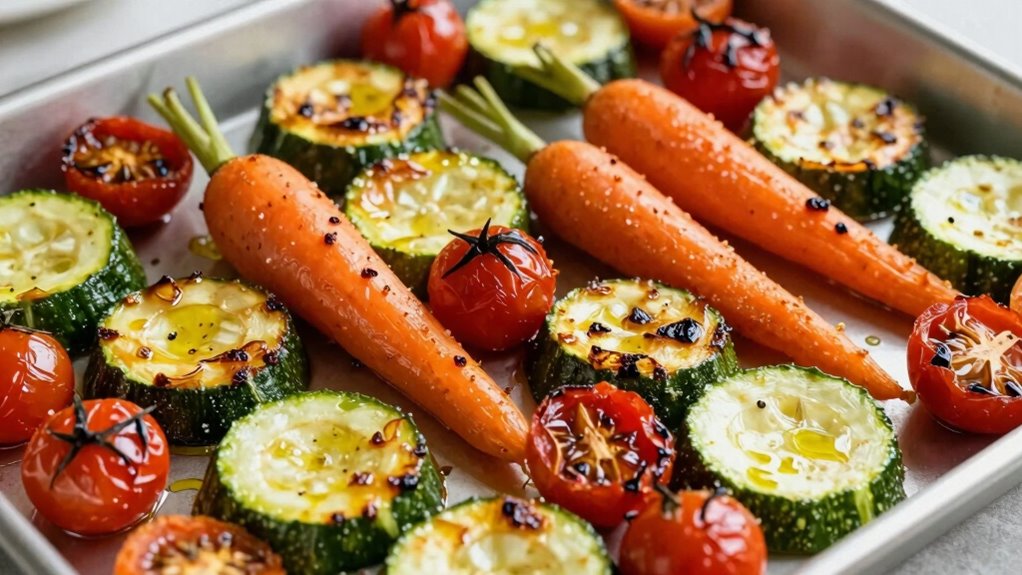
Even with careful storage and reheating, roasting can sometimes produce less-than-perfect results. Common problems include uneven cooking, sogginess, or bland flavor. To fix these issues, consider experimenting with seasoning variations to enhance flavor and texture. Selecting the right veggies is also essential; denser vegetables like carrots or potatoes need longer roasting, while softer ones like zucchini cook quickly. Here are some tips to improve your results:
To improve roasted veggies, tweak seasonings and choose vegetables suited to your desired cooking time.
- Use high heat and avoid overcrowding the pan to prevent sogginess
- Toss vegetables with oil and seasoning evenly for consistent flavor
- Adjust veggie selection based on cooking time to guarantee even roasting and avoid undercooked or overcooked pieces
Frequently Asked Questions
Can Certain Vegetables Be Pre-Cooked Before Roasting to Prevent Sogginess?
Yes, you can pre-cook certain vegetables to prevent sogginess during roasting. Using pre-cooking techniques like blanching or microwaving helps reduce vegetable moisture, which is a key cause of sogginess. By partially cooking vegetables before roasting, you ensure they retain a firmer texture and crispness. Just remember to drain excess water and pat them dry for best results, so your roasted veggies stay flavorful and not soggy.
Does the Type of Baking Sheet Affect Veggie Crispiness?
Yes, the baking sheet material can dramatically influence veggie crispiness. Metal sheets, especially those with a darker finish, heat quickly and help moisture escape, preventing sogginess. Meanwhile, non-stick or glass pans trap moisture, making vegetables limp. The secret lies in choosing the right material to draw out vegetable moisture efficiently. When you pick the right baking sheet, your roasted veggies turn irresistibly crispy, revealing the true power of thoughtful equipment choices.
How Does Moisture Content in Vegetables Influence Roasting Outcomes?
Moisture levels in vegetables directly impact your roasting results. If your veggies are too wet, they release steam, making them soggy instead of crispy. To avoid this, pat them dry thoroughly before roasting, and consider tossing them with a little oil to help moisture escape. Properly managing moisture content guarantees your roasted veggies come out tender on the inside and crisp on the outside.
Are There Specific Seasonings That Help Keep Veggies Crispy?
Ever wonder if certain seasoning techniques can keep your veggies crispy? Yes, they can! Use spice combinations like paprika, garlic powder, or cumin mixed with a touch of salt to enhance flavor without adding moisture. Toss your veggies in a little oil first, then sprinkle your seasonings evenly. This helps create a dry surface that crisps up nicely, making your roasted veggies irresistibly crunchy and flavorful every time.
Can Using Parchment Paper or Foil Impact the Crunchiness of Roasted Vegetables?
Using parchment paper or foil can impact the crunchiness of roasted veggies. Parchment impact is minimal, helping veggies stay crispy because it allows heat circulation and prevents sticking. Foil effects are more significant; it traps moisture, which can make veggies soggy. For crunchiest results, opt for parchment paper and avoid covering veggies tightly with foil, or use it only at the end to retain crispness while preventing sticking.
Conclusion
Don’t let soggy veggies ruin your sheet pan meals. With these simple tips, you can achieve crispy, flavorful roasted vegetables every time. If you’re worried about time or effort, remember that a little prep and proper storage make all the difference. So go ahead—enjoy your delicious, perfectly roasted veggies without the sogginess. Once you master these tricks, meal prep will become faster, easier, and way more satisfying!