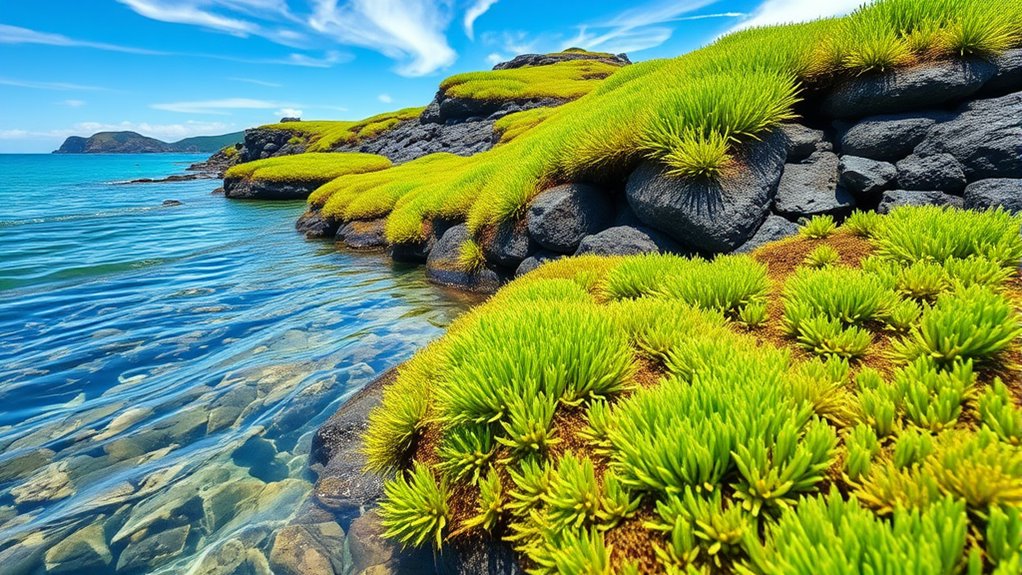

When engaging in sea moss farming, it’s vital to prioritize sustainable practices that protect marine ecosystems. Select sites with clean water, strong flow, and minimal pollution, while avoiding overharvesting of wild populations. Use eco-friendly techniques like biodegradable anchors and avoid chemicals. Respect marine biodiversity by not damaging habitats and monitoring water quality regularly. By doing so, you help guarantee healthy, renewable resources—if you continue, you’ll discover more ways to minimize your environmental impact effectively.
Key Takeaways
- Implement sustainable harvesting by selecting mature plants and avoiding overexploitation to protect wild sea moss populations.
- Choose cultivation sites with optimal water flow and sunlight, avoiding polluted or heavily impacted areas.
- Use eco-friendly farming methods, such as biodegradable anchors and chemical-free practices, to prevent environmental contamination.
- Regularly monitor water quality and sea moss growth to ensure ecological balance and early detection of issues.
- Support marine biodiversity by preserving habitats, minimizing habitat destruction, and collaborating with local communities and experts.
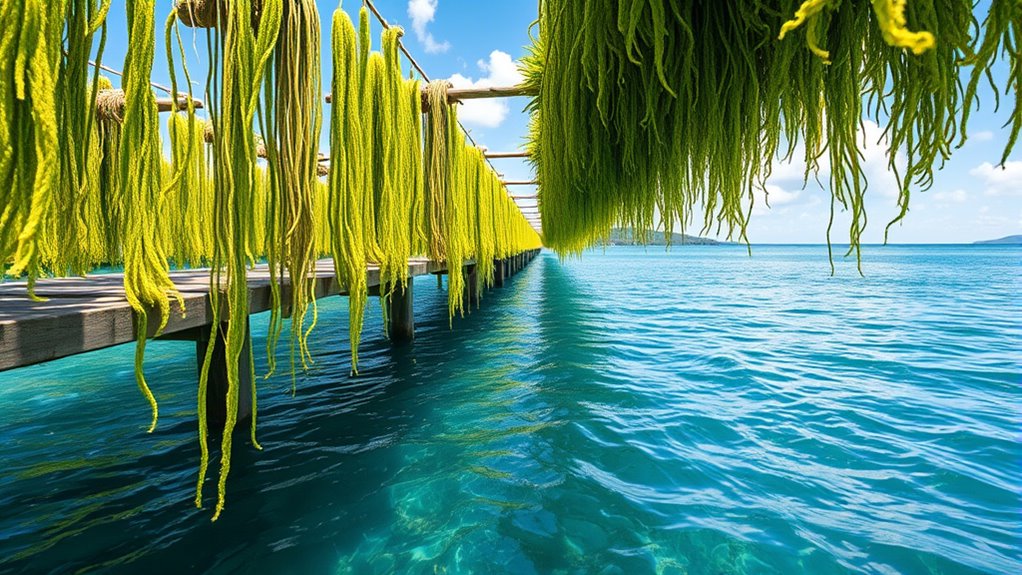
Sea moss farming is quickly gaining popularity as a sustainable way to produce nutritious seaweed for various health and culinary uses. As you venture into sea moss cultivation, it’s vital to prioritize sustainable harvesting practices that protect the ocean environment. By adopting methods that do not deplete wild populations, you help guarantee that sea moss remains a renewable resource. This means harvesting only mature plants and leaving enough behind to reproduce and sustain the natural ecosystem. Maintaining this balance prevents overexploitation, which can lead to the decline of local seaweed beds and disrupt marine ecosystems.
Focusing on sustainable harvesting also benefits marine biodiversity. Healthy, undisturbed ecosystems are essential for supporting diverse marine life, from tiny invertebrates to larger fish species. When you harvest thoughtfully, you minimize habitat destruction and avoid damaging other marine flora and fauna that coexist with sea moss. This approach preserves the natural balance and promotes resilience in the ecosystem, ensuring that the ocean can continue to support not just your farm, but countless other species that depend on these habitats.
Thoughtful harvesting preserves marine ecosystems, supporting diverse species and ensuring ocean resilience for future generations.
As you set up your sea moss farm, consider the location carefully. Choose sites with strong water flow and ideal sunlight exposure, but steer clear of areas already under stress from pollution or human activity. By doing so, you reduce the risk of introducing pollutants or disrupting local marine biodiversity further. It’s also wise to work with local communities and environmental experts to develop guidelines that align with conservation efforts, which helps protect the broader marine environment while supporting your farming goals.
Another key to maintaining environmental integrity is implementing eco-friendly farming techniques. For example, using biodegradable anchors and avoiding chemicals or artificial fertilizers ensures that your operation remains sustainable and non-invasive. These practices help prevent contamination of the water and surrounding habitats, safeguarding the health of marine ecosystems. Additionally, regular monitoring of water quality and sea moss growth can alert you to any potential issues early on, enabling prompt corrective actions that uphold environmental standards.
In the broader context, understanding the importance of biodiversity hotspots and their protection can guide your farming practices to minimize ecological impact. In the end, sustainable sea moss farming isn’t just about producing a healthy product; it’s about fostering a harmonious relationship with the ocean. By practicing sustainable harvesting, you contribute to the conservation of marine biodiversity, ensuring that these vibrant ecosystems can thrive for generations to come. Your commitment to eco-conscious methods helps create a model for responsible aquaculture—one that respects and preserves the ocean’s delicate balance while providing valuable resources.
Frequently Asked Questions
How Does Sea Moss Farming Impact Local Marine Biodiversity?
Sea moss farming can impact local marine biodiversity by causing habitat disruption, which may disturb native species and their environments. If not managed properly, it could introduce invasive species that compete with local flora and fauna, reducing biodiversity. You should monitor farms carefully, minimize habitat disturbance, and prevent the spread of invasive species to protect the health of marine ecosystems while cultivating sea moss sustainably.
Are There Regulations for Sustainable Sea Moss Farming Practices?
Yes, there are regulations for sustainable sea moss farming practices. You should follow regulatory frameworks that set standards for environmental protection and resource management. Conservation policies guide you to minimize ecological impacts, such as maintaining water quality and protecting local habitats. By adhering to these rules, you help guarantee that sea moss farming remains eco-friendly, promotes biodiversity, and supports long-term sustainability for marine ecosystems.
What Are the Potential Effects of Sea Moss Farming on Water Quality?
Sea moss farming can impact water quality through nutrient runoff, which may cause algae blooms and deplete oxygen levels, harming marine life. Sediment disturbance from farming activities can increase turbidity, affecting sunlight penetration and disrupting ecosystems. You should carefully manage farming practices to minimize these effects, such as controlling nutrient inputs and reducing sediment disturbance, ensuring the health of surrounding waters and maintaining sustainable cultivation.
How Does Climate Change Influence Sea Moss Cultivation?
Did you know climate change causes temperature fluctuations that can reduce sea moss yields by up to 30%? As a sea moss farmer, you need to focus on climate adaptation strategies, like selecting resilient strains and adjusting harvesting times. Rising temperatures can stress your crops, so staying informed about climate patterns helps you mitigate impacts, ensuring healthier growth and more stable harvests despite the challenges posed by climate change.
Can Sea Moss Farming Help Reduce Ocean Pollution?
Yes, sea moss farming can help reduce ocean pollution through its biodegradation potential. By cultivating sea moss, you promote natural pollution mitigation, as it absorbs excess nutrients and contaminants from the water. This process helps improve water quality and supports healthier marine ecosystems. Your efforts in sea moss farming not only produce a valuable resource but also contribute to cleaner oceans and a more sustainable environment.
Conclusion
As you venture into sea moss farming, remember that while it offers ecological benefits like carbon absorption and habitat creation, it also poses risks of overharvesting and habitat disruption. Picture lush, thriving underwater forests contrasted with damaged reefs or depleted stocks. Your mindful approach balances growth with preservation, ensuring this sustainable resource benefits both the environment and your efforts. Embrace responsible farming, and you’ll help maintain the ocean’s delicate, vibrant balance for generations to come.