
Root-to-stem vegetarian cooking encourages you to use vegetable scraps like stems, tops, and peels, reducing waste and boosting flavor. You can peel broccoli stems for stir-fries, turn carrot tops into pesto, or bake zucchini peels as snacks. This approach makes meals more creative, nutritious, and eco-friendly while saving money. If you’re interested in transforming humble scraps into tasty dishes, keep exploring how to maximize every bit of your produce.
Key Takeaways
- Utilize vegetable stems, tops, and peels to create flavorful, nutritious dishes, minimizing waste and maximizing ingredient use.
- Incorporate vegetable scraps into homemade broths and soups for depth of flavor and sustainability.
- Experiment with plant-based snacks and pesto using parts like carrot tops and zucchini peels.
- Plan meals around whole vegetables, enabling diverse recipes and efficient batch cooking.
- Promote eco-friendly and budget-conscious cooking by turning vegetable trimmings into culinary treasures.

Have you ever wondered how delicious and satisfying vegetarian cooking can be? Embracing a root-to-stem approach not only reduces waste but also expands your culinary creativity. When you start using every part of vegetables, you unleash new flavors and textures that you might have previously overlooked. For instance, instead of discarding broccoli stems, you can peel and chop them into stir-fries or blend them into smoothies. Carrot tops, often tossed away, can be turned into vibrant pesto or added to salads. This method encourages you to think resourcefully, making your meals more economical and environmentally friendly.
Incorporating root-to-stem cooking into your routine also makes meal prep more efficient. You’ll find that using whole vegetables allows for more versatile meal options, especially when planning ahead. You can prepare a variety of plant-based snacks that utilize different parts of the produce, such as roasted carrot tops or zucchini peel crisps, which are perfect for on-the-go munching. These snacks not only satisfy your cravings but also keep you energized and focused throughout the day. When you do your vegetarian meal prep, think about batching recipes that use up every part of your vegetables. For example, making a large batch of vegetable broth from trimmed ends and peels saves money and adds depth to future soups and stews.
Root-to-stem cooking also fosters a deeper connection with your ingredients. As you peel and trim, you start to appreciate the full life cycle of your produce, encouraging more mindful eating. Plus, it offers a chance to experiment with different flavors and textures, turning humble scraps into culinary treasures. It’s satisfying to know that you’re reducing waste while creating nutritious, flavorful dishes. Whether you’re preparing a quick snack or a full vegetarian meal, this approach keeps your cooking sustainable and innovative.
Frequently Asked Questions
How Do Root-To-Stem Recipes Reduce Food Waste Effectively?
You reduce food waste effectively by using every part of vegetables in your cooking. This sustainable approach minimizes discard, saving money and resources. When you incorporate stems, leaves, and peels into recipes, you cut down on waste and promote eco-friendly practices. By doing so, you support food waste reduction and embrace sustainable cooking habits, making your meals more environmentally responsible while enjoying nutritious, flavorful dishes.
What Are the Best Root Vegetables for Beginners?
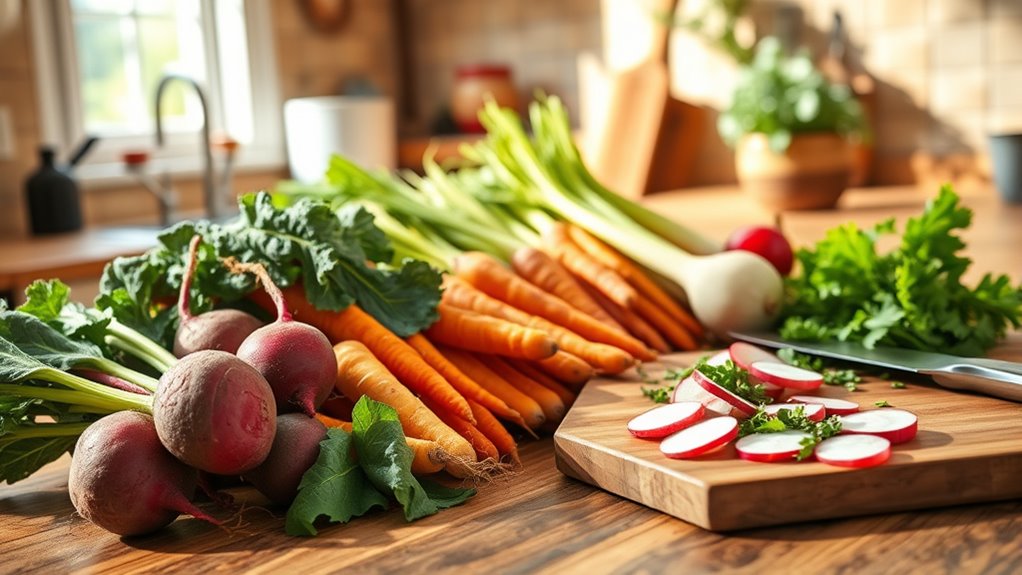
You should start with carrots, potatoes, and beets—they’re easy to handle and versatile. These root vegetables work well with simple cooking techniques like roasting or boiling, which bring out their natural sweetness. Experiment with flavor pairings such as garlic, herbs, or citrus to enhance their taste. As a beginner, these options help you learn basic skills while enjoying delicious, nutritious dishes.
How Can I Adapt Root-To-Stem Cooking for Picky Eaters?
You can adapt root-to-stem cooking for picky eaters by focusing on creative presentation and flavor masking. Slice roots into fun shapes or serve them mixed into familiar dishes, like pasta or smoothies. Use flavorful herbs, spices, or a touch of sweetness to enhance taste and hide any unfamiliar flavors. This approach makes healthy, sustainable eating approachable and enjoyable without overwhelming their palate.
Are There Seasonal Variations in Root-To-Stem Cooking?
Absolutely, seasonal harvests influence root-to-stem cooking, bringing flavor variations that dance with the seasons. As winter’s chill fades, you’ll find earthy carrots and parsnips giving way to vibrant beets and radishes in spring. Embrace these changes, savoring the unique flavors each season offers. By adapting your recipes to the bounty around you, you keep your dishes fresh, exciting, and perfectly in tune with nature’s rhythm.
How Does Root-To-Stem Vegetarian Cooking Impact Nutrition?
By practicing root-to-stem vegetarian cooking, you boost nutrient retention, ensuring you get maximum vitamins, minerals, and fiber from your produce. This approach also encourages dietary diversity, as you use more parts of vegetables that are often discarded. As a result, you enhance your overall nutrition, reduce waste, and enjoy more flavorful, creative meals. It’s a smart way to nourish your body while making eco-friendly choices.
Conclusion
Embracing root-to-stem vegetarian cooking transforms your meals from ordinary to extraordinary. Imagine a vibrant plate, where every leftover finds purpose, and each bite nurtures both body and planet. It’s a simple act of kindness, turning waste into nourishment. As you savor these dishes, you’ll notice a harmony—between Earth’s bounty and your own well-being—reminding you that sustainability can be deliciously satisfying. In this way, your kitchen becomes a place of mindful abundance and creative renewal.