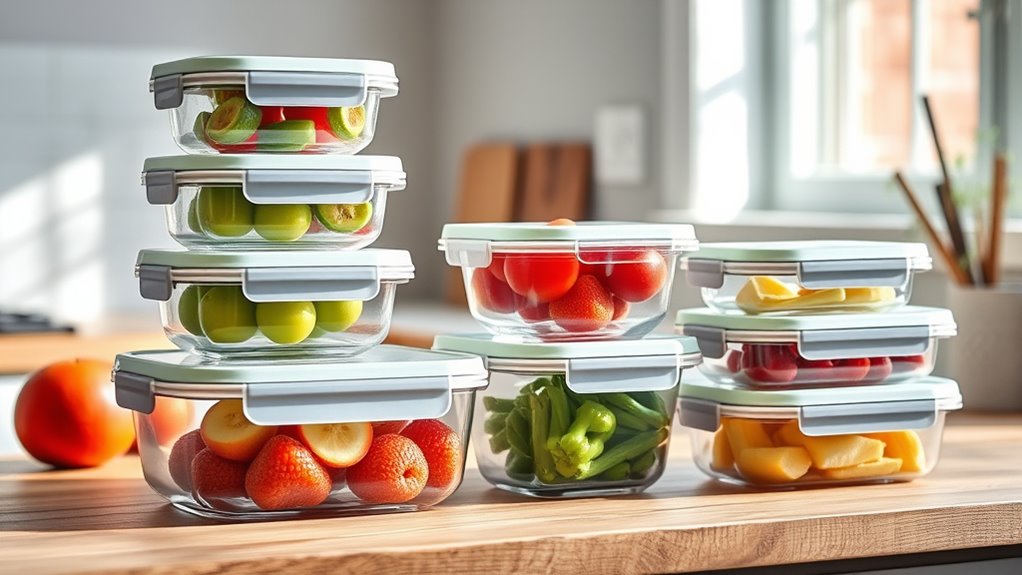

Reusable food storage solutions help you maximize space and reduce waste in your kitchen. You can choose from eco-friendly materials like BPA-free silicone, glass, and stainless steel that last for years. Space-saving designs like stackable, collapsible, and modular containers keep your fridge and cabinets tidy. By switching to these options, you support a sustainable lifestyle while making your kitchen more organized. Exploring the options further will reveal even more ways to make your space eco-friendly and efficient.
Key Takeaways
- Made from eco-friendly, durable materials like BPA-free silicone, glass, and stainless steel for safe, long-lasting storage.
- Space-saving designs such as stackable, nesting, and collapsible containers optimize kitchen organization and maximize space.
- Modular lids and slim profiles enable customizable and tidy storage of leftovers, ingredients, and snacks.
- Reduces waste by replacing disposable wraps and bags, supporting sustainable and eco-conscious living.
- Enhances kitchen efficiency with practical, environmentally friendly solutions that promote clutter-free, organized spaces.

Are you looking for smarter, more sustainable ways to store your food? Reusable food storage solutions are an excellent way to cut down on waste and make your kitchen more eco-friendly. When choosing these solutions, pay close attention to options made from eco friendly materials. Brands now offer containers crafted from BPA-free silicone, glass, and stainless steel—materials that are durable, safe, and better for the environment than single-use plastics. These eco friendly materials don’t just help reduce landfill waste; they also resist staining and odors, making them easier to clean and reuse over time. Plus, many of these containers are designed to last for years, providing a cost-effective alternative to disposable wraps and bags.
Choose eco friendly, durable containers made from silicone, glass, or stainless steel to store food sustainably and reduce waste.
Space saving designs are another key feature you should look for in reusable food storage solutions. Traditional bulky containers can clutter your fridge and cabinets, making it hard to find what you need quickly. Modern designs focus on maximizing space by being stackable or nesting inside each other, which helps you organize your kitchen efficiently. For instance, some containers come with lids that snap securely and stack neatly, saving vertical space without risking spills. Collapsible silicone bowls and containers are also popular; they expand when in use and collapse flat for easy storage when empty. This flexibility is especially helpful if you have limited kitchen storage or want to keep your drawers tidy.
Another benefit of these space saving designs is that they often feature compact shapes that fit more easily into your fridge or freezer. Some containers are designed with slim profiles, making it simple to squeeze them into tight spots. This way, you can organize leftovers, prepped ingredients, or snacks without sacrificing valuable space. When shopping for reusable solutions, consider those that come with modular lids and stackable bases to create a customizable storage system. The combination of eco friendly materials and space saving designs means you get durable, safe, and efficient containers that support your sustainable lifestyle while keeping your kitchen neat.
In short, choosing reusable food storage solutions made from eco friendly materials with thoughtful space saving designs helps you reduce waste, declutter your kitchen, and store your food more efficiently. These options are not only better for the environment but also make your daily routine more convenient. Whether you’re storing leftovers, prepping snacks, or organizing ingredients, these containers give you a practical and eco-conscious way to keep your kitchen tidy and sustainable. Making the switch to these smarter storage options is a simple step toward a greener, more organized home.
Frequently Asked Questions
Are Reusable Food Storage Options Microwave-Safe?
Yes, many reusable food storage options are microwave-safe, making your recycling benefits and eco-friendly packaging choices easier. Always check the manufacturer’s label for microwave safety to avoid damage or leaks. Using microwave-safe containers reduces waste and promotes sustainability. By selecting these versatile options, you enjoy convenient reheating while supporting eco-friendly practices, helping decrease reliance on single-use plastics and promoting a healthier planet.
How Long Do Reusable Containers Typically Last?
Reusable containers typically last between 1 to 5 years, depending on durability factors like material quality and usage. You’ll want to contemplate how often you wash, microwave, or expose them to heat, as these can affect container lifespan. Proper care, such as gentle cleaning and avoiding harsh chemicals, helps extend their durability, ensuring you get the most out of your investment in eco-friendly storage solutions.
Are Reusable Food Wraps Suitable for Hot Foods?
Reusable food wraps aren’t ideal for hot foods, as heat can weaken their material and cause them to melt or lose effectiveness. Instead, you should use them for beverage storage or snack packaging at room temperature or when cooled. If you need to store hot foods, opt for microwave-safe containers. This way, you maintain your reusable wraps in good shape and ensure your food stays fresh and safe.
Can Reusable Storage Be Used in the Freezer?
Yes, reusable storage containers are safe for freezer use, but you should check for freezer safety labels. They’re designed to withstand low temperatures, and their container durability guarantees they won’t crack or break easily. Just make sure to leave some space for expansion when filling them, and avoid over-tightening lids. Properly using these containers helps preserve your food and reduces waste, making freezer storage both practical and eco-friendly.
What Are the Best Materials for Reusable Food Containers?
Think of choosing materials like planting seeds for a greener future. You’ll want containers made from high-durability materials like stainless steel, borosilicate glass, or BPA-free plastics, which stand up to daily use. These options reduce environmental impact by lasting longer and avoiding single-use waste. Prioritize food-safe, durable choices that can handle freezer, microwave, and dishwasher use, ensuring your food stays fresh and your eco-footprint stays small.
Conclusion
Switching to reusable food storage solutions isn’t just good for the environment—it’s a smart move that often feels like a happy coincidence. You might find yourself saving money, reducing waste, and discovering new storage options all at once. Plus, with so many eco-friendly choices available, it’s almost like the universe conspired to make sustainable living easier for you. Embrace these solutions, and you might just stumble upon your new favorite kitchen hack without even trying.