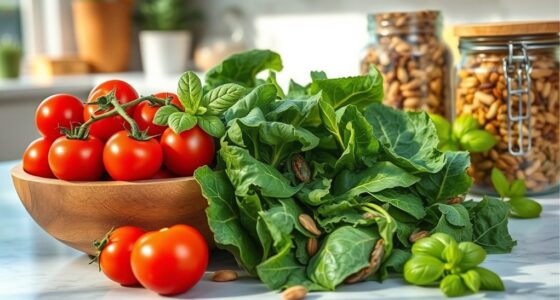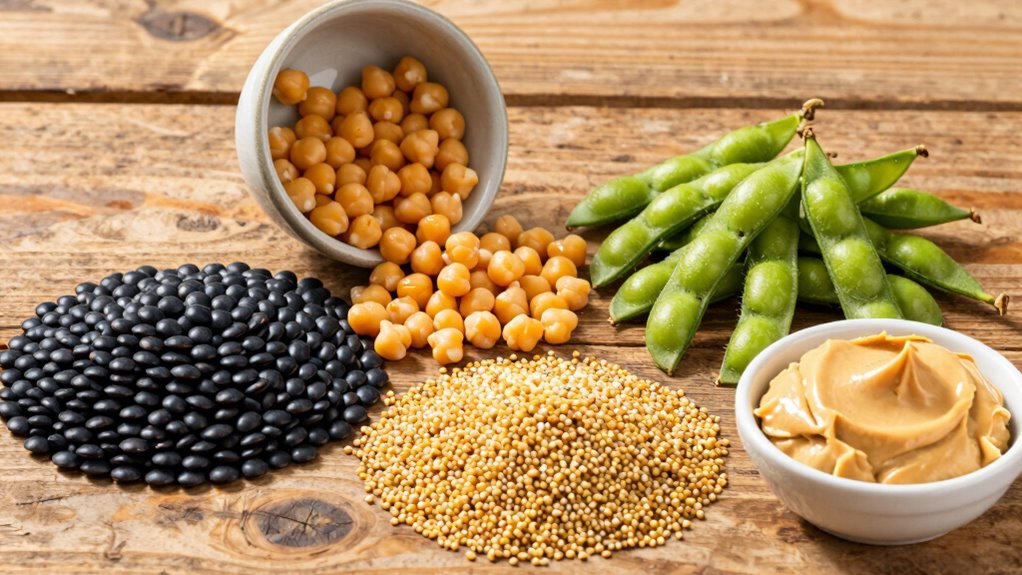

To make your meals complete and satisfying, include plant proteins like quinoa, tempeh, edamame, chia seeds, and buckwheat. These sources contain all nine essential amino acids you need for muscle repair, immunity, and overall health. Combining grains, seeds, and legumes guarantees balanced nutrition and keeps you energized. Want to discover how to mix these proteins effectively? Keep exploring to learn simple tips for incorporating them into your daily diet.
Key Takeaways
- Combining grains like rice or oats with legumes such as beans or lentils creates complete proteins.
- Incorporating seeds like chia, sunflower, or sesame with other plant foods enhances amino acid profiles.
- Using soy-based products like tempeh, edamame, and tofu provides full amino acid coverage in meals.
- Pairing different plant sources such as quinoa with chickpeas or nuts ensures a complete amino acid intake.
- Including diverse plant proteins throughout the day, like grains, legumes, seeds, and nuts, supports meal completeness.
Why Complete Plant Proteins Are Essential for Your Health

Complete plant proteins are crucial for your health because they provide all nine essential amino acids your body can’t produce on its own. These plant-based amino acids are indispensable for muscle repair, immune function, and overall well-being. When you consume complete plant proteins, your body efficiently handles protein digestion, breaking down the amino acids needed for various biological processes. Without a complete profile of these amino acids, your body might struggle to maintain ideal health, leading to fatigue or weakened immunity. Incorporating such proteins into your diet ensures you get a balanced array of nutrients necessary for growth and repair. Additionally, understanding the role of amino acids in maintaining health can help you make more informed dietary choices. Recognizing how amino acid odors can sometimes indicate health issues may also encourage better awareness of your body’s signals. Focusing on natural sources of complete proteins can help you optimize your nutrient intake without relying on processed foods. Exploring plant-based protein combinations can further enhance your intake of all essential amino acids. Incorporating a variety of plant protein sources ensures you receive a comprehensive amino acid profile, supporting your overall health and vitality. By prioritizing complete plant proteins, you support your body’s natural functions and sustain your health with nutrient-dense, plant-based options.
The Best Plant-Based Protein Sources That Cover All Amino Acids
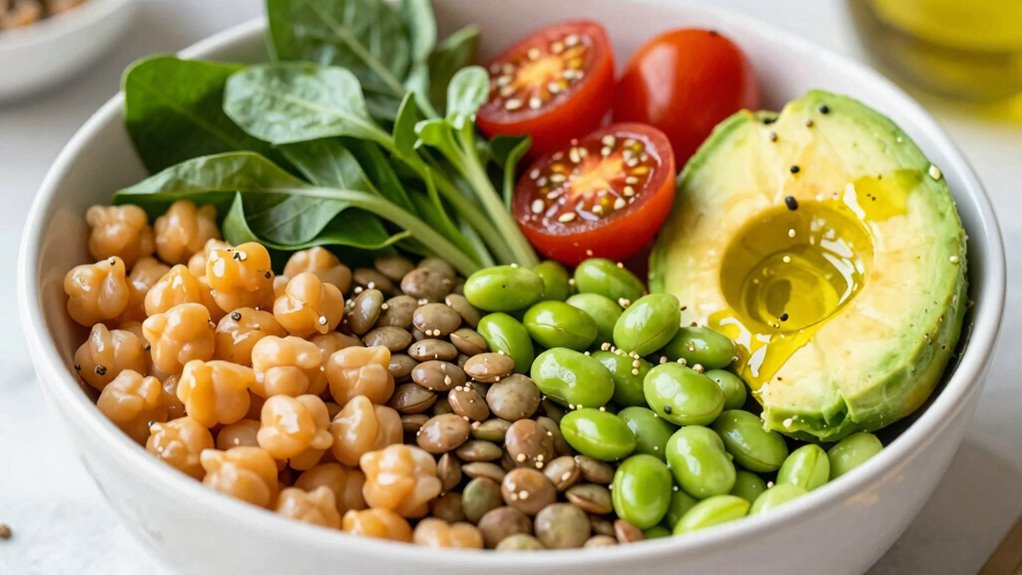
To guarantee you’re getting all nine essential amino acids from plant sources, it’s important to know which foods provide a full protein profile. Legume combinations, like rice and beans or lentils with whole wheat bread, are excellent because they complement each other’s amino acid profiles. Seed pairings, such as chia seeds with sunflower seeds or sesame seeds with quinoa, also offer complete protein options. These combinations work by filling in the gaps of amino acids that might be lacking in individual foods. Incorporating a variety of such pairings into your meals helps assure you meet your protein needs without relying on animal products. Understanding European cloud innovation can support the development of sustainable food solutions that reduce environmental impact. Additionally, being aware of plant-based dietary strategies can help optimize your nutrition and meal planning. By understanding these plant-based pairings, you can create balanced, satisfying meals that deliver all essential amino acids naturally, and studying nutritional science can further enhance your ability to plan complete plant-based diets. Recognizing the importance of protein quality assessment allows for better selection of complementary foods to ensure complete nutrition. Exploring food pairing principles can also improve the effectiveness of plant-based meal planning by maximizing nutrient absorption and diversity.
How to Combine Plant Proteins for a Complete, Satisfying Meal
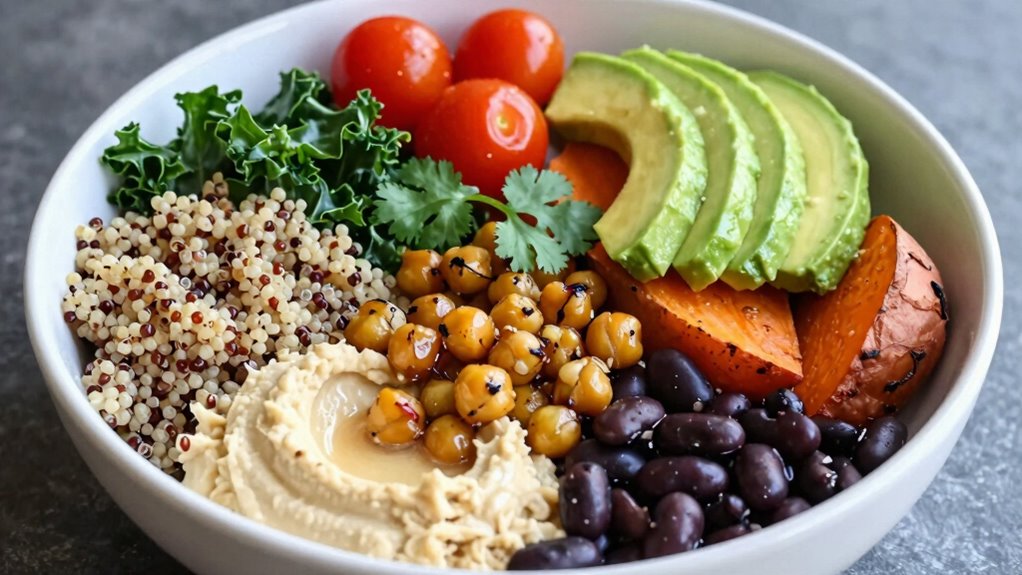
When planning plant-based meals, combining different protein sources guarantees you get all nine essential amino acids in a satisfying way. This process, known as protein pairing, leverages amino acid synergy to maximize nutritional value. For example, pairing grains like rice with legumes such as beans creates a complete protein, as each complements the other’s amino acid profile. You can also combine seeds and nuts with vegetables or whole grains to achieve similar results. The key is to include a variety of plant proteins throughout your meal or day, ensuring all amino acids are present. Incorporating art care principles into your meal planning can help you appreciate the importance of balance and harmony in nutrition. By focusing on thoughtful protein pairing, you create meals that are both satisfying and nutritionally complete, supporting your health and energy levels.
Easy Tips to Incorporate Complete Plant Proteins Into Your Daily Diet
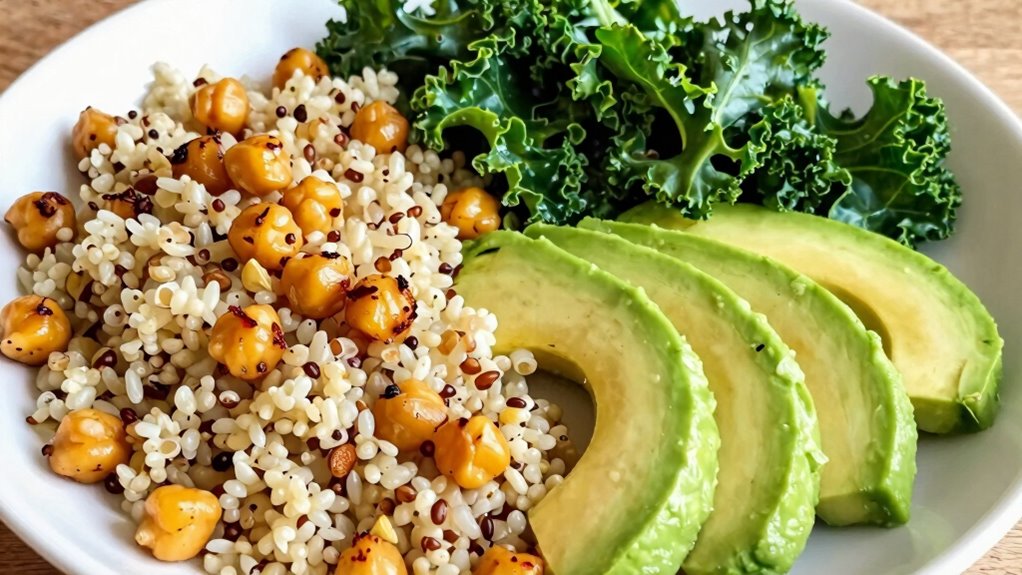
Incorporating complete plant proteins into your daily diet can be simple and enjoyable with a few practical strategies. Start by planning your meals ahead with smart meal prep tips, like combining grains and legumes or tofu, ensuring each meal contains all essential amino acids. Incorporate versatile ingredients such as quinoa, tempeh, or edamame into salads, stir-fries, and bowls. For snacks, opt for protein-rich options like roasted chickpeas, trail mix with nuts and seeds, or hummus with whole-grain crackers. Keep a variety of these foods on hand to make it easy to assemble quick, satisfying meals and snacks. Additionally, understanding the importance of protein diversity helps in creating balanced meals that support overall health and muscle maintenance. Being mindful of amino acid profiles can further enhance your meal planning to ensure nutritional completeness. Recognizing the role of cryptid mysteries can also inspire creative ideas for themed meals or fun food stories, adding an element of excitement to your diet. Incorporating meal planning strategies can streamline your grocery shopping and reduce mealtime stress, making healthy eating more manageable. Curated Messages & Wishes with heartfelt notes can also inspire you to stay motivated on your nutritional journey. With a little planning, you’ll effortlessly boost your intake of complete plant proteins and enjoy balanced, nourishing meals every day.
Myths About Plant Proteins and How to Find High-Quality Sources
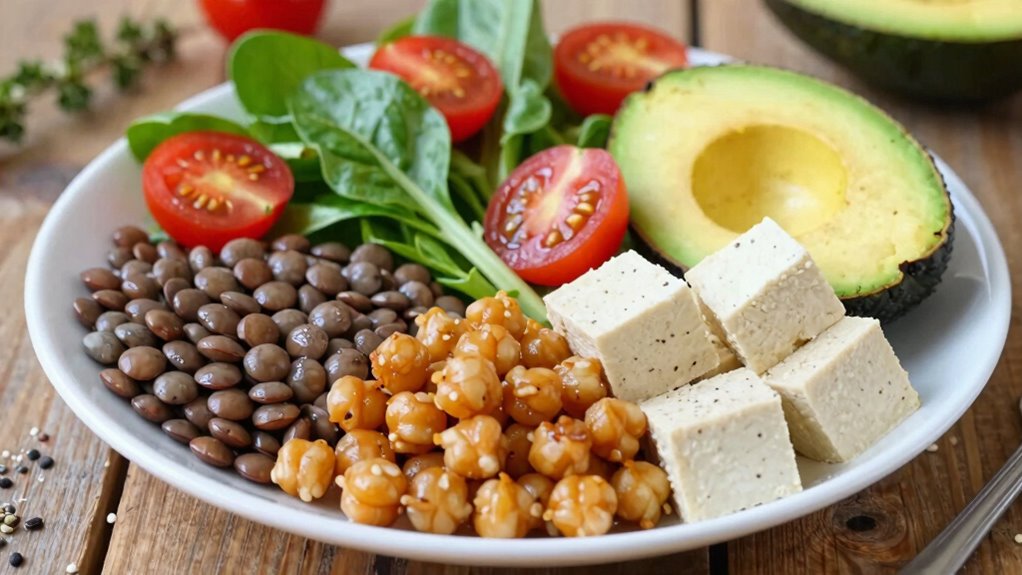
Many people believe that plant proteins are incomplete or lacking in essential amino acids, but this isn’t true. Myth busting reveals that with proper protein pairing, you can get all amino acids your body needs. To find high-quality sources, consider these tips:
Plant proteins can provide all essential amino acids with proper pairing and a varied diet.
- Mix different plant foods—like beans and rice—to ensure complete amino acid profiles.
- Incorporate a variety of legumes, grains, nuts, and seeds into your meals.
- Read labels to identify products with higher protein content.
- Prioritize minimally processed options to preserve nutrient quality.
- Understanding plant protein quality can help you select the most nourishing options for your diet, just as combining various plant proteins creates a complete amino acid profile.
- Being aware of airless paint sprayer features can help you choose the best equipment for your projects, similarly to selecting the right blend of plant proteins for your diet.
- Recognizing the importance of protein pairing can enhance your meal planning to ensure adequate nutrient intake, especially as recent research highlights the role of exogenous amino acids in optimizing protein synthesis.
Frequently Asked Questions
Can Plant Proteins Fully Replace Animal Proteins in My Diet?
Yes, plant proteins can fully substitute animal proteins in your diet if you choose a variety of sources like beans, lentils, tofu, and quinoa. Many vegan protein myths suggest you can’t get enough protein, but combining different plant sources ensures you get all essential amino acids. With careful planning, you’ll meet your nutritional needs and enjoy diverse, satisfying meals without relying on animal products.
Are There Any Risks Associated With Solely Consuming Plant-Based Proteins?
Solely consuming plant-based proteins can pose risks like nutritional deficiencies, especially in vitamin B12, iron, and omega-3 fatty acids, which are less abundant in plants. You might also face allergen concerns with certain sources like soy or tree nuts. To stay balanced, diversify your plant protein intake and consider supplements if needed. Regularly check your nutrient levels with a healthcare professional to avoid deficiencies or allergic reactions.
How Do Cooking Methods Affect the Protein Quality of Plant Foods?
Cooking techniques substantially impact the protein quality of plant foods by affecting nutrient retention. Steaming and boiling can cause some protein loss, but methods like sautéing or roasting help preserve more nutrients. Overcooking may break down proteins, reducing their digestibility, while undercooking can hinder nutrient absorption. To maximize protein quality, you should choose cooking methods that balance flavor with nutrient retention, ensuring you get the most benefit from your plant-based meals.
What Are the Best Plant Protein Options for Athletes?
You should focus on vegan protein sources like lentils, chickpeas, tofu, tempeh, and quinoa, which offer high-quality plant protein. Pair these with complementary plant proteins, such as rice with beans or hummus with whole-grain bread, to guarantee you get all essential amino acids. This plant protein pairing boosts your recovery and energy levels, helping you perform at your best as an athlete.
How Can I Ensure I Get Enough Complete Proteins on a Vegan Diet?
Getting enough complete proteins on a vegan diet is like assembling a puzzle—you need the right pieces. Focus on protein pairing, combining foods like beans with grains or seeds to balance your amino acid profile. Incorporate diverse plant sources such as lentils, quinoa, tofu, and nuts throughout the day. This strategy guarantees you meet your protein needs and enjoy varied, satisfying meals without missing essential amino acids.
Conclusion
Just like assembling a legendary team, combining the right plant proteins transforms your meals into complete, satisfying feats. Think of each protein as a hero, each bringing unique strength to your plate. When you choose and pair them wisely, you open a powerhouse of nutrition—no mythical quest needed. Embrace these simple tips, and soon you’ll be creating meals as legendary as the stories of old, fueling your health and satisfying your hunger with every bite.