The biggest mistake that keeps your home pizza from tasting incredible is overworking the dough or rushing the fermentation process. When you knead too much or don’t give the dough enough time to rise, it becomes dense, flat, and lacking flavor. Proper fermentation and gentle handling are key to a light, airy crust with rich flavor. Keep these tips in mind, and you’ll discover more secrets to perfecting your pizza with each attempt.
Key Takeaways
- Overworking the dough during kneading can weaken gluten, resulting in tough, dense crusts that lack tenderness and flavor.
- Rushing or insufficient fermentation prevents proper rising, leading to flat, flavorless, and heavy pizza crusts.
- Using low-quality flour or skipping essential ingredients like salt diminishes flavor and structural integrity of the dough.
- Incorrect hydration levels or handling can cause sticky dough that doesn’t rise well or develop proper texture.
- Not allowing adequate resting or fermentation time hampers flavor development and results in a less airy, less flavorful crust.
Why Does My Pizza Dough Fall Flat? Common Mistakes to Avoid

One common reason your pizza dough falls flat is overworking it during kneading. When you knead too much, you disrupt the dough’s gluten structure, preventing proper dough fermentation and leading to a dense, flat crust. Additionally, rushing the fermentation process or using ingredient substitutions that alter hydration or gluten development can hinder rising. For example, swapping bread flour for a lower-protein alternative might reduce gluten strength, affecting the dough’s ability to rise. To avoid this, knead just enough to develop a smooth, elastic dough, and allow sufficient dough fermentation time for flavor and lift. Be mindful of ingredient substitutions, ensuring they support proper fermentation and gluten formation. Proper handling and ingredient choices keep your dough airy and well-risen, avoiding flatness. Also, understanding gluten formation can help you better control dough elasticity and rise. Recognizing how proper fermentation influences dough structure is essential for achieving that perfect rise. Paying attention to dough hydration levels is equally important, as they play a crucial role in the dough’s ability to rise properly. Incorporating the right hydration levels can significantly improve your dough’s texture and lift.
Top Dough Errors That Ruin Flavor and Texture
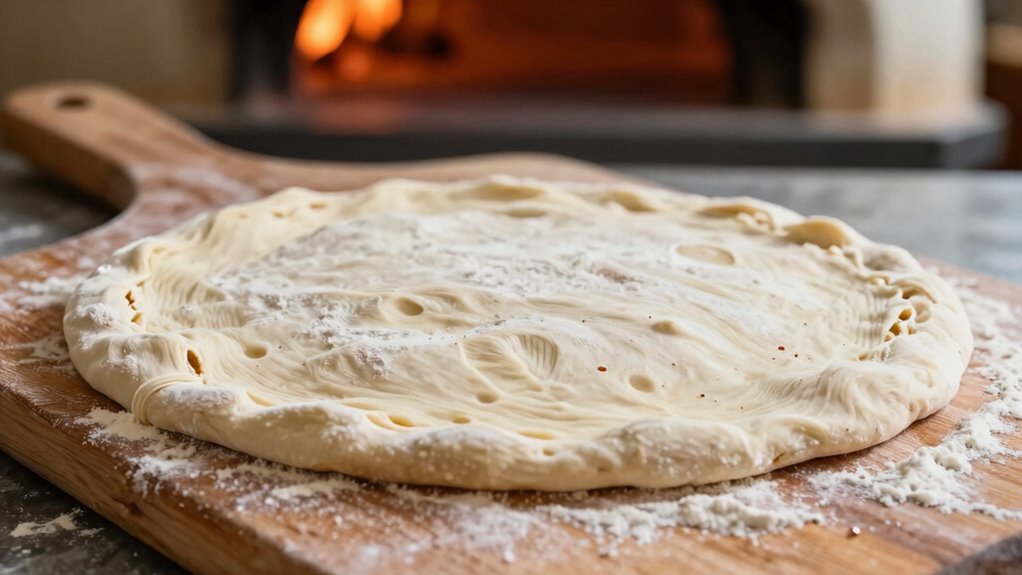
Poor ingredient choices and improper handling can considerably compromise your pizza dough’s flavor and texture. Using low-quality flour or skipping essential ingredients like salt impacts the dough’s taste and structure. Additionally, incorrect fermentation techniques—such as rushing the proofing process or not allowing enough time—can lead to flat, bland crusts with poor rise. Proper fermentation techniques are crucial for developing flavor and texture, and understanding how to control fermentation conditions can make a significant difference. Avoid ingredient substitutions that aren’t suited for pizza dough, like using oils or sugars that alter the dough’s hydration or fermentation. Overworking the dough also causes gluten development issues, resulting in a tough or dense crust. To prevent these errors, stick to authentic ingredients, follow proper fermentation techniques, and handle the dough gently. These small adjustments, combined with consistent ingredient ratios, make a big difference in achieving a flavorful, perfectly textured pizza crust. Incorporating cultural activities like traditional fermentation methods can also enhance the authenticity and flavor of your dough, and paying attention to ingredient ratios ensures optimal consistency and rise. Additionally, understanding the importance of mammography guidelines can help in early detection of health issues, much like how proper dough handling is essential for a perfect pizza.
How to Prepare Pizza Dough for a Perfect Crust
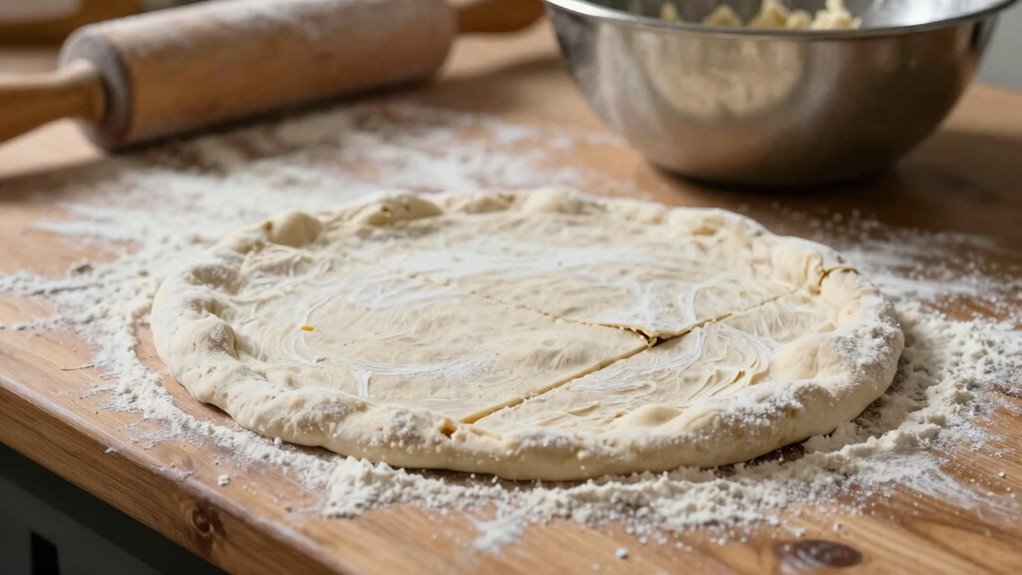
Achieving a perfect pizza crust begins with proper dough preparation, which sets the foundation for flavor, texture, and overall success. Start by ensuring your dough ferments adequately; this develops flavor and creates a better crust. Use warm water and give it enough time—at least 1 to 2 hours or overnight for more complex flavors. When necessary, ingredient substitutions can improve texture or taste, like replacing part of the flour with whole wheat or adding a touch of olive oil for tenderness. Mix your ingredients thoroughly, knead until smooth, and let the dough rest covered in a warm spot. Proper fermentation also enhances gluten development, which contributes to the dough’s elasticity and overall texture. Paying attention to your yard care setup can help you maintain a clean workspace, ensuring your ingredients stay fresh and uncontaminated. Additionally, maintaining a clean workspace fosters better hygiene practices, which is essential for food safety and dough quality. Incorporating proper fermentation techniques can further enhance the flavor and texture of your dough, leading to an incredible crust. Thoughtful ingredient substitutions and proper fermentation help create a well-balanced, flavorful dough that’s easy to stretch and results in an incredible crust.
Troubleshooting: Fixing Common Dough Problems
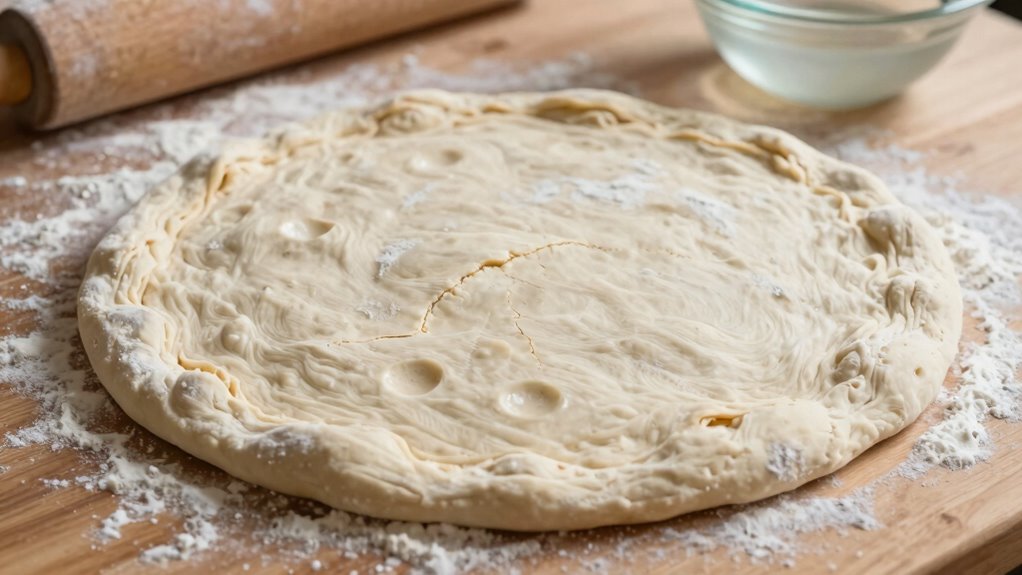
Even with careful preparation, dough issues can still pop up during your pizza-making process. If your dough is too sticky, try reducing liquids or adjusting ingredient substitutions. For example, incorporating comedogenic ratings into your ingredient choices can help prevent skin or surface issues with your dough. For under-fermented dough, give it more time for dough fermentation to develop flavor and texture. Conversely, over-fermented dough may become sour or fragile; in this case, use it quickly or start fresh. Here’s a quick troubleshooting guide:
| Problem | Cause | Solution |
|---|---|---|
| Sticky dough | Excess moisture, low gluten | Add flour gradually, adjust hydration |
| Dense, heavy crust | Insufficient fermentation | Extend dough fermentation time |
| Flat, lack of rise | Poor yeast activity or substitutions | Use fresh yeast, ensure proper proofing |
Understanding dough fermentation can help you better manage timing and results for consistently delicious pies. Additionally, paying attention to gluten development can improve the dough’s structure and elasticity, preventing common issues like stickiness or density. Developing a good kneading technique is also essential to achieve optimal gluten formation and dough quality. Furthermore, adopting traditional Indigenous wellness practices such as mindful preparation and respecting natural rhythms may enhance your overall baking experience.
Simple Tips to Elevate Your Homemade Pizza Dough
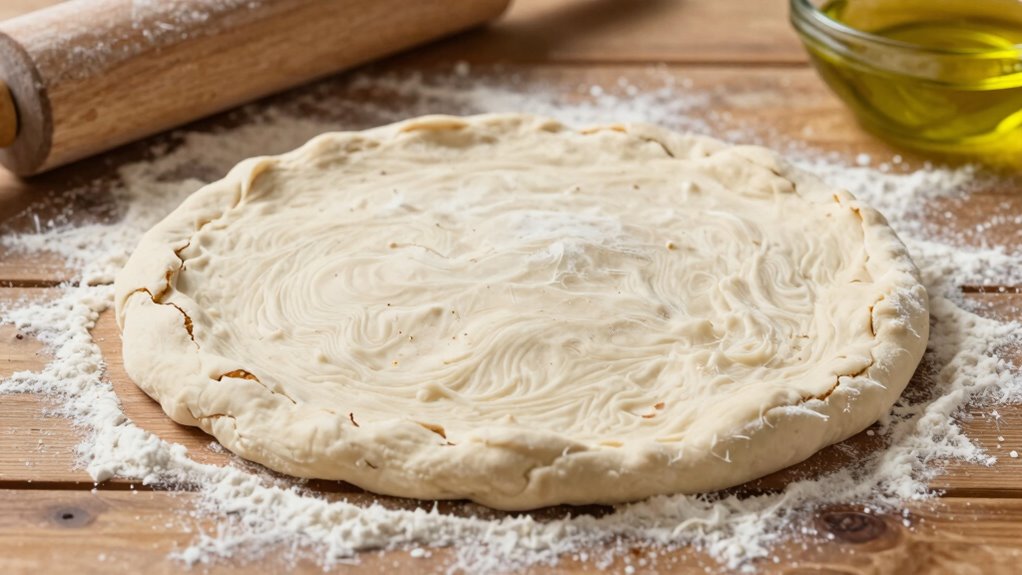
To elevate your homemade pizza dough, focus on simple techniques that make a noticeable difference. First, let your dough rest longer to develop flavor and improve texture. Use quality ingredients, like high-protein flour and fresh yeast, for a better base. Experiment with creative toppings to add variety and excitement—think roasted vegetables, unique cheeses, or fresh herbs. Don’t shy away from alternative sauces beyond traditional marinara; pesto, white sauce, or even hummus can transform your pizza’s flavor profile. Lightly brushing the crust with olive oil before baking enhances its crispness and adds richness. Incorporating support networks for new dads can provide helpful tips and encouragement, especially when managing the challenges of home cooking and family life. Additionally, understanding different personality traits can help you better tailor your cooking style to suit your preferences and those of your family. Recognizing common brustkrebs symptome can also help you stay vigilant and proactive about health. Exploring sound healing science and incorporating calming sounds during your pizza-making process might boost your relaxation and creativity, leading to an even better experience. Moreover, implementing targeted email marketing strategies can inspire you with fresh ideas and motivation for your culinary adventures. These small tweaks help your dough shine, creating a more memorable pizza experience every time.
Frequently Asked Questions
Can Using Different Flour Types Improve My Pizza Flavor?
Yes, using different flour types can considerably improve your pizza flavor. For example, bread flour enhances gluten development, giving your crust a chewy texture, while whole wheat flour adds a rich, nutty flavor for better flavor enhancement. Experimenting with combinations allows you to customize your crust’s taste and texture, making each pizza unique. Just remember, different flours may require adjustments in hydration and kneading to achieve the perfect dough.
How Does Resting Time Affect Dough Elasticity?
Picture your dough as a stretched rubber band; as it rests, gluten development and the fermentation process work together, making it more elastic. Resting time allows the dough to relax and strengthen, preventing it from snapping when stretched. The longer this process, the more your dough gains resilience, resulting in a tender, chewy crust. So, give your dough ample rest to reveal perfect elasticity and flavor.
What’s the Best Way to Store Leftover Pizza Dough?
You should store leftover pizza dough in an airtight container or wrap it tightly with plastic wrap. Refrigerate it to slow dough fermentation, which helps preserve gluten development and prevents over-proofing. For longer storage, consider freezing the dough, then thaw it in the fridge before use. This way, you keep the dough fresh, maintain its elasticity, and guarantee your pizza retains that perfect texture and flavor.
Does Adding Sugar Impact the Dough’s Rise?
Adding sugar can be a game-changer for your dough’s rise. Sugar’s effect boosts yeast activation, giving it that extra kick to produce more carbon dioxide. This means your dough will rise better and develop a lighter, airier texture. Just remember, a little sugar goes a long way—too much can slow fermentation or make the crust overly sweet. Balance is key to achieving that perfect, mouthwatering pizza crust.
How Do I Prevent Dough From Sticking During Shaping?
To prevent dough from sticking during shaping, use non-stick techniques like dusting your surface and hands with flour or flour alternatives such as rice flour or cornstarch. You can also lightly oil the surface or your hands to reduce sticking. Avoid over-flouring, which can make the dough tough. Keep the dough slightly chilled and work quickly, ensuring it doesn’t get sticky or difficult to handle, resulting in a perfectly shaped pizza.
Conclusion
To turn your homemade pizza into a masterpiece, avoid the common dough pitfalls like rushing the rise or overworking the dough. Think of your dough as a delicate dance partner—gentle, patient, and in sync with your hands. With the right techniques and attention to detail, you’ll craft a crust that’s as irresistible as a magnet, drawing everyone in for a slice of perfection. Keep experimenting, and soon, your pizza will be a showstopper every time.