
🔍 Read the full analysis: Pesto Alla Genovese By Mortar: Why The Original Method Still Wins on Mad Tasting

Get kitchen staples and gadgets delivered free with Prime
- Fast, free delivery on millions of items
- Prime Video, Amazon Music and more included
- Member-only deals all year
TL;DR
A source article from Mad Tasting explains why pounding pesto alla Genovese in a mortar can produce a softly textured sauce with a fresh basil aroma. It also notes that a food processor can make excellent pesto and that ingredient quality, gentle handling and serving technique matter more than the tool alone.
Mad Tasting has published a guide to making pesto alla Genovese with a mortar and pestle, arguing that gradual crushing gives cooks more control over texture and helps retain a fresh basil aroma. The guide also says a food processor can make excellent pesto, framing the mortar as a traditional option rather than a requirement for a good sauce.
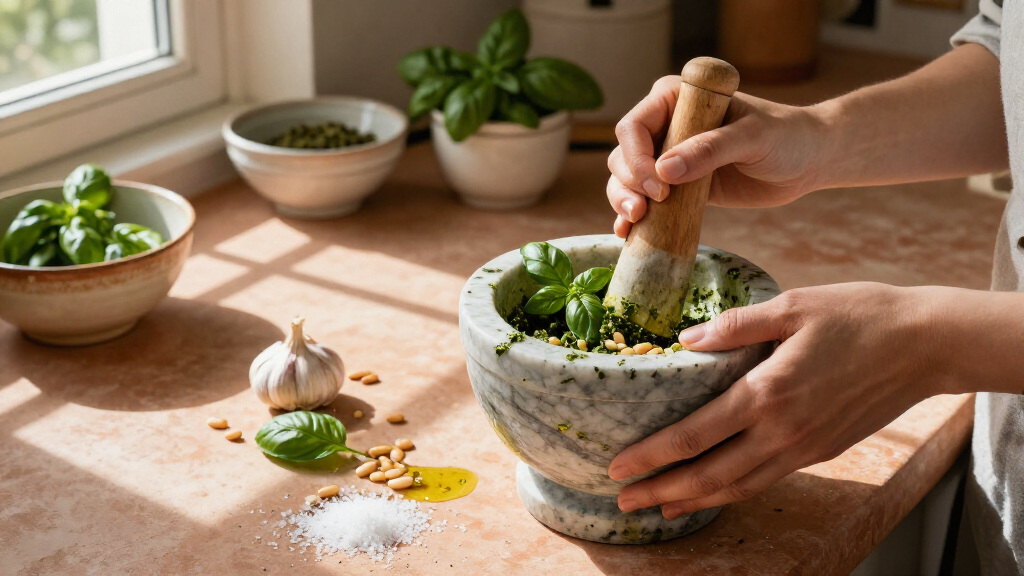
The guide describes pesto alla Genovese as a Ligurian basil sauce made with basil, garlic, pine nuts, hard cheese and extra-virgin olive oil. In the traditional method, cooks pound the ingredients in stages. The pestle presses and smears basil against the mortar’s rough surface, leaving a softly textured paste if the cook stops before the leaves are fully broken down.
By comparison, a food processor chops quickly and tends to create a more uniform sauce. Mad Tasting says the difference is a matter of control and sensory preference, not evidence that one technique always produces better flavor. It notes that fast processing may warm a small batch, while a mortar lets the cook feel when the basil has collapsed enough.
The recommended process begins with dry, tender basil leaves. Garlic is crushed with salt, followed by pine nuts; basil is added a handful at a time, then grated cheese and olive oil are worked in gradually. The guide emphasizes gentle handling and gradual additions rather than force. It also says recipes vary in ingredient ratios and in the order for adding cheese and oil, so its sequence is a practical method rather than a fixed rule.
Why the Mortar Still Wins
Pounding pesto offers hands-on control over texture and pace. A food processor can also make excellent pesto; ingredient quality and gentle handling matter whichever tool you choose.
Choose Your Tool
The difference is control and preference, not a proven winner.
- Gradual crushing and hands-on control
- Can leave a softly textured paste
- Suited to a small batch
- Faster mixing
- More uniform texture
- Useful for larger quantities
Build the Sauce Gradually
The traditional lineup is basil, garlic, pine nuts, salt, hard cheese and extra-virgin olive oil.
Crush them together, then add pine nuts.
Work in a handful at a time and stop while small flecks remain.
Work in grated cheese and olive oil gradually. Recipes vary in ratios and order.
Serve It Without Cooking
Pesto is a Ligurian basil sauce; its name is linked to pestâ, meaning “to pound” or “to crush.”
- Toss with pasta off the heat.
- Try trofie or trenette, sometimes with potatoes and green beans.
- Parmigiano Reggiano and Pecorino Fiore Sardo are a classic cheese pairing.
Texture Depends on the Tool
The comparison matters to cooks deciding whether traditional equipment changes the result enough to justify the extra work. The mortar offers hands-on control over coarseness: a cook can stop while small flecks of basil remain. A processor is faster and produces a more even mixture, which may suit a weeknight meal or a larger batch.
Mad Tasting’s central qualification is that the tool is not the only determinant of quality. Fresh ingredients, careful seasoning and gentle handling matter whichever method is used. The source does not cite a controlled taste test or scientific measurement, so its account of the mortar’s aromatic advantage should be understood as a practical sensory observation, not a proven universal result.
The guidance also affects how pesto is served. The source recommends pairing it with Ligurian pasta such as trofie or trenette, sometimes with potatoes and green beans. It advises tossing the sauce with pasta off the heat, helping keep the uncooked basil from being treated like a sauce meant for prolonged cooking.
Products Worth Considering

Weber Smokey Mountain Cooker 14 Charcoal Smoker

Ninja Foodi Air Fryer 8 Qt DualZone 6-in-1 Grey DZ201

Instant Pot Pro 6-Quart 10-in-1 Electric Pressure Cooker
As an affiliate, we earn on qualifying purchases.
A Sauce Named for Pounding
The name pesto is linked in the source to the Ligurian verb pestâ, meaning “to pound” or “to crush.” That origin reflects the traditional method: the ingredients are gradually worked together rather than cooked in a pan. The sauce’s identity rests on a short ingredient list and the fresh character of its basil.
Mad Tasting identifies Parmigiano Reggiano and Pecorino Fiore Sardo as a classic cheese pairing, while noting that proportions vary among recipes. Pine nuts soften garlic’s sharpness, and cheese contributes salt and savory flavor. The article does not present one exact ratio as definitive; it suggests adjusting the balance to taste.
The source compares three tools: a mortar for a small batch with a textured finish, a processor for speed or larger quantities, and a blender for a very smooth, potentially more pourable sauce. Its advice is limited to preparation and serving; it does not report a new product, official ruling or culinary study.
“The mortar’s advantage is control over pace and texture.”
— Mad Tasting
No Test Establishes a Winner
The source provides no controlled taste-test results, measurements of aroma or temperature, or evidence that mortar-made pesto is preferred by all diners. Its claim that pounding can preserve a fresh, leafy aroma is presented as a sensory explanation, not a quantified finding. It also does not specify a single authoritative recipe ratio.
The supplied material cuts off during a sentence about avoiding an overcrowded mortar. It therefore does not provide the complete troubleshooting advice, storage instructions or any further details that may have followed in the original article. No publication date was included in the material provided.
Choose a Method and Serve
The source does not announce a follow-up test or a new development. For home cooks, its next step is practical: try a small batch in a mortar if texture and hands-on control are priorities, or use a processor when speed or volume matters. In either case, dry basil and gradual mixing are central to the method it describes.
Serve the pesto with pasta, mixing it in off the heat; the guide names trofie and trenette, with potatoes and green beans, as traditional pairings. The source gives no specific storage duration or temperature guidance, so it does not support a claim about how long a prepared batch can safely be kept.
Key Questions
Does pesto have to be made in a mortar?
No. Mad Tasting says a food processor can make excellent pesto. The mortar is an option for cooks seeking greater control over a textured finish and gradual mixing.
What difference does the mortar make?
The pestle crushes and smears the basil against the bowl, which can leave a softly textured sauce. A processor chops faster and usually creates a more uniform mixture.
Which ingredients does the guide recommend?
The traditional lineup is basil, garlic, pine nuts, hard cheese, salt and extra-virgin olive oil. The guide names Parmigiano Reggiano and Pecorino Fiore Sardo as a classic cheese pairing, while noting that recipes vary.
How should pesto be added to pasta?
The source recommends tossing pesto with pasta off the heat. It suggests trofie or trenette, and mentions potatoes and green beans as accompaniments.
Does the source say mortar-made pesto tastes better?
It describes the mortar’s aroma and texture as advantages, but does not report a controlled comparison proving it tastes better. The article says ingredient quality and careful handling also matter.
Source: Mad Tasting