🔍 Read the full analysis: Torta Della Nonna: The Custard-and-Pine-Nut Tart Every Trattoria Serves on Mad Tasting

Get kitchen staples and gadgets delivered free with Prime
- Fast, free delivery on millions of items
- Prime Video, Amazon Music and more included
- Member-only deals all year
TL;DR
Torta della Nonna is a traditional Italian dessert featuring a shortcrust pastry filled with lemon custard and topped with toasted pine nuts and powdered sugar. It is especially popular in Tuscany but varies regionally. Its history is murky, but it remains a staple at many trattorias.
Torta della Nonna is a classic Italian dessert that remains a staple on Tuscan trattoria menus. It features a crisp pasta frolla shell filled with lemon-scented crema pasticcera, topped with toasted pine nuts and dusted with powdered sugar. Despite its widespread popularity, its precise origins are debated, and regional variations continue to evolve. For more details, see the original analysis. This article clarifies what is known about this beloved tart, its history, and its cultural significance, as detailed in the original analysis.
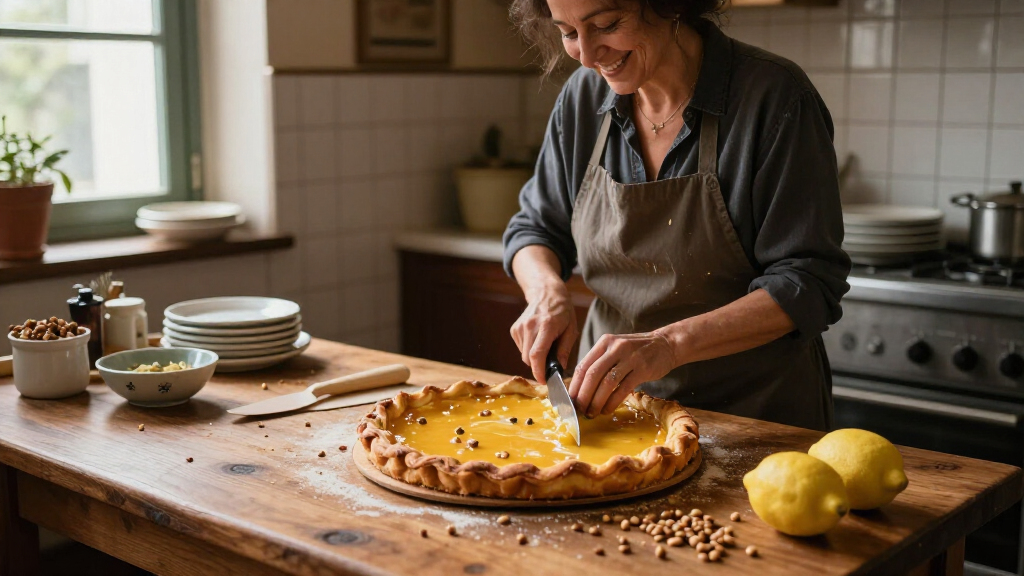
The tart’s structure involves three key components: a tender, crumbly pasta frolla shell, a smooth lemon-flavored custard called crema pasticcera, and a crunchy topping of toasted pine nuts. The pastry, similar to French pâte sablée, provides richness without heaviness, while the citrus-infused custard balances the richness with acidity. The toasted pine nuts add a resinous, savory sweetness, and the final dusting of powdered sugar gives it a distinctive, rustic appearance.
Although often associated with Tuscany—especially Florence and Arezzo—the exact origins of Torta della Nonna remain uncertain. The most common account attributes its creation to Guido Samorini, a Florentine chef from the 20th century, who popularized the dessert in local restaurants. However, some sources suggest it was a traditional household recipe that predated commercial fame, with regional variations existing long before its widespread recognition. The name, meaning ‘Grandmother’s Cake,’ emphasizes its rustic, homey appeal, whether or not it has a documented history dating back centuries.
While the dessert is prevalent in Tuscan trattorias, it is not universally found across Italy. In Rome, for example, tiramisù and panna cotta are more common, while in Sicily, cassata and cannoli dominate. The tart’s regional popularity is strongest in Tuscany, where it often appears on menus from modest osterias to upscale ristoranti. Variations exist, such as the ‘torta del nonno’ in Arezzo, which sometimes includes chocolate or almonds, reflecting local tastes.
Torta della Nonna: The Custard-and-Pine-Nut Tart Every Trattoria Serves
A crisp pasta frolla shell, lemon-scented crema pasticcera, toasted pine nuts, and a snowfall of powdered sugar — the beloved “Grandmother’s Cake” that anchors Tuscan menus from modest osterias to upscale ristoranti.
Three Components, One Perfect Balance
The tart’s structure is a study in Italian harmony: richness without heaviness, acidity balancing cream, and crunch against silk.
The Shell — Pasta Frolla
A tender, crumbly shortcrust pastry similar to French pâte sablée. It delivers buttery richness without heaviness, forming the crisp foundation of every slice.
The Filling — Crema Pasticcera
A smooth, lemon-scented pastry cream. The citrus acidity cuts through the richness of the pastry, keeping each bite bright rather than cloying.
The Topping — Pine Nuts & Sugar
Toasted pine nuts add a resinous, savory sweetness and crunch, while a final dusting of powdered sugar gives the tart its distinctive rustic appearance.
From Kitchen Lore to Trattoria Staple
No concrete documentation confirms the tart’s origin before the 20th century. Its history rests largely on oral tradition and culinary lore.
Household Roots
Similar custard-filled pastries likely existed in Tuscan homes, with recipes passed down informally for generations.
Pre-1900s · Oral traditionSamorini’s Claim
The most common account credits Florentine chef Guido Samorini, who is said to have created or popularized the tart in his restaurant.
20th century · FlorenceMenu Fixture
The tart spread across Tuscany, pairing with the region’s wines and coffee, from osterias to ristoranti.
Decades on · Region-wideLiving Tradition
Variations with chocolate or almonds — like Arezzo’s “torta del nonno” — keep the recipe evolving with local tastes.
Today · Still evolving“I created the recipe in the 20th century to offer diners a taste of authentic Tuscan home cooking.”
— Chef Guido Samorini, FlorenceWhere to Find It — and Where You Won’t
Despite its fame, Torta della Nonna is not universal across Italy. Its stronghold is firmly Tuscan.
| Region | Signature Dessert(s) | Torta della Nonna Common? | Notes |
|---|---|---|---|
| Tuscany | Torta della Nonna | ✓ Everywhere | Florence & Arezzo strongholds; osterias to ristoranti |
| Arezzo | Torta del nonno | ~ Variant | Sometimes includes chocolate or almonds |
| Lazio / Rome | Tiramisù, panna cotta | ✗ Rare | Other dolci dominate the menu |
| Sicily | Cassata, cannoli | ✗ Rare | Regional pastry traditions prevail |
Estimated Presence on Restaurant Menus
A qualitative scale of how often the tart appears on regional menus, from Tuscan ubiquity to Sicilian rarity.
Everything You Wanted to Ask
What are the main ingredients?
Pasta frolla (shortcrust pastry), crema pasticcera (lemon-scented pastry cream), toasted pine nuts, and powdered sugar.
Can I make it at home?
Yes — with careful technique: prevent a soggy pastry shell and ensure a perfectly smooth custard for an authentic result.
Is it the same in every region?
No. Some areas add chocolate or almonds, and its popularity is strongest in Tuscany, where it is a fixture on menus.
How long does it keep?
A few hours at room temperature; refrigerated, two to three days while maintaining its texture and flavor.
Why “Grandmother’s Cake”?
The name evokes a rustic, homey image — family recipe and comfort food — even if its precise origins remain uncertain.
What’s next for the tart?
Chefs and home bakers worldwide are adding modern twists — new flavors and presentations — as interest in traditional Italian desserts grows.
Cultural and Culinary Significance of Torta della Nonna
The enduring popularity of Torta della Nonna highlights its role as a symbol of Tuscan culinary tradition and family hospitality. Its balanced combination of crisp pastry, creamy filling, and toasted pine nuts exemplifies Italy’s emphasis on harmony and simplicity in desserts. For many, it evokes nostalgic memories of family gatherings and cozy trattoria experiences. Moreover, understanding its regional variations and uncertain history enriches appreciation for Italy’s diverse food culture, illustrating how a simple dessert can carry layers of regional identity and history.
Italian tart pan for Torta della Nonna
As an affiliate, we earn on qualifying purchases.
As an affiliate, we earn on qualifying purchases.
Historical and Regional Background of the Tart
The history of Torta della Nonna is difficult to trace definitively. Its association with Tuscany, particularly Florence and Arezzo, is well established, but no concrete documentation confirms its origin before the 20th century. The story most often told credits Guido Samorini, a Florentine chef, who is said to have created or popularized the tart in response to customer demand. Prior to this, similar custard-filled pastries likely existed in local households, with recipes passed down informally. The name itself, meaning ‘Grandmother’s Cake,’ suggests a rustic, family-oriented origin, serving as a symbol of home cooking and tradition.
Over time, the tart became a fixture in Tuscan eateries, especially as a dessert that pairs well with the region’s wines and coffee. Its simplicity and balance of flavors have helped it withstand changing culinary trends, maintaining its status on menus for decades. Despite its regional roots, variations have emerged, including versions with chocolate, almonds, or different nuts, reflecting local tastes and seasonal ingredients.
“I created the recipe in the 20th century to offer diners a taste of authentic Tuscan home cooking.”
— Chef Guido Samorini
Unanswered Questions About Its Origins and Variations
While the popular story credits Guido Samorini with creating or popularizing Torta della Nonna, there is no definitive documentation supporting this. It remains unclear whether the tart originated as a household recipe long before the 20th century or was a more recent creation that gained traditional status. Additionally, regional variations, such as versions with chocolate or almonds, suggest a flexible recipe that adapts to local tastes, but the boundaries of what constitutes an authentic Torta della Nonna are still debated.
Further research into historical cookbooks and regional culinary archives could shed light on its true origins, but currently, much of its history is based on oral tradition and culinary lore.
Future of Torta della Nonna in Italian Cuisine
As interest in traditional Italian desserts continues to grow globally, chefs and home bakers are experimenting with modern twists on Torta della Nonna, incorporating new flavors and presentation styles. Culinary historians and food writers may further explore its origins, potentially uncovering more precise historical details. For now, the tart remains a beloved symbol of Tuscan hospitality and family tradition, likely to be enjoyed for generations to come, both in Italy and abroad.
Key Questions
What are the main ingredients of Torta della Nonna?
The main ingredients include pasta frolla (shortcrust pastry), crema pasticcera (lemon-scented pastry cream), toasted pine nuts, and powdered sugar.
Can I make Torta della Nonna at home?
Yes, with careful attention to baking techniques—such as preventing soggy pastry and ensuring smooth custard—you can recreate an authentic version at home.
Is Torta della Nonna the same in every region of Italy?
No, regional variations exist, with some areas adding chocolate or almonds, and the tart’s popularity is strongest in Tuscany.
How long does Torta della Nonna keep?
It keeps well at room temperature for a few hours and can be refrigerated for two to three days, maintaining its texture and flavor.
Why is it called ‘Grandmother’s Cake’?
The name evokes a rustic, homey image, emphasizing its roots as a family recipe or comfort food, even if its precise origins are uncertain.
Source: Mad Tasting
Halloween Picks
halloween
As an affiliate, we earn on qualifying purchases.