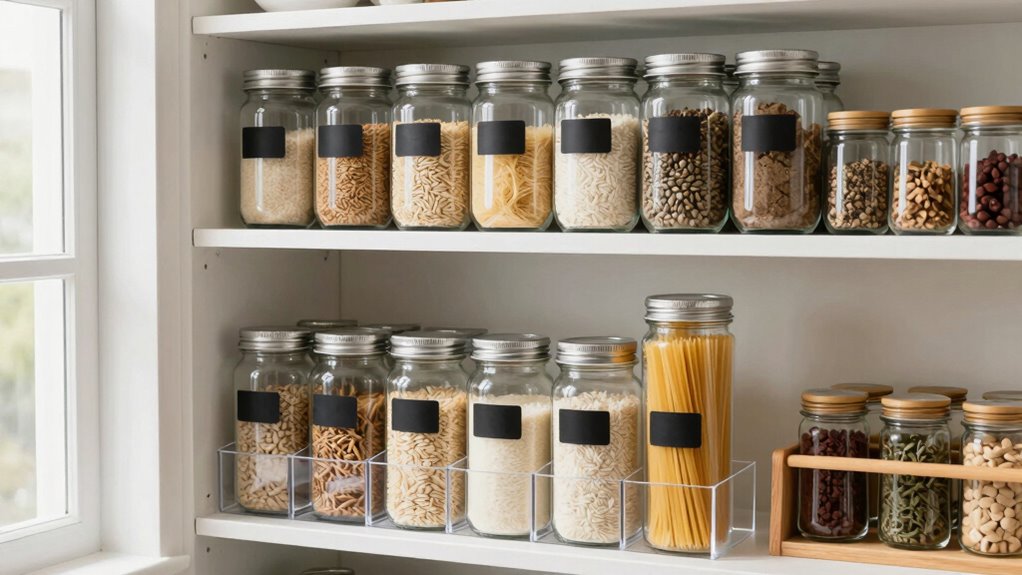

To save money with pantry organization, keep things simple by using clear containers, labels, and grouping similar items. Regularly check for expired or unused products and discard them to reduce waste. Reorganize during routine checks to keep items accessible and prevent duplicate purchases. Stick to an easy system that works for you, making meal prep smoother and preventing clutter. Keep learning practical tips to maintain an efficient and budget-friendly pantry.
Key Takeaways
- Use clear, labeled containers to prevent duplicate purchases and easily identify items.
- Regularly check and discard expired or unused products to reduce waste and save money.
- Group similar items together to simplify shopping, avoid overbuying, and optimize pantry space.
- Implement routine inventory checks to maintain organization and prevent clutter buildup.
- Reorganize during each check to keep frequently used items accessible and streamline meal prep.
Identify Why Your Pantry Gets Cluttered and How to Fix It
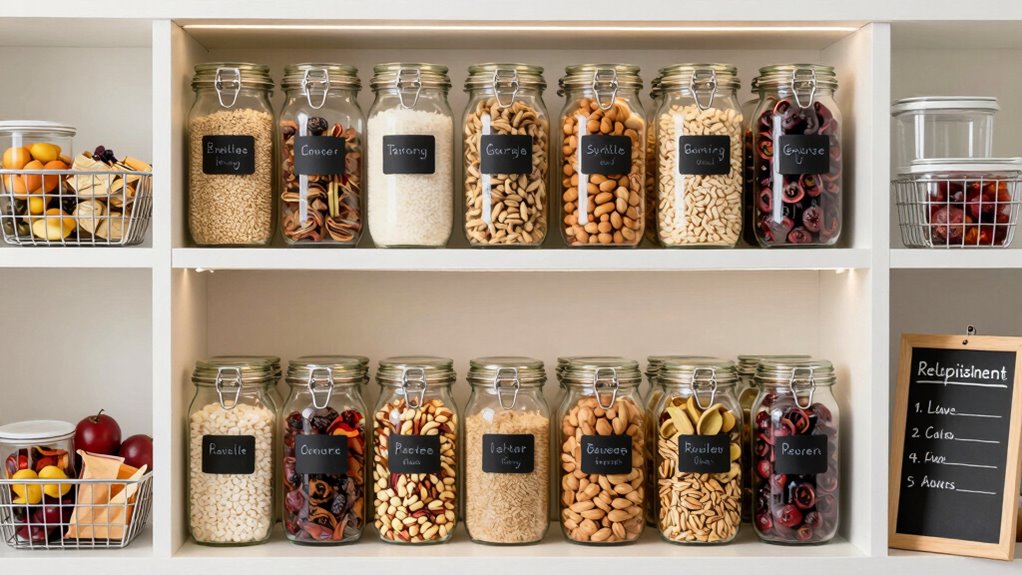
Clutter in your pantry often happens because items are stored without a system or proper organization. When you don’t keep track of expiration dates, expired food piles up, leading to unnecessary waste. This not only wastes money but also creates chaos when you’re searching for ingredients. Over time, random stacking and lack of labels cause you to overlook products that are past their prime. To fix this, start by regularly checking expiration dates and discarding expired items. Keep similar items together, and use clear containers or labels so you can easily see what you have. By staying proactive about food waste and organizing your pantry, you’ll prevent clutter from building up and save money in the long run.
Create a Simple, Easy-to-Use Pantry Organization System
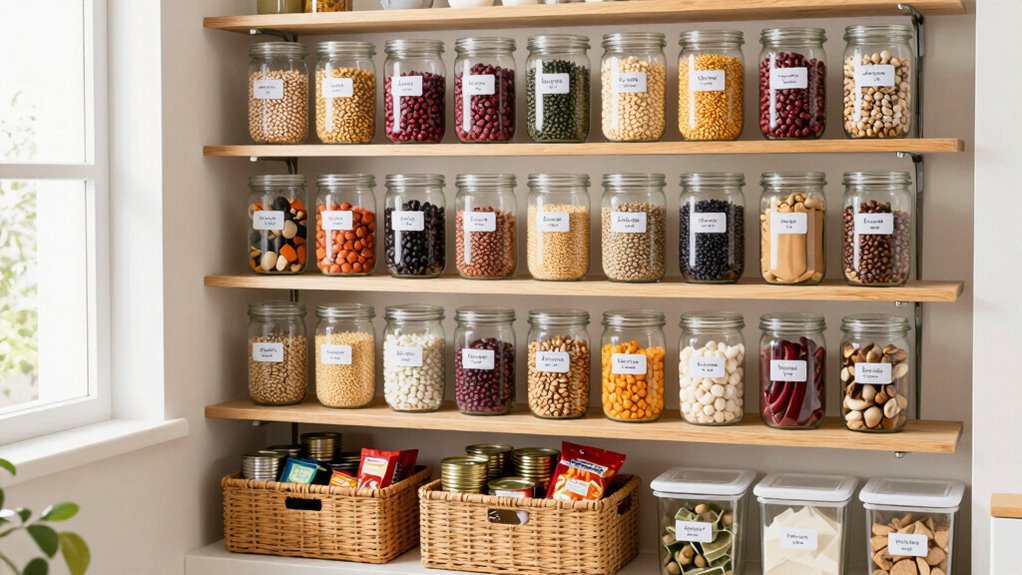
Creating a simple, easy-to-use pantry organization system starts with choosing the right storage solutions. Opt for clear containers, baskets, and labeled bins to keep items visible and accessible. This setup streamlines meal prep by making ingredients easy to find quickly, saving you time and reducing waste. Focus on affordability by using budget shopping strategies—like repurposing jars or purchasing in bulk—while maintaining organization. Group similar items together, such as snacks or baking supplies, to simplify your shopping list and prevent overbuying. Keep frequently used items at the front for easy access, and less-used items at the back. A straightforward system reduces clutter and makes it easier to maintain, helping you stay within your budget while preparing meals efficiently. Incorporating simple organization principles can enhance the effectiveness of your pantry setup and ensure consistent maintenance over time. Additionally, understanding AI job roles can inspire innovative ways to manage household systems more efficiently. Implementing these strategies can also promote sustainable practices within your household, contributing to environmental conservation. Paying attention to water sources and ensuring proper storage can further optimize your pantry management and reduce unnecessary trips or waste. Developing a routine for regular inventory checks can help you stay on top of expiration dates and prevent food waste.
Label and Categorize Your Food for Easy Finding
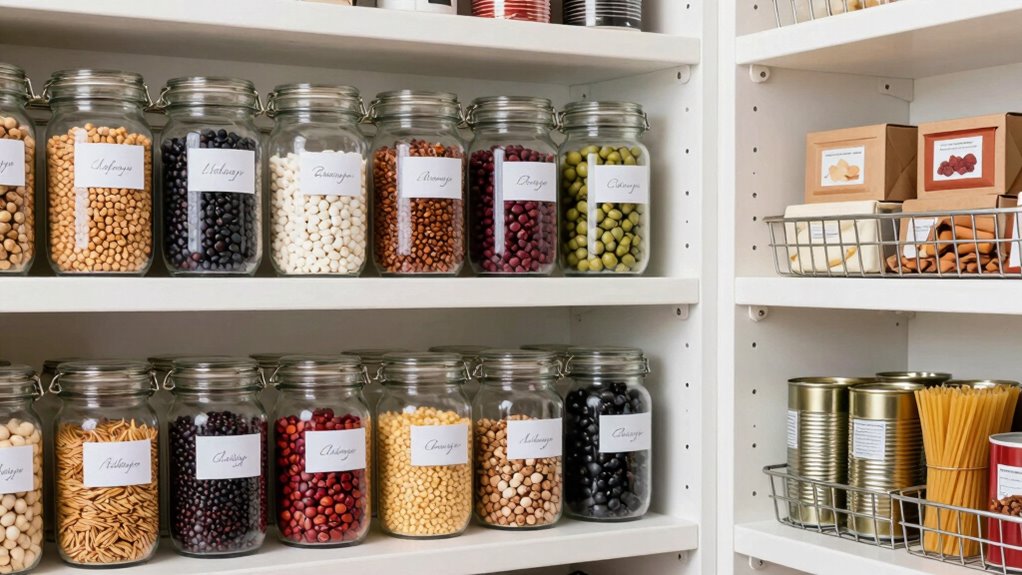
Once you’ve organized your pantry with clear containers and grouped similar items, labeling and categorizing become the next essential steps. Food labeling helps you quickly identify what’s inside each container, saving time and reducing frustration. Use simple, consistent labels for categories like grains, snacks, baking supplies, or canned goods. Category sorting makes it easier to find what you need without rummaging through piles of unorganized items. Consider using a label maker or printable labels for a neat, professional look. Be specific with your labels to avoid confusion later. Regularly review and update your labels as your pantry inventory changes. Incorporating organization strategies can further enhance your system’s effectiveness, especially when combined with food storage tips that maximize space and freshness. Additionally, utilizing water-resistant labels can help keep your labels intact in humid or spill-prone areas, maintaining clarity over time. Implementing proper food labeling techniques ensures your system remains efficient and easy to maintain, and understanding how to use essential oils for organization can add a calming scent to your space as well.
Use Clear Storage Containers to Prevent Buying Duplicates
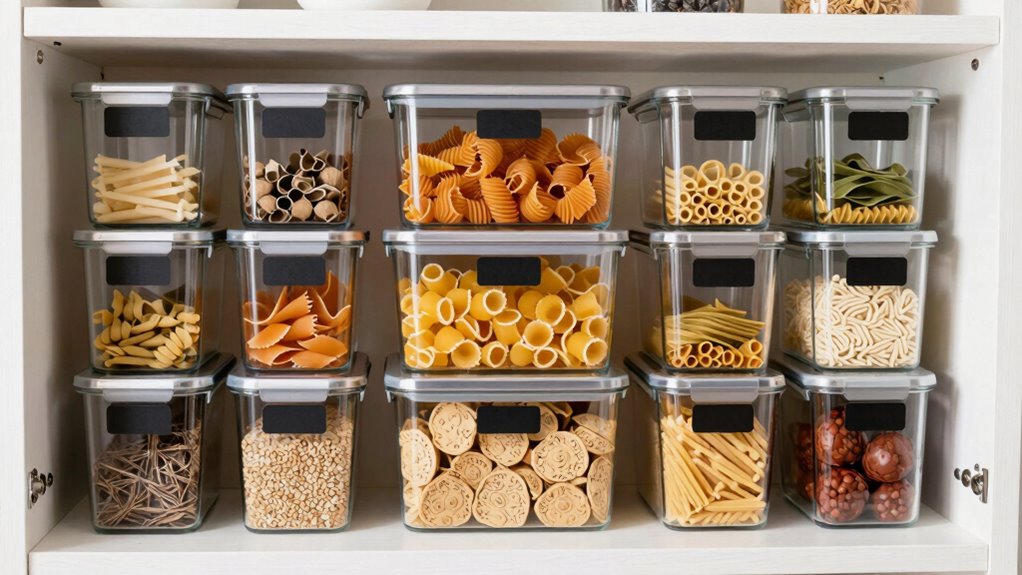
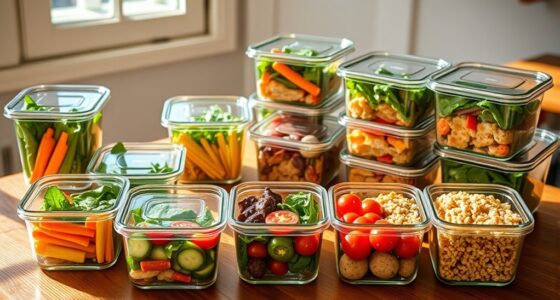
Using clear storage containers is one of the most effective ways to prevent buying duplicates and save money. They allow you to see exactly what’s inside, making it easier to track your supplies and avoid unnecessary purchases. By organizing bulk storage items in uniform containers, you optimize space and reduce clutter. Incorporating organization techniques can further enhance your pantry’s efficiency. Implementing visual storage cues helps you quickly identify when you’re running low, preventing duplicate buys and saving money in the long run. Additionally, understanding halal standards for food storage ensures your pantry remains compliant with dietary requirements. Proper labeling and categorization also support inventory management, making it easier to plan meals and shopping trips. Understanding food safety guidelines is essential to keep your pantry hygienic and your food fresh. Here’s a simple way to categorize your items:
| Food Type | Container Type |
|---|---|
| Grains & Pasta | Clear canisters |
| Snacks & Chips | Stackable jars |
| Spices & Powders | Small labeled containers |
Check and Reorganize Your Pantry Regularly to Save Money

Regularly checking and reorganizing your pantry helps you catch expired or unused items before they go to waste, saving you money. When you do this, you’ll notice items you’re running low on, helping with meal planning. It also prevents duplicate purchases. Visualize this process:
- Pull out all cans and boxes, checking expiration dates.
- Group similar items together, like snacks or baking supplies.
- Toss expired or stale items into the trash.
- Update your shopping list based on what you need or have plenty of.
- Incorporating inventory management techniques can further optimize your pantry organization and reduce unnecessary spending. Utilizing support breakfast options, such as high-protein or versatile ingredients, can also help you make the most of what you have and minimize waste. Paying attention to food storage methods ensures items stay fresh longer, reducing waste and saving money over time. Understanding your personality traits can also help you develop more effective organization habits tailored to your tendencies. Additionally, being aware of the cultural heritage associated with traditional food storage practices can inspire innovative ways to keep food fresh and organized.
Troubleshoot Common Pantry Organization Problems and Keep It Simple

When your pantry starts to feel cluttered, clear container labels can quickly help you find items and stay organized. Regular maintenance checks prevent clutter from piling up and catch any expired or spoiled food early. Keeping things simple with these routines makes pantry management easier and more effective. Incorporating simple storage solutions can further improve your pantry’s functionality and reduce overall clutter. Additionally, understanding water quality and maintaining proper storage conditions can help preserve food freshness and prevent contamination. Being aware of reliable backup power options can also ensure your pantry remains accessible during outages or emergencies, maintaining your food safety and peace of mind. Proper ventilation is essential to prevent moisture buildup and mold growth, especially in humid environments, which can be influenced by humidity control methods.
Clear Container Labels
Clear container labels are essential for a streamlined pantry that’s easy to navigate. They help you quickly identify contents, understand nutrient analysis, and assess shelf stability. Imagine opening your pantry and seeing:
- Bright, readable labels on each container
- Uniform fonts that make scanning effortless
- Clear indicators of date and freshness
- Organized labels matching specific categories like grains or snacks
Labels prevent confusion, reduce waste, and guarantee you use ingredients before they spoil. They also make it easier to check nutrient info at a glance. By keeping labels simple, you avoid clutter and frustration. Well-labeled containers help you maintain a clean, efficient pantry that saves time and money, making meal prep smoother and more predictable.
Regular Maintenance Checks
To keep your pantry organized and avoid clutter from sneaking back in, it’s important to perform routine maintenance checks. Regularly reviewing your inventory tracking helps you identify expired or unused items, preventing waste and saving money. These checks also support effective meal planning by ensuring you know what ingredients you have on hand, making it easier to create shopping lists and avoid duplicate purchases. Take a few minutes each week to scan your pantry, reorganize items if needed, and dispose of expired products. This habit keeps your space tidy and functional, reducing the chances of chaos returning. Consistent upkeep ensures your pantry remains a streamlined, cost-effective part of your home, making meal prep easier and more efficient.
Frequently Asked Questions
How Often Should I Reorganize My Pantry for Optimal Savings?
You should reorganize your pantry every three to six months to optimize savings. Regularly updating your system helps with meal planning and keeps shopping lists accurate, reducing impulse buys. When you reorganize, check for expired items and adjust storage based on frequency of use. This habit guarantees you stay aware of your supplies, preventing waste and saving money over time. Consistent organization makes shopping more efficient and cost-effective.
What Are the Best Budget-Friendly Storage Container Options?
Think of affordable storage options like treasure chests for your pantry. You can repurpose jars, plastic bins, or even use DIY container solutions made from recycled items. Clear containers help you quickly spot items, saving money by preventing duplicates. Look for sales or bulk deals to get the best value. These budget-friendly choices keep your pantry organized and cost-effective, making your shopping trips smarter and more efficient.
How Can I Prevent Pests in My Organized Pantry?
To prevent pests in your organized pantry, use pest-proof containers made of glass or airtight plastic to store your food. Incorporate natural repellents like bay leaves or dried lavender in your pantry to deter bugs. Regularly clean shelves and inspect stored items for signs of pests. Keeping your pantry dry and sealing cracks also helps. These simple steps create an inhospitable environment for pests, keeping your food safe.
What Is the Ideal Pantry Layout for Small Spaces?
Think of your pantry as a tiny library; every shelf and vertical storage space counts. For small spaces, prioritize adjustable shelves to optimize shelf height, making use of vertical storage to maximize every inch. Place frequently used items at eye level, while lesser-used goods go higher or lower. Use stackable containers and hooks to keep everything accessible and organized, turning limited space into a functional, efficient storage oasis.
How Do I Handle Expired or Spoiled Food Efficiently?
You should regularly check for expired or spoiled food by practicing food rotation, moving newer items to the back and older ones to the front. When you find spoiled food, dispose of it promptly to prevent spoilage detection issues. Keep an organized system so you can quickly identify outdated items, reducing waste and saving money. Incorporate clear labels and designated spots, making it easier to maintain an efficient and budget-friendly pantry.
Conclusion
With a tidy pantry, your shelves become a well-organized treasure chest, each labeled container and clear space guiding your hand effortlessly. Imagine opening the door to find exactly what you need in seconds, preventing impulse buys and wasted food. Regular check-ins keep your system fresh, saving you money and stress. Keep it simple, stay consistent, and watch your pantry transform into a clutter-free haven that makes cooking and shopping a breeze.