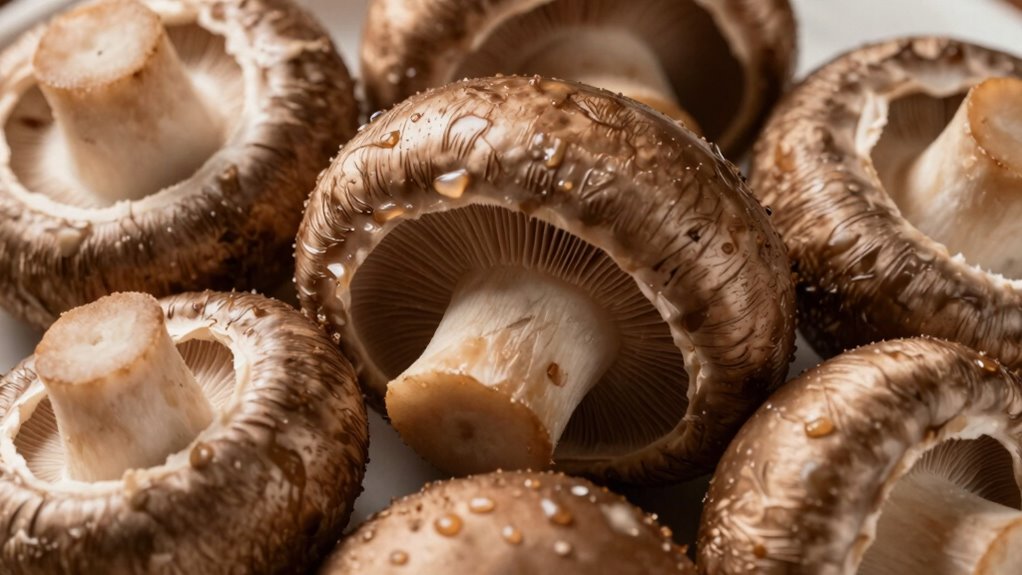
To achieve mushroom ‘meatiness,’ you should focus on techniques that enhance their texture and flavor. Sear them in a hot pan to develop a caramelized, meaty exterior, and avoid overcrowding the pan to prevent steaming. Deglazing with broth or wine adds savory depth, while marinating in spices boosts flavor absorption. Grilling or braising can also create a firm, satisfying bite. Keep experimenting with these methods, and you’ll discover how to transform mushrooms into a hearty, meat-like ingredient.

Get kitchen staples and gadgets delivered free with Prime
- Fast, free delivery on millions of items
- Prime Video, Amazon Music and more included
- Member-only deals all year
Key Takeaways
- Proper searing and browning develop a deep, meaty texture by caramelizing mushroom surfaces.
- Marinating mushrooms enhances moisture absorption, creating a firmer, more substantial bite.
- Grilling or slow-cooking tenderizes mushrooms, mimicking the texture of cooked meat.
- Deglazing with broth or soy sauce adds flavor layers and mimics savory meat juices.
- Combining techniques like searing, marinating, and braising maximizes meat-like texture and flavor.
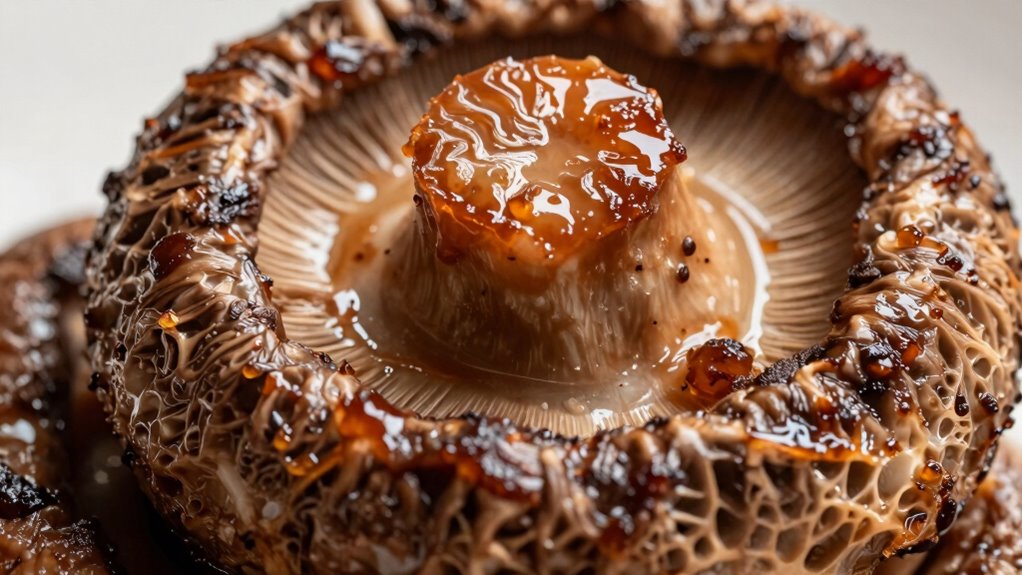
Mushrooms are often celebrated as a plant-based meat substitute because of their unique texture and savory flavor, which can mimic the meaty experience you’re craving. Their natural umami makes them a versatile ingredient to enhance the flavor profile of vegetarian dishes. To maximize this, you should focus on flavor enhancement through smart cooking techniques. Searing mushrooms in a hot pan until they develop a deep, caramelized exterior draws out their rich flavors and adds a meaty depth to your dish. The key is to avoid overcrowding the pan, which can cause steaming rather than browning. Instead, cook in batches if needed, allowing each piece to make contact with the hot surface. This creates those desirable browned edges that amplify flavor and give mushrooms their signature savory punch.
Sear mushrooms in batches to develop deep, savory flavor and achieve a satisfying, meaty texture.
Another effective cooking technique involves deglazing the pan with liquids like broth, wine, or soy sauce after searing. This pulls up all those browned bits stuck to the bottom, infusing your mushrooms and surrounding ingredients with even more flavor. Incorporate aromatics such as garlic, onions, or herbs early in the process to build complexity. These additions not only boost flavor but also contribute to the overall savory character, making the mushrooms more satisfying in meatless dishes. Additionally, understanding the importance of biodiversity can inspire creative ways to incorporate different mushroom varieties, each offering unique textures and flavors.
To truly mimic the texture of meat, consider different cooking methods that alter the mushrooms’ consistency. For example, marinating mushrooms beforehand in a marinade rich in soy sauce, smoked paprika, or balsamic vinegar can add layers of flavor and help them absorb moisture, giving them a more substantial bite. Grilling is another technique that imparts a smoky flavor and firm texture, which can be especially appealing in burgers or skewers. Slow-cooking or braising mushrooms in flavorful broths can also create a tender, hearty result, perfect for stews or fillings.
In all cases, the goal is to combine smart cooking techniques with flavor-enhancing strategies. Searing, deglazing, marinating, and grilling each play a part in transforming mushrooms from simple fungi into a satisfying, meat-like centerpiece. By understanding how to manipulate their natural qualities through these methods, you can create dishes that not only taste fantastic but also deliver that elusive, satisfying meaty texture you’re after.
cast iron skillet for searing mushrooms
As an affiliate, we earn on qualifying purchases.
As an affiliate, we earn on qualifying purchases.
Frequently Asked Questions
Do All Mushroom Varieties Have a Meaty Texture?
Not all mushroom varieties have a meaty texture. Some, like portobellos and shiitakes, are known for their hearty, dense texture, thanks to specific cultivation techniques that enhance their firmness. Others, such as enoki or button mushrooms, are more delicate. Your choice depends on the mushroom flavor profiles you prefer and the cultivation methods used, which influence their texture and overall meatiness in dishes.
How Do Cooking Methods Affect Mushroom’s Meatiness?
Think of cooking mushrooms as tuning an instrument; each method shapes their meatiness. Searing with high heat creates a crispy, chewy texture, amplifying their natural umami. Grilling adds smoky flavor, deepening their savory profile. Sautéing quickly enhances tenderness while preserving moisture. Roasting intensifies flavor and firms the texture, making mushrooms more satisfying. Your choice of cooking technique directly influences their meatiness, turning simple mushrooms into hearty, flavorful bites through skillful flavor enhancement.
Can Mushrooms Replace All Types of Meat in Recipes?
Yes, mushrooms can replace many types of meat in recipes, thanks to their culinary versatility and ability to absorb flavors. They work well in dishes like burgers, stews, and stir-fries, but may not fully mimic the texture of all meats. To make the most of their potential, focus on flavor enhancement through seasoning and marinating, ensuring your mushroom-based dishes are tasty and satisfying.
Are There Health Benefits to Eating Mushroom-Based Dishes?
You get a lot of health benefits from mushroom-based dishes. They’re packed with nutrients like B vitamins, selenium, and antioxidants, which support your immune system and overall health. Plus, mushrooms fit well with dietary restrictions—being low in calories and fat. Eating more mushrooms can boost your nutrient profiles and help you maintain a balanced diet. So, incorporating them into meals is a smart move for your health.
How Do Mushroom Textures Vary Across Different Cuisines?
You’ll notice mushroom textures vary widely across cuisines, from tender and juicy in Asian stir-fries to firm and chewy in Italian dishes. Chefs often use umami enhancement techniques to amplify their meaty qualities, creating a satisfying experience. In culinary fusion, mushrooms adapt seamlessly, combining different cultural influences. This versatility allows you to enjoy diverse textures, whether soft and delicate or hearty and substantial, making mushrooms a favorite ingredient worldwide.
Conclusion
Next time you bite into a mushroom burger, remember it’s no coincidence that their “meaty” texture perfectly satisfies your craving. It’s almost like nature knew you’d appreciate the trick — a clever way mushrooms mimic meat’s chewiness and richness. So, the next time you’re surprised by that satisfying bite, enjoy the coincidence that mushrooms, with their texture tricks, are here to make your vegetarian meals just as hearty and delicious. It’s almost poetic, isn’t it?
Columbus Day / Indigenous Peoples' Day Picks
long weekend sales
As an affiliate, we earn on qualifying purchases.