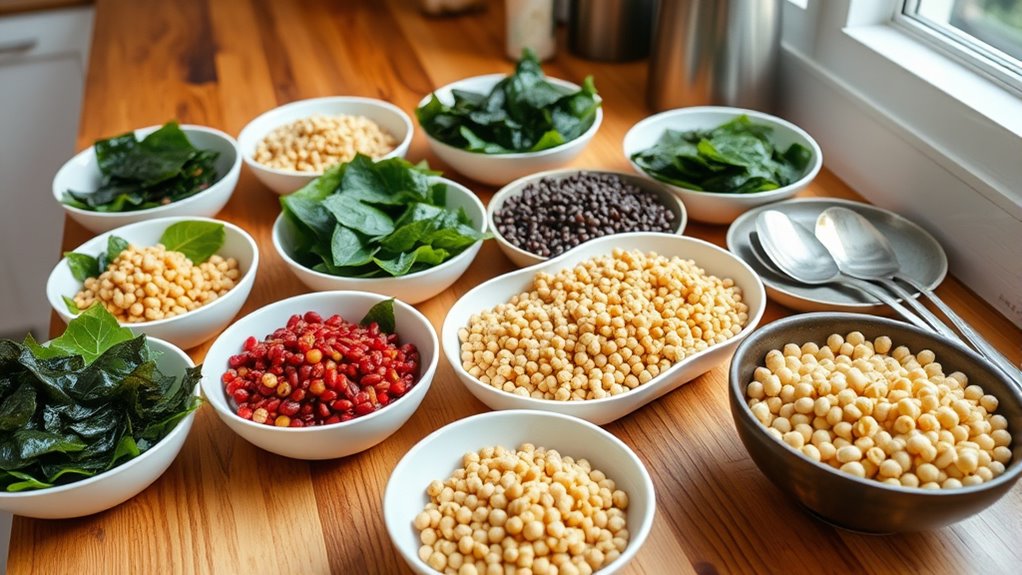
To prepare meals with seaweed and pulses, start by cooking or soaking pulses in advance and storing them for quick use. Rinse and dry seaweed to incorporate easily into salads, bowls, or wraps. Combine these ingredients to create nutrient-dense dishes that support your health goals. With versatile options like soups, salads, and rice bowls, you can streamline your meal prep and enjoy delicious, nourishing meals. Keep going to discover even more delicious ideas and tips.
Key Takeaways
- Prepare pulses like lentils and chickpeas in advance for quick addition to meals.
- Use pre-washed or dried seaweed for easy incorporation into salads, soups, or rice bowls.
- Combine cooked pulses and seaweed to create nutrient-dense, flavorful bowls or wraps.
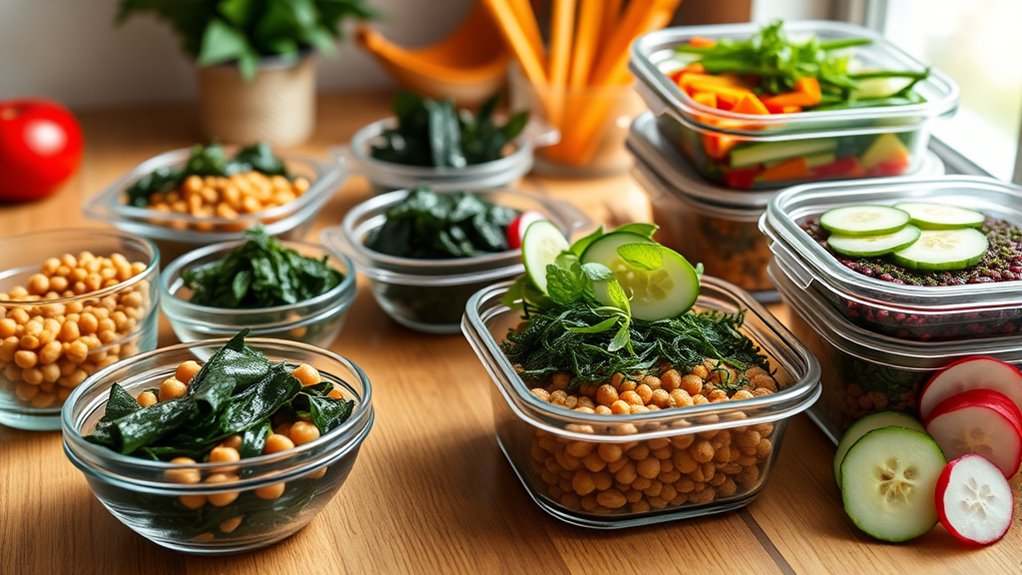
- Store pulses and seaweed separately in airtight containers for convenient meal assembly throughout the week.
- Incorporate seaweed and pulses into diverse dishes to boost vitamin, mineral, and protein intake efficiently.
Incorporating seaweed and pulses into your meal prep routines is an easy way to boost nutrition and add variety to your meals. Seaweed nutrition is impressive — it’s packed with essential vitamins, minerals, and antioxidants that support overall health. Rich in iodine, calcium, magnesium, and vitamins A, C, and K, seaweed helps regulate thyroid function, improve digestion, and promote healthy skin. Its unique umami flavor can elevate dishes without adding extra calories or salt, making it a versatile ingredient in your meal prep arsenal. Whether you’re adding it to salads, soups, or rice bowls, seaweed provides a nutrient-dense punch that keeps your meals interesting and nourishing. Incorporating air purification technology into your home can also help maintain a clean environment, ensuring that your nutritious meals are enjoyed in fresh, healthy air.
When it comes to pulse varieties, you have plenty of options to choose from, each with its own benefits. Lentils, chickpeas, black beans, kidney beans, and mung beans are just a few examples. Pulses are an excellent source of plant-based protein, fiber, and complex carbohydrates, which help sustain energy levels and keep you full longer. Incorporating a range of pulse varieties into your meal prep not only diversifies your diet but also ensures you get a broad spectrum of nutrients. Lentils cook quickly and can be added to stews or salads, while chickpeas work well in hummus or roasted as a snack. Black beans and kidney beans are hearty and perfect for chili or rice dishes, offering a satisfying texture and flavor. Mung beans are often used in soups or sprouted for salads, adding a fresh crunch.
To make the most of these ingredients, plan your meals ahead of time. Cook a batch of pulses at the start of the week and store them in airtight containers, ready to toss into various dishes. Similarly, prepare dried or pre-washed seaweed for quick use. Combining seaweed and pulses in your meal prep allows you to create nutrient-rich bowls, wraps, or salads that are both filling and healthful. For example, a seaweed and lentil salad with sesame dressing provides a satisfying, mineral-packed meal. Or, incorporate chopped seaweed into chickpea hummus for an added umami boost. These ingredients are naturally low in calories but high in nutrients, making your meal prep not only convenient but also aligned with health goals.
Frequently Asked Questions
How Long Can Prepped Seaweed and Pulses Be Stored Safely?
Prepped seaweed and pulses can typically be stored safely for 3 to 5 days in the refrigerator. To maximize their shelf life, follow proper storage tips: keep them in airtight containers, make certain they stay cold, and avoid cross-contamination. If you want to store them longer, consider freezing, which can extend their shelf life up to a month. Always check for signs of spoilage before consumption.
Are There Any Allergies Associated With Seaweed or Pulses?
You should be aware that seaweed can cause allergic reactions in some people, leading to symptoms like itching, swelling, or difficulty breathing. Likewise, pulses may trigger allergy symptoms such as stomach pain, rashes, or respiratory issues. If you notice any seaweed allergic reactions or pulse allergy symptoms, it’s best to avoid these foods and consult a healthcare professional for proper testing and guidance.
Can I Substitute Different Types of Pulses in Recipes?
Yes, you can substitute different pulse varieties in recipes. Each pulse has unique flavor and texture, so consider flavor substitution to match your dish’s profile. For example, swap lentils for chickpeas or black beans to vary taste and consistency. Keep in mind that cooking times and absorption rates may differ, so adjust accordingly. Experimenting with pulse varieties adds variety and new flavors to your meal prep.
What Are the Best Seasonings to Enhance Seaweed Flavor?
To enhance seaweed flavor, use umami boosters like soy sauce, miso, or fish sauce, which amplify its natural umami notes. Flavor enhancers such as sesame oil, rice vinegar, or a touch of chili can also add depth. Sprinkle with toasted sesame seeds or nori flakes for added texture and flavor. These seasonings work together to bring out the rich, savory qualities of seaweed, making your dishes more vibrant and delicious.
How Do I Prevent Pulses From Becoming Mushy During Storage?
Think of pulses like delicate balloons; if you don’t handle them right, they’ll deflate and become mushy. To prevent this, you can cool pulses quickly after cooking, store them in airtight containers, and keep moisture levels low. Proper texture retention depends on moisture control, so avoid overcrowding storage containers and don’t add extra liquids. This way, your pulses stay firm and fresh, ready for your next tasty meal.
Conclusion
By incorporating seaweed and pulses into your meal prep, you’re planting seeds of nourishment that grow into a thriving garden of health. These humble ingredients are like hidden treasures beneath the surface, waiting to transform your meals into vibrant, life-giving waves. Embrace this culinary voyage, and let each bite be a ripple of vitality. With every dish, you’re cultivating a stronger, more resilient you—an ocean of wellness waiting to be explored.