
To prep work lunches on a budget, focus on versatile staples like rice, beans, eggs, and seasonal vegetables. Buy in bulk, choose affordable proteins like canned tuna or chicken thighs, and incorporate frozen or canned goods to save money. Plan simple, nutritious meals ahead of time and use containers for easy portion control. Sticking to your grocery list and maximizing ingredients will help keep costs down. Keep exploring tips to make your lunches even more budget-friendly.
Key Takeaways
- Plan meals using affordable staples like rice, beans, eggs, and seasonal vegetables to maximize nutrition and cost savings.
- Batch cook grains, legumes, and roasted vegetables weekly to save time and reduce ingredient waste.
- Use simple seasonings and fresh herbs to enhance flavor without extra costs or added calories.
- Prepare versatile meals such as salads, wraps, or one-pot dishes that require minimal ingredients and preparation.
- Make a detailed shopping list based on meal plans, stick to it, and buy in bulk to control expenses and avoid impulse purchases.
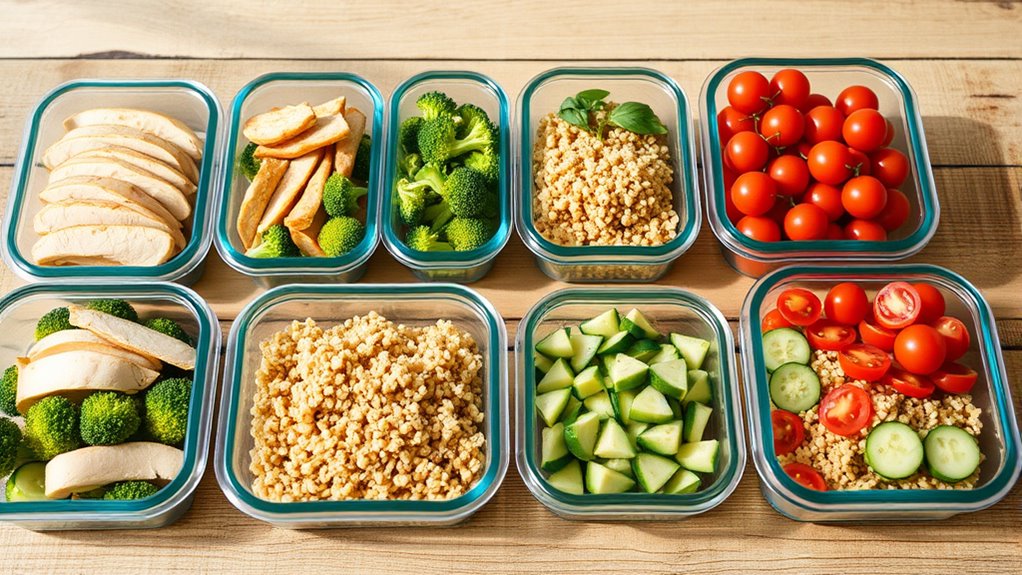
Preparing your work lunches doesn’t have to break the bank. You can create delicious, nutritious meals without overspending by focusing on cost-effective ingredients and smart portion control strategies. The key is to plan ahead, select affordable staples, and use techniques that stretch your budget while still satisfying your hunger. Start by identifying versatile, budget-friendly ingredients like rice, beans, eggs, seasonal vegetables, and affordable proteins such as canned tuna or chicken thighs. These cost-effective ingredients form the foundation of many easy-to-make lunches. Buying in bulk is a great way to save money, especially on staples like grains and legumes. When planning your meals, aim for simplicity—think one-pot dishes, salads, and wraps that require minimal ingredients but pack plenty of flavor.
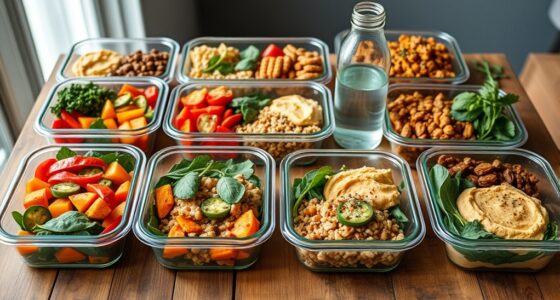
Plan affordable, nutritious lunches with staples like rice, beans, eggs, and seasonal vegetables for budget-friendly meals.
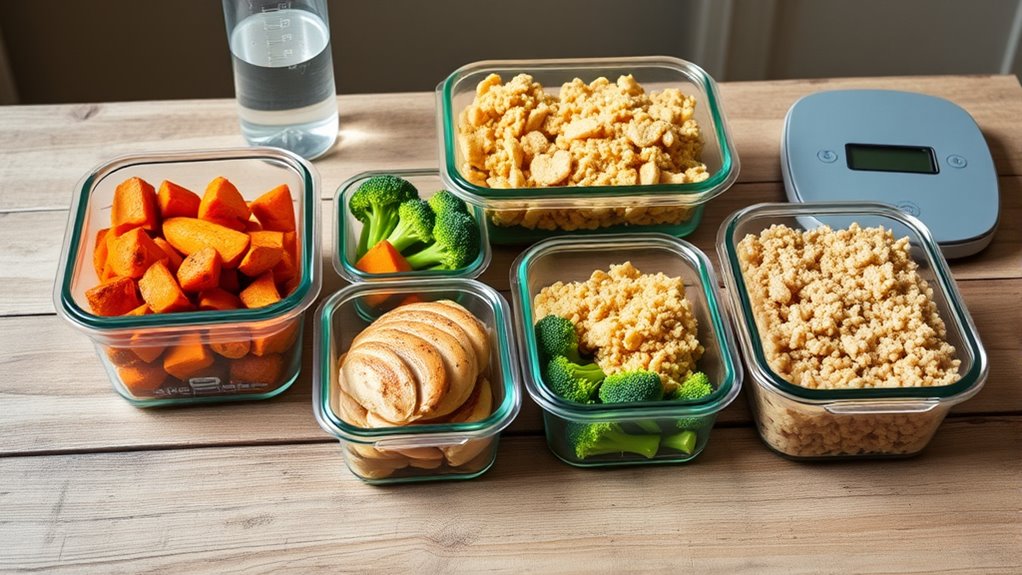
Portion control is essential to make your budget last. Using containers with compartments or dividing your meals into individual servings helps prevent overeating and waste. By measuring out appropriate portions of carbs, proteins, and vegetables, you ensure each lunch is balanced and satisfying without excess. This strategy prevents you from buying more food than you need or feeling hungry before your next meal. It also helps you stay accountable to your budget, as you can track how much you’re spending per meal and adjust accordingly. Incorporate leftovers into your next lunch or freeze portions for future use—this reduces waste and maximizes your investment in ingredients.
Another tip is to prepare meals in advance, which allows you to buy ingredients in bulk and use them efficiently. Batch cooking beans, grains, or roasted vegetables at the start of the week saves time and money. When you assemble your lunches, use simple seasonings and fresh herbs to enhance flavor without adding costly sauces or extras. You can also swap out ingredients based on what’s on sale or what’s in season, further reducing costs. Keep your pantry stocked with affordable essentials like frozen vegetables, canned goods, and dried herbs, so you’re always ready to whip up a quick, economical lunch. Additionally, investing in meal prep tools like quality containers can make organizing and transporting your lunches more convenient and efficient.
Finally, avoid impulse buys at the store. Make a shopping list based on your meal plan and stick to it. This prevents you from splurging on unnecessary items and keeps your grocery bill in check. Combining these cost-effective ingredients with portion control strategies means you’ll be able to enjoy nutritious, homemade lunches every day without draining your wallet. With a little planning and discipline, meal prepping on a budget becomes not just feasible but also enjoyable, helping you save money while nourishing your body.
Frequently Asked Questions
How Can I Meal Prep if I Have Dietary Restrictions?
You can meal prep with dietary restrictions by choosing versatile ingredients and exploring gluten-free options and vegan substitutions. Focus on fresh vegetables, grains like quinoa or rice, and plant-based proteins such as beans or tofu. Prepare meals in advance and customize them for your needs. Always read labels to avoid hidden allergens, and experiment with new recipes to keep your lunches exciting and safe for your diet.
What Are the Best Affordable Protein Sources for Meal Prep?
You should look for affordable protein sources like plant-based proteins such as beans, lentils, and chickpeas, which are budget-friendly and versatile. Canned meats like tuna, salmon, and chicken are also economical and convenient options. Incorporate these into your meal prep to guarantee you’re getting enough protein without overspending. These options are easy to store, prep, and add flavor to your lunches, making your meal prep both healthy and budget-conscious.
How Do I Keep Meals Fresh Throughout the Week?
You might find it’s no coincidence that airtight containers and proper refrigeration keep your meals fresh longer. Always store your prepped meals in airtight containers to prevent spoilage and moisture loss. Use refrigeration tips like labeling containers with dates, maintaining a consistent fridge temperature, and avoiding overcrowding. These habits guarantee your meals stay delicious and safe throughout the week, making your meal prep both budget-friendly and worry-free.
Can I Meal Prep for Multiple People With Different Tastes?
Yes, you can meal prep for multiple people with different tastes by considering family preferences and practicing portion control. Start by preparing versatile base meals and offer a variety of toppings or sides to customize each plate. Use separate containers for different preferences, and measure portions to guarantee everyone gets enough without waste. This approach keeps everyone happy and makes your meal prep more efficient.
What Are Some Budget-Friendly Snack Options for Work Lunches?
Looking for budget-friendly snack options that keep you energized? You’ll love healthy snack ideas like homemade trail mix, fruit slices, or veggie sticks with hummus. Portable snack options like granola bars, yogurt cups, or roasted chickpeas make it easy to grab and go. These snacks won’t break the bank but will keep you satisfied through your workday. Ready to enjoy tasty, affordable snacks without sacrificing health? Let’s get snacking!
Conclusion
By planning your work lunches on a budget, you not only save money but also enjoy healthier, more satisfying meals. Did you know that prepping meals can cut your weekly lunch costs by up to 50%? With a little planning and smart shopping, you can keep your midday meals flavorful and affordable. So, start prep today—your wallet and taste buds will thank you!