Meal prepping for gut health helps you consistently include prebiotic-rich foods like oats, beans, and fruits, which nourish good bacteria. It also allows you to incorporate probiotic sources like yogurt, kimchi, or kefir easily into your meals. By controlling ingredients and avoiding processed snacks, you support digestion and a balanced microbiome. Staying organized with meal prep tools makes it simple to develop a routine. Keep going to discover more ways to optimize your gut-friendly meal plan.
Key Takeaways
- Incorporate fermented foods like yogurt, kimchi, and sauerkraut into meal prep to boost probiotics.
- Include fiber-rich ingredients such as oats, beans, and fruits to serve as prebiotics for gut bacteria.
- Combine probiotics and prebiotics in meals, like yogurt with berries or veggie stir-fries with kimchi, for synergistic gut benefits.
- Use meal prep tools and routines to ensure consistent intake of gut-supportive foods and develop healthy digestion habits.
- Prepare nutrient-dense, microbiome-friendly meals in advance to reduce processed foods and promote digestive resilience.
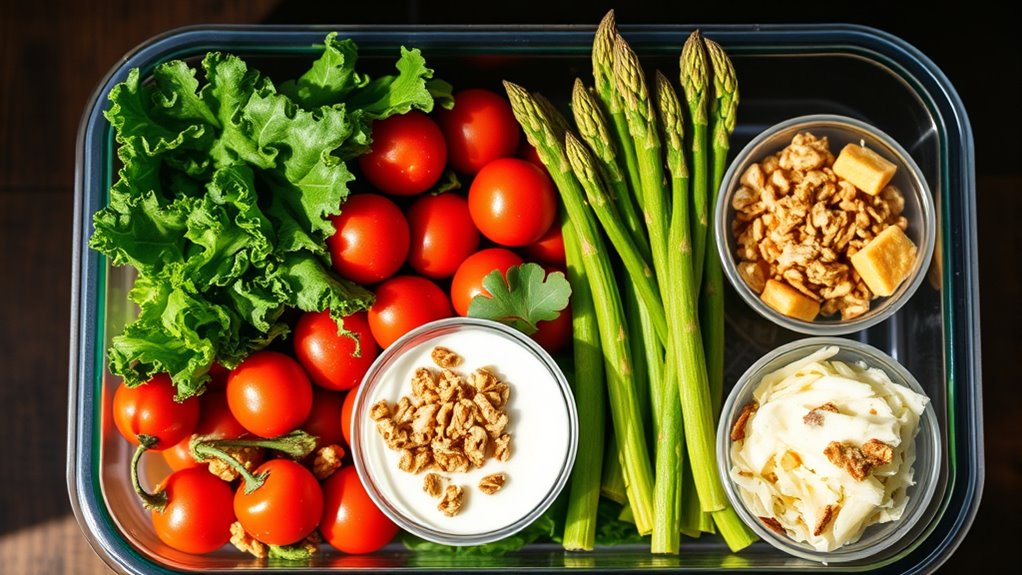
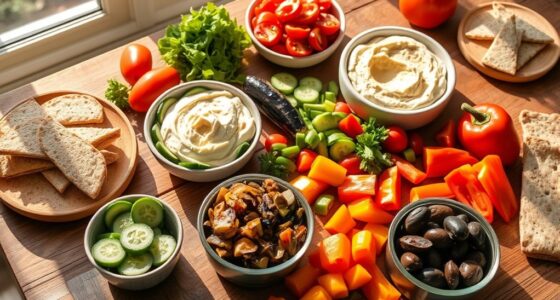
Taking control of your diet through meal prep can substantially improve your gut health. When you plan and prepare your meals ahead of time, you guarantee that your digestive system gets the nutrients it needs to thrive. One of the most effective ways to support your gut is by including fermented foods and fiber-rich recipes in your meal prep. Fermented foods like yogurt, sauerkraut, kimchi, and kefir are packed with probiotics—live bacteria that restore and balance your gut microbiome. Incorporating these into your meals regularly helps promote digestion, reduce bloating, and strengthen your immune system. By prepping fermented foods in advance, you can easily add a spoonful to salads, wraps, or snacks, making it simple to boost your probiotic intake without much effort.
Prepping fermented foods boosts your gut health effortlessly and deliciously.
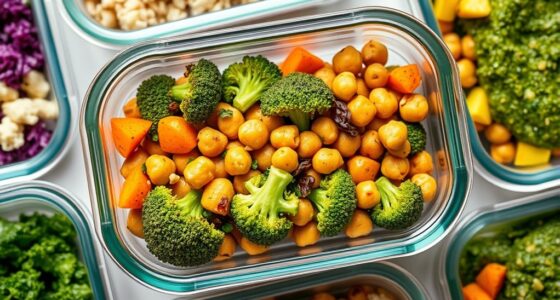
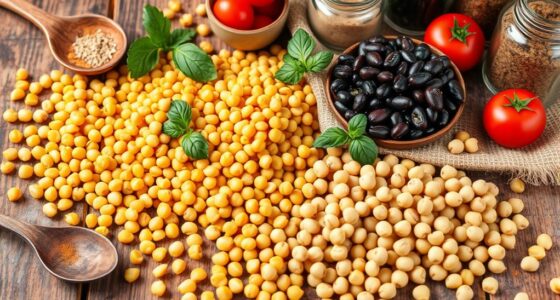
In addition to fermented foods, focusing on fiber-rich recipes is vital for gut health. Fiber acts as a prebiotic, providing nourishment for the beneficial bacteria already residing in your gut. When you prepare meals with fiber-rich ingredients like oats, beans, lentils, fruits, and vegetables, you’re fueling the growth of good bacteria, which in turn enhances digestion and nutrient absorption. Meal prepping fiber-rich recipes allows you to control portions and ingredients, guaranteeing you consistently meet your daily fiber needs. For instance, batch-cooking hearty bean salads or overnight oats with fresh fruit can become staples in your weekly plan. These recipes not only support your gut microbiome but also help regulate bowel movements and prevent issues like constipation.
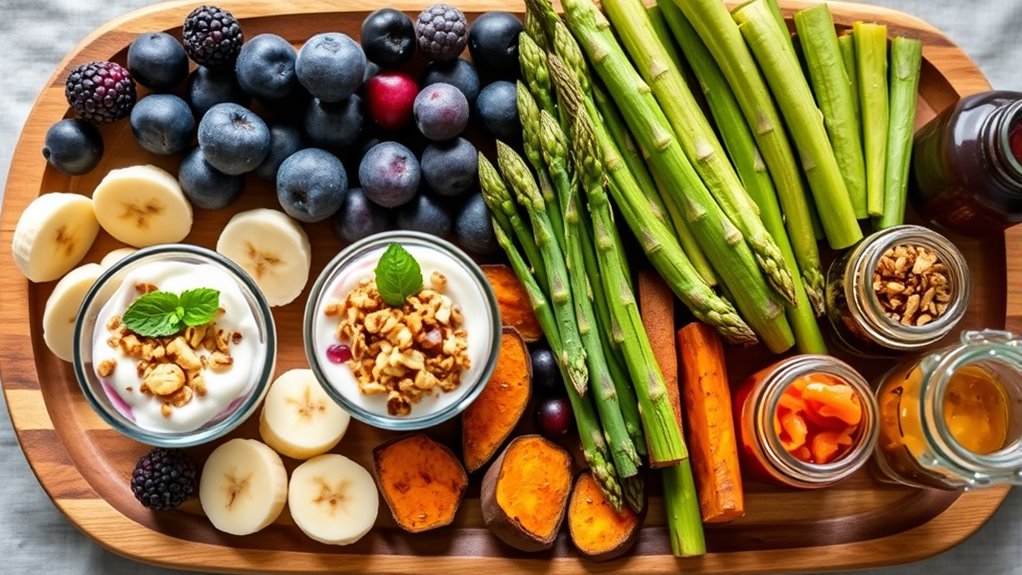
Furthermore, combining fermented foods with high-fiber ingredients creates powerful synergy for gut health. For example, preparing a kimchi and veggie stir-fry or a yogurt and berry parfait combines probiotics with prebiotics, amplifying their benefits. Planning ahead enables you to have these nutritious options readily available, reducing the temptation to reach for processed snacks that can harm your gut. When you dedicate time to meal prep, you also gain control over added sugars, preservatives, and unhealthy fats often found in store-bought options, which can negatively impact your gut bacteria. Additionally, using meal prep apps or tools can streamline this process, making it easier to stay consistent with your gut-healthy routines.
Ultimately, consistent meal prep centered around fermented foods and fiber-rich recipes helps establish a gut-friendly routine. It’s about making mindful, deliberate choices that support your digestive health every day. By taking the time to plan and prepare these gut-boosting meals, you’re investing in a healthier, more resilient digestive system. Over time, this approach can lead to improved energy, better digestion, and a more balanced microbiome, all achievable through simple, effective meal prep strategies.
Frequently Asked Questions
Can Gut-Friendly Meals Improve Mental Clarity?
Yes, gut-friendly meals can improve your mental clarity by supporting the mind-gut connection along the gut-brain axis. When you nourish your gut with prebiotics and probiotics, you enhance your microbiome health, which influences neurotransmitter production and reduces inflammation. This positive impact can lead to sharper focus, better mood, and mental clarity, showing how essential your gut health is for overall cognitive function.
How Long Does It Take to See Gut Health Benefits?
Think of your gut microbiome as a garden that needs time to flourish. Usually, you’ll notice digestion improvement within a few days to a couple of weeks after starting gut-friendly meals. Consistent intake of prebiotics and probiotics nourishes your gut bacteria, gradually enhancing gut health. While some may see quick changes, for longer-lasting benefits, give it about four to six weeks, and your digestion will thank you for the care.
Are Supplements Necessary if Eating Prebiotics and Probiotics?
Supplements aren’t always necessary if you’re eating enough prebiotics and probiotics through your diet. You can get sufficient gut benefits from natural foods like yogurt, kefir, bananas, and garlic. However, if your diet lacks variety or you have specific health issues, dietary supplements can help fill gaps. Ultimately, it’s best to consult a healthcare professional to determine if you need supplements for your gut health.
Can Meal Prep Help With Chronic Digestive Issues?
Think of your gut as a delicate garden needing constant care. Meal prep can be your gardener’s toolkit, helping you manage fermentation techniques and meal prep tips that nurture healthy bacteria. By planning ahead, you prevent chaos in your digestive landscape, easing chronic issues. Consistent prep supports balanced digestion, turning your meals into nourishing rituals that cultivate a thriving, resilient gut.
What Are the Best Storage Practices for Fermented Foods?
To guarantee your fermented foods stay fresh and probiotic benefits remain intact, store them in airtight containers designed for fermented storage. Keep them in the refrigerator at consistent temperatures to prevent spoilage. Use probiotic packaging that’s BPA-free and specifically made for fermented products, which helps maintain probiotic potency. Avoid exposing your fermented foods to light or fluctuating temperatures, and always seal containers tightly after each use to preserve their health benefits.
Conclusion
By choosing prebiotics and probiotics, you nourish your gut, support your digestion, and boost your immunity. By planning your meals thoughtfully, you empower your health, improve your well-being, and enjoy more vibrant days. By making gut-friendly choices, you create a healthier you, a happier you, a stronger you. Remember, every meal is an opportunity to nurture your gut, to promote balance, and to embrace a healthier lifestyle—because your gut health truly matters.