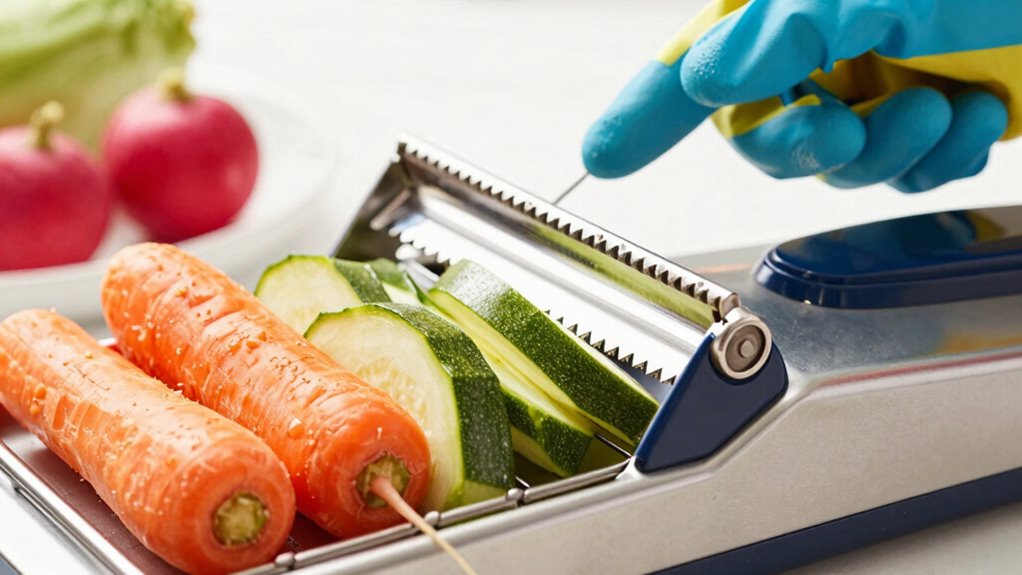
The safety rule everyone learns too late is to always use protective gear, like a hand guard or finger protector, when slicing with a mandoline. Sharp blades can cause deep cuts if you rush or neglect safety precautions. Keep fingers away from the blade and make sure your equipment is stable. Skipping these steps might save time, but it risks serious injury. To stay safe and avoid painful lessons, follow these essential tips—your safety depends on it.
Key Takeaways
- Always use a safety guard or finger protector to prevent accidental cuts.
- Never bypass or disable safety features on the mandoline.
- Keep blades sharp and well-maintained to reduce slipping accidents.
- Stabilize the mandoline on a non-slip surface during use.
- Avoid rushing; take steady, controlled motions for safe slicing.
The Hidden Dangers of Using a Mandoline Without Safety Gear
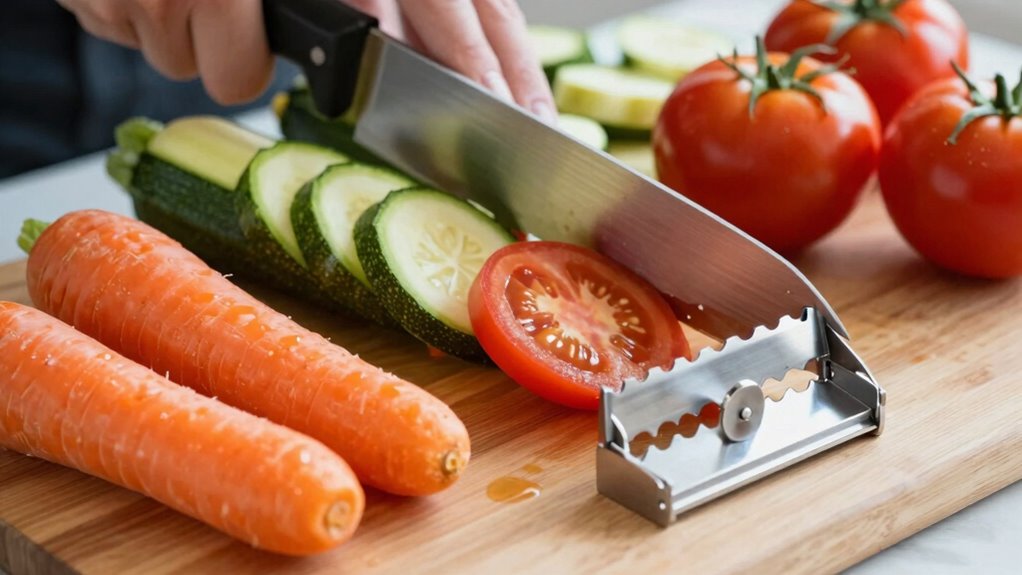
Using a mandoline without safety gear might seem quick and convenient, but it can hide serious dangers. Kitchen accidents happen when sharp blades are exposed, increasing the risk of cuts and lacerations. Without proper safety measures, your fingertips are vulnerable every time you slide produce across the blade. Sharp blades cut swiftly and unexpectedly, making injuries easy to occur if you’re not careful. Many underestimate how dangerous an unguarded mandoline can be, especially during repetitive slicing or when rushing. These accidents often lead to deep cuts that require medical attention. Protect yourself by always using safety gear, like hand guards or cut-resistant gloves. Remember, the convenience isn’t worth risking a painful injury from a preventable accident. Using proper safety gear can significantly reduce the risk of injury and ensure safer slicing experiences. Additionally, understanding the sharpness of blades and how they can cause severe injuries emphasizes the importance of safety precautions. Being aware of mandoline safety standards can guide you in choosing the right equipment to minimize risks. Recognizing the potential hazards involved in using a mandoline is crucial for avoiding preventable injuries, especially considering the dangers of unguarded blades that are often overlooked.
Why Keep Fingers Away From the Mandoline Blade
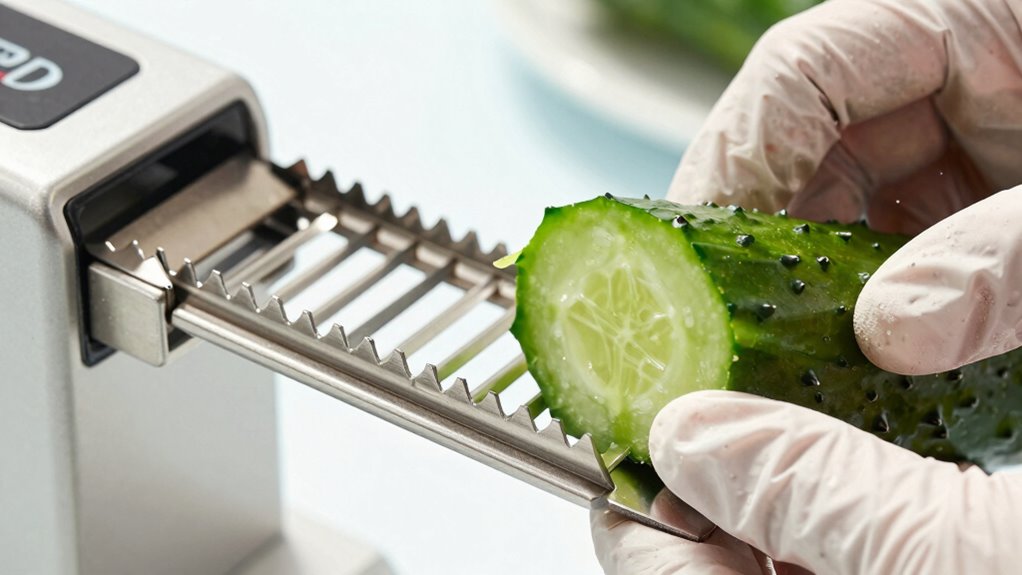
To prevent painful cuts and injuries, it’s essential to keep your fingers well away from the mandoline blade at all times. Proper knife maintenance isn’t just about sharpening; it’s about safe handling and control. Use the hand guard or a finger protector to keep your fingers clear during slicing. When applying cutting techniques, always focus on your grip and positioning, avoiding direct contact with the blade. Remember, rushing or gripping the food too tightly increases the risk of slips. Maintaining a steady, controlled motion helps prevent accidents. Never try to force food through the mandoline; instead, use gentle, even pressure. Keeping your fingers away is the simplest way to avoid injuries and ensure safe, efficient slicing every time. Additionally, understanding the importance of safe handling practices enhances overall kitchen safety. Being aware of cutting tools safety tips can further reduce the risk of mishaps. Educating yourself about kitchen safety protocols can also make a significant difference in preventing injuries. Incorporating proper safety equipment such as cut-resistant gloves can provide an extra layer of protection during slicing tasks. Using ergonomic tools can also help reduce fatigue and improve control during repetitive tasks.
Common Mistakes That Cause Mandoline Injuries and How to Avoid Them
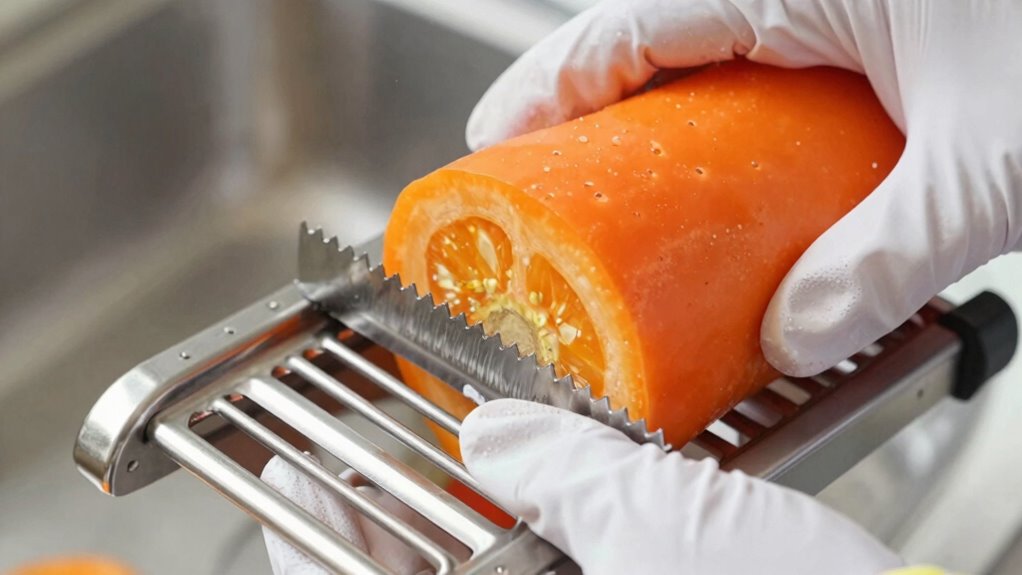
Many common mistakes can lead to injuries when using a mandoline, but most happen when you let your guard down or rush the process. One mistake is neglecting blade maintenance, which can cause uneven cuts or slips. Always keep the blade sharp and clean to guarantee precise, safe slicing. Proper blade maintenance not only ensures safety but also prolongs the life of your equipment. Regularly inspecting the sharpness of blades helps prevent accidents caused by dull or damaged edges. Another mistake is ignoring the ergonomic design; if your mandoline isn’t comfortable to grip or adjust, you might force your hand or slip. Using improper or unstable food holders also increases risk. Rushing through slicing or skipping safety features, like protective gloves, further heightens the danger. To avoid injuries, take your time, regularly maintain the blade, and choose a mandoline with an ergonomic design that fits comfortably in your hand. Proper care and setup are key to safe use. Additionally, being aware of and understanding mandoline safety tips can significantly reduce the risk of accidents during your food prep. Remember, proper tool maintenance is essential for safe operation and should never be overlooked.
Essential Safety Tips for Using a Mandoline Safely
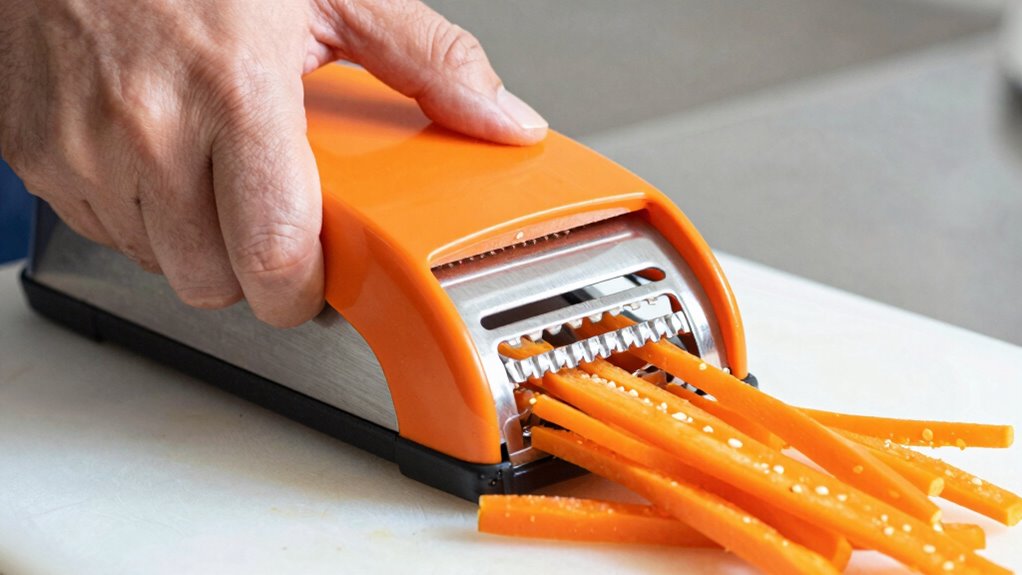
Ensuring safety while operating a mandoline starts with understanding and following essential precautions. Before you begin, check that your kitchen design allows ample space for stable use, reducing the risk of slips. Always use the hand guard to protect your fingers from the sharp blade, especially when working on delicate or uniform slices for your recipe ideas. Keep the mandoline on a non-slip surface, and never try to force food through the blade faster than it can handle. Familiarize yourself with the adjustable thickness settings to avoid accidents caused by sudden slips. Properly storing your mandoline after use prevents accidental cuts. Additionally, understanding the importance of proper equipment setup can significantly enhance safety and efficiency during use. Proper maintenance and cleaning of your mandoline also ensures that it remains in good working condition, reducing the likelihood of malfunctions or accidents. Being aware of potential hidden hazards can help you identify and mitigate risks before they result in injury. Regularly inspecting your mandoline for wear and tear can prevent unexpected failures during operation. By adopting these safety tips, you’ll enjoy precision slicing without compromising safety, making your kitchen a safer space for all your cooking adventures.
First Aid Tips: What to Do If You Get Cut in the Kitchen
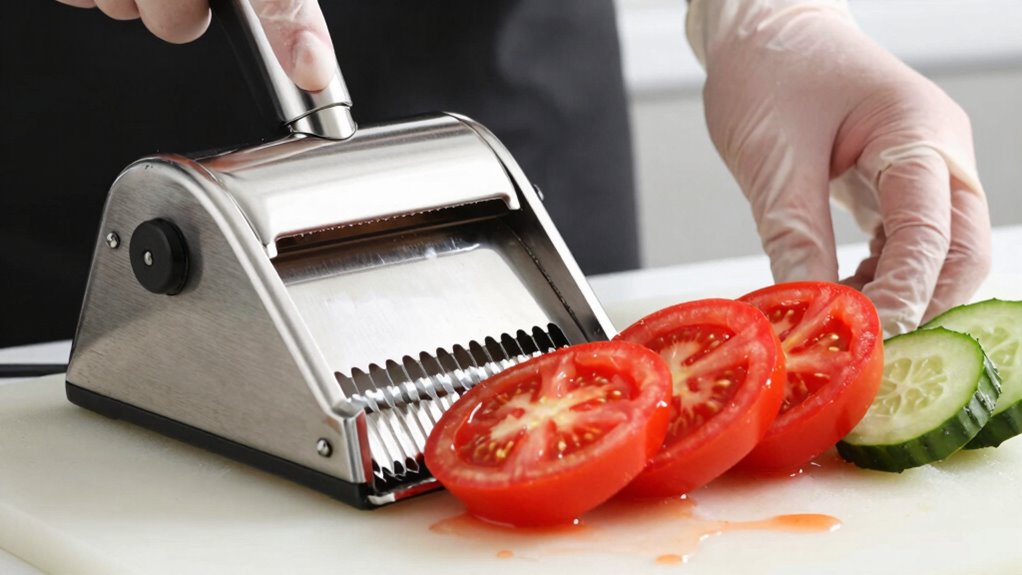
Getting cut in the kitchen can happen unexpectedly, but knowing how to respond quickly can make a difference. When you’re practicing good knife skills and prioritizing kitchen safety, accidents happen less often, but when they do, act fast. Rinse the cut with clean water, then apply pressure with a clean cloth or bandage to stop bleeding. Elevate the injured finger or hand if possible. Keep calm and avoid removing the bandage to prevent reopening the wound. Understanding testing accuracy in first aid supplies can ensure you’re using the most effective materials for treatment. Additionally, being aware of healthy eating tips can help you maintain overall safety and well-being in the kitchen environment. Recognizing common kitchen hazards can also help prevent future injuries. Using the right exfoliation techniques like glycolic acid can improve skin resilience and reduce the risk of injury from minor cuts or abrasions. Being aware of family photoshoot fails and how unpredictable moments can happen can remind you to stay alert during all activities, including cooking.
Frequently Asked Questions
What Types of Safety Gear Are Most Effective for Mandoline Use?
To stay safe while using a mandoline, you should always wear protective gloves and make certain the safety guards are in place. Protective gloves help prevent cuts if your hand slips, while safety guards keep your fingers away from the blades. Both are essential for safe mandoline use. Using these safety gear pieces actively reduces the risk of injuries, helping you prepare your vegetables confidently and securely.
How Often Should I Replace the Mandoline Blade for Safety?
You should replace your mandoline blade every 3 to 6 months to maintain safety standards and guarantee sharpness. Regular blade maintenance, including cleaning and inspection, helps prevent accidents caused by dull blades. If you notice signs of wear, such as nicks or rust, replace the blade sooner. Keeping your blade sharp and in good condition minimizes the risk of slips and injuries, making your mandoline safer to use.
Are There Specific Foods That Increase the Risk of Injury?
Certain foods, like soft fruits or slippery vegetables, can increase your risk of injury during food preparation with a mandoline. These foods tend to slide or slip, making it harder to control your cuts and increasing the chance of accidents. To prevent injuries, always use a guard and focus on injury prevention. Being cautious with tricky foods helps you stay safe and maintain precision while slicing.
Can Children Safely Use a Mandoline With Supervision?
Children can use a mandoline safely with proper child supervision and adherence to age restrictions. Experts agree that kids under 12 should not operate mandolines due to their sharp blades and risk of injury. When supervising older children, guarantee they understand safety rules, use safety guards, and handle the tool carefully. By following these precautions, you reduce the risk and allow your children to learn kitchen skills safely.
What Are Signs of a Serious Injury From Mandoline Use?
If you suffer a deep cut, bleeding heavily, or experience intense pain from mandoline use, seek medical attention immediately. Signs of a serious injury include exposed tissue, inability to move your finger, or persistent numbness. To prevent injury, always maintain your knife properly and use safety features. Injury prevention relies on careful knife maintenance and using protective gloves, ensuring you’re alert and cautious during slicing to avoid severe cuts.
Conclusion
Remember, using a mandoline without proper safety gear is like inviting chaos into your kitchen. Keep your fingers well away from the blade, follow safety tips, and never underestimate the power of a quick first aid response. With cautious practice, you can avoid injuries that feel as dramatic as a kitchen disaster movie. Stay alert, stay safe, and turn your mandoline into a tool that makes prep easier—not a hazard that turns your culinary adventure into a nightmare.