
Hardness in knife steel measures how resistant the blade is to scratching, dents, and deformation, affecting its ability to stay sharp longer. Steels with higher hardness maintain their edge better, making chopping and slicing easier, but they can be more brittle. Softer steels are more flexible but dull faster. Choosing the right hardness depends on your cooking style and needs. Keep exploring to discover how to pick the best steel for your kitchen tasks.
Key Takeaways
- Hardness measures a knife’s resistance to scratching, denting, and deformation, influenced by its steel composition.
- Higher hardness improves edge retention and sharpness but can reduce blade flexibility and increase brittleness.
- Selecting the right hardness depends on your cooking style—softer steels offer ease of maintenance, while harder steels last longer.
- Extremely hard steels may be more prone to chipping and require careful handling and maintenance.
- Understanding steel hardness helps you choose a knife that balances sharpness, durability, and ease of use for your needs.
What Does Hardness Mean in Knife Steel?
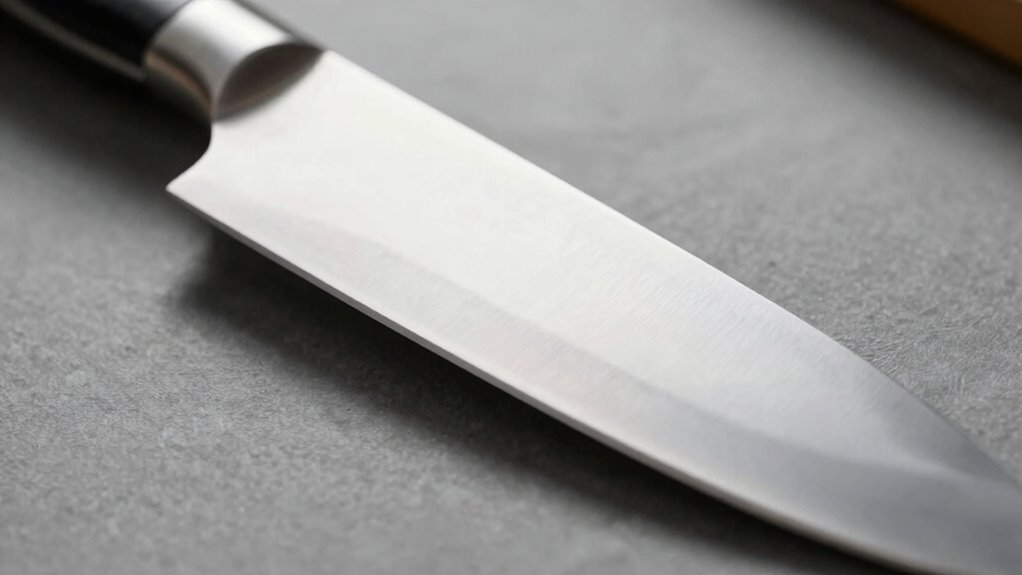
Hardness in knife steel measures how resistant the material is to scratching, denting, and deformation. It depends on the steel composition, especially the types and amounts of carbon and alloying elements used. Higher carbon content generally increases hardness, making the knife more durable. To determine hardness, various testing methods are employed, such as the Rockwell or Vickers tests. These methods involve pressing a specific indenter into the steel surface under controlled conditions. The results provide a numerical value indicating the steel’s hardness level. Understanding these measurements helps you assess how well a knife will stand up to daily use. Additionally, testing methods are essential tools in evaluating the quality of knife steel. Keep in mind that while hardness is important, it’s just one factor affecting overall performance and edge retention.
How Does Hardness Impact Knife Sharpness and Edge Retention?
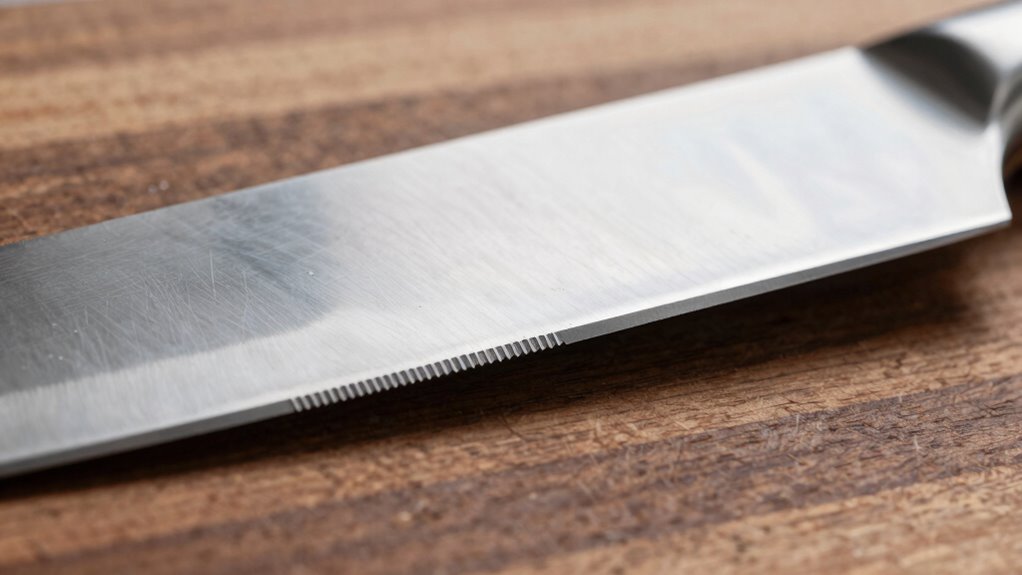
While a higher hardness level can make a knife more resistant to dulling, it doesn’t automatically guarantee a sharper edge or longer-lasting performance. Harder steels often maintain their edge longer, but they may lose some blade flexibility, making them more prone to chipping or breaking under pressure. Additionally, increased hardness can reduce corrosion resistance, so you’ll need to care for your knife properly. Imagine slicing through a ripe tomato with ease, the edge holding firm; or the blade resisting corrosion after cleaning. Hardness influences:
Higher hardness boosts edge retention but may reduce flexibility and corrosion resistance, requiring proper care.
- The ability to sustain a razor-sharp edge during chopping
- The risk of chipping or brittle breakage
- Blade flexibility, affecting how it bends under stress
- Corrosion resistance, impacting longevity and maintenance
- The significance of material composition in maintaining image quality during prolonged use. material composition plays a crucial role in determining overall blade durability and performance over time. Moreover, selecting the right steel based on hardness levels can optimize your knife’s suitability for different culinary tasks, especially when considering the application type and expected usage.
How Hardness Affects the Durability of Your Kitchen Knife
The hardness of your kitchen knife directly influences its durability, determining how well it withstands daily use and abuse. A harder blade typically holds an edge longer but may be more brittle, reducing blade flexibility. Conversely, softer steels offer greater flexibility, making the knife less prone to chipping but requiring more frequent sharpening. Harder steels also tend to have better corrosion resistance, protecting against rust and staining. However, if the steel is too hard, it can become brittle and prone to cracking. Striking the right balance ensures your knife remains durable and reliable over time. Here’s a quick comparison:
| Steel Hardness | Blade Flexibility | Corrosion Resistance | Edge Retention | Chipping Risk |
|---|---|---|---|---|
| High | Low | High | Excellent | Higher |
| Medium | Moderate | Moderate | Good | Moderate |
| Low | High | Lower | Fair | Lower |
Choosing the Right Steel Hardness for Your Cooking Style
Choosing the right steel hardness depends on your cooking style and how you use your knives daily. If you prefer precision and easy maintenance, a softer steel with lower hardness might suit you, especially for budget knife options. For those who want a sharper edge that stays longer, opting for a higher hardness steel is ideal, but it requires more care. When comparing ceramic vs. steel, ceramic blades are incredibly hard and retain sharpness, but they’re brittle and can chip easily. Steel knives with medium to high hardness offer durability and ease of sharpening, perfect for everyday chopping. Imagine:
- A lightweight ceramic blade slicing effortlessly through vegetables
- A sturdy steel knife handling tough meats
- Budget options with softer steel, requiring less frequent sharpening
- Premium high-hardness steel for precision and longevity
Additionally, understanding filtration and maintenance can help you keep your knives in top condition for years to come.
Common Myths About Hardness and Knife Performance
Many people believe that higher hardness always makes a knife better, but that’s a common misconception. The myth vs reality about hardness misconceptions can lead you to overlook other important factors like toughness and edge retention. While a harder steel often holds an edge longer, it can also become more brittle, increasing the risk of chipping or breaking. Conversely, softer steels are more durable but require more frequent sharpening. Don’t assume that the hardest steel is the best choice for your needs. Instead, consider how hardness interacts with other qualities such as flexibility, ease of sharpening, and overall performance. Understanding these myths vs reality helps you make smarter decisions about selecting and caring for your knives, ensuring they perform *ideal* for your specific cooking style. Also, knowing the zodiac traits and personalities of your knife’s steel can give insight into its behavior and longevity. Additionally, understanding the net+ certification benefits can be valuable for those pursuing a career in the culinary or tech fields. Recognizing how industry trends influence steel development can further refine your choices and expectations.
Frequently Asked Questions
How Does Hardness Influence the Ease of Sharpening a Knife?
Higher hardness makes your knife edge more durable, which improves edge retention, but it also makes sharpening more difficult. When your knife is very hard, it resists dulling but requires more effort and finer tools to restore its sharpness. Conversely, softer steels sharpen easily but tend to lose their edge faster. So, if you want a balance, choose a hardness level that offers good edge retention without making sharpening a chore.
Can a Harder Steel Make a Knife More Brittle?
A harder steel can make your knife more brittle, increasing the risk of chipping or breaking. For example, some high-hardness steels have a 30% higher chance of metal brittleness compared to softer steels. This results from the toughness trade-offs, where increased hardness reduces flexibility. If you need a durable, less brittle knife, balance hardness with toughness to prevent damage during tough cuts.
What Trade-Offs Exist Between Hardness and Corrosion Resistance?
You’ll notice that increasing hardness can reduce corrosion resistance because harder steels often have a different alloy composition, making them more prone to rust. To balance blade durability and corrosion resistance, choose steels with appropriate alloy elements like chromium, which enhances rust resistance. Keep in mind that harder blades may need more maintenance to prevent corrosion, but they generally stay sharper longer, benefiting your cooking.
How Often Should I Sharpen a High-Hardness Knife?
You should sharpen your high-hardness knife every 2-4 weeks, depending on usage. With proper blade maintenance, it stays sharp longer, but even the best steel dulls over time. Regular sharpening keeps your knife performing at its peak, preventing accidents and making prep work a breeze. Don’t wait until it’s painfully dull—stay ahead of the curve with consistent sharpening, and your knife will cut through anything like a hot knife through butter!
Does Hardness Affect the Knife’s Weight or Balance?
Hardness doesn’t directly affect your knife’s weight or balance. Instead, it influences how well the blade holds its edge. A harder knife might be slightly lighter because it can be made thinner without sacrificing strength, which can subtly impact balance. However, overall weight and balance depend more on the handle material and design. So, focus on the knife’s construction and feel to guarantee it suits your cutting style.
Conclusion
Understanding knife steel hardness is like holding the key to releasing your perfect cut. It influences sharpness, edge retention, and durability—all crucial for your cooking experience. By choosing the right hardness for your style, you’ll turn your kitchen into a well-oiled machine. Don’t let myths cloud your judgment—arm yourself with knowledge and slice through your culinary tasks with confidence. After all, a sharp knife is the true maestro of your kitchen orchestra.