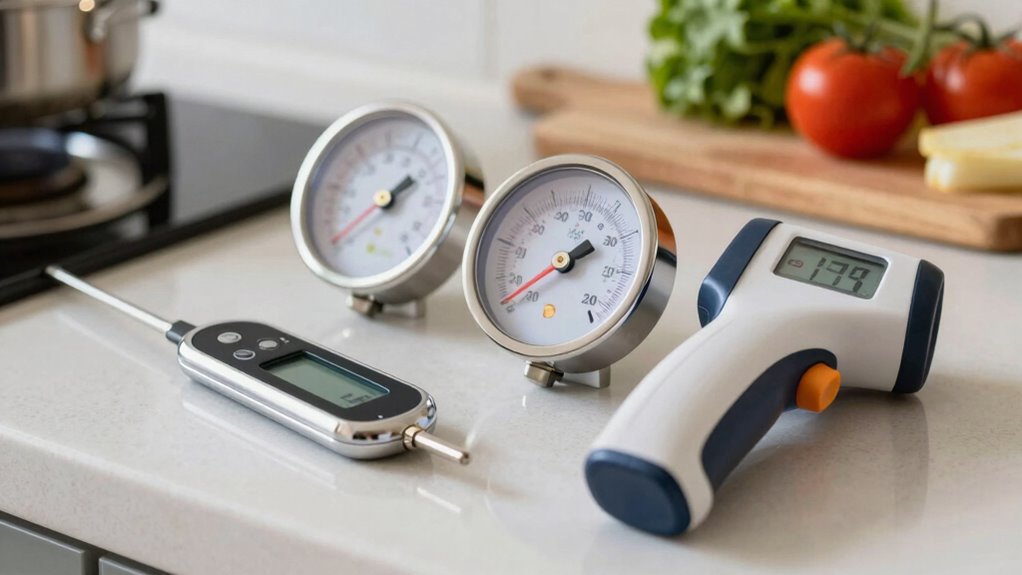
To find the right kitchen thermometer for each task, consider what you’re cooking. Use an instant-read for quick checks of meats or baked goods, while dial thermometers stay in the oven for continuous monitoring. Infrared devices are great for surface temps like frying or searing. Probe thermometers work well for internal meat temps. If you keep exploring, you’ll discover how to select the best tool for every culinary need and boost your cooking precision.
Key Takeaways
- Use digital instant-read thermometers for quick checks of meat doneness and baked goods.
- Choose dial oven-safe thermometers for continuous monitoring inside the oven during cooking.
- Infrared thermometers are ideal for surface temperature checks like frying or searing.
- Probe thermometers are best for measuring internal temperatures of meats and baked items.
- Select thermometers with appropriate temperature ranges and features based on specific cooking tasks.
Types of Kitchen Thermometers for Cooking
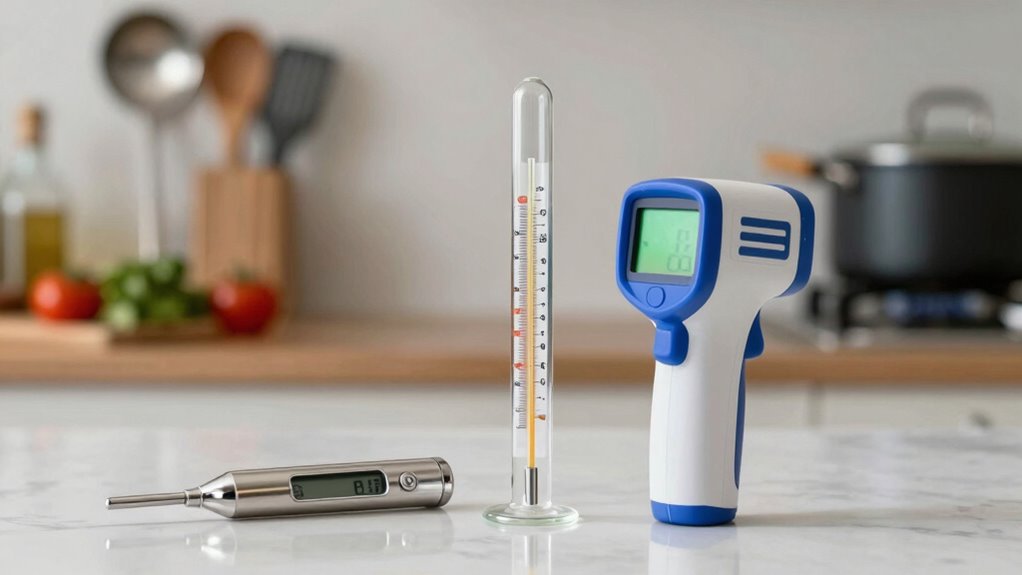
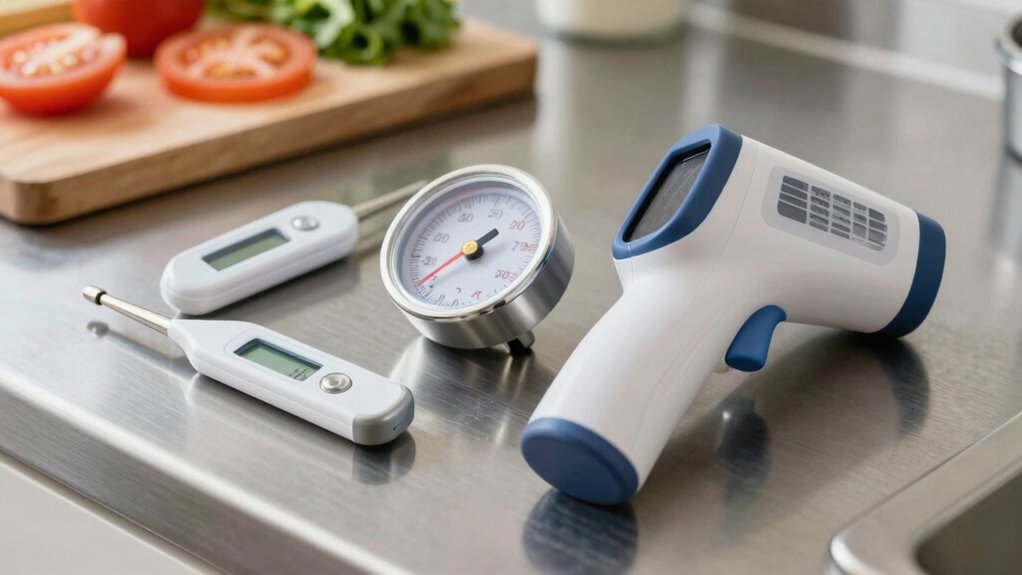
When it comes to cooking, choosing the right thermometer can make all the difference in ensuring your dishes turn out perfect. Different types of kitchen thermometers suit various cooking techniques and ingredient safety needs. For example, digital instant-read thermometers quickly provide accurate readings, ideal for checking meat doneness or baked goods. Dial oven-safe thermometers stay in the dish while cooking, helping you monitor temperature without opening the oven. Infrared thermometers are great for surface temperature checks, such as frying or searing. Each thermometer type helps you maintain proper ingredient safety by ensuring foods reach safe internal temperatures. Selecting the right tool depends on your specific cooking methods and safety requirements, ensuring precision and consistency in your culinary endeavors. Additionally, understanding the various thermometer types can help you choose the most effective tool for each task. Proper calibration of thermometers is also essential to maintain accuracy over time. Regularly checking and adjusting your thermometers ensures ongoing accuracy, which is crucial for food safety and quality. Incorporating proper maintenance practices can extend the lifespan and reliability of your thermometers, ensuring ongoing accuracy.
When Should You Use a Digital Probe Thermometer?
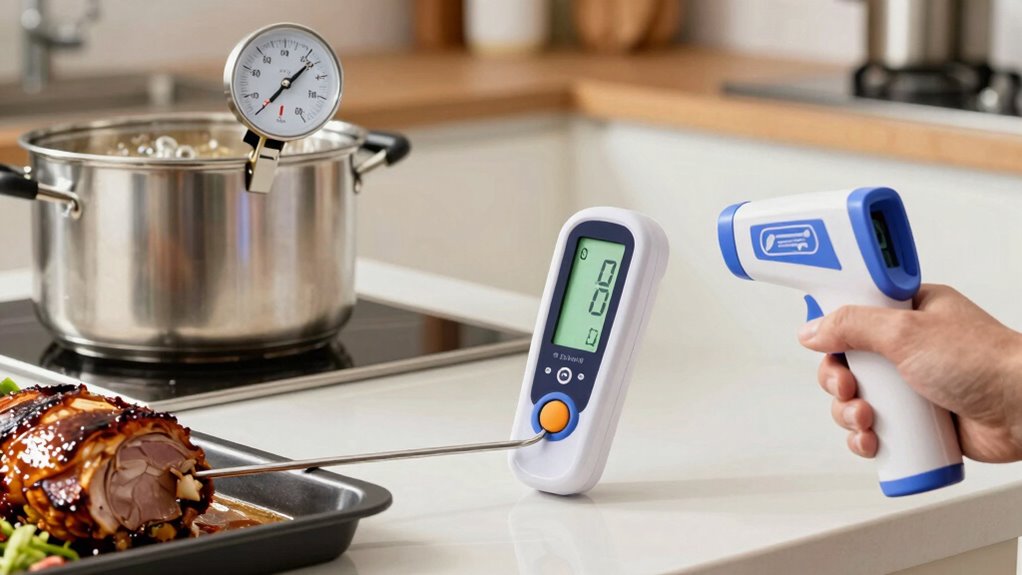
You should use a digital probe thermometer when you need precise temperature readings during cooking. Its real-time monitoring helps you avoid overcooking or undercooking your food. This makes it ideal for tasks like roasting meats or monitoring thick sauces. Additionally, employing accurate temperature control can enhance food safety and quality. Using a digital thermometer with proper calibration ensures consistent and reliable readings for your culinary needs. Incorporating reliable measuring tools is essential for achieving consistent results in your cooking. For example, selecting a thermometer with calibration features can help maintain accuracy over time. Understanding how contrast ratio impacts image quality can also help you choose the right tools for your kitchen display or presentation needs.
Precise Temperature Readings
Digital probe thermometers are essential tools whenever precise temperature readings are critical to guarantee food safety and quality. You should use a digital probe thermometer when cooking meats, poultry, or seafood to ensure they reach safe internal temperatures, preventing foodborne illnesses. They’re also invaluable for monitoring food storage conditions, such as checking refrigerator or freezer temperatures, to maintain ideal storage safety. When precise readings are needed—like verifying the doneness of a roast or ensuring leftovers are stored correctly—a digital probe provides accurate, real-time data. This helps you avoid undercooking or overcooking and keeps your food safe from bacteria growth. Using a digital probe thermometer in these situations ensures you meet safety standards and preserve the quality of your ingredients efficiently. Additionally, employing innovative European cloud servers can help you track and analyze temperature data over time for enhanced food safety management.
Real-Time Monitoring Benefits
Real-time monitoring with a digital probe thermometer is especially valuable during the cooking process, as it provides continuous temperature updates that help you make immediate adjustments. This real-time data guarantees food safety by preventing undercooking or overcooking, and enhances culinary precision. You can spot temperature fluctuations instantly, reducing the risk of harmful bacteria or dry, overdone dishes. Imagine:
- Watching your roast reach the perfect internal temperature without opening the oven.
- Tracking thick soups or stews to avoid scorching or uneven heating.
- Monitoring a turkey’s core temperature during slow roasting for optimal results.
- Recognizing the importance of well-sourced coverage to ensure accurate and reliable information about cooking tools and techniques.
- Utilizing precise temperature control to achieve consistent results every time you cook.
- Relying on connected technology for real-time updates that keep you informed throughout the cooking process.
- Understanding the heat transfer properties of different materials to improve your monitoring accuracy.
- Incorporating modern technology can also help you troubleshoot temperature inconsistencies more effectively.
Using a digital probe thermometer in these moments keeps you in control, guarantees safety, and ensures your dishes turn out exactly as intended. It’s an essential tool for cooks who value accuracy and consistency.
How to Choose the Best Dial Oven Thermometer

Choosing the best dial oven thermometer starts with understanding how to evaluate its features. First, ensure it promotes oven safety by providing accurate readings, helping you avoid under or overcooking. Look for a thermometer with easy-to-read dial markings and a temperature range suitable for your cooking needs. Calibration is essential—select a thermometer that can be easily calibrated to maintain accuracy over time. A well-calibrated thermometer ensures consistent results and prevents dangerous temperature fluctuations. Durability matters too; opt for models with sturdy construction and heat-resistant materials. Additionally, consider the size and placement of the dial; it should be visible without opening the oven door excessively. Paying attention to temperature range and calibration capability can significantly improve your cooking outcomes. Understanding quality assurance practices can help you choose a more reliable and long-lasting thermometer. The proper maintenance of your thermometer can also extend its lifespan and ensure ongoing accuracy, making it a vital tool in your kitchen arsenal. Regularly checking the accuracy and calibration of your thermometer is crucial for maintaining consistent cooking results and ensuring safety. Incorporating technological features such as digital displays or remote monitoring can further enhance your cooking precision and convenience. By focusing on these features, you’ll choose a reliable oven thermometer that enhances safety and cooking precision.
How Instant-Read Thermometers Make Cooking Easier
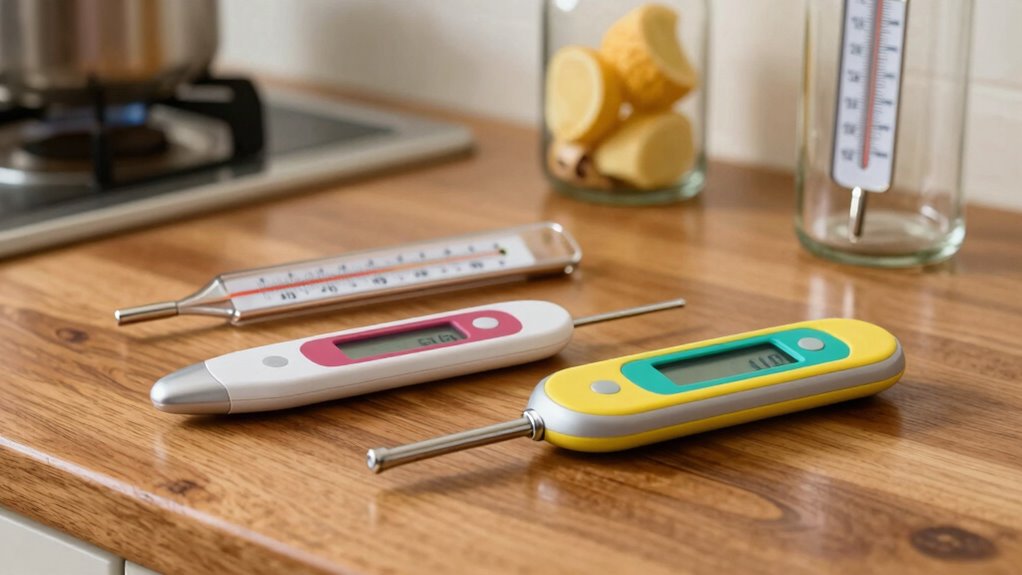
Instant-read thermometers simplify cooking by providing quick, accurate temperature readings right when you need them. This helps you monitor food doneness precisely, reducing the risk of undercooking or overcooking. Whether you’re developing a new recipe or ensuring safe poultry, these tools make your process smoother. Imagine piercing a thick steak, a loaf of bread, or a roast, and instantly knowing if it’s ready. You can:
Instant-read thermometers deliver quick, accurate temps, ensuring perfect doneness and safer, more confident cooking every time.
- Check the center of a roast without guessing
- Confirm the internal temperature of a baked ham
- Safely verify the doneness of chicken or pork. Proper thermometer use ensures accurate readings and safe cooking practices. This real-time feedback enhances cooking safety and accelerates recipe development, giving you confidence with every dish. Instant-read thermometers are a game-changer for home cooks seeking perfect results every time. They also help you understand cooking temperatures, which is essential for achieving the desired doneness and food safety. Mastering temperature calibration ensures your thermometer provides reliable measurements over time.
Using Infrared Thermometers for Surface Temperature Checks
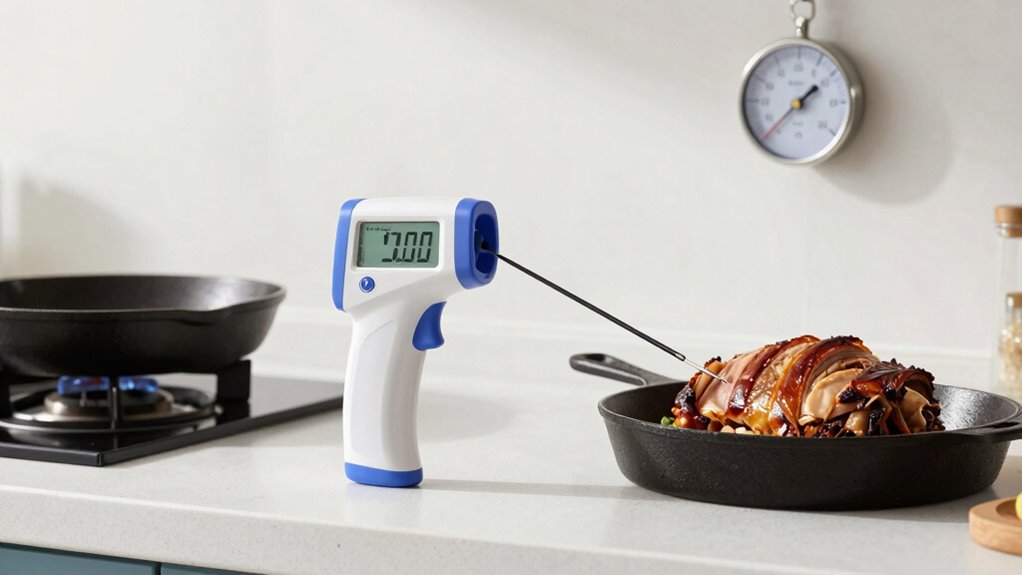
Infrared thermometers allow you to measure surface temperatures quickly and without contact, making them ideal for many kitchen tasks. To get accurate readings, you need to understand how emissivity affects measurements and calibrate your device accordingly. Paying attention to these factors ensures reliable surface temperature checks every time.
Surface Measurement Techniques
Surface measurement techniques using infrared thermometers offer a quick and non-contact way to check surface temperatures. To get accurate results, you need to perform proper surface calibration and adjust for emissivity. Calibration ensures the device reads correctly, especially when measuring unfamiliar surfaces. Emissivity adjustment helps account for different surface materials, like shiny metal or matte finishes, which can affect readings. When using the infrared thermometer:
- Keep the device a consistent distance from the surface
- Ensure a clean, unobstructed view for accurate measurement
- Regularly calibrate and modify for emissivity to match the surface type
Emissivity and Accuracy
Since emissivity varies among different materials, understanding how it impacts infrared thermometer readings is crucial for accurate surface temperature measurements. Emissivity effects can cause significant discrepancies if ignored, leading you to misjudge cooking times or safety levels. To guarantee accuracy, use proper calibration techniques, such as adjusting your infrared thermometer’s emissivity setting for specific surfaces. Many devices allow you to set the emissivity value, which is essential for materials like stainless steel, ceramic, or painted surfaces. Without proper calibration, readings may be skewed, especially on shiny or reflective surfaces. Regularly verifying your thermometer against a contact thermometer or a surface with a known emissivity helps maintain measurement precision. Recognizing emissivity effects and applying correct calibration techniques will give you reliable surface temperature readings every time.
How to Calibrate and Maintain Your Kitchen Thermometers
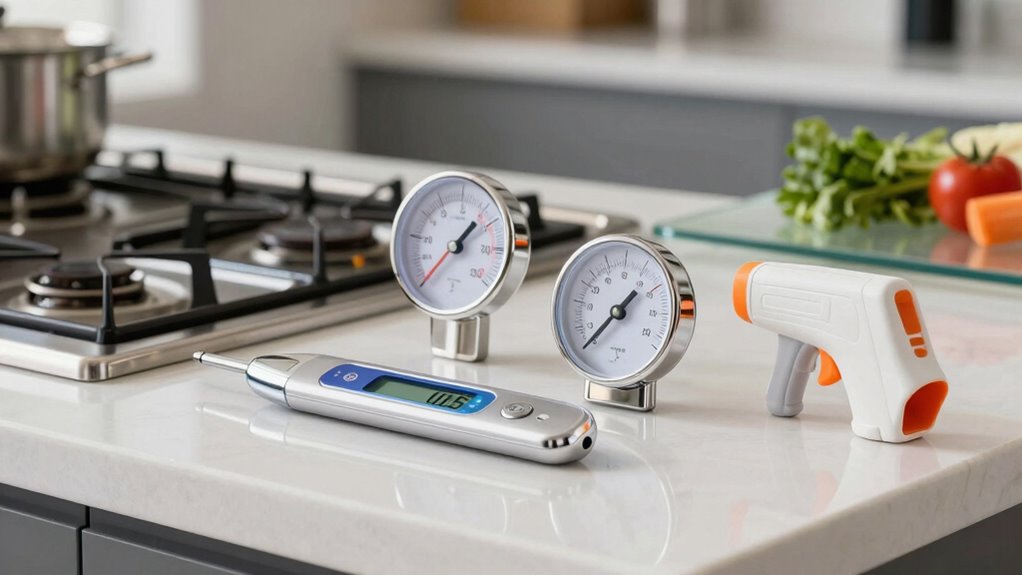
To guarantee your kitchen thermometer provides accurate readings, regular calibration and maintenance are essential. Proper calibration techniques, like using boiling water or ice water tests, ensure your device stays precise. Maintenance routines, such as cleaning the probe after each use and inspecting for damage, keep your thermometer functioning correctly. Imagine wiping off stubborn residues from the metal tip, checking the display for cracks, and gently calibrating the device in controlled environments. These simple steps prevent false readings that could compromise your cooking. Consistently calibrate your thermometer as recommended by the manufacturer, and perform routine maintenance to prolong its lifespan. Staying diligent with these practices helps you trust your thermometer’s accuracy and guarantees perfectly cooked meals every time.
Features to Consider When Buying a Cooking Thermometer
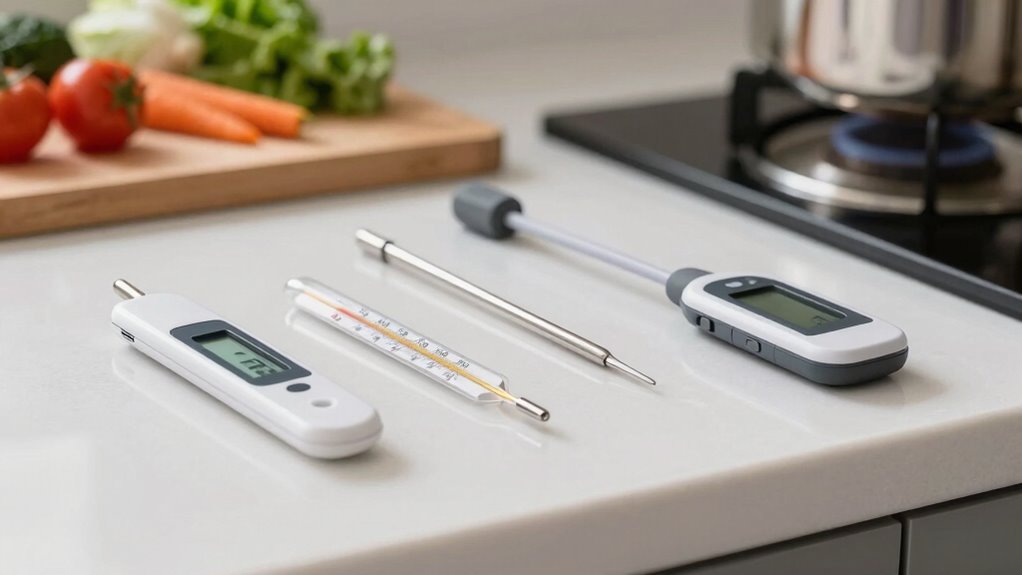
When choosing a cooking thermometer, understanding its key features guarantees you pick the right tool for your needs. Focus on temperature range to ensure it covers your typical cooking tasks. Look for features that support cooking safety, like fast response times and easy-to-read displays, so you can monitor food without delay. Accurate thermometer calibration is essential; select models that are either pre-calibrated or easy to calibrate yourself to maintain precision over time. Consider probe durability and the type of display—digital or analog—that suits your comfort. A waterproof design enhances longevity and ease of cleaning, while a hold function allows you to check temperatures without removing the probe. Prioritizing these features helps you choose a thermometer that’s reliable, safe, and tailored to your specific cooking needs.
Comparing Costs, Accuracy, and Ease of Use of Thermometers
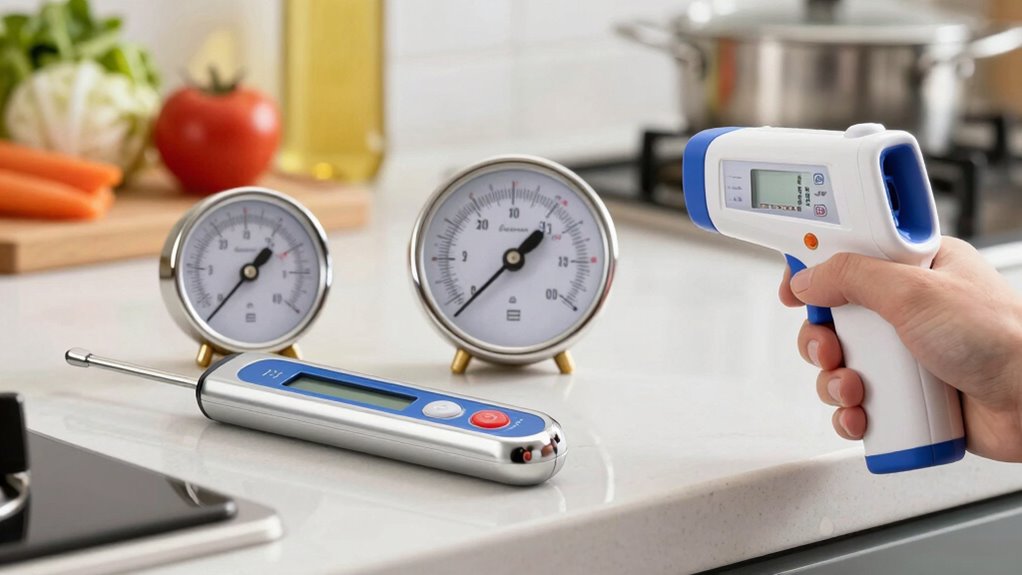
While selecting a cooking thermometer, balancing cost, accuracy, and ease of use can seem challenging, but understanding how these factors compare helps you make an informed choice. A good cost comparison shows that affordable models often deliver decent accuracy, but premium options provide higher precision. User friendliness varies; some thermometers have intuitive digital displays, while others require manual reading or calibration. Visualize a thermometer with a bright, easy-to-read screen, a sturdy probe for quick readings, and a simple calibration process. Consider how much you’re willing to spend for added features or better accuracy. Remember, a thermometer that’s easy to use saves time and reduces errors, making your cooking more consistent and enjoyable. Weigh these factors carefully to find the best fit for your kitchen needs.
Troubleshooting Common Kitchen Thermometer Problems
Even the most reliable kitchen thermometers can encounter issues that affect their performance. Common calibration issues may cause inaccurate readings, so it’s essential to calibrate your thermometer regularly according to the manufacturer’s instructions. If your readings seem off, try recalibrating by using the ice water method or boiling water test. Battery problems are another common culprit, especially with digital models. When your thermometer isn’t turning on or the display is dim, check the battery. Replace it following these battery replacement tips: remove the old battery carefully, ensure correct placement, and use fresh, high-quality batteries for reliable operation. Keeping these troubleshooting steps in mind helps ensure your thermometer stays accurate and ready for your next cooking challenge.
Tips for Picking the Right Thermometer for Your Cooking Needs

When choosing a thermometer, consider how accurate and precise it needs to be for your cooking style. Think about how easy it is to use, especially when multitasking in the kitchen. Also, check if the temperature range covers the foods you typically prepare to guarantee reliable readings every time.
Accuracy and Precision
Choosing a thermometer with high accuracy and precision guarantees your cooking turns out just right. To guarantee reliable readings, pay attention to calibration techniques—regularly check and adjust your thermometer as needed. Proper thermometer placement is vital; insert it deep enough into the food for an accurate core temperature, avoiding contact with bone or fat. Look for thermometers with consistent readings across multiple uses, indicating good precision. Visualize the thermometer’s probe nestled in a thick cut of meat, or submerged in liquid to verify calibration. When selecting, consider models that allow easy calibration, have clear markings, and offer stable readings. Accurate and precise thermometers help you avoid undercooking or overcooking, making your culinary results consistently perfect.
Ease of Use
Looking for a thermometer that’s easy to use can make a big difference in your cooking experience. Focus on ergonomics, ensuring the device fits comfortably in your hand and is simple to hold and operate. Check the user interface—look for clear buttons, an intuitive display, or a straightforward digital readout that’s easy to interpret at a glance. Avoid complicated setups or confusing controls that can slow you down or lead to mistakes. A well-designed thermometer minimizes effort and reduces frustration, so you can focus on cooking instead of figuring out how to use it. Whether it’s a probe, dial, or digital model, choose one that feels natural to operate and quickly provides accurate readings, making your cooking safer and more efficient.
Temperature Range
Selecting a thermometer with the right temperature range guarantees you can accurately measure a variety of foods and cooking processes. This guarantees cooking safety and proper food storage, preventing undercooking or overcooking. When choosing, consider the typical temperatures you’ll encounter, from rare steaks to boiling water.
- Imagine checking the perfect internal temperature of a roast or avoiding the danger zone with quick readings.
- Visualize monitoring the precise heat needed for candy or dairy, where accuracy is critical.
- Think about ensuring leftovers are stored at safe temperatures to prevent bacteria growth.
A thermometer with an appropriate range helps you confidently handle different tasks, making your kitchen safer and more efficient. Picking the right range is essential for versatile, reliable measurements.
Frequently Asked Questions
How Long Does It Take for a Thermometer to Give an Accurate Reading?
Your thermometer’s response time varies, but most take about 2 to 10 seconds to give an accurate reading. Factors like the type of thermometer and the temperature of what you’re measuring can influence this accuracy duration. To guarantee precise results, give it enough time to stabilize, especially with digital models. Remember, faster response times often mean quicker, reliable readings, so choose a thermometer suited to your needs for ideal performance.
Can I Use a Kitchen Thermometer for Outdoor Grilling?
Yes, you can use a kitchen thermometer for outdoor grilling, but keep in mind that thermometer accuracy can vary with temperature extremes. Look for a rugged, waterproof model designed for high heat and outdoor use. Make certain it has a fast response time and is durable enough to withstand outdoor conditions. Using the right thermometer helps you monitor your grill’s temperature precisely, ensuring perfectly cooked food every time.
Are There Safe Temperature Ranges for Different Types of Meat?
Think of meat safety as your culinary shield. You should aim for specific temperature guidelines to prevent foodborne illnesses—like 145°F for steaks and roasts, 160°F for ground meats, and 165°F for poultry. Use your thermometer to make sure these safe ranges, and you’ll serve delicious, worry-free meals. Staying within these guidelines guarantees your meat is both safe to eat and perfectly cooked every time.
How Often Should I Replace or Recalibrate My Thermometer?
You should calibrate your thermometer at least once a year or whenever it gives inconsistent readings. This helps maintain accuracy and extends its lifespan. Check your thermometer’s calibration frequency based on usage and manufacturer recommendations. Replace it if it’s no longer precise after recalibration or if it shows signs of damage. Proper care ensures your thermometer stays reliable for all your cooking needs and prevents food safety issues.
What Materials Are Safest for Food Contact in Thermometers?
Imagine your thermometer as a trusted kitchen companion, and you want only the safest materials touching your food. You should look for thermometers made from food grade plastics and stainless steel, as they guarantee safety and durability. These materials resist corrosion, won’t transfer harmful chemicals, and are easy to clean. Choosing thermometers with these components guarantees your cooking remains safe, delicious, and free from unwanted contaminants.
Conclusion
Choosing the right kitchen thermometer is like finding the perfect tool for a craft—you’ll wonder how you ever cooked without it. I once ignored my meat thermometer, only to serve a dinner that was undercooked and disappointing. Now, with the right thermometer, I cook confidently, knowing each dish hits the mark. Invest in the right tool, and you’ll turn everyday cooking into a precise, stress-free art—making every meal a masterpiece.