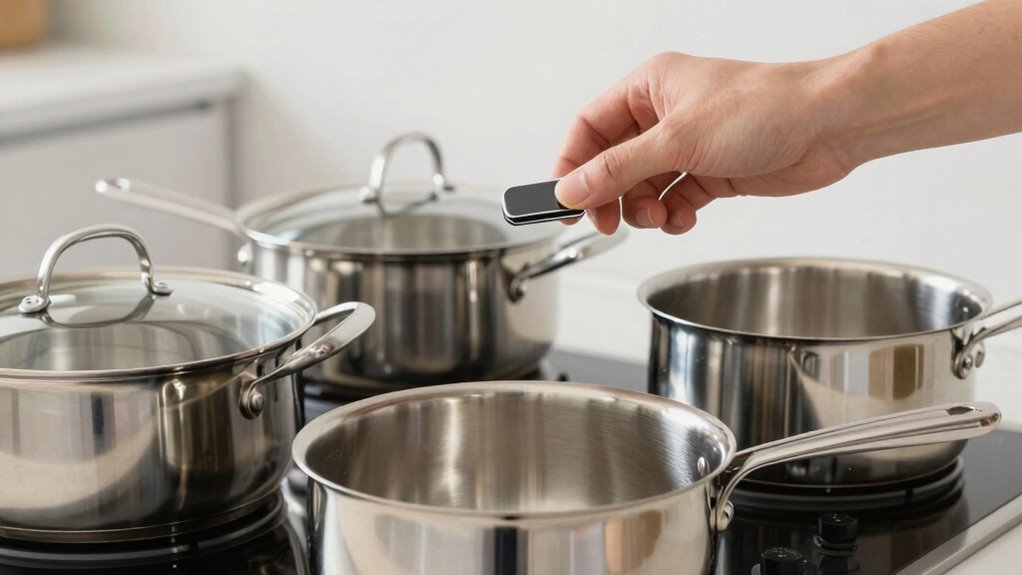
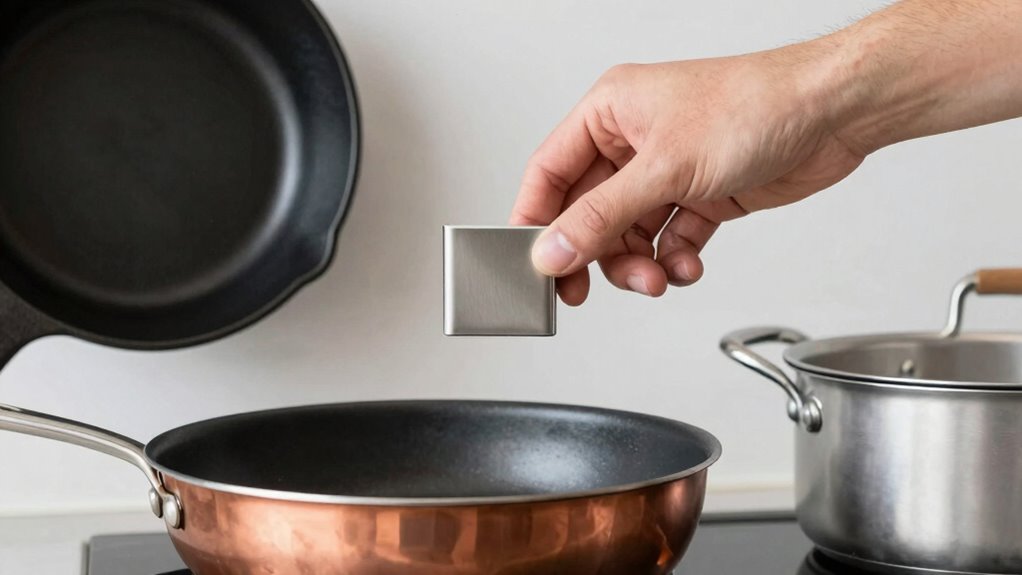
To choose cookware for induction, start with the magnet test—if a magnet sticks firmly to the bottom, it’s likely compatible. Also, check for flat, smooth surfaces and look for induction symbols or labels. Use magnetic materials like cast iron or certain stainless steels, and avoid aluminum, copper, or non-magnetic glass and ceramic unless they have magnetic bases. For more tips on selection and maintenance, you’ll find helpful guidance ahead.
Key Takeaways
- Perform the magnet test: a strong magnet sticking firmly indicates compatibility with induction cookware.
- Ensure cookware has a flat, smooth bottom for even heat distribution and proper contact on the induction surface.
- Verify the material: use ferrous metals like cast iron or magnetic stainless steel; avoid non-magnetic materials like aluminum or copper.
- Look for induction symbols or labels on cookware packaging to confirm compatibility before purchase.
- Consider size, shape, and build quality to ensure safety, efficiency, and durability in induction cooking.
What Is Induction Cookware and How Does It Work?
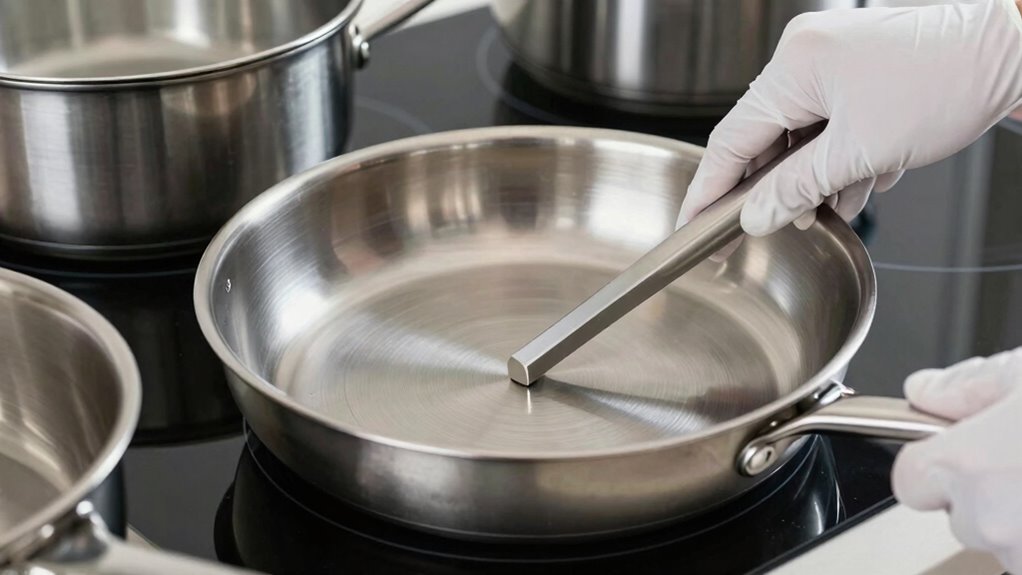
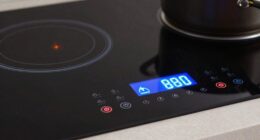
Induction cookware is specially designed to work with induction cooktops by directly transferring heat through magnetic fields. This method offers enhanced cooking safety since the cookware heats only when in contact with the magnetic surface, reducing the risk of burns or accidental fires. Plus, induction cookware often boasts sleek, modern aesthetics, making your kitchen look stylish and contemporary. The design emphasizes functionality and safety, with smooth surfaces that are easy to clean. Because the heat is generated in the cookware itself, you get precise temperature control, which helps prevent overcooking and spills. This efficiency and safety appeal make induction cookware a popular choice for modern kitchens. Additionally, European innovation in cookware materials and design has led to even more durable and energy-efficient options. Understanding its features ensures you select cookware that’s both safe and visually appealing. Proper cookware selection enhances cooking safety and ensures a more organized and efficient kitchen experience.
How Can You Test if Your Pots and Pans Are Induction Compatible?
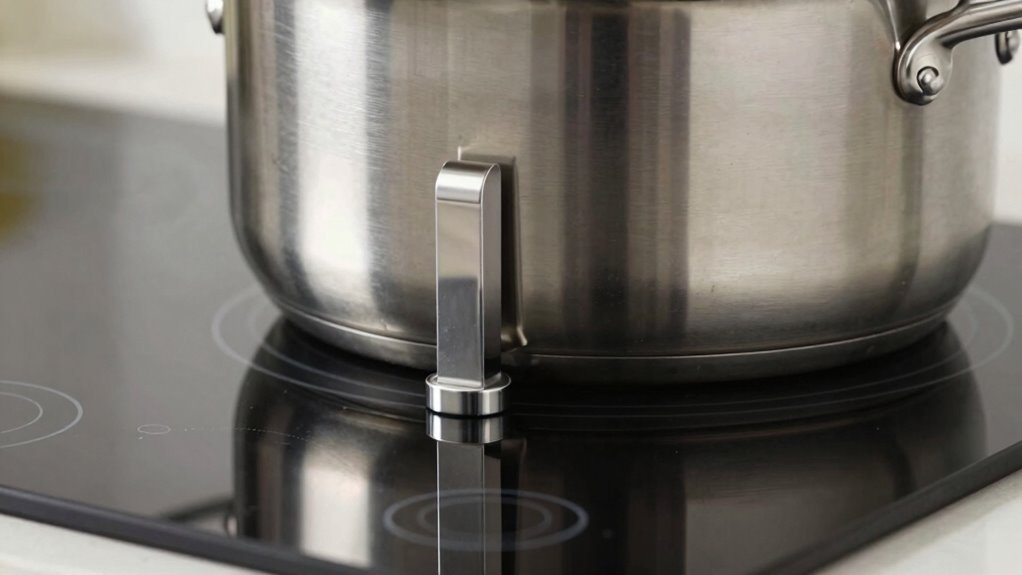
To determine if your pots and pans work with induction cooktops, a simple test can save you time and money. The magnet test is quick: if a magnet sticks firmly to the bottom, your cookware is likely compatible. Besides functionality, consider cookware aesthetics, as attractive designs enhance your kitchen decor. Brand reputation also matters; trusted brands often ensure consistent quality. You can also check for induction symbols on the bottom of your pots and pans or review packaging information. Here’s a quick overview:
| Test Method | Indicator | Additional Factors |
|---|---|---|
| Magnet Test | Magnet sticks firmly | Look for aesthetics and brand reputation |
| Visual Inspection | Flat, smooth bottom | Check for induction symbols |
| Manufacturer Info | Labels or packaging | Confirm compatibility with induction |
This approach guarantees you select cookware that’s both functional and visually appealing.
Key Materials That Make Cookware Suitable for Induction Cooking
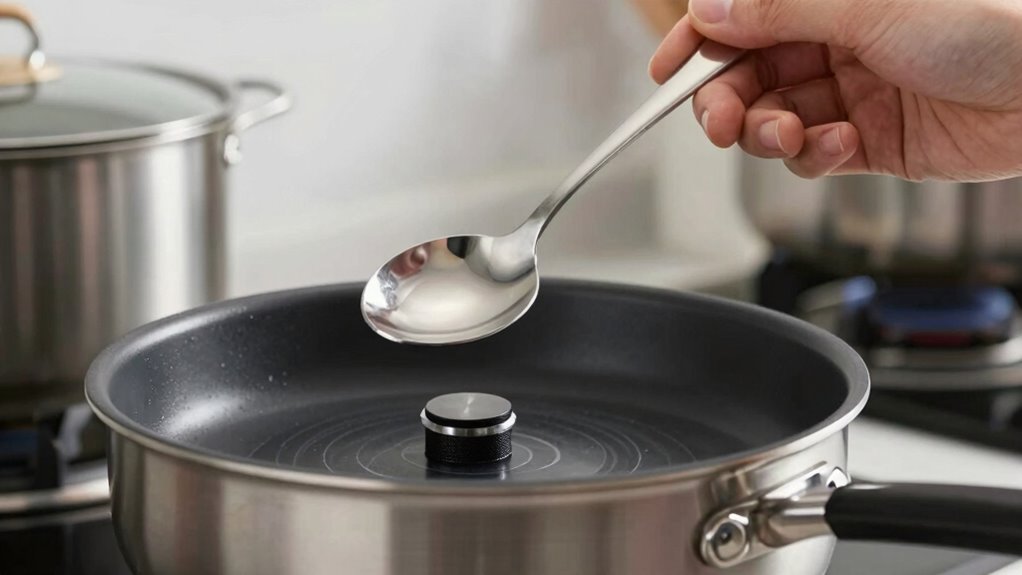
To guarantee your cookware works with induction, it needs a magnetic base that’s compatible. The materials used also matter for durability and safety during cooking. Understanding these key factors helps you choose the right pots and pans for your induction stove. Additionally, selecting cookware with free floating features can improve heat distribution and prevent warping over time. Ensuring the cookware has a magnetic base is essential for efficient energy transfer and consistent cooking results.
Magnetic Base Compatibility
Magnetic base compatibility is essential when choosing cookware for induction cooking, as only certain materials can generate heat through magnetic induction. Your cookware’s magnetic base must be compatible with your induction stove to guarantee efficient heating. Look for cookware with a magnetic base, often made of ferrous metal, for ideal cookware compatibility. Some common materials include cast iron and certain stainless steels. Non-magnetic materials like aluminum or copper won’t work unless coated with a magnetic layer. Here’s a quick overview:
| Material | Compatibility |
|---|---|
| Cast iron | Excellent |
| Magnetic stainless steel | Highly compatible |
| Aluminum, Copper | Not compatible unless magnetic layer added |
Always verify your cookware’s magnetic base to guarantee it will work properly with induction. Ensuring the cookware’s magnetic properties are suitable is crucial for optimal performance.
Material Durability and Safety
Choosing durable and safe cookware for induction involves selecting materials that can withstand daily use without degrading or posing health risks. Material longevity is essential to guarantee your cookware remains effective and safe over time. Look for options like cast iron, stainless steel, and clad aluminum, which are known for their strength and durability. These materials resist warping, scratching, and corrosion, supporting your cooking safety. Avoid cheap or low-quality metals that may release harmful substances or break down quickly. Prioritize cookware with sturdy construction and non-toxic coatings when applicable. Additionally, understanding the magnet test can help verify if cookware is suitable for induction cooking, ensuring compatibility. A durable material not only enhances safety but also reduces the need for frequent replacements, saving you money in the long run. Being aware of material safety standards can further guide you in selecting high-quality, compliant cookware. By choosing high-quality, durable materials, you assure your cookware performs consistently, maintains safety standards, and lasts for years, making your induction cooking experience both reliable and secure.
Which Cookware Materials Should You Avoid for Induction?
You should avoid cookware made from non-magnetic metals like aluminum and copper, as they won’t work with induction stovetops. Glass and ceramic pots also won’t heat properly because they lack magnetic properties. Stick to compatible materials to guarantee your cookware heats efficiently and safely. Additionally, understanding the Twin Flame vs Soul Tie can help you choose cookware that enhances your cooking experience by fostering harmony and balance in your kitchen environment. Recognizing the importance of magnetic properties in cookware materials ensures optimal performance and safety during your cooking sessions.
Non-Magnetic Metals
Ever wonder why some cookware simply won’t work on an induction stove? It’s because non-magnetic metals don’t interact with the magnetic field. You should avoid cookware made from non-magnetic alloys like aluminum, copper, or glass, as they won’t heat directly on induction. Here are three key points:
- Magnetic metals are necessary for induction compatibility.
- Non-magnetic alloys won’t generate heat unless combined with magnetic layers.
- Materials like aluminum and copper, often used for their excellent heat conduction, are non-magnetic and incompatible unless specially plated or layered.
Aluminum and Copper
Aluminum and copper are popular materials for cookware because they conduct heat efficiently and heat up quickly. However, aluminum cookware and copper pots are not suitable for induction cooktops because they are non-magnetic. Induction relies on magnetic fields to generate heat, so these materials won’t work unless they have a magnetic layer added. If you use aluminum or copper cookware without an induction-compatible base, your stove won’t recognize it, and it won’t heat properly. Avoid relying on uncoated aluminum cookware or copper pots if you have an induction cooktop. Instead, look for cookware with a magnetic stainless steel or iron core. This ensures your cookware interacts with the induction field and heats efficiently. Always check for the magnet test before purchasing non-stick aluminum or copper cookware. Additionally, understanding the magnetic properties of your cookware can help you make smarter choices for induction cooking. Recognizing induction-compatible materials can save you time and prevent frustration when selecting cookware.
Glass and Ceramic
Glass and ceramic cookware are generally not compatible with induction cooktops because they don’t contain magnetic properties. While some ceramic coatings are used on induction-compatible pans, plain glass or ceramic cookware won’t work without a magnetic base. To understand why, consider these points:
- Lack of magnetic properties – pure glass and ceramic materials aren’t attracted to magnets.
- Glass durability – despite being sturdy, glass can crack or shatter under rapid temperature changes, making it unsafe on induction. Additionally, the thermal expansion of glass and ceramic materials can lead to cracking if exposed to sudden temperature fluctuations.
- Ceramic coatings – some ceramic-coated cookware may have a magnetic core, but plain ceramic or glass pieces typically won’t activate the induction stove.
- Magnetic compatibility is essential for proper induction heating, so always check for a magnetic base before using cookware on an induction cooktop.
- Additionally, thermal conductivity varies among materials, affecting how evenly heat is distributed on your cooktop. Having a good understanding of material properties can help you select the best cookware for your needs. It is also important to consider durability when selecting cookware for induction to ensure safety and longevity.
Avoid using unmagnetized glass or ceramic cookware if you want efficient heating and safety on your induction cooktop.
How to Choose the Right Size and Shape of Induction Cookware

Choosing the right size and shape of induction cookware is essential for efficient cooking and safety. When selecting cookware, consider induction cookware sizes that match your burner’s diameter for proper heat transfer. Too small or too large pots can waste energy and cause uneven heating. Pay attention to cookware shape selection; flat-bottomed pots and pans ensure better contact with the induction surface, improving performance. Round, square, or rectangular shapes can influence how you cook and store your cookware, so choose shapes that fit your cooking style and kitchen space. Avoid mismatched sizes, as they can reduce induction efficiency and increase energy use. By matching the size and shape of your cookware to your induction cooktop, you optimize safety, performance, and energy savings. Proper heat distribution also depends on selecting cookware with a suitable bottom material and thickness to ensure even cooking.
Additional Features to Consider When Selecting Induction Cookware
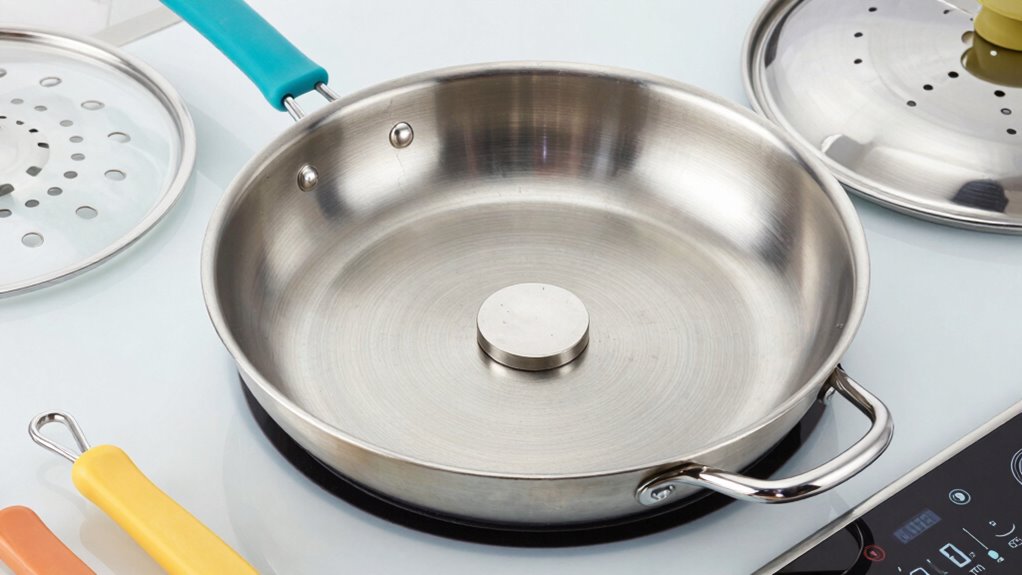
When choosing induction cookware, you’ll want to consider how well it distributes heat to guarantee even cooking. Pay attention to handle and lid designs for safety and ease of use, especially during busy kitchen moments. Additionally, check if the cookware is compatible with accessories you might want to use, like steamers or trivets, to maximize its versatility. Ensuring the cookware has a transparent fee structure can also help you avoid unexpected costs and make informed investment decisions. To ensure durability and safety, verify that the cookware has undergone quality testing and certification standards. Moreover, selecting cookware with heat distribution properties can enhance cooking performance and energy efficiency. Incorporating appropriate safety features, such as heat-resistant handles and secure lids, can further improve your overall cooking experience and safety. Regularly inspecting the piercing materials used in cookware can also prevent potential health issues related to material degradation.
Heat Distribution Efficiency
Have you ever noticed uneven cooking or hot spots on your pan? That’s often due to poor heat distribution efficiency. Good cookware should maximize heat transfer and energy efficiency, ensuring your food heats evenly. To assess this, look for cookware with:
- A thick, layered base for uniform heat conduction
- A flat, smooth bottom that maintains contact with the induction surface
- Materials like cast iron or multi-ply stainless steel that promote even heat spread
These features help distribute heat more effectively, reducing hot spots and improving energy transfer. When choosing cookware, prioritize pieces designed for ideal heat distribution. This ensures faster cooking, less energy waste, and better control over your temperature. Efficient heat distribution makes your induction cooking experience smoother and more consistent. Proper heat conduction is essential for achieving this level of performance.
Handle and Lid Design
A well-designed handle and lid can considerably enhance your cooking experience on induction. When choosing cookware, pay attention to the handle design—look for handles that are sturdy, heat-resistant, and comfortable to grip. Avoid handles that become hot or wobble during cooking, as this can cause accidents. The lid design also matters; a well-fitting lid traps heat efficiently and prevents splatters. Choose lids with a secure fit and a handle that stays cool enough to handle safely. Some lids have steam vents, which help regulate pressure and prevent boiling over. Overall, ergonomic handles and well-crafted lids improve safety, convenience, and cooking precision, making your induction cooking more enjoyable and efficient.
Compatibility With Accessories
Selecting induction cookware that’s compatible with accessories can considerably expand your cooking options and improve convenience. When choosing, consider how well it works with essential induction accessories and fits into your cookware storage. Compatibility can influence your overall experience and kitchen organization.
Here are key ideas to keep in mind:
- Make certain your cookware works with common induction accessories like steamer baskets or specialized lids.
- Opt for cookware that stacks neatly, making cookware storage more efficient.
- Check if accessories attach securely for safety and ease during cooking.
How to Maintain and Care for Your Induction-Compatible Pots and Pans

Proper maintenance is essential to keep your induction-compatible pots and pans performing their best. Regular cleaning tips include using mild dish soap and a non-abrasive sponge to prevent scratching the surface. Avoid harsh cleaners or steel wool that can damage the coating. After washing, dry your cookware thoroughly to prevent water spots and corrosion. When storing, opt for storage solutions like stackable pot protectors or soft cloths between items to prevent scratches and dents. Keep the cookware in a dry, cool place away from direct sunlight. Proper care extends the lifespan of your pots and pans, maintaining their effectiveness on induction cooktops. Consistent maintenance ensures they stay in top condition, making your cooking experience smoother and more enjoyable.
Common Mistakes to Avoid When Buying Induction Cookware
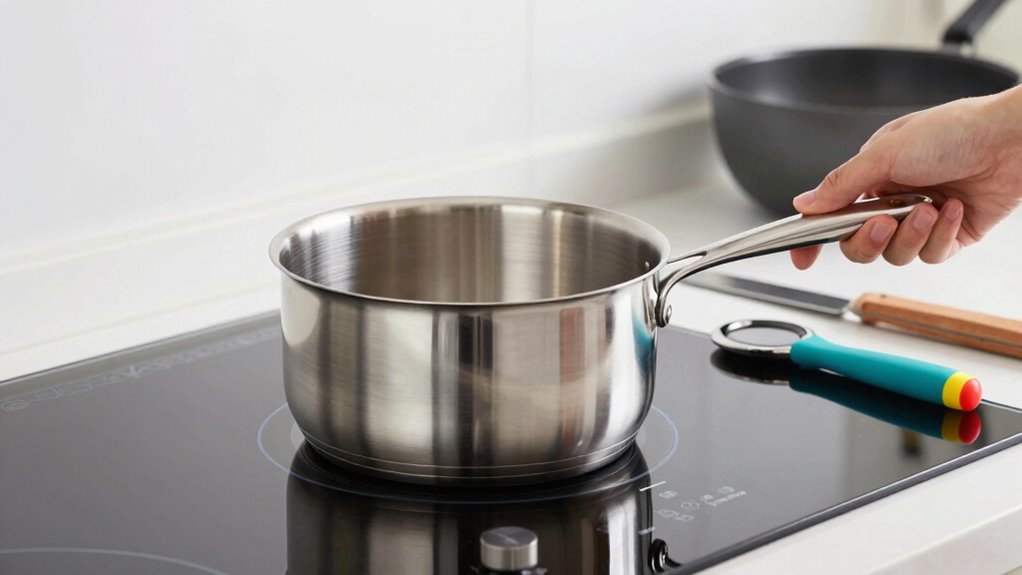
When buying induction cookware, many shoppers make the mistake of choosing pots and pans based solely on price or appearance rather than compatibility. This can reinforce common induction myths, like believing all cookware works equally well or lasts forever. To avoid these pitfalls, consider these points:
- Don’t assume cheaper cookware has the same induction compatibility as premium options—testing with a magnet is essential.
- Ignore durability claims; not all cookware has the same longevity, and poor-quality materials may warp or degrade faster.
- Avoid neglecting the base material; magnetic properties matter more than aesthetics for effective cooking and long-term use.
Are Budget-Friendly Options as Effective as Premium Cookware?
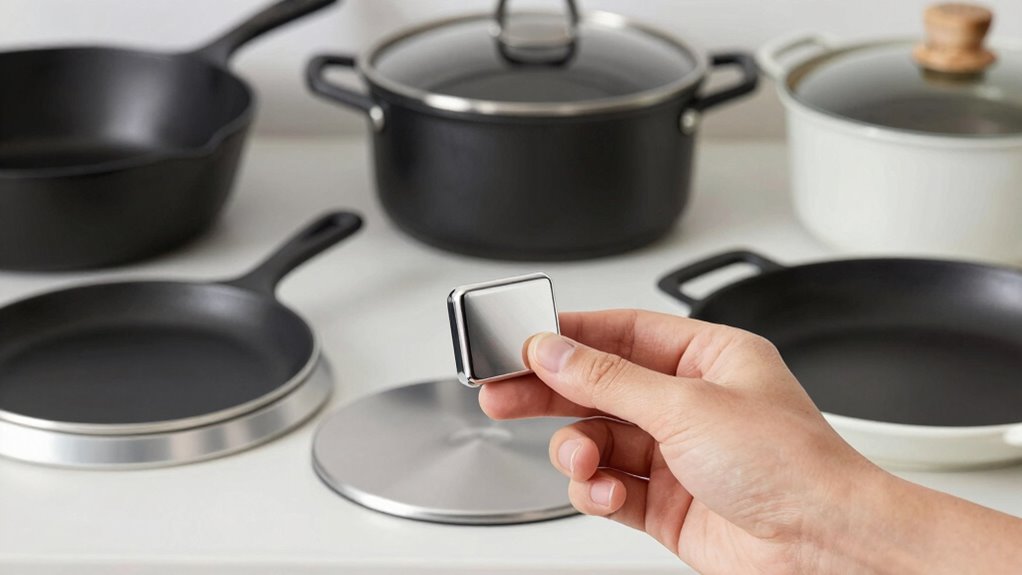
Budget-friendly induction cookware can be surprisingly effective, but it’s important to understand what sets it apart from premium options. While budget cookware often uses thinner materials, many still feature ferromagnetic bases capable of induction cooking. Their performance might not match premium options in heat distribution or durability, but for everyday use, they can be quite adequate. If you’re on a tight budget, you’ll find that many budget cookware sets work well, especially if they pass the magnet test. However, premium options typically offer better construction, longer lifespan, and more even heating. Ultimately, your choice depends on your cooking needs and expectations. For casual cooking, budget cookware can do the job, but for professional or frequent use, investing in premium options might be worth it.
Tips for Troubleshooting Induction Compatibility Issues
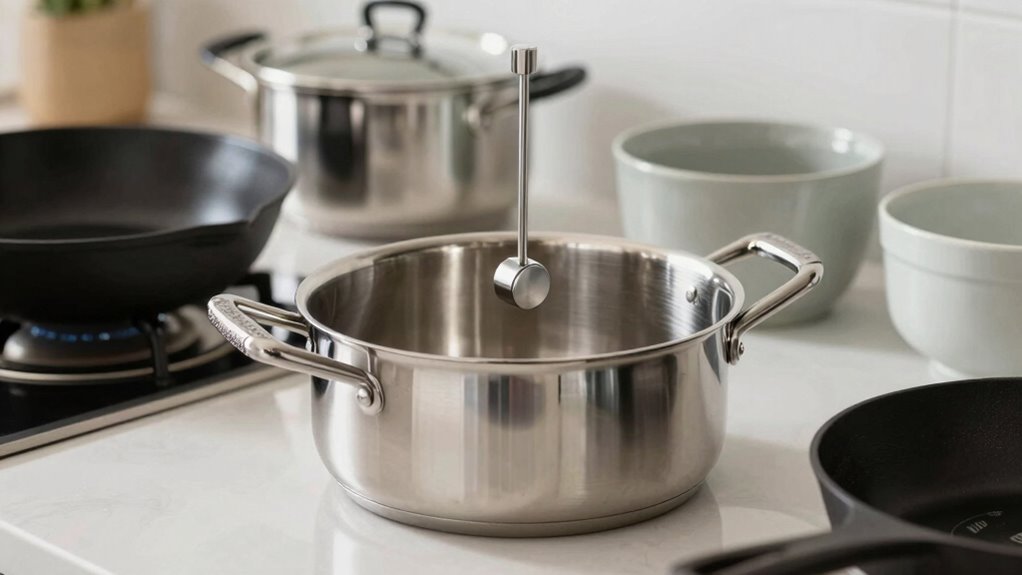
If your induction cooktop isn’t responding to your cookware, troubleshooting the issue begins with checking compatibility. First, verify your cookware is made of ferromagnetic material—use the magnet test to confirm. Second, inspect your cookware’s flatness; uneven bases can cause poor contact, affecting cooking safety and efficiency. Third, consider cookware storage: stacking or improper stacking can damage the base, reducing induction compatibility. Additionally, always clean your cookware thoroughly before use to remove any debris that might interfere. If problems persist, test with different pots or pans to identify incompatible ones. Proper cookware storage not only prevents damage but also maintains consistent performance. Addressing these issues helps ensure safe, effective cooking and prolongs your cookware’s lifespan.
Frequently Asked Questions
Can Non-Metallic Cookware Be Used on Induction Stoves?
Non-metallic cookware can’t be used on induction stoves because of their magnetic properties. Induction cooking relies on material compatibility, specifically magnetic materials, to generate heat. Since non-metallic options lack magnetic properties, they won’t work unless they have a magnetic base or an induction-compatible layer. You need cookware with the right material compatibility to guarantee efficient heating and safe operation on your induction stove.
How Does Cookware Thickness Affect Induction Performance?
Thicker cookware generally improves induction performance because material impact enhances heat distribution, ensuring even cooking. When your cookware is too thin, it can heat unevenly and lose efficiency, while thicker pots retain heat better and respond more quickly to temperature changes. So, opting for a sturdy, well-made piece helps you cook more efficiently, with consistent heat distribution that makes a noticeable difference in your culinary results.
Are There Specific Brands Known for Durable Induction-Compatible Cookware?
You’ll find that brands like All-Clad, Le Creuset, and Calphalon are known for durable induction-compatible cookware. Their strong brand reputation stems from consistent quality and reliable material durability, ensuring your pots and pans last through frequent use. These brands often use high-grade stainless steel and other sturdy materials, making them a smart investment for long-term performance on induction stoves.
How Do I Identify if My Existing Cookware Is Compatible Without Testing?
Think of your cookware as a puzzle piece—if it fits, it’ll work on induction. To identify compatibility without testing, check the bottom for labels or markings indicating magnetic material or use a magnet to see if it sticks. Many modern pots use stainless steel with a magnetic layer. Material identification is key—if the magnet holds, your cookware is induction-compatible, saving you time and effort.
What Are the Best Practices for Storing Induction Cookware Safely?
To store your induction cookware safely, always use proper storage techniques. Avoid stacking heavy pots directly on each other to prevent damage; instead, use pan protectors or soft cloths between items for safe organization. Keep cookware in a dry, cool place away from direct sunlight. Hang pans on wall racks or store them in cabinets with dividers. This guarantees their longevity and maintains a safe, organized kitchen environment.
Conclusion
Choosing the right induction cookware is like finding the perfect key to access a seamless cooking experience. With a simple magnet test and knowledge of materials, you’ll navigate this kitchen maze with confidence. Remember, the right pots and pans don’t just sit pretty—they perform, last, and elevate your culinary adventures. Trust your instincts, avoid pitfalls, and soon your kitchen will transform into a symphony of efficiency and flavor, all powered by the magic of induction.