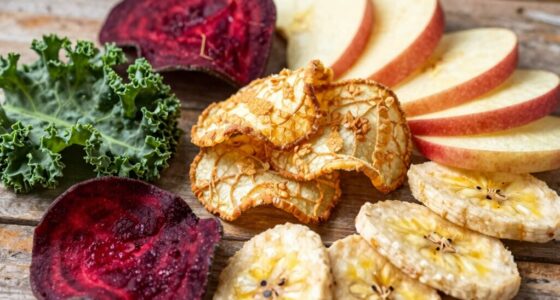

To build a balanced raw plate, start with fresh, organic fruits and colorful vegetables for vitamins and fiber. Add plant-based proteins like nuts, seeds, or sprouted legumes, and include high-quality animal products if desired. Incorporate fermented foods like kimchi or sauerkraut to boost digestion, and use healthy fats such as avocado or raw nuts. Enhance flavors with herbs and lemon, and mix in crunchy textures for variety. Keep exploring for more tips to perfect your raw plate.

Get kitchen staples and gadgets delivered free with Prime
- Fast, free delivery on millions of items
- Prime Video, Amazon Music and more included
- Member-only deals all year
Key Takeaways
- Prioritize a variety of colorful, fresh vegetables and fruits for diverse nutrients and antioxidants.
- Include plant-based proteins like nuts, seeds, and sprouted legumes for balanced amino acids.
- Incorporate fermented foods to enhance digestion and nutrient bioavailability.
- Add healthy fats from avocado, raw nuts, and seeds to support brain health and reduce inflammation.
- Enhance flavor and texture with fresh herbs, lemon, and raw honey for enjoyable, satisfying meals.
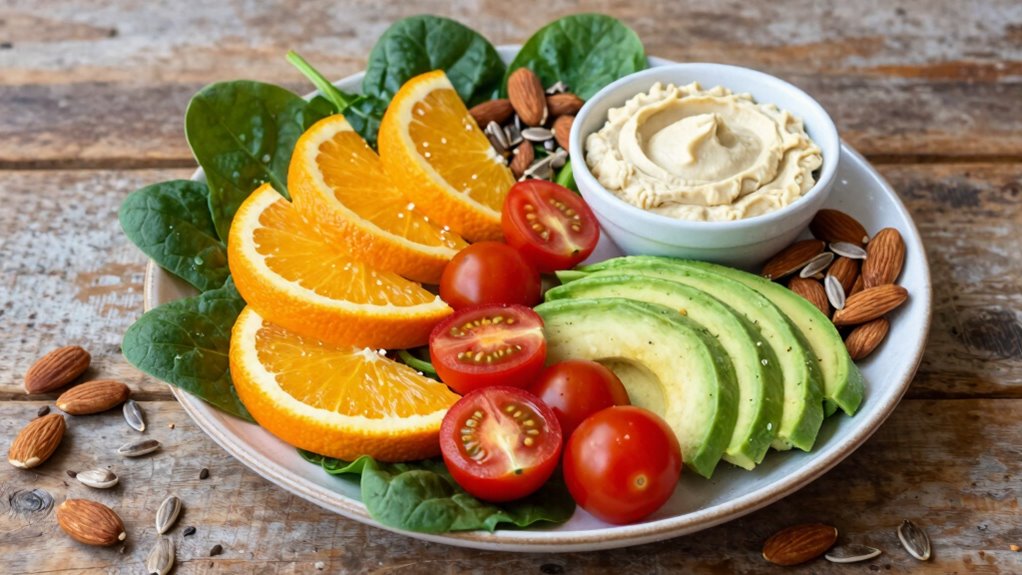
Creating a balanced raw plate involves carefully selecting and combining ingredients to guarantee you get a variety of nutrients without overdoing any one aspect. To do this effectively, you need a simple formula that emphasizes diversity, quality, and preparation techniques. First, focus on ingredient sourcing. Opt for fresh, organic produce whenever possible, as it retains more nutrients and reduces exposure to pesticides. Incorporate a range of colorful vegetables and fruits, ensuring you get a spectrum of vitamins, antioxidants, and fiber. Prioritize whole, minimally processed foods to maximize nutritional value. For proteins, include plant-based options like nuts, seeds, and sprouted legumes, or select high-quality, raw animal products if that aligns with your diet. These sources provide essential amino acids and healthy fats, crucial for overall health.
Create a nutrient-rich, balanced raw plate with diverse, fresh, and minimally processed ingredients.
Next, consider fermentation techniques. Fermentation is a powerful method to enhance digestion and access additional nutrients. Incorporate fermented foods like sauerkraut, kimchi, or kefir into your plate; they introduce beneficial probiotics that support gut health. When preparing fermented items, use traditional techniques, ensuring proper temperature and fermentation time to develop flavor and maximize probiotic benefits. Proper fermentation practices are essential for nutrient bioavailability, as they help break down tough plant fibers and release nutrients for easier absorption. Incorporating fermentation techniques can also help preserve seasonal foods and reduce food waste. Not only does fermentation improve digestibility, but it also adds a tangy complexity to your meal, making it more satisfying. Additionally, choosing fermented foods can help diversify your gut microbiome, promoting overall well-being.
Balancing your raw plate also involves including healthy fats. Avocado, raw nuts, and seeds can supply the necessary omega-3s and monounsaturated fats that support brain function and reduce inflammation. Be mindful of portion sizes to keep your meal balanced. Additionally, add some sprouted grains or seeds to provide complex carbohydrates for sustained energy without spiking blood sugar levels. These ingredients should be prepared with care—soaking and sprouting improve digestibility and nutrient absorption.
Finally, think about flavor and texture. Fresh herbs, lemon juice, and a dash of raw honey can brighten the flavors without compromising the raw integrity. Incorporate a variety of textures—crunchy nuts, crisp vegetables, and smooth dips—to make the plate engaging and satisfying. Remember, the goal is to create a plate that’s not only nutritious but also enjoyable, encouraging you to stick with healthy habits.
As an affiliate, we earn on qualifying purchases.
Frequently Asked Questions
What Are the Essential Nutrients to Include in a Raw Plate?
You need to include essential nutrients like protein, healthy fats, vitamins, and minerals to guarantee nutrient balance on your raw plate. Focus on food variety by incorporating different fruits, vegetables, nuts, seeds, and quality raw meats or fish. This approach helps you get a broad spectrum of nutrients, supporting overall health. Remember, a well-rounded raw plate combines these elements to meet your body’s nutritional needs effectively.
How Do Portion Sizes Vary for Different Age Groups?
Portion variability varies for different age groups to meet their specific nutritional needs. You should serve smaller, age-specific servings for children, ensuring they get enough nutrients without overeating. Teenagers and adults require larger portions to support growth and activity levels. As you plan, consider age-specific servings, adjusting portion sizes accordingly. This approach helps maintain a balanced raw plate, promoting ideal health while accommodating different developmental stages.
Can Raw Plates Be Customized for Specific Dietary Restrictions?
Yes, raw plates can be customized for specific dietary restrictions. You can easily tailor raw plate modifications by swapping ingredients, adjusting portion sizes, or eliminating allergens. Whether you’re avoiding nuts, gluten, or dairy, you can fine-tune your raw plate to fit your needs. This flexibility allows you to craft a customized, colorful, and conscious meal, making raw plates a versatile, valuable option for various dietary restrictions.
How Long Can a Raw Plate Be Stored Safely?
You can store a raw plate safely for up to 24 hours, but food safety depends on proper storage. Keep it refrigerated at or below 40°F (4°C) to prevent bacterial growth. Avoid leaving it out at room temperature for more than two hours. Always check for signs of spoilage, like an off smell or slimy texture, before eating. Proper storage duration is vital to guarantee your raw plate remains safe and fresh.
What Are Common Mistakes to Avoid When Building a Raw Plate?
You should avoid overcrowding your plate, which can ruin food presentation and diminish plate aesthetics. Don’t forget to vary textures and colors to make the dish visually appealing. Using too much or too little of ingredients can throw off balance, so measure carefully. Keep your plate clean and organized, as messy presentation detracts from overall aesthetics. Ultimately, avoid neglecting portion sizes, ensuring your raw plate looks inviting and well-balanced.
Conclusion
Now that you know the simple formula for building a balanced raw plate, you’re well on your way to nourishing your body with whole, unprocessed foods. Remember, it’s all about striking the right chord between proteins, fats, and carbs—like a well-tuned instrument. Keep experimenting and listening to your body’s signals. Before you know it, you’ll be cooking up plates that are not only healthy but also a feast for the senses, truly hitting the nail on the head.
Fall Picks
fall essentials
As an affiliate, we earn on qualifying purchases.