Herbal tea infused juice ideas offer a delicious way to boost flavor and health benefits. You can combine chamomile or lemon balm with citrus for a calming, fragrant drink or mix hibiscus or rosehip with berries for a tart, floral twist. Experiment by adding spices like cinnamon or fresh herbs such as mint or basil. Brew your herbal tea strong, cool it, and blend it into your favorite juice for a unique, nourishing beverage. Explore more creative pairings to craft your perfect infusion.
Key Takeaways
- Pair citrus juices with chamomile or lemon balm for calming herbal-infused drinks.
- Combine berry juices with hibiscus or rosehip for tart, floral flavor layers.
- Add spices like cinnamon or ginger to herbal teas for warm, spiced juice blends.
- Brew strong herbal teas, cool, then mix with fruit or vegetable juices for enhanced flavor.
- Experiment with herbal tea and herb combinations, such as peppermint with cucumber or basil, for creative, personalized infusions.
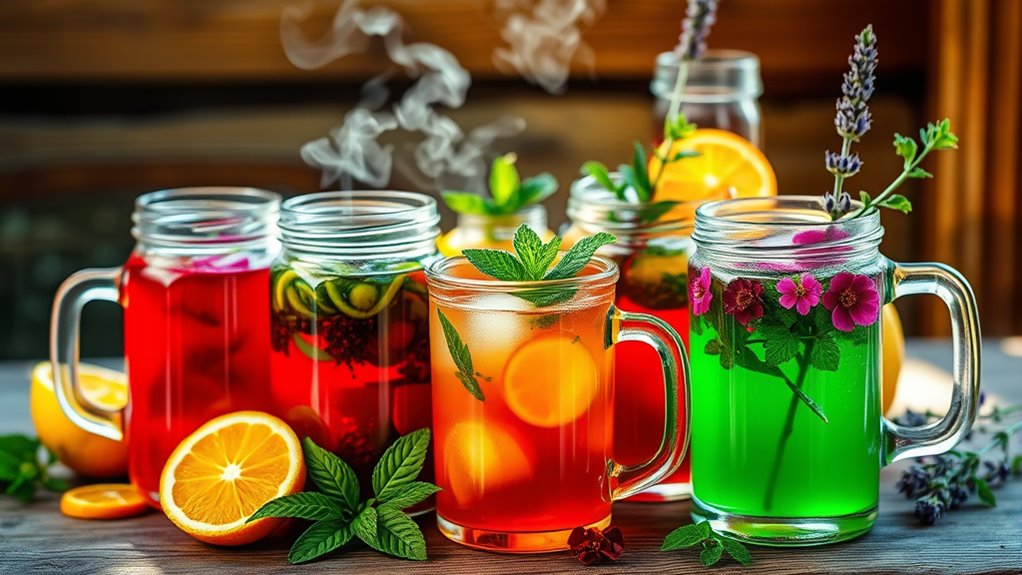
Herbal tea infusions can elevate your juice game by adding depth, flavor, and health benefits. When you incorporate herbal teas into your juice recipes, you’re not just enhancing taste; you’re also infusing your drinks with natural antioxidants, vitamins, and soothing properties. To make the most of this, it’s vital to contemplate tea pairing and flavor combinations carefully. The right pairing can turn a simple juice into a sophisticated blend that excites your palate and offers wellness perks.
Start by choosing herbal teas that complement the fruit or vegetable base of your juice. For example, if you’re working with citrus, a hint of chamomile or lemon balm can create a calming, aromatic profile. For berry-based drinks, try pairing with hibiscus or rosehip, which add a tart, floral note that enhances the fruit’s natural sweetness. When selecting tea pairings, think about balancing flavors—if your juice is intensely sweet, opt for teas with a slight bitterness or earthiness, like rooibos or green tea, to add complexity without overpowering the drink.
Pair citrus with chamomile or lemon balm for a calming, aromatic juice blend.
Flavor combinations are key to crafting a harmonious infusion. You might experiment by combining herbal teas with spices, such as adding cinnamon or ginger to a spiced apple juice infused with chai tea. For a revitalizing summer drink, consider blending peppermint tea with cucumber and lemon, creating a cooling, invigorating flavor combo. Layering flavors is also effective; combining herbal teas with herbs like basil or mint can produce vibrant, multi-dimensional drinks that are both revitalizing and healthful. Incorporating goal tracking techniques can help you refine your recipes over time based on what flavors resonate most.
Another tip is to brew your herbal tea strong enough so its flavor stands out when mixed with juice. Steep the tea a bit longer than usual, then cool it before blending. This ensures the herbal notes don’t get lost and that your juice retains a robust flavor profile. You can also experiment with adding a splash of honey or a squeeze of citrus to enhance the herbal tea’s natural qualities and create a balanced, flavorful infusion.
Ultimately, the art of herbal tea-infused juice lies in your willingness to experiment with different tea pairings and flavor combinations. Play around with ingredients, trust your taste buds, and don’t be afraid to try unexpected combos. Whether you’re seeking a calming, energizing, or simply delicious drink, herbal teas provide a versatile foundation for creating personalized juice infusions that are both enjoyable and beneficial for your health.
Frequently Asked Questions
Can Herbal Teas Alter Juice Shelf Life?
Herbal teas can influence juice shelf life by affecting herbal tea stability and the overall preservation process. When you add herbal teas to juice, their natural antioxidants and antimicrobial properties may help extend freshness. To maximize shelf life, use proper juice preservation techniques like pasteurization or refrigeration. Be mindful that some herbal teas might introduce enzymes or microbes, so always verify they’re properly prepared to maintain quality and safety.
Which Herbal Teas Are Best for Specific Health Benefits?
You’ll find that herbal teas like chamomile, ginger, and peppermint are your best allies for specific health benefits. Chamomile’s herbal tea antioxidants boost your immune system, while ginger enhances herbal tea digestion, easing discomfort. Peppermint is great for calming your stomach and reducing bloating. These teas aren’t just flavorful—they’re powerful tools to improve your health, making every sip feel like a tiny miracle in a cup.
How to Properly Store Herbal Tea-Infused Juices?
You should store herbal tea-infused juices in airtight storage containers to preserve freshness. Keep them refrigerated at or below 40°F, and always use clean containers to prevent bacteria growth. For best results, consume the juice within 24-48 hours, and avoid leaving it out at room temperature for extended periods. Follow refrigeration tips closely to maintain flavor, nutrients, and safety, ensuring your infused juices stay delicious and healthy.
Are There Any Allergens in Herbal Tea Infusions?
Herbal tea ingredients can sometimes hide allergens like pollen, nuts, or seeds, turning your invigorating drink into an unexpected voyage. You should always check allergy precautions before brewing, especially if you have sensitivities. While most herbal teas are safe, some may cause reactions. Keep a watchful eye on ingredient labels and consult with your healthcare provider if you’re unsure, ensuring your juice remains a delightful, allergen-free experience.
Can Children Safely Consume Herbal Tea-Infused Juices?
Yes, children can safely consume herbal tea-infused juices if you follow pediatric safety and herbal tea guidelines. Always choose caffeine-free, child-friendly herbal teas and consult with a pediatrician before introducing new ingredients. Use herbs in moderation, avoid potential allergens, and make sure the juice is appropriately diluted. Monitoring your child’s reaction is also important. When you follow these precautions, herbal tea-infused juices can be a healthy, enjoyable treat for your kids.
Conclusion
So, stir your senses, sip slowly, and savor the synergy of herbal tea-infused juices. Let each lingering flavor foster freshness, foster fitness, and fuel your fabulousness. Remember, every vibrant vial of vitality is a victory in your wellness journey. With mindful mixing and motivated mindfulness, you master the magic of making moments more meaningful. Embrace these effortless ideas, and enjoy energized, elegant experiences every day!