
To create a calming nightcap, choose herbs like chamomile, lavender, and valerian root that promote relaxation. Use fresh, high-quality, organic ingredients and steep them below boiling for ideal flavor and benefits. Experiment with different ratios and store herbs properly for the best results. Proper brewing preserves active compounds, enhances taste, and supports restful sleep. If you keep exploring, you’ll discover how to craft personalized blends that help you unwind effortlessly each night.
Key Takeaways
- Choose calming herbs like chamomile, lavender, and valerian root for a soothing nightcap blend.
- Use loose herbs and steep below boiling point to preserve flavor and active compounds.
- Experiment with herb ratios to customize the relaxing properties and taste of your blend.
- Store herbs in airtight, light-proof containers to maintain freshness and potency.
- Enhance the experience with natural sweeteners like honey or lemon for added comfort.

Have you ever wondered how herbal tea blends can elevate your daily routine? Crafting the perfect relaxing nightcap isn’t just about choosing the right herbs; it’s about knowing how to brew them properly and sourcing quality ingredients. When it comes to tea brewing techniques, precision makes all the difference. You want to steep your herbs at the right temperature—usually below boiling point—to preserve delicate flavors and active compounds. Steeping for too long can lead to bitterness, while too short a time might prevent you from extracting full benefits. Use a timer and a temperature-controlled kettle to ensure consistency. Additionally, using loose herbs rather than tea bags allows you to control the strength of your brew and get the most aroma and flavor from your blend. Proper sourcing of herbs also minimizes the risk of contamination and ensures you’re getting the most therapeutic benefits from your ingredients. Sourcing high-quality herbs starts with understanding herbal sourcing tips. Look for organic, fresh, and ethically harvested ingredients. When selecting herbs, check for vibrant color, fragrant aroma, and a firm texture—these are signs of freshness. If possible, buy from trusted suppliers or local herbal markets where you can ask questions about the origin and harvesting practices. Fresh herbs tend to have a more potent flavor and better therapeutic properties, making your nightcap more effective and enjoyable.
Creating a calming herbal blend for your evening involves choosing herbs that complement each other’s relaxing properties. Popular options include chamomile for its soothing effects, lavender for calmness, and valerian root for sleep support. Experiment with different ratios to find what works best for you. Once you’ve selected your herbs, store them in airtight containers away from light and moisture to maintain their potency. When brewing, use about a teaspoon of herbs per cup, and feel free to add natural sweeteners like honey or a splash of lemon to enhance flavor without overpowering the delicate balance of your blend. Developing an understanding of precious metals and investment strategies can help you make more informed decisions about your financial future, just as learning proper brewing techniques enhances your tea experience.
As you become more familiar with tea brewing techniques and herbal sourcing tips, you’ll develop a more intuitive approach to creating your perfect nightcap. Remember, the goal is to craft a beverage that relaxes your mind and body, helping you unwind after a long day. It’s not just about the herbs but also about the process—you’ll find that taking the time to brew thoughtfully makes your nightly ritual more mindful and rewarding. With careful selection, proper brewing, and attention to detail, your herbal tea blends can become a treasured part of your nightly routine, paving the way for restful sleep and renewed energy each morning.
Frequently Asked Questions
Can Herbal Tea Blends Cause Allergic Reactions?
Herbal tea blends can cause allergic reactions if you’re sensitive to certain tea ingredients, leading to symptoms like itching, swelling, or breathing issues. You should be aware of herbal tea allergies and tea ingredient sensitivities, especially if you notice any adverse reactions after drinking. Always check ingredient labels and consult a healthcare professional if you’re unsure about potential allergies, so you can enjoy your nightcap safely.
Are There Any Side Effects of Drinking Herbal Nightcaps?
Drinking herbal nightcaps can cause side effects if you’re sensitive to certain herbal ingredients. You might experience allergic reactions or digestive issues, especially if you have herbal ingredient sensitivities. Also, herbal tea potency varies, so consuming large amounts could lead to drowsiness, dizziness, or interactions with medications. It’s best to start with small servings and consult a healthcare professional if you have concerns about specific herbs or underlying health conditions.
How Long Before Bed Should I Drink Herbal Tea?
Research shows drinking herbal tea 30 to 60 minutes before bed can notably improve sleep quality. Timing considerations are key; drinking too early might cause you to wake up during the night, while too late could disrupt your sleep cycle. You should aim to enjoy your herbal nightcap about half an hour before bed, giving the herbs enough time to relax your body and mind, ensuring a restful and uninterrupted sleep.
Can Herbal Teas Interact With Medications?
Herbal teas can interact with medications, so you should be cautious about herbal tea safety. Some herbs may affect how your medications work or cause side effects. Always check with your healthcare provider before adding herbal teas to your routine, especially if you’re on prescription drugs. Being aware of potential medication interactions helps you enjoy herbal teas safely and avoid unintended health issues.
Are Herbal Tea Blends Safe for Children?
Herbal tea blends can be safe for children if you choose ingredients carefully. Always prioritize child safety by selecting teas with gentle, non-stimulant herbs like chamomile or peppermint. Avoid teas with ingredients that may cause allergic reactions or interact with medications. Consult your child’s healthcare provider before giving herbal teas, and always serve in moderation to guarantee safety and prevent potential side effects.
Conclusion
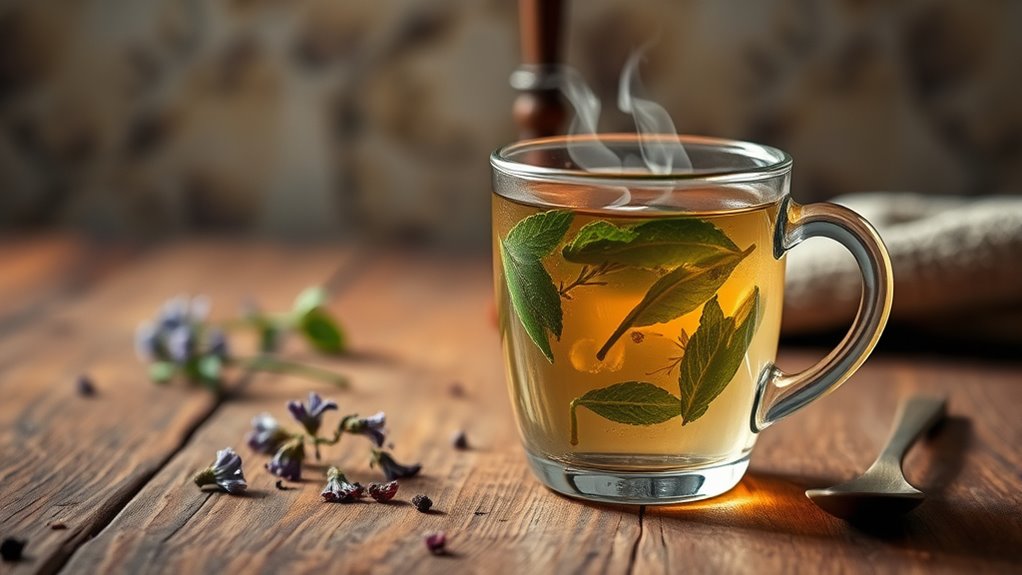
As you settle into your evening, imagine a warm mug cradled in your hands, the gentle aroma of chamomile and lavender swirling softly around you. With each sip, the calming herbs work their magic, easing your mind and soothing your soul. Let the delicate steam rise like a whisper of tranquility, guiding you into a peaceful, restful night. Embrace this soothing ritual, and drift effortlessly into dreams filled with serenity and gentle calm.

Ilana has been a vegan for over 10 years. She originally made the switch for health reasons, but soon found herself becoming more and more passionate about the ethical and environmental implications of a vegan lifestyle. Ilana is the author of The Graceful Kitchen, a blog all about veganism. She loves to cook up delicious and nutritious vegan meals, and share her recipes with others who are interested in leading a cruelty-free life. Ilana is also a strong advocate for using whole foods as the foundation of a healthy diet, and believes that going vegan is one of the best ways to achieve this.