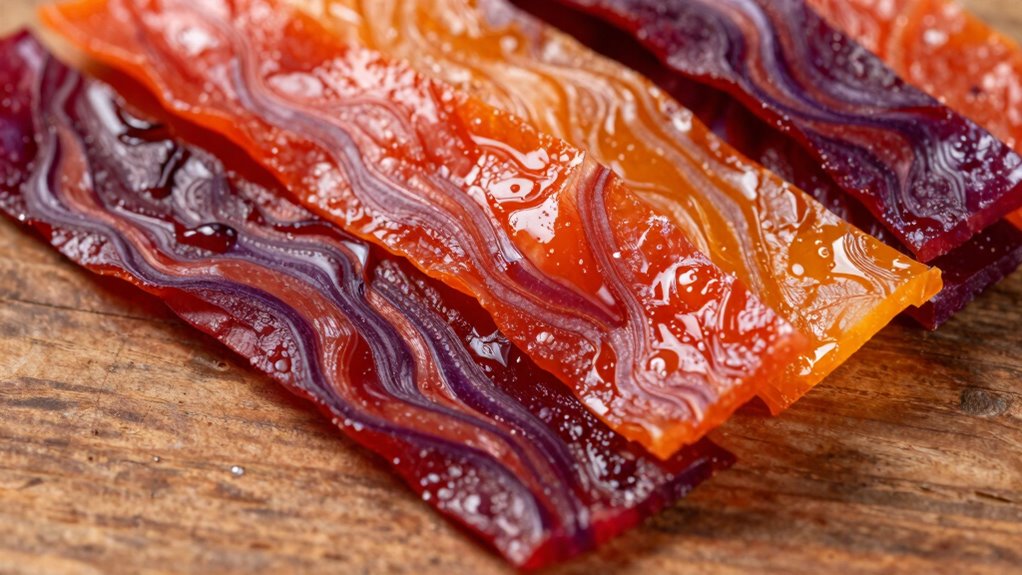
To nail the texture of sugar-free fruit leather, start with ripe, sweet fruits and blend them until smooth, adjusting thickness for your desired consistency. Spread the puree evenly on parchment and dehydrate at around 135°F until it feels tacky and slightly pliable. Properly controlling moisture, using the right storage methods, and troubleshooting sticking or brittleness will help you achieve the perfect chewy, flavorful leather every time. Keep exploring to master every step for ideal results.
Key Takeaways
- Select ripe, high-sugar fruits to naturally enhance sweetness and achieve the desired chewy, pliable texture.
- Blend fruit puree until smooth and adjust thickness with water or juice for even dehydration.
- Spread the puree evenly on parchment or silicone sheets to ensure uniform drying and consistent texture.
- Dehydrate at around 135°F (57°C) until the leather feels tacky, slightly pliable, and free of excess moisture.
- Store in airtight containers with parchment paper layers to maintain moisture balance and prevent sticking.
Why Make Your Own Sugar-Free Fruit Leather?
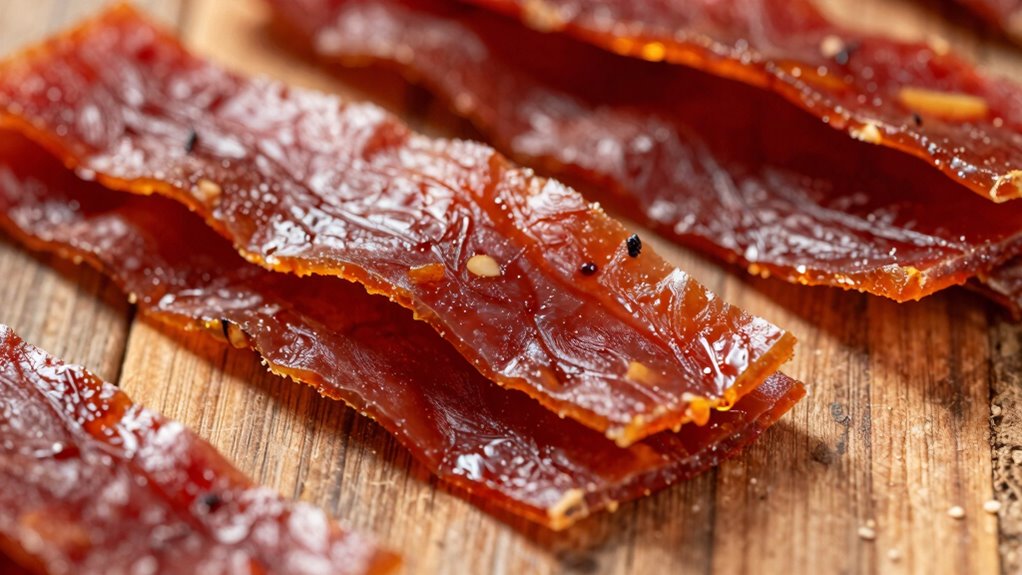
Making your own sugar-free fruit leather allows you to enjoy a healthy, natural snack without the added sugars found in store-bought versions. When you create it at home, you gain control over the ingredients, ensuring better fruit preservation and maximum flavor. This way, you avoid preservatives and artificial sweeteners that often come with commercial options. Plus, making your own lets you experiment with different fruits to enhance flavor and achieve the perfect taste. The process also helps you preserve seasonal fruits, reducing waste and extending their enjoyment. With homemade fruit leather, you get a concentrated, chewy snack that’s both nutritious and bursting with natural fruit flavor. It’s a satisfying way to indulge without compromising your health goals.
How to Pick the Right Fruits for Naturally Sweet Leather
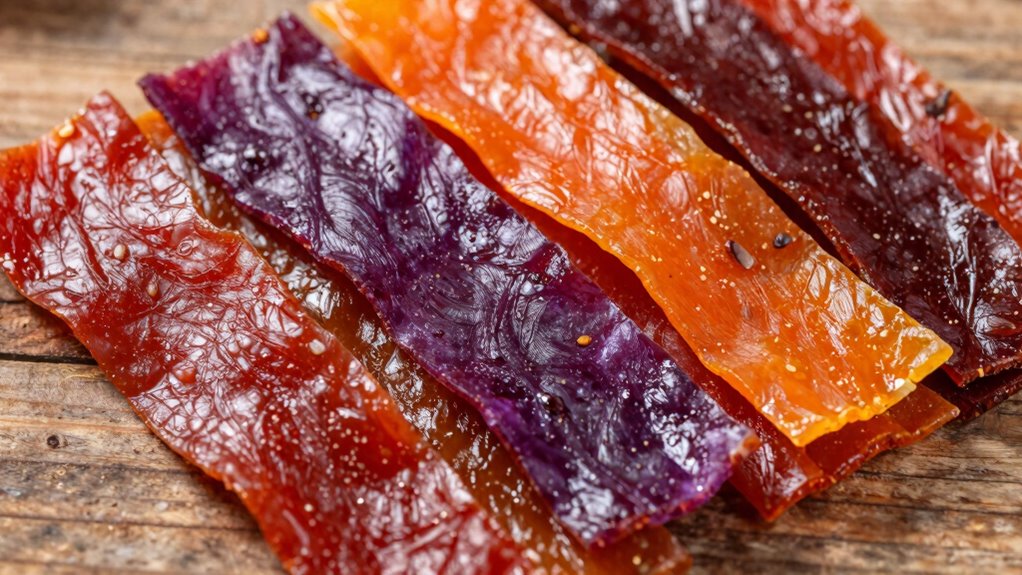
Choose ripe fruits, as they naturally possess higher sugar content and a richer flavor. Pay attention to the fruit’s natural sweetness levels to guarantee your leather is flavorful without added sugar. Keep seasonal availability in mind to select the best-tasting, freshest options for your homemade fruit leather. Incorporating natural sweetness from the fruit itself can help achieve the desired texture and flavor. Additionally, selecting seasonally available fruits ensures optimal ripeness and flavor, making your fruit leather even more delicious. Being aware of fruit ripeness indicators can further improve your selection process for perfect results, especially when considering fruit maturity signs that signal peak ripeness. Properly assessing glycolic acid benefits for skin can also be helpful if you’re using exfoliating ingredients in your recipes or skincare routines to complement your health-conscious approach.
Ripe Fruit Selection
Selecting the right fruits is key to making naturally sweet fruit leather without added sugar. Ripe fruits have concentrated sugars and vibrant flavors, which are essential for flavor enhancement and achieving the desired sweetness. Look for fruits that are deeply colored, slightly soft, and fragrant, indicating ideal ripeness. Using dried fruit can also boost natural sweetness and flavor, especially if you want a richer taste. Avoid underripe or overly tart fruits, as they can result in a leather that’s too tangy or lacks sweetness. Fresh, ripe fruit provides a better base for your recipe, reducing the need for added sweeteners. Proper selection ensures your fruit leather is flavorful, naturally sweet, and has the perfect texture. Additionally, understanding the importance of community-based knowledge can help you select fruits that are sustainably sourced and culturally significant, enhancing both flavor and cultural connection.
Natural Sweetness Levels
How can you guarantee your fruit leather is naturally sweet without added sugar? Focus on selecting fruits with balanced fruit acidity and high fruit fiber. Fruits like dates, figs, and ripe berries naturally contain more sugars and have lower acidity, making them perfect for sweet, flavorful leather. High fruit fiber helps enhance sweetness perception and improves texture, giving your leather a satisfying chew without extra sugar. Additionally, ensuring proper filtration and pump protection during preparation can help maintain the integrity of your fruit pulp and prevent clogs in your equipment, leading to a smoother end product. Proper ripeness and storage of fruits also play a crucial role in maximizing natural sweetness and achieving the desired texture. Avoid overly tart fruits like green apples or unripened plums, as their acidity can mask sweetness. Instead, choose fruits at peak ripeness, which naturally maximize sugar content and minimize tartness. By understanding fruit acidity and fiber levels, you can craft naturally sweet fruit leather that’s both delicious and healthy.
Seasonal Fruit Availability
Opting for seasonal fruits guarantees your fruit leather develops the perfect balance of natural sweetness and flavor. Fresh, seasonal fruits tend to have a richer fruit flavor, making your leather more vibrant and naturally sweet without added sugars. When selecting fruits, consider their peak harvest time to guarantee maximum ripeness and ideal sweetness. Proper storage methods are vital to preserve their flavor and texture until you’re ready to make the leather. Keep fruits in a cool, dry place or refrigerate them to maintain freshness. Using seasonal produce also means you’re likely to find better quality at lower prices, reducing the need for preservatives or long-term storage. seasonal fruit availability can help you select the best produce for your recipe, ensuring optimal flavor and sweetness. Additionally, understanding fruit ripeness can further enhance the natural sweetness and texture of your fruit leather. Recognizing the seasonal cycles of fruits can also assist in planning your harvest and preparation to achieve the best results, and paying attention to local harvest times ensures you select fruits at their peak.
Preparing and Pureeing Fruit for Perfect Texture
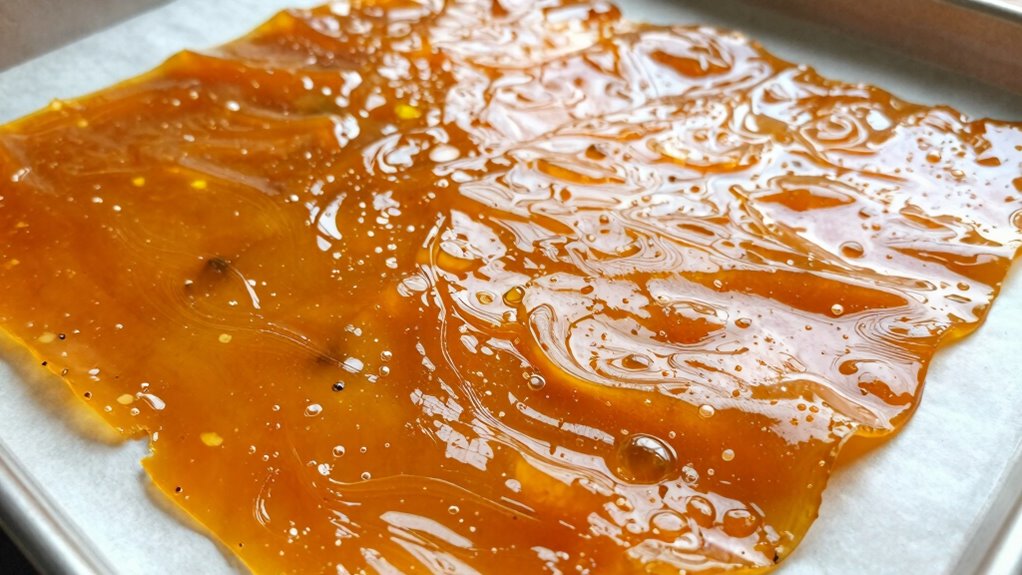
Start by selecting ripe fruits, as they naturally have the best flavor and texture. Wash them thoroughly to remove dirt and residues, ensuring a clean puree. Then, blend until smooth, adjusting the consistency for your desired leather thickness. Choosing quality ingredients is essential for achieving the best flavor and texture in your fruit leather. Additionally, understanding cryptid mysteries can add an intriguing layer of folklore to your culinary storytelling. To enhance your fruit leather, consider experimenting with proper dehydration techniques to achieve the perfect texture and shelf stability, and always ensure your dehydration equipment is reliable and safe for consistent results. Maintaining color accuracy in your dehydration process can help preserve the vibrant appearance of your fruit leather.
Choosing Ripe Fruits
Choosing ripe fruits is essential for making delicious, naturally sweet fruit leather without added sugar. When fruit ripeness is ideal, the fruit offers maximum flavor enhancement, making your leather naturally sweet without extra ingredients. Ripe fruits are softer and easier to puree, resulting in a smooth, even texture. Look for fruits that are fully colored, slightly soft to the touch, and have a fragrant aroma. Avoid underripe or overripe fruits, as they can affect flavor and texture. Selecting the right ripeness ensures your fruit leather will be sweet, flavorful, and consistent. Using ripe fruit means you won’t need to add sugar or sweeteners, allowing the natural taste to shine through. Properly choosing your fruit sets the foundation for perfect, sugar-free fruit leather. Additionally, understanding fruit ripeness indicators can help you select the best produce for optimal results, including recognizing optimum harvesting time for peak flavor and texture. Ensuring you pick fruits at their peak ripeness guarantees the best possible flavor and texture in your homemade fruit leather.
Proper Washing Techniques
Before pureeing your fruit, it’s essential to thoroughly wash it to remove dirt, pesticides, and bacteria that can affect flavor and safety. Proper fruit washing is key to contamination prevention, ensuring your fruit is safe to eat and makes a clean, fresh-tasting leather. Use cold water and gently scrub the surface with your hands or a soft brush to remove residues. Avoid soaking fruit for too long, which can lead to spoilage. Pay special attention to crevices and stem areas. After washing, dry the fruit with a clean towel or paper towel to prevent excess moisture from affecting the texture. This step helps you achieve the best possible flavor and consistency in your fruit leather, free from any unwanted contaminants. Additionally, understanding kitchen fundamentals can help you develop better techniques for handling and preparing ingredients. Proper drying techniques also contribute to texture control, ensuring your fruit leather is neither too sticky nor too brittle. Incorporating proper cleaning techniques can further enhance the safety and quality of your homemade fruit leather. Being mindful of food safety practices during preparation not only protects your health but also improves the overall quality of your homemade treats.
Blending to Smoothness
After thoroughly washing your fruit, the next step is to blend it until it reaches a smooth, even consistency. Use a high-speed blender or food processor to guarantee thorough fruit blending. Start by pulsing to break down the pieces, then blend continuously until the mixture is silky and free of lumps. Texture smoothing is essential to prevent uneven fruit leather. If your puree is too thick or chunky, add a small amount of water or juice to help it blend more easily. Scrape down the sides of the blender as needed to incorporate all fruit. Keep blending until you achieve a uniform, smooth consistency that will dry evenly. Proper texture smoothing during this stage ensures a tender, chewy fruit leather without added sugar.
How to Dehydrate Fruit Leather for Chewy, Pliable Results

Dehydrating fruit leather to achieve a chewy, pliable texture requires careful temperature control and timing. Start by spreading your blended fruit evenly on a parchment-lined dehydrator tray or a silicone sheet, ensuring no gaps or thick spots. Use quality dehydration equipment designed for fruit drying, as consistent airflow and temperature are key. Set your dehydrator to around 135°F (57°C), which is ideal for drying without losing nutrients or altering flavor. Check the leather periodically; it should feel tacky but not sticky, and slightly pliable when done. The drying time varies based on thickness and humidity but typically ranges from 4 to 8 hours. Proper dried fruit techniques and reliable dehydration equipment help you produce fruit leather that’s chewy, flexible, and perfect for snacking.
Tips for Achieving the Best Texture Without Added Sugar
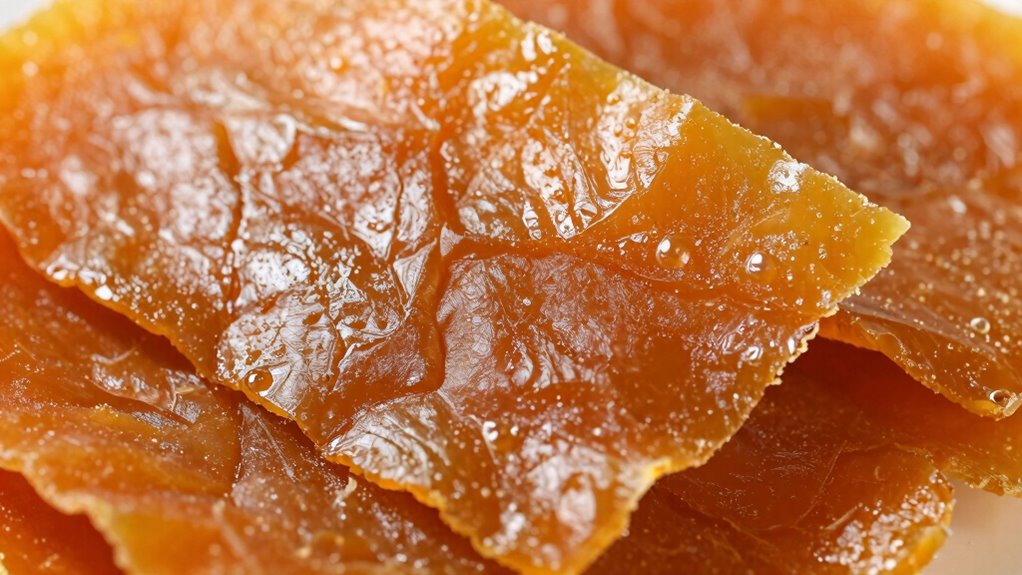
Achieving the perfect texture in fruit leather without added sugar relies on selecting ripe, naturally sweet fruits and balancing their moisture content. Ripe fruit enhances the fruit flavor, making your leather taste rich and vibrant. To improve texture, blend fruits until smooth, ensuring even consistency and best texture enhancement. Keep in mind that too much moisture can lead to a sticky or overly soft result, so slightly reduce liquid if needed. Using a food processor helps break down fibers for a uniform texture. Experiment with blending times and fruit combinations to find what creates the ideal chewiness. Properly prepared, your fruit leather will have a satisfying texture that celebrates natural sweetness without added sugar. This approach guarantees a delicious, well-structured, and flavorful snack.
Troubleshooting Common Texture Problems
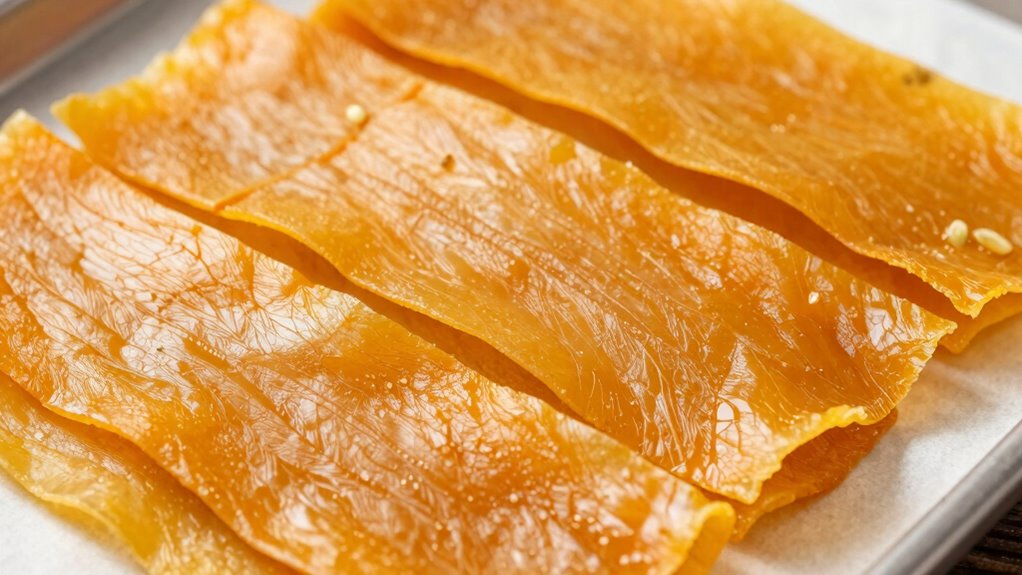
When your fruit leather develops a sticky, overly soft, or brittle texture, troubleshooting becomes essential to pinpoint the cause and correct it. To fix sticky or overly soft leather, focus on texture adjustments by reducing moisture during blending or drying. Too much moisture prevents proper setting, so increase drying time or lower humidity in your environment. Conversely, if the leather is brittle, it likely has too little moisture. You can soften it by lightly rehydrating with a small amount of fruit juice or water and gently reheating. Proper moisture control is key throughout the process; ensure your fruit purees are not overly wet and that you dry the leather evenly. Making these adjustments helps you achieve the perfect, chewable texture every time.
Storing and Serving Your Homemade Sugar-Free Fruit Leather
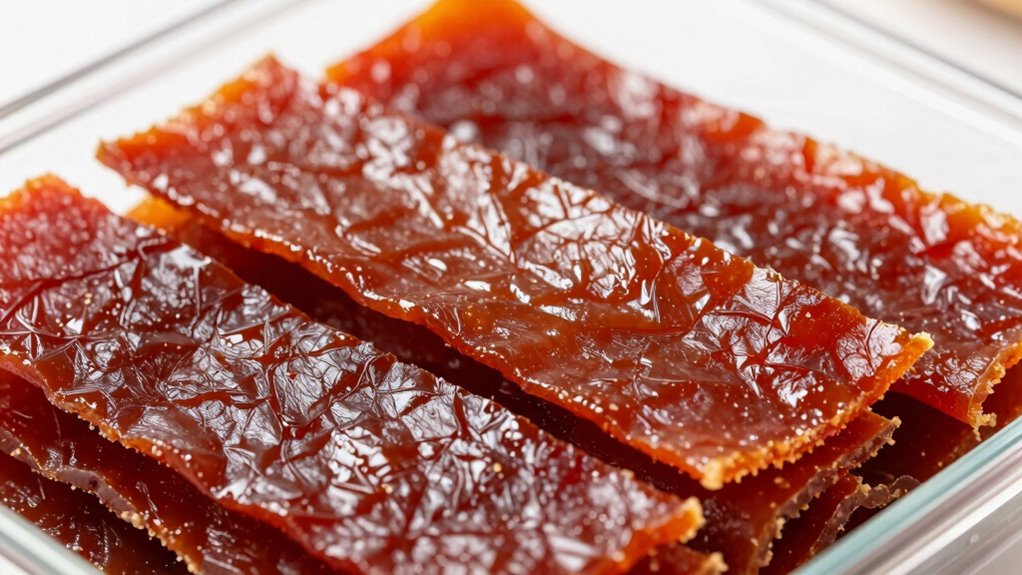
Properly storing your homemade sugar-free fruit leather guarantees it stays fresh and maintains its ideal texture and flavor. Store your fruit leather in an airtight container or zip-top bag, placing a piece of parchment paper between layers to prevent sticking. Keep it in a cool, dry place away from sunlight to prolong freshness. For longer storage, you can refrigerate or freeze the leather; just be sure to wrap it tightly to prevent moisture absorption. When serving, cut the leather into strips or small squares for easy snacking. You can also rehydrate it slightly by warming it briefly if it becomes too firm. These storage tips help preserve its chewy texture, while serving suggestions make your homemade fruit leather a versatile, healthy treat anytime.
Frequently Asked Questions
Can I Use Dried Fruits Instead of Fresh for Sugar-Free Leather?
Yes, you can use dried fruits instead of fresh for sugar-free fruit leather. Dried fruits are concentrated in flavor and sweetness, so your leather will be richer and more intense. However, keep in mind that dried fruits may alter the texture, making it chewier or denser, and flavor differences could be noticeable, especially if you prefer the milder taste of fresh fruits. Adjust your recipe accordingly for the best results.
How Do I Prevent Sticking or Tearing During Dehydration?
To prevent sticking or tearing during dehydration, line your non-stick baking sheets with parchment paper for easy removal. Make sure your fruit puree is smooth and spread evenly, about 1/8 inch thick, to avoid tears. Regularly check the fruit leather as it dries, and handle it gently once it’s done. Using parchment paper helps prevent sticking and makes peeling easier, ensuring a perfect, tear-free texture.
Is It Possible to Make Fruit Leather Without a Dehydrator?
Yes, you can make fruit leather without a dehydrator by using alternative drying methods like oven drying or air drying. First, prepare your fruit with proper techniques—blend it into a smooth puree and spread it thinly on parchment paper. For oven drying, set your oven to the lowest temperature, around 140°F (60°C), and let it dry for several hours. Monitor to prevent over-drying or burning.
How Thin Should the Fruit Puree Be Before Drying?
Think of your fruit puree consistency as the foundation of a sturdy bridge; it needs to be just right. You should spread the puree to a thickness of about 1/8 to 1/16 inch on the drying sheet. This thin, even layer guarantees uniform drying, preventing cracks or stickiness. Keep it as smooth as glass, and you’ll achieve perfect fruit leather with the ideal texture.
Can I Add Spices or Herbs Without Affecting Texture?
You can definitely add spices or herbs without affecting the fruit leather’s texture, as long as you use them sparingly. Herb flavorings and spice compatibility are key—start with small amounts to avoid overpowering the fruit’s natural sweetness. Mix them evenly into the puree before drying, ensuring they distribute well. This way, you enhance the flavor without compromising the smooth, pliable texture you’re aiming for.
Conclusion
Now that you’ve nailed the art of making sugar-free fruit leather, your snacks will blow store-bought versions out of the water — no added sugars, just pure, luscious fruit flavor bursting at the seams. Imagine biting into a chewy, pliable strip so delicious, it’ll make your taste buds do a happy dance every single time. Get ready to impress everyone with your homemade masterpiece — once you master this, store-bought will never stand a chance!