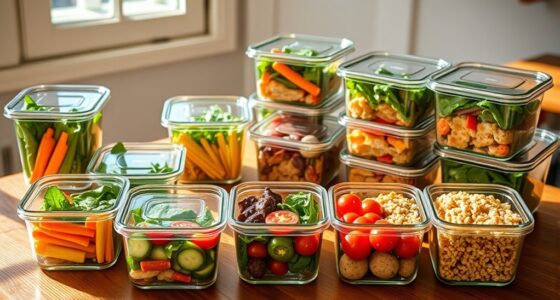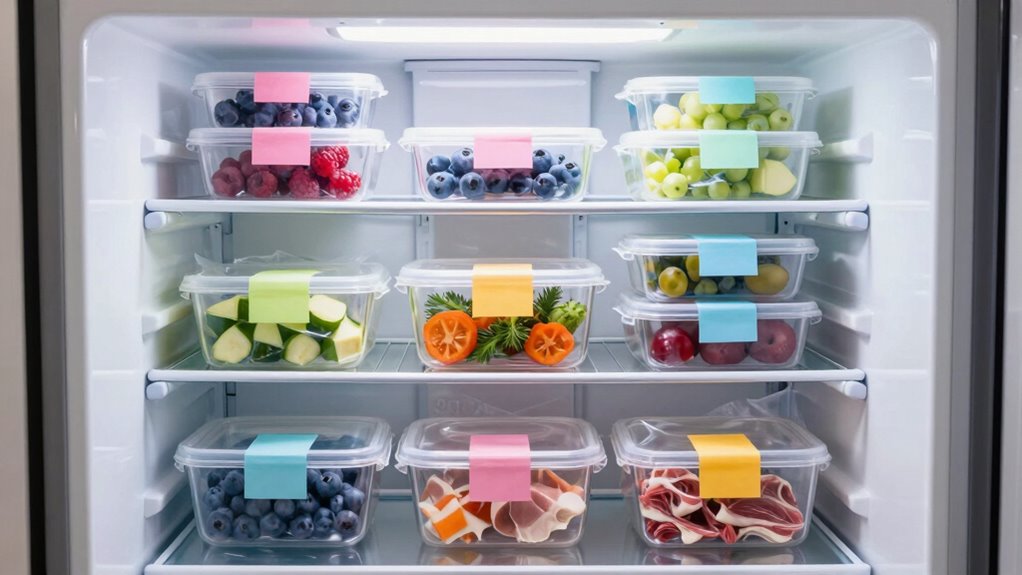
To organize your freezer for meal prep, start by measuring and understanding its space and compartments. Use clear, stackable containers and label everything with dates and contents for easy identification. Group similar foods together and create a rotation system to prevent waste. Maintain proper temperature and periodically check for expired items. Keeping things tidy and systematically stored helps save time and food. Keep exploring for more tips to keep your freezer efficient and fresh.
Key Takeaways
- Categorize and group similar foods (meats, vegetables, prepared meals) for easier access and rotation.
- Use clear, stackable containers with labeled dates, contents, and portions for quick identification.
- Implement the FIFO (First-In, First-Out) system to ensure older items are used before newer ones.
- Maintain proper freezer temperature at 0°F or below and leave space around packages for airflow.
- Regularly check for expired or spoiled items, reorganize, and update your inventory to prevent waste.
Assess Your Freezer Space and Inventory
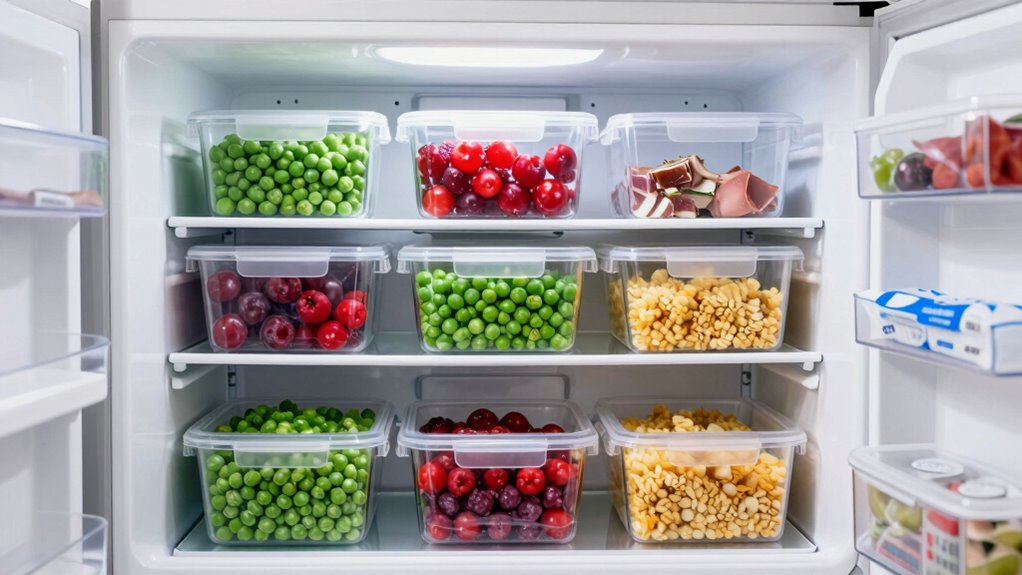
Before you begin organizing, it’s essential to evaluate how much space you have and what’s already inside. Measure your freezer’s dimensions to understand its capacity and identify any built-in compartments or shelves. This helps you plan effective storage solutions. Next, perform inventory tracking by taking stock of everything currently stored—note quantities, expiration dates, and types of foods. This step reveals what you need to use soon and what can be donated or discarded. By assessing your freezer space and inventory, you avoid overcrowding and ensure you can access essentials quickly. Understanding freezer organization techniques and how it impacts accessibility can help you better coordinate your storage for optimal accessibility. Proper organization also considers space utilization, ensuring every inch of your freezer is used efficiently. Knowing your freezer’s capacity and contents also helps prevent overstocking, reducing waste and making meal prep more efficient. Incorporating digital inventory tools can further streamline your tracking process and keep everything organized. This foundational step sets the stage for a well-organized, functional freezer.
Why Organizing Your Freezer Saves Time and Reduces Waste
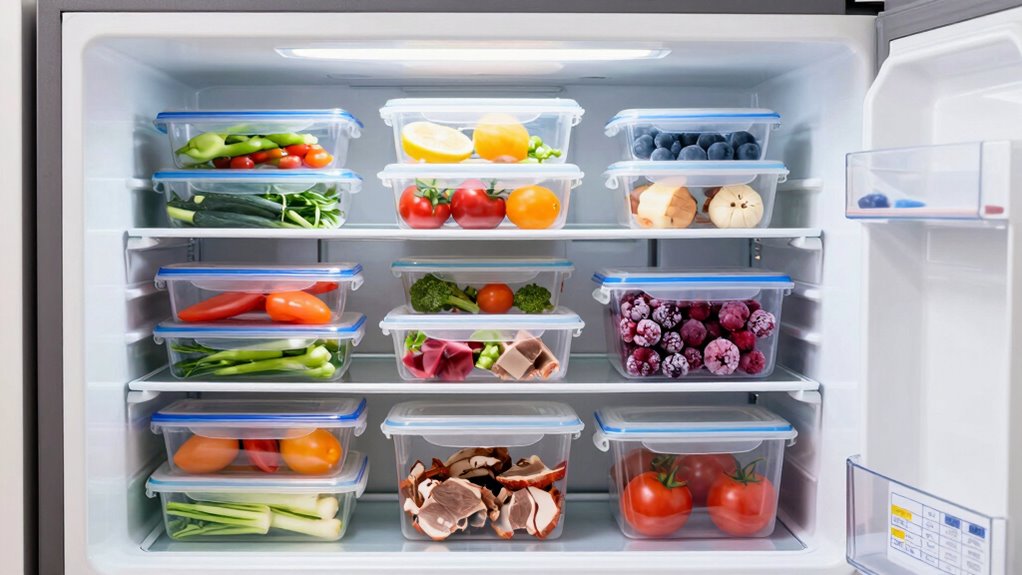
Organizing your freezer helps you find what you need quickly, saving you time during busy mornings or meal prep. When your food storage is tidy, you spend less time searching and more time cooking. Plus, proper organization reduces food waste by preventing forgotten or expired items from piling up. With clear sections, you can plan meals efficiently and ensure ingredients stay fresh longer.
- Streamlines meal planning, so you use ingredients before they spoil
- Prevents duplicate purchases by knowing what’s already in your freezer
- Keeps perishables accessible, reducing the chance of freezer burn
- Promotes better food storage habits, extending shelf life
- Saves time and money by minimizing waste and unnecessary buying
A well-organized freezer makes meal prep faster and more sustainable, helping you enjoy nutritious meals without the hassle.
Categorize and Label Frozen Foods for Easy Access
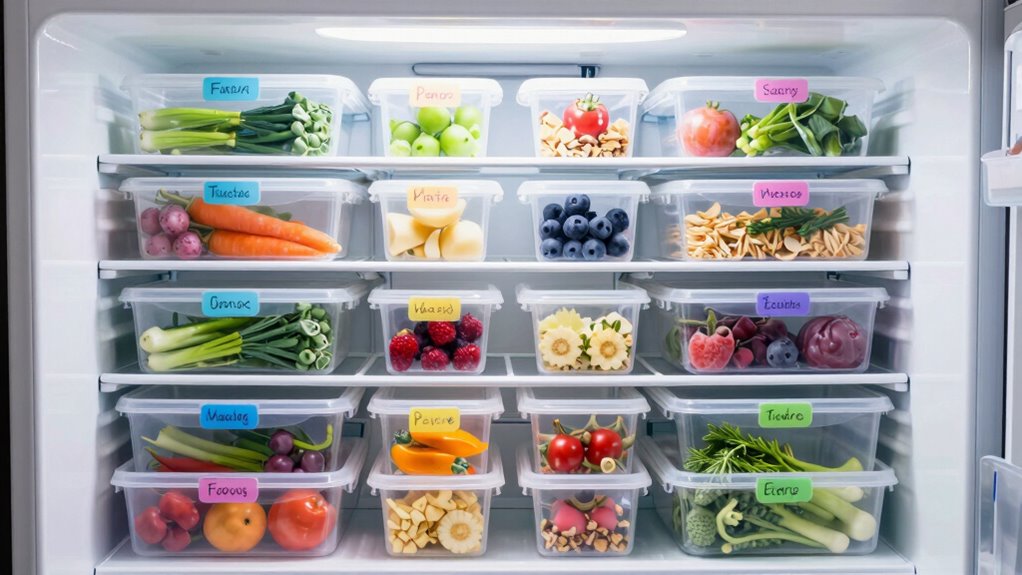
To make your freezer more accessible, start by labeling all your items clearly so you can find what you need quickly. Group similar foods together, like vegetables or meats, to keep things organized and easy to locate. This simple step saves you time and helps prevent food from getting lost or forgotten. Additionally, organized storage can help you monitor expiration dates and reduce food waste. Implementing clear categorization ensures that you can efficiently plan your meals and avoid unnecessary trips to the store. Proper freezer maintenance also extends the lifespan of your items and keeps your food safe for longer periods. Incorporating freezer organization systems can further optimize space and improve overall efficiency. Staying aware of market trends can also inspire new meal ideas based on seasonal ingredients you might find in your freezer.
Label Everything Clearly
Labeling your frozen foods clearly is essential for quick and easy access later on. Good labeling provides clarity and helps you identify items at a glance, saving time and avoiding freezer chaos. Use visual cues like color-coded labels or tape to distinguish food categories quickly. Include key details such as date, contents, and portion size for freshness and meal planning. Consider the following tips:
- Use bold, legible handwriting or printed labels
- Incorporate color-coded labels for different food groups
- Write dates clearly to track storage time
- Include portion sizes for easy meal prep
- Keep labels consistent for uniformity and quick recognition
- Proper labeling creates visual cues that streamline your freezer organization, making it simple to find what you need without digging. Proper labeling keeps everything accessible and reduces waste. Additionally, using smart organization techniques can further enhance your freezer management by integrating digital inventory systems or smart labels that sync with your home automation. Incorporating digital labeling systems can help keep track of stored items more efficiently, especially when managing large quantities and considering air purifier maintenance, which ensures your environment stays clean and healthy. Using clear, durable labels also prevents smudging or peeling over time, maintaining clarity in your freezer.
Group Similar Items Together
Grouping similar items together makes it easier to find what you need quickly and keeps your freezer tidy. Start by organizing your food grouping based on categories like vegetables, meats, or prepared meals. This method simplifies item categorization, so you don’t waste time searching through unrelated foods. Use clear containers or bins to separate each group, and consider stacking or labeling them for even faster access. When you’re consistent with food grouping, it’s easier to see what you have and avoid duplicates or waste. This system also helps you spot expired items before they spoil. Implementing organized storage techniques can further enhance your freezer management. Additionally, understanding odor management can prevent unpleasant smells from spreading and help you maintain a fresh freezer environment. Proper temperature control is essential to keep foods safe and preserve quality over time. Regularly cleaning and reconditioning batteries ensures your freezer runs efficiently and prolongs its lifespan. Incorporating inventory control strategies can help you keep track of what’s in your freezer and prevent overstocking. Overall, categorizing and grouping similar foods streamlines meal prep and maintains an organized, efficient freezer environment.
Use Clear Containers and Bags to Keep Your Freezer Tidy
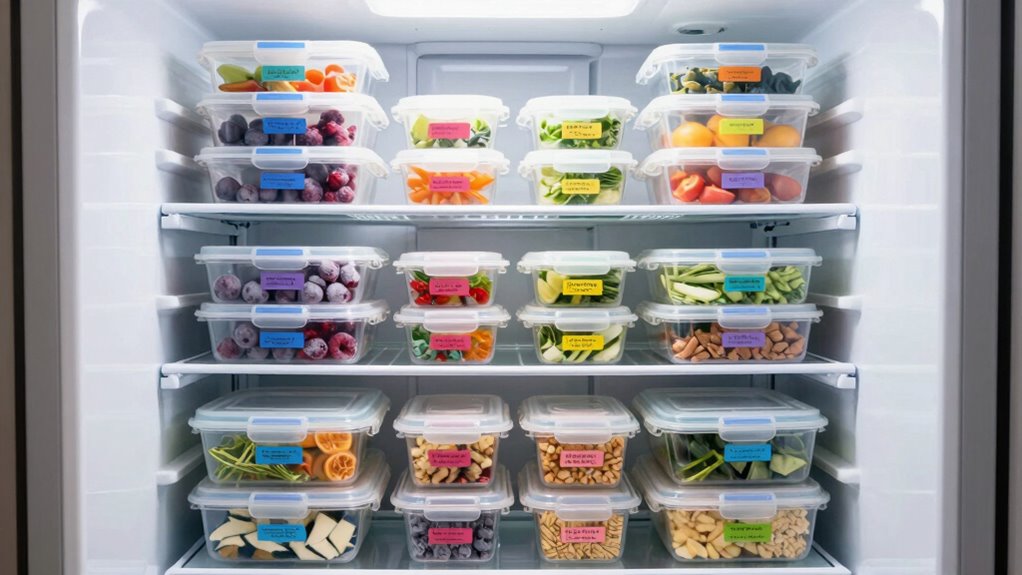
Using clear containers and bags helps you see what’s inside at a glance, making your freezer more organized. Choose stackable containers with markings so you can easily identify contents and avoid overpacking. Keep your freezer tidy by maintaining space and not squeezing in too much. Incorporating sustainability practices into your freezer organization can also reduce waste and improve efficiency. Being mindful of airflow ensures proper circulation, which maintains food quality and prevents spoilage. Proper power backup planning can help your freezer stay functional during outages, protecting your stored food. Additionally, labeling your containers clearly can further enhance freezer visibility and prevent unnecessary opening and closing. To further optimize organization, consider using dog-friendly storage solutions, especially if you store pet meals or treats, to keep everything safe and easily accessible.
Use Visible, Stackable Containers
Clear, stackable containers and bags make it easy to see what’s inside your freezer at a glance. Using these for your meal prep creates organized, visible storage that simplifies finding what you need. With stackable containers, you maximize space and keep similar items grouped together. Opt for containers that lock securely to prevent spills and freezer burn. Keep lids consistent for easier stacking and access. Regularly check for expired items and rearrange as needed. Here are some tips:
- Choose clear, durable containers for transparency
- Use uniform sizes to maximize stacking
- Store like items together for quick retrieval
- Keep a designated spot for frequently used ingredients
- Avoid overfilling to prevent crushing or spills
Implementing visible, stackable containers guarantees your freezer remains tidy and efficient, saving you time and reducing waste. Practical storage solutions ensure your freezer stays organized and accessible.
Label With Clear Markings
Label with clear markings to keep your freezer organized and easy to navigate. A good labeling system helps you quickly identify contents without rummaging through everything. Use waterproof markers on your storage containers and bags to write down the date, contents, and portion size. Clear containers and bags make it easier to see what’s inside, reducing the risk of forgotten leftovers. Stick labels on the front or top of each container for quick identification. Consistent labeling ensures you know exactly what’s frozen, so you don’t waste time searching or guessing. This simple step keeps your freezer tidy and prevents food from getting lost or expired. With clear markings, meal prep becomes more efficient, and you’ll always know what you have on hand.
Avoid Overpacking Freezer
To keep your freezer organized and prevent it from becoming overcrowded, it’s important to avoid overpacking. Overstuffing can compromise frozen food safety, making it harder to spot spoiled items and increasing the risk of freezer burn. Plus, it complicates freezer defrosting and cleaning. Use clear containers and resealable bags to maintain visibility and airflow. This helps you quickly identify contents and prevents items from getting lost or buried.
- Leave space around packages for airflow to prevent frost buildup
- Use uniform containers for easy stacking and space efficiency
- Avoid filling every inch; maintain room for expansion during freezing
- Regularly check for expired or spoiled food and discard promptly
- Keep a list of frozen foods to streamline meal prep and prevent overstocking
Create a Freezer Inventory System to Track What You Have
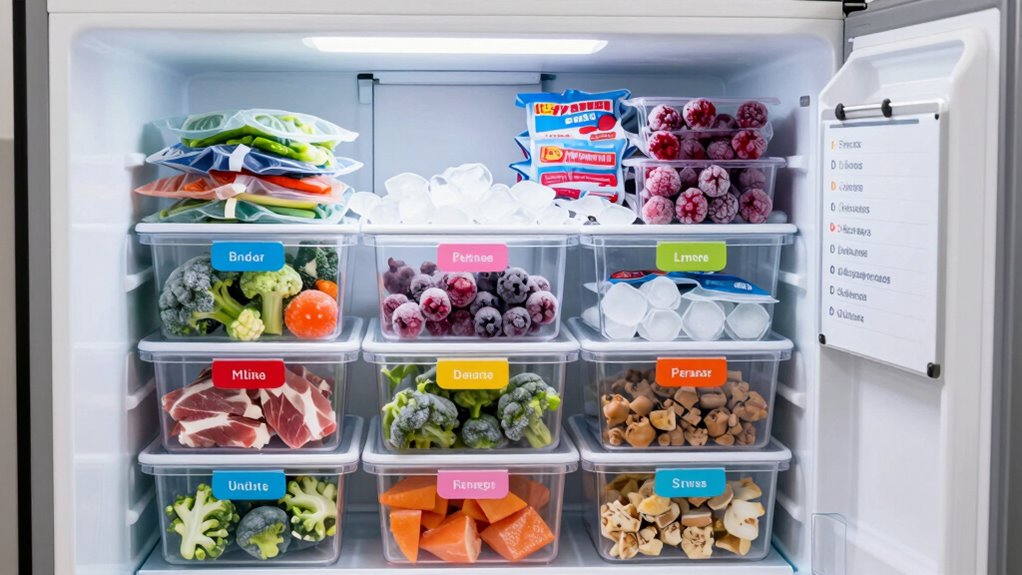
Creating a freezer inventory system helps you keep track of what’s inside and prevents unnecessary defrosting or food waste. With effective inventory tracking, you know exactly what items you have, how long they’ve been stored, and when to use them. Start by making a simple list or use digital tools like spreadsheets or apps designed for freezer management. Label each item with the date it was frozen to help with system management and prioritize use. Regularly update your inventory as you add or consume items. This approach keeps your freezer organized, saves time during meal prep, and reduces waste. A clear system minimizes guesswork, ensures nothing gets lost in the back, and makes meal planning more efficient.
Store and Rotate Frozen Foods for Freshness and Safety

Storing and rotating frozen foods properly is vital to maintain their quality and guarantee safety. Keeping your freezer at the right temperature—ideally 0°F or below—ensures food safety and prevents spoilage. To keep everything fresh, follow these tips:
- Label foods with dates to track freshness.
- Use the first-in, first-out (FIFO) method to rotate older items to the front.
- Avoid overfilling the freezer to allow proper air circulation.
- Check the freezer temperature regularly with a thermometer.
- Wrap foods tightly to prevent freezer burn and contamination.
Maximize Your Freezer Space With Storage Tools and Tips
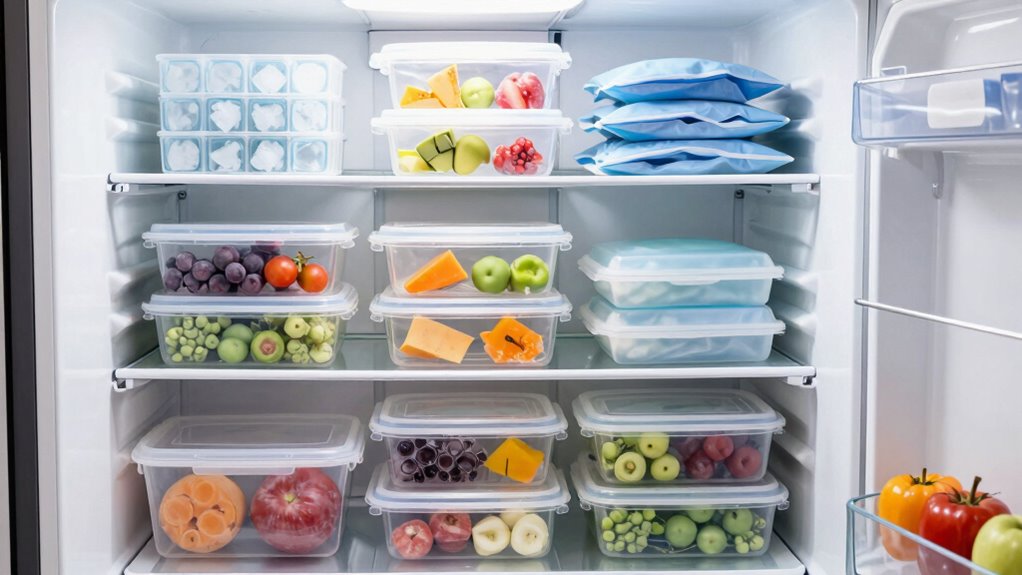
Maximizing your freezer space starts with using the right storage tools and organizing techniques. Invest in sturdy storage containers that stack easily and keep food protected from freezer burn. Clear containers make it simple to see what’s inside at a glance, saving time and preventing waste. Use a labeling system—write date and contents on each container or bag—to track freshness and rotation. Consider vacuum-sealed bags for space efficiency and longer preservation. Group similar items together, like vegetables or meats, and arrange them in a way that allows easy access to frequently used ingredients. Regularly reevaluate your setup to avoid overcrowding. Proper storage tools and smart labeling help you maintain order and ensure nothing gets lost or forgotten in the back of your freezer.
Maintain Your Organized Freezer With Regular Cleanouts
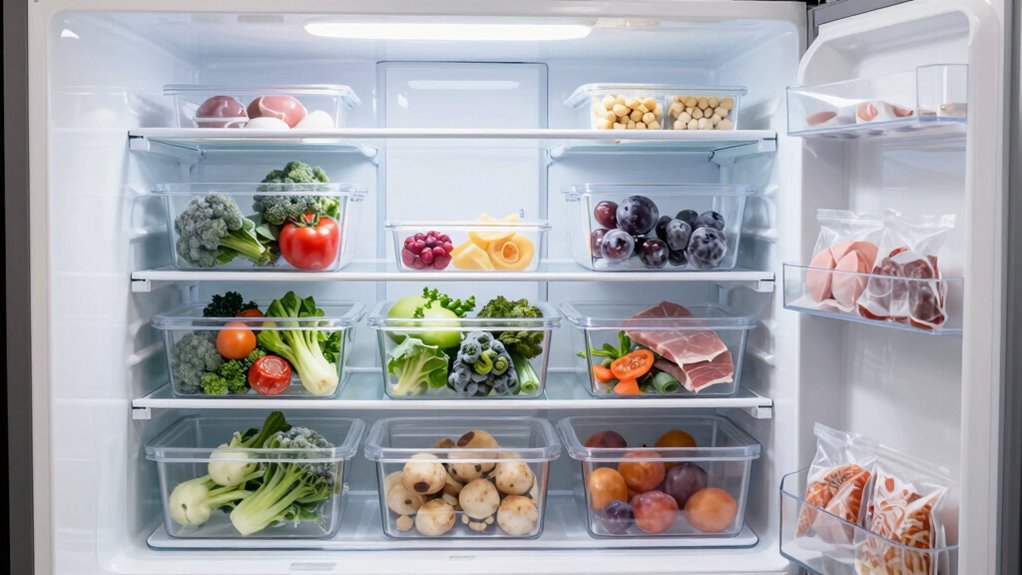
Regular cleanouts are essential to keep your freezer organized and functioning efficiently. Over time, frost buildup and expired items can hinder your freezer’s performance, affecting the freezer temperature and reducing energy efficiency. To maintain ideal conditions, schedule cleanouts every few months.
During cleanouts, you should:
- Remove all items and check expiration dates
- Defrost if frost buildup exceeds a quarter-inch
- Wipe down shelves and walls
- Reorganize food by category
- Check and adjust the freezer temperature if needed
Keeping your freezer tidy ensures it runs smoothly, conserves energy, and prevents food waste. Regular cleanouts help you spot potential issues early, maintaining your organized system and prolonging the life of your appliance.
Troubleshoot Common Freezer Organization Challenges
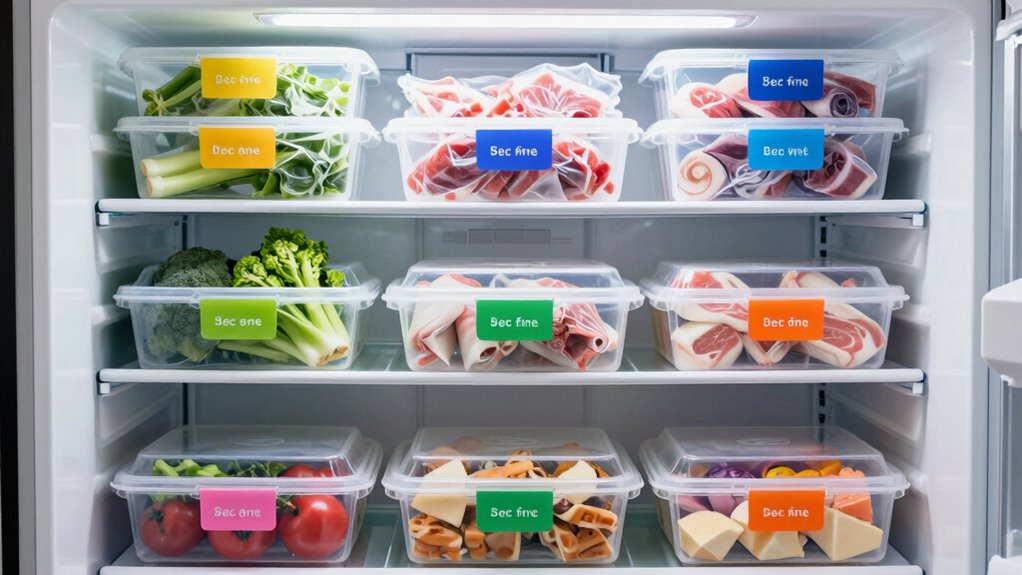
Even with regular cleanouts, organizing your freezer can still present challenges. A common issue is freezer smell, which can linger if spills or spoiled items aren’t promptly cleaned. To combat this, wipe down surfaces regularly and store strong-smelling foods in airtight containers. Frost buildup is another obstacle; it reduces space and causes uneven freezing. To prevent frost, avoid leaving the door open for too long and ensure seals are tight. Defrost your freezer when frost exceeds a quarter-inch thick. Keeping a list of stored items also helps you avoid overpacking, which can contribute to frost and smell issues. Staying proactive with these tips ensures your freezer stays organized, fresh, and functioning efficiently.
Frequently Asked Questions
How Often Should I Defrost My Freezer for Optimal Organization?
You should defrost your freezer every 3 to 6 months for ideal organization. Regular freezer maintenance helps prevent ice buildup, which can reduce storage space and efficiency. Follow a consistent defrosting schedule, especially if you notice frost exceeding a quarter-inch thick. Doing so keeps your freezer running smoothly, makes it easier to find what you need, and extends the appliance’s lifespan. Stay on top of maintenance to keep your meal prep organized and efficient.
What Are the Best Ways to Prevent Freezer Burn on Stored Foods?
Prevent freezer burn and keep your foods fresh by using airtight containers and proper wrapping. Don’t leave foods exposed or loosely wrapped, as air contact causes dehydration and ice crystals. Always squeeze out excess air before sealing, and double-wrap items with foil or plastic wrap if needed. Using these methods, you guarantee your meals stay flavorful, avoid freezer burn, and last longer, saving you money and reducing waste.
How Can I Organize a Small Freezer Efficiently?
You can maximize your small freezer’s space by using clear storage containers that stack easily and are easy to see through. Implement a labeling system with dates and contents on each container to keep track of everything. Organize items by type or meal, and keep frequently used ingredients at the front. Regularly tidy up to prevent clutter, making it simpler to find what you need and avoid food waste.
What Are Some Tips for Labeling Leftovers and Meal Prep Items?
Did you know that properly labeled leftovers last up to 50% longer in the freezer? To guarantee clarity, use waterproof markers or labels, and include both the name and expiration date. Keep labels visible and legible for quick identification. This prevents waste and spoilage, saving you money and time. Clear labeling helps you easily find what you need, reducing the risk of eating expired food and keeping your freezer organized.
How Do I Safely Thaw Frozen Foods Without Compromising Quality?
To safely thaw frozen foods, use proper thawing techniques like refrigerator thawing at a safe temperature below 40°F, which preserves quality and prevents bacterial growth. You can also thaw in cold water or microwave if you plan to cook immediately. Avoid leaving foods out at room temperature, as this risks bacteria. Always plan ahead to ensure your food thaws gradually and safely, maintaining its flavor and texture.
Conclusion
Keeping your freezer organized is like tending a well-played symphony—you’ll find what you need without missing a beat. With a little effort now, you’ll save time, reduce waste, and keep your meals fresh as a daisy. Regular cleanouts and smart storage turn chaos into harmony, ensuring nothing gets lost in the cold shadows. Stay on top of your freezer game, and you’ll enjoy stress-free meal prep that’s as smooth as a well-oiled machine.