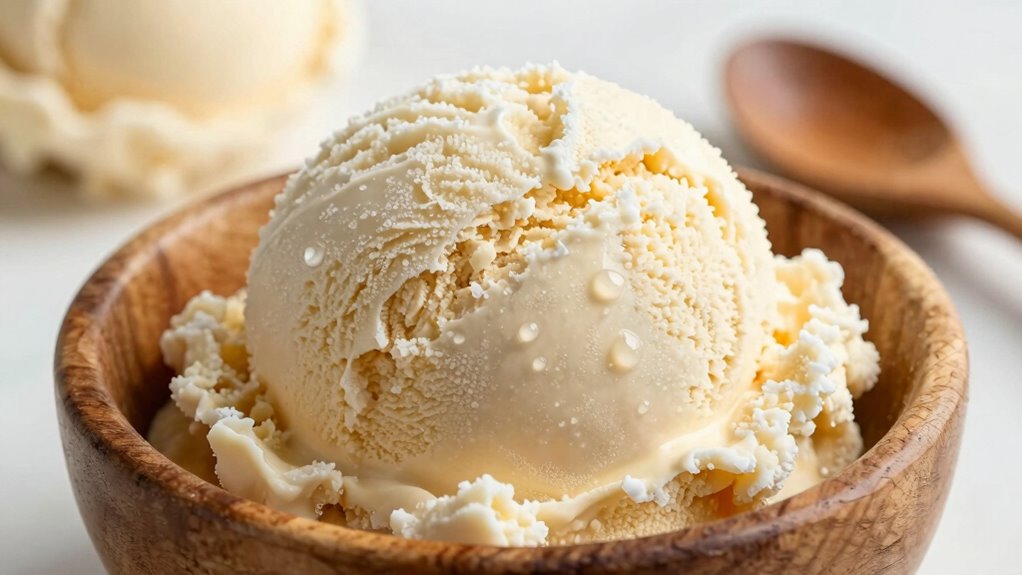

Your vegan ice cream gets icy mainly because it lacks dairy fats and stabilizers that keep it smooth. Using ingredients like coconut milk or nut butters without balancing fats and adding stabilizers like guar gum or xanthan gum makes large ice crystals form. Proper churning, quick freezing, and storage also matter. To improve, focus on ingredient ratios, stabilizers, and freezing techniques. Keep exploring to discover the best tips for irresistibly creamy vegan ice cream.
Key Takeaways
- Insufficient fats and stabilizers cause large ice crystals, leading to icy texture; add coconut milk, cashew cream, or stabilizers.
- Rapid freezing and proper churning prevent large ice crystal formation, resulting in smoother ice cream.
- Use stabilizers like xanthan gum or agar-agar and emulsifiers to improve creaminess and reduce iciness.
- Store in airtight containers at consistent freezer temperatures to avoid moisture exposure and large ice crystals.
- Proper chilling before churning and gentle handling during freezing help achieve a velvety, scoopable texture.
Why Does Vegan Ice Cream Turn Icy?
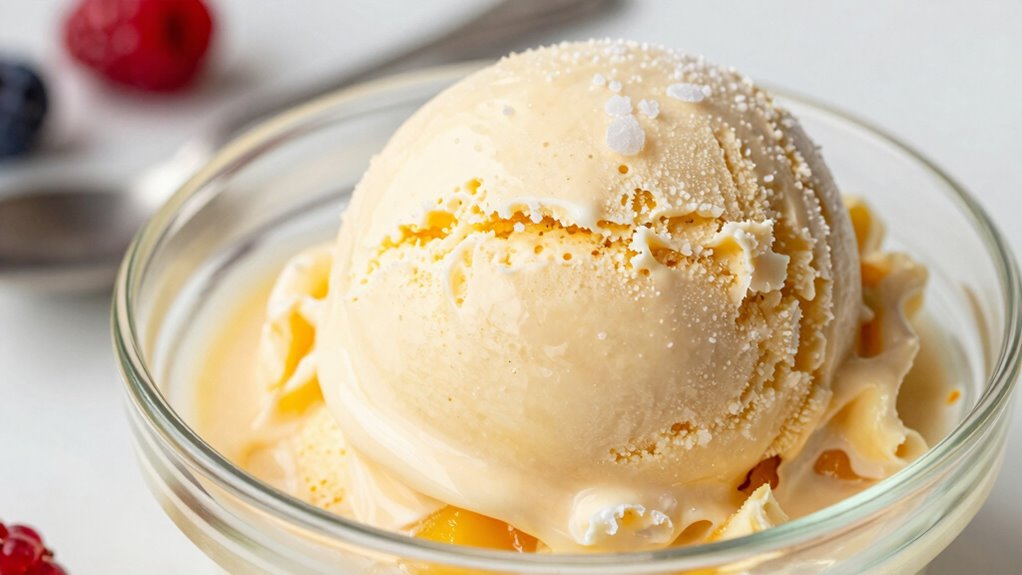
Vegan ice cream often turns icy because it lacks the dairy fats and stabilizers found in traditional ice creams that help keep it smooth. Without these ingredients, the texture contrast between creamy and icy becomes more pronounced, making it less enjoyable. Additionally, the absence of dairy fats affects flavor balance, causing the taste to become dull or overly cold. When ice crystals form, they disrupt the smooth mouthfeel and diminish the overall flavor experience. To prevent this, it’s important to understand how ingredients influence texture and flavor. Achieving a balance ensures your vegan ice cream remains creamy and flavorful, even when stored for longer periods. Proper formulation and storage techniques can help maintain the ideal texture contrast and flavor profile. Moreover, understanding color accuracy can help in selecting ingredients that contribute to a more appealing appearance, enhancing the overall sensory experience. Incorporating emulsifiers and stabilizers can further improve texture and prevent iciness, making your vegan ice cream more enjoyable and freeze-thaw stability is crucial for maintaining quality during storage.
How Do Ingredients Affect Vegan Ice Cream’s Creaminess?
The key to achieving creamy vegan ice cream lies in the ingredients you choose, as each plays a vital role in texture. Dairy alternatives like coconut milk, cashew cream, or soy-based milks add richness and smoothness, mimicking traditional dairy’s creaminess. These ingredients influence the flavor profiles, offering a variety of tastes from subtle to bold, which can enhance or detract from the overall creaminess. Thickeners such as guar gum or xanthan gum help stabilize the mixture, preventing ice crystals and maintaining a velvety texture. Using the right combination of dairy alternatives and stabilizers guarantees your ice cream remains smooth and luscious, avoiding icy textures. Selecting ingredients thoughtfully directly impacts how creamy and indulgent your vegan ice cream turns out.
How Freezing and Churning Techniques Prevent Ice Crystals

Freezing and churning are essential steps that prevent the formation of large ice crystals, which can ruin the smooth texture of vegan ice cream. Proper churning keeps tiny ice crystals suspended, ensuring a creamy mouthfeel and preventing icy chunks. This process also enhances texture by creating a more uniform consistency, making each bite enjoyable. Additionally, churning promotes better flavor infusion, as it evenly distributes ingredients and prevents separation. The rapid movement during churning introduces air, leading to a lighter, more desirable texture. By controlling the freezing rate and consistently churning, you reduce ice crystal size and improve overall quality, resulting in a velvety, delicious vegan ice cream that’s free of icy crunchiness. Understanding ice crystal formation helps you fine-tune your technique for the best results. Proper freezing techniques are crucial in managing how quickly ice crystals form during the process. Paying attention to temperature control during freezing can further minimize large crystal development, ensuring a smoother final product. Developing an awareness of crystal growth patterns allows for better adjustments in your freezing process to achieve optimal creaminess. Additionally, being aware of seasonal temperature variations can help you adapt your method for different environments, maintaining consistency.
Which Stabilizers and Emulsifiers Keep Vegan Ice Cream Smooth?
Have you ever wondered how to keep vegan ice cream smooth and scoopable? Using the right stabilizers and plant-based emulsifiers makes all the difference. Stabilizer options like guar gum, xanthan gum, and agar-agar help prevent ice crystal formation and improve texture. Emulsifiers such as lecithin derived from soy or sunflower aid in blending fats evenly, creating a creamy mouthfeel. Imagine this table:
| Stabilizer Options | Emulsifier Choices |
|---|---|
| Guar gum | Soy lecithin |
| Xanthan gum | Sunflower lecithin |
| Agar-agar | Coconut-based emulsifiers |
| Cornstarch | Aquafaba (chickpea water) |
These ingredients work together to keep your vegan ice cream smooth and irresistible. Choose stabilizers and emulsifiers wisely to achieve that perfect, scoopable texture every time. Understanding how these ingredients interact can help optimize your recipes for the best results.
Best Practices for Freezing and Storage to Avoid Icing
To keep your vegan ice cream irresistibly smooth and scoopable, proper freezing and storage techniques are key. Use effective freezing techniques by placing your ice cream in an airtight container, leaving minimal air space to prevent freezer burn. Wrap the container tightly to maintain a consistent temperature and avoid temperature fluctuations. Storage tips include keeping your ice cream at a steady, cold temperature—ideally around 0°F (-18°C)—and avoiding frequent door openings. Consider placing a layer of plastic wrap directly on the surface before sealing the lid to prevent ice crystals from forming. Additionally, store your ice cream away from strong-smelling foods to prevent flavor transfer. Proper freezing techniques and attentive storage will help you enjoy smooth, creamy vegan ice cream every time. Maintaining proper storage can also help extend the shelf life of your frozen treats and preserve their quality. Ensuring your freezer maintains a consistent temperature is essential for preventing freezer burn and ice crystal formation, especially when you understand the importance of temperature stability in food preservation. Regularly checking your freezer’s temperature with a thermometer can help maintain ideal conditions and prevent temperature fluctuations, which can lead to ice crystal formation and degrade texture.
Common Mistakes That Make Vegan Ice Cream Icy

One common mistake is using too little fat, which can cause your ice cream to become hard and icy. Overfreezing the mixture also contributes to an icy texture, so timing is key. Additionally, low-quality thickeners may not provide enough stability, leading to unwanted ice crystals. Using a high-pressure process can help achieve a smoother and more consistent texture in your vegan ice cream. Incorporating proper stabilizers can further prevent ice crystal formation and improve creaminess.
Insufficient Fat Content
Insufficient fat content is a common mistake that leads to icy vegan ice cream. Fat plays a vital role in creating a smooth, creamy texture by preventing ice crystals from forming. When your dairy alternatives lack enough fat, the mixture doesn’t retain enough richness, resulting in a more brittle, icy consistency. A richer base helps improve texture and stability during freezing. To fix this, consider adding high-fat ingredients like coconut milk, cashew cream, or vegan butter to boost the overall fat content. These additions help create a richer, more stable base that resists freezing into an icy texture. Incorporating fat-rich ingredients can make a significant difference in achieving the desired creamy consistency. Be mindful of the balance, as too little fat will make your ice cream feel gritty and less indulgent. Increasing the fat content ensures your vegan ice cream stays creamy and scoopable. Additionally, experimenting with emulsifiers like lecithin or xanthan gum can help improve texture and prevent ice crystal formation.
Overfreezing the Mixture
Overfreezing your vegan ice cream is a common mistake that results in an excessively icy texture. When you overfreezing the mixture, ice crystals become too large, leading to a grainy feel. To avoid this, consider these tips:
- Use a timer to prevent leaving the mixture in the freezer too long.
- Transfer the mixture to an airtight container to prevent improper storage and moisture exposure.
- Stir the ice cream every 30-45 minutes during the initial freezing phase to break up large ice crystals.
- Avoid frequent temperature fluctuations, which can cause ice crystal growth.
Using Low-Quality Thickeners
Using low-quality thickeners can substantially contribute to an icy texture in your vegan ice cream. Relying on artificial thickeners might seem convenient, but they often lack the stability needed for smoothness. Instead, opt for natural alternatives like agar-agar, cornstarch, or arrowroot powder, which improve creaminess without compromising flavor. Incorporating safe installation practices in your kitchen setup can help ensure proper mixing and temperature control during the freezing process, leading to a better final texture. Incorporating glycolic acid in your skincare routine can also enhance skin texture, leading to a more enjoyable eating experience with your homemade ice cream.
Easy Fixes to Make Your Vegan Ice Cream Creamier

To make your vegan ice cream creamier, consider using ingredients with higher fat content, like coconut milk or cashew cream. Adding stabilizers or thickeners can also improve texture without sacrificing creaminess, and chilling your mixture thoroughly before freezing helps it stay smooth. These simple fixes can transform your ice cream into a richer, more indulgent treat. Incorporating classic arcade game elements into your process, such as patience and precision, can also help achieve a better texture. Additionally, understanding frozen dessert science can guide you in mastering the ideal consistency, including how freezing point depression impacts texture and smoothness.
Use Higher Fat Content
Increasing the fat content in your vegan ice cream helps create a richer, creamier texture that’s hard to achieve with low-fat ingredients. Using dairy alternatives with higher fat content enhances mouthfeel and prevents ice crystal formation. To boost creaminess, consider:
- Choosing full-fat coconut milk or coconut cream for a natural fat boost.
- Incorporating nut butters like cashew or almond for added richness.
- Using full-fat plant-based yogurts to increase the overall fat content.
- Adding small amounts of vegan margarine or coconut oil to improve texture.
Higher fat content from dairy alternatives helps stabilize the mixture, resulting in a smoother, creamier ice cream. Keep in mind, this simple adjustment profoundly improves mouthfeel and reduces iciness, making your vegan ice cream far more indulgent. Additionally, selecting high-fat dairy alternatives can significantly enhance the overall texture and creaminess of your ice cream.
Incorporate Stabilizers or Thickeners
Incorporating stabilizers or thickeners is an easy way to enhance the creaminess of your vegan ice cream. Stabilizer types like guar gum, xanthan gum, and carrageenan help prevent ice crystal formation and improve texture. Thickening agents such as cornstarch, arrowroot, or ground oats can also contribute to a smoother, richer consistency. When adding stabilizers, start with small amounts—about ½ teaspoon per quart—and blend thoroughly to avoid clumping. These ingredients work by binding water and creating a more cohesive mixture, which results in a creamier ice cream. By selecting the right stabilizer types and using them correctly, you can substantially reduce iciness and achieve a velvety, indulgent finish every time.
Chill Mixture Thoroughly
Chilling your mixture thoroughly before churning is one of the simplest ways to achieve a creamier vegan ice cream. Start by preparing your ingredients and then chill mixture thoroughly in the fridge for at least 4 hours or overnight. To guarantee the best results, pre freeze equipment, such as your ice cream maker bowl, for 24 hours beforehand. This step helps maintain a consistent cold temperature during churning. Additionally, consider these tips:
- Use a shallow container to spread out the mixture for quicker chilling
- Cover the mixture tightly to prevent ice crystals from forming
- Stir the mixture occasionally during chilling to distribute cold evenly
- Always pre freeze equipment to optimize freezing efficiency
Following these steps ensures your mixture is cold enough, resulting in a smoother, creamier vegan ice cream.
Tips for Perfectly Smooth Vegan Ice Cream Every Time
Achieving a perfectly smooth vegan ice cream every time starts with choosing the right base and properly preparing it. Use a blend that includes vegan protein to improve texture and add nutritional value. Incorporate plant-based antioxidants to prevent ice crystal formation and enhance flavor. Churn the mixture thoroughly to break up ice crystals and distribute ingredients evenly. For added creaminess, consider adding a small amount of coconut milk or cashew cream.
| Ingredient Type | Purpose | Tips |
|---|---|---|
| Vegan protein | Improves texture and nutritional value | Use blended tofu or pea protein |
| Plant-based antioxidants | Prevents ice crystals, boosts flavor | Add berries or dark leafy greens |
| Coconut milk or cashew cream | Enhances creaminess | Use in small amounts for smoothness |
| Proper churning | Achieves smooth consistency | Churn for at least 20-30 minutes |
Frequently Asked Questions
Can the Type of Plant-Based Milk Influence Ice Crystal Formation?
Yes, the type of plant-based milk influences ice crystal formation. Some milks, like coconut or cashew, create creamier textures, reducing large ice crystals. Others, like almond or rice milk, may lead to icier results if not handled properly. To minimize ice crystals, use appropriate freezing techniques, such as churning frequently or adding stabilizers. Choosing the right plant-based milk and employing proper freezing techniques guarantees smoother, creamier vegan ice cream.
Does Adding Alcohol Help Prevent Vegan Ice Cream From Becoming Icy?
Think of alcohol as a magic wand that keeps your ice cream smooth. Adding a splash lowers alcohol’s freezing point, preventing icy crystals from forming. While it might slightly alter alcohol’s flavor impact, a small amount can make your vegan ice cream creamier and less icy. Just be cautious—too much alcohol can make the texture overly soft, so find the right balance for that perfect scoop every time.
How Does Overfreezing Affect the Texture of Vegan Ice Cream?
Overfreezing your vegan ice cream causes ice crystals to grow larger, resulting in a gritty, icy texture that ruins the smoothness of your dairy alternatives. It also diminishes flavor stability, making the ice cream taste dull or off. To prevent this, avoid freezing it too long and store it at the right temperature. Properly stored, your vegan ice cream stays creamy and flavorful, delighting your taste buds with every scoop.
Are There Natural Ingredients That Naturally Prevent Ice Crystallization?
Did you know natural stabilizers can reduce ice crystallization, improving your vegan ice cream? Plant extracts like guar gum, pectin, and agar-agar naturally prevent large ice crystals from forming, resulting in a smoother texture. These ingredients are safe, eco-friendly, and effective, making them perfect for your homemade treats. Incorporate natural stabilizers into your recipe to enjoy creamy, scoopable vegan ice cream every time without the icy crunch.
What Role Does Sugar Concentration Play in Ice Crystal Development?
Higher sugar concentration in your vegan ice cream slows down ice crystal formation by lowering the freezing point, which keeps the texture smooth. Sugar acts as an antifreeze, preventing large ice crystals from developing. If you add too little sugar, you’ll notice iciness because of rapid ice crystal growth. To improve, increase sugar content slightly or use sweeteners like agave or corn syrup, which help maintain a creamy, scoopable consistency.
Conclusion
Don’t let icy vegan ice cream ruin your treat. By choosing the right ingredients, using proper freezing techniques, and adding stabilizers, you can enjoy smooth, creamy scoops every time. Think of it like making a perfect smoothie—blend well, freeze carefully, and store properly. Even if it turns a little icy, a quick warm-up or re-churn can restore creaminess. With these tips, you’ll always savor delicious, velvety vegan ice cream, no matter the season.