
Electric composters rapidly break down kitchen waste like fruit peels, coffee grounds, and small food scraps into nutrient-rich compost, making indoor composting easy and odor-free. They use heat, grinding, and microbes to speed up decomposition but can’t process bones, dairy, or oily foods. While they’re great for small-scale waste, they don’t fully replace outdoor composting that produces more mature soil. Keep exploring to discover how to get the most out of yours.
Key Takeaways
- Electric composters rapidly break down kitchen waste using heat, grinding, and microbial activity, producing compost quickly.
- They are ideal for small-scale, indoor use and do not handle large quantities or bulky waste like bones or dairy.
- Electric composters effectively control odors and require minimal space, making them suitable for urban environments.
- They do not replace outdoor composting, which creates richer, nutrient-dense soil over a longer period.
- Limitations include capacity constraints, electricity dependence, higher upfront costs, and inability to process all types of organic waste.
What Can You Compost With an Electric Composter?
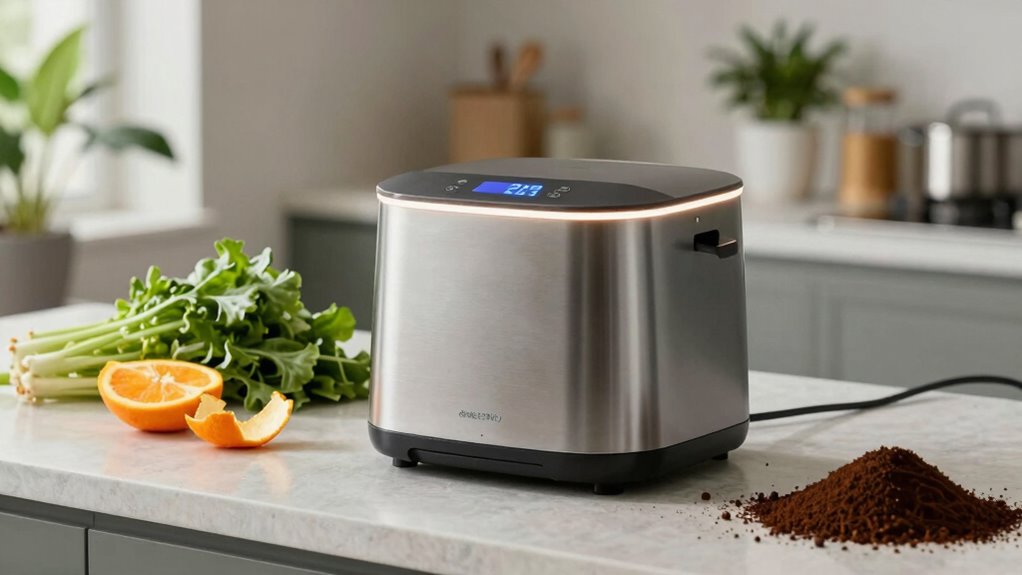
Electric composters are versatile tools that can handle a wide range of organic waste. You can easily compost kitchen scraps like fruit and vegetable peels, coffee grounds, and eggshells. Food waste such as leftover cooked vegetables or small pieces of bread also break down efficiently in these devices. Unlike traditional composting, electric composters quickly process organic materials, reducing their volume and odor. You won’t need large outdoor space or special conditions—just insert your food waste, and the composter takes over. This makes it perfect for urban settings or indoor use. Keep in mind, however, that some items like meat, dairy, or oily foods are typically not recommended, as they can cause odors or disrupt the composting process. Proper waste management is essential to ensure your electric composter functions effectively and safely. Additionally, selecting a model with appropriate capacity can help match your household waste output and prevent overloading. Incorporating landscaping ideas like planting native plants around your compost bin can enhance your backyard’s natural appeal and support sustainable practices.
How Do Electric Composters Work?
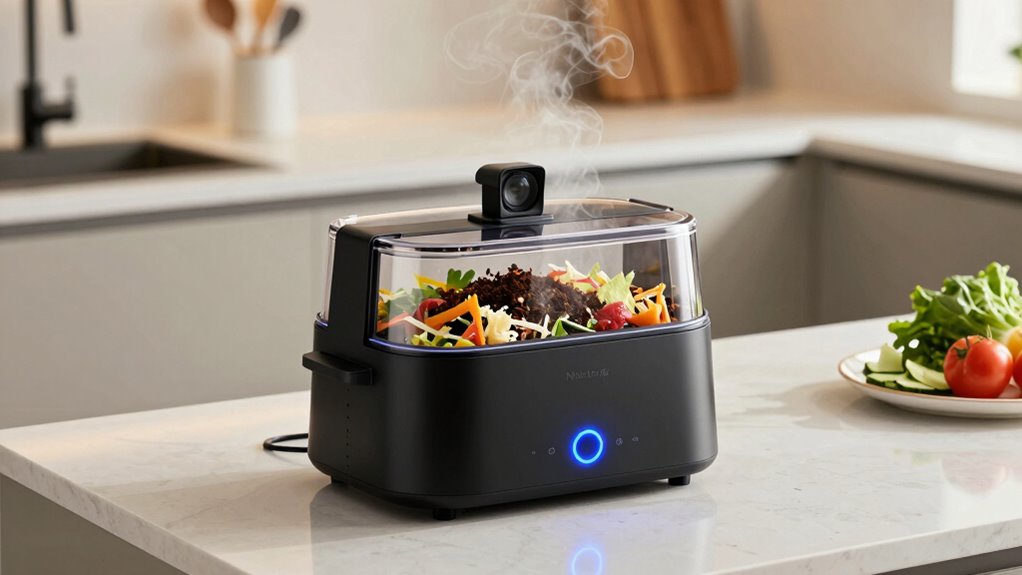
Electric composters utilize a combination of heating, grinding, and microbial activity to rapidly break down organic waste. They accelerate decomposition by maintaining ideal temperatures, shredding scraps, and fostering beneficial microbes. Inside, the device mimics natural composting but in a controlled environment. As waste breaks down, you can harvest nutrient-rich compost tea, ideal for plants. Unlike a worm bin, electric composters handle larger quantities and require less maintenance. They also continuously produce compost, reducing wait times. Additionally, these appliances often feature smart technology that allows for monitoring and adjusting the composting process remotely. This integration of technology enhances digital safety and efficiency in managing organic waste. Proper temperature regulation is essential for optimal microbial activity and efficient composting. Here’s a quick overview of key processes:
| Process | Description | Result |
|---|---|---|
| Heating | Maintains ideal temp to speed microbial activity | Faster decomposition |
| Grinding | Breaks down waste into smaller pieces | Enhanced microbial access |
| Microbial Activity | Microbes break down organic matter | Produces compost tea |
| Aeration | Ensures oxygen flow to microbes | Healthy compost |
Furthermore, some electric composters include odor control features that help manage smells during the process. Proper ventilation also contributes to a more efficient composting environment.
Why Use an Electric Composter? Benefits Explained
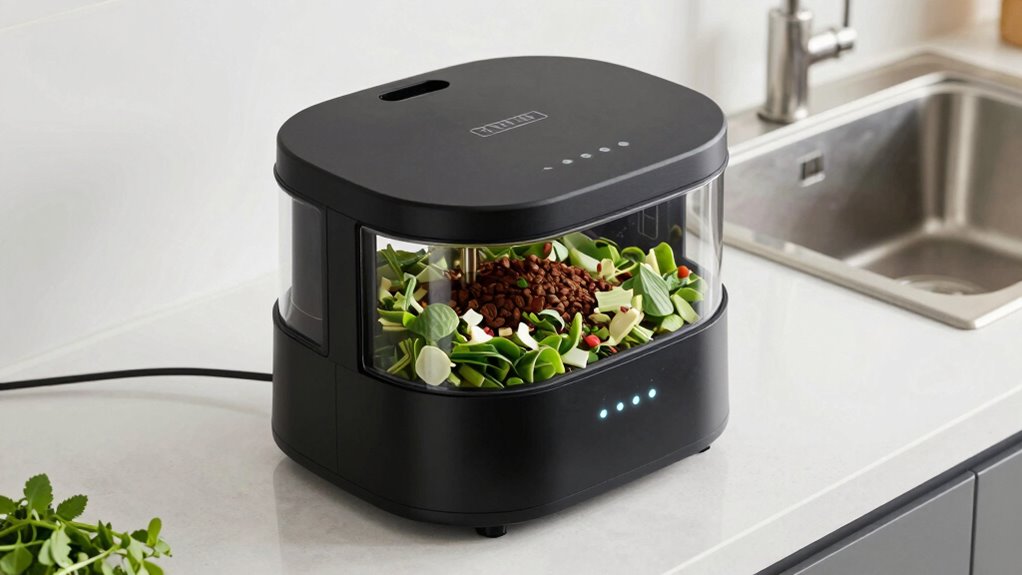
Using an electric composter speeds up your recycling process, so you get nutrient-rich soil faster. It also controls odors effectively, making composting more pleasant and less messy. Plus, it’s an eco-friendly way to manage waste, reducing your household’s environmental impact. Additionally, electric composters often feature user-friendly controls that simplify the composting process for beginners easy-to-use controls. These devices may also incorporate advanced composting technology to optimize decomposition and improve efficiency. Some models even utilize electric power generation technology to reduce energy consumption and enhance sustainability. Incorporating sustainable energy solutions can further lower their environmental footprint and support eco-friendly practices.
Faster Composting Process
If you want to speed up your composting process, electric composters are a game-changer. They enhance microbial activity by maintaining ideal compost temperature, which accelerates decomposition. Unlike traditional methods, electric units generate heat, creating a warm environment that promotes faster breakdown of organic waste. This consistent temperature boost encourages beneficial microbes to work more efficiently, reducing the time it takes to produce usable compost. Additionally, herbal infusion machines can be used to process botanical waste that might otherwise slow down composting, further streamlining the process. Since they are designed for easy operation, electric composters are suitable for users of all experience levels. With an electric composter, you won’t have to wait months for your compost to mature; instead, you can have nutrient-rich soil in a matter of weeks. By actively controlling heat levels, these devices ensure a quicker, more reliable composting process, saving you time and effort while producing high-quality compost swiftly. Furthermore, incorporating composting techniques can optimize efficiency and improve the quality of your finished compost.
Odor Control Advantages
Because electric composters are designed with sealed lids and built-in ventilation systems, they effectively minimize odors that typically escape from traditional compost piles. This setup provides excellent scent suppression and odor elimination, making indoor composting practical without unpleasant smells. Imagine a compact unit quietly working in your kitchen, controlling odors with ease. Additionally, the safe and efficient operation of electric composters helps prevent odors from becoming a nuisance in your home environment. Their odor control technology ensures that any potential smells are contained, making them suitable for use in small living spaces. Proper ventilation design further enhances odor management by directing smells away from indoor areas. Moreover, integrating airflow regulation features can optimize odor containment and improve overall performance. Indoor composting benefits greatly from these features, allowing you to compost waste conveniently and cleanly.
Eco-Friendly Waste Management
Electric composters offer an eco-friendly way to manage organic waste right in your home, reducing the need for landfill disposal and cutting down on greenhouse gas emissions. Many composting myths discourage people from starting, but electric composters simplify waste reduction strategies by speeding up decomposition and eliminating odors. Unlike traditional composting, they require less space, effort, and knowledge, making eco-friendly waste management accessible. By composting at home, you actively decrease the amount of waste sent to landfills, which helps reduce methane emissions. This sustainable practice not only benefits the environment but also produces nutrient-rich compost for your garden. Using an electric composter aligns with your commitment to eco-conscious living and promotes responsible waste management. Additionally, choosing eco-friendly waste solutions like electric composters supports sustainable waste management practices, which are essential for minimizing environmental impact and promoting responsible tourism practices. Incorporating electric composters into your routine can also help you understand composting benefits better and foster more sustainable habits.
What Are the Limitations of Electric Composting?
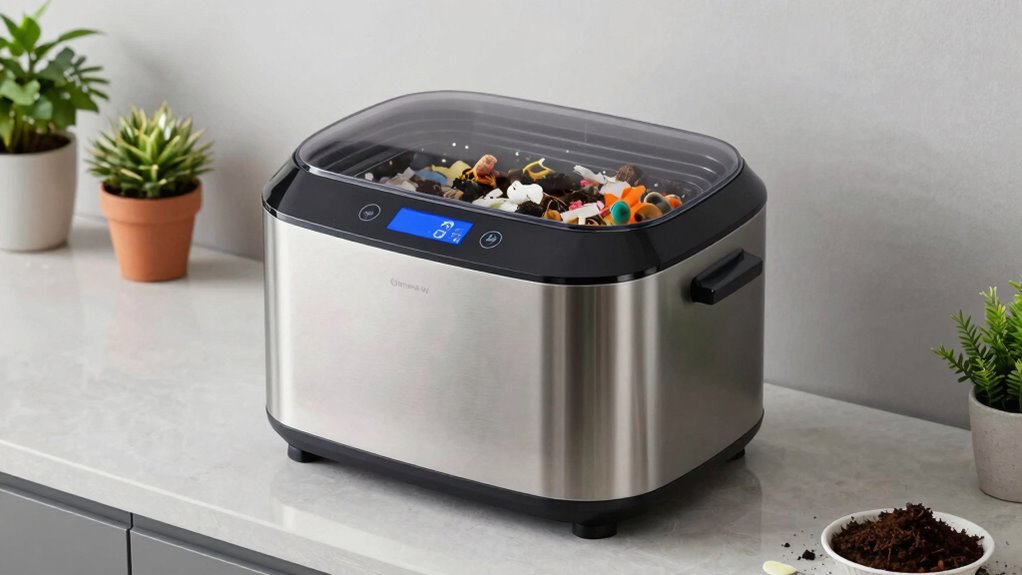
While electric composters offer a convenient and odor-free way to recycle organic waste, they do have notable limitations. One major drawback is their capacity; most models can’t handle large quantities of compostable material, which can be frustrating if you produce a lot of waste. Additionally, electric vs traditional composting highlights their dependence on electricity, making them less eco-friendly if you’re concerned about energy use. They also can’t process all types of organic waste, such as bones or dairy, limiting what you can compost. Cost is another factor; electric composters tend to be more expensive upfront than traditional methods. Finally, they don’t develop compost as quickly as traditional composting, which can be a disadvantage if you’re enthusiastic for rich, mature soil. Regular maintenance and understanding proper composting techniques can help maximize their effectiveness.
How to Choose the Best Electric Composter for Your Kitchen
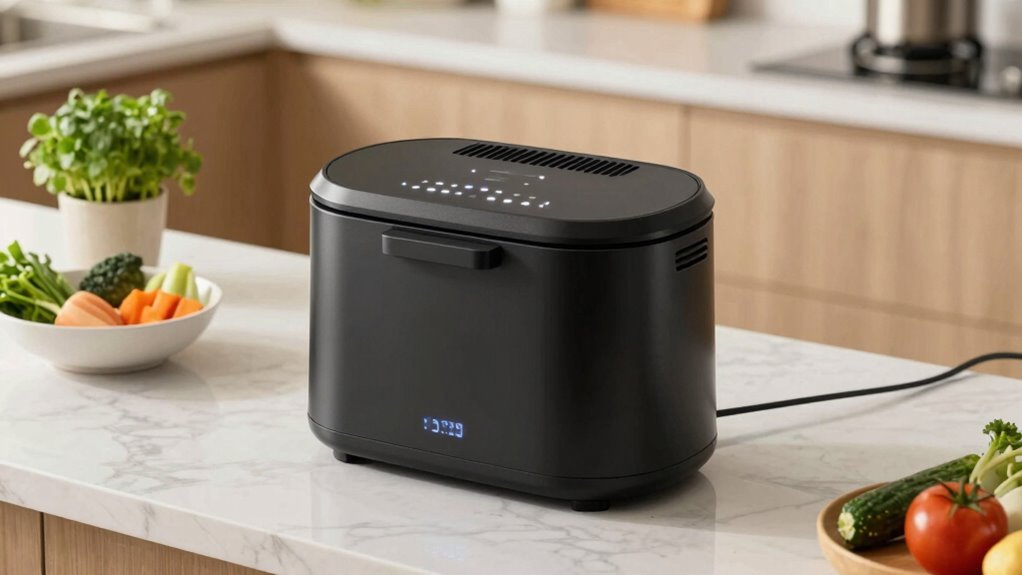
Choosing the right electric composter for your kitchen starts with evaluating your waste habits and space. If you have limited counter space, a compact kitchen countertop model might be ideal, saving room while still handling daily scraps. Consider the compost bin styles available—some have a simple, sleek design, while others feature more advanced controls or odor management systems. Think about how often you’ll use it and how much waste you generate. If you prefer a model that’s easy to operate with minimal maintenance, look for one with intuitive controls and easy-to-clean surfaces. Also, check the compatibility with your kitchen’s aesthetic. Selecting the right electric composter involves balancing size, style, and features to match your needs and create a seamless fit in your culinary space.
Can Electric Composters Fully Replace Outdoor Composting? Pros and Cons
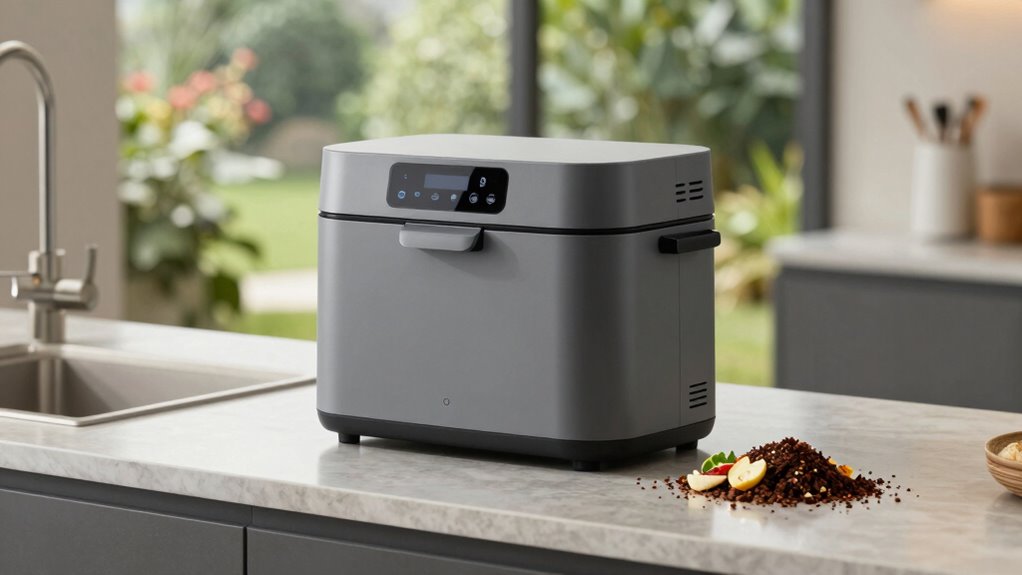
Can electric composters truly replace outdoor composting? While they offer quick, odor-free composting right in your kitchen, they can’t fully replace outdoor composting. Outdoor gardening benefits from compost bins that provide nutrient-rich soil over time, supporting plant growth and soil health. Electric composters are convenient for small-scale food waste reduction, but they don’t handle large quantities or yard scraps well. Additionally, compost bin maintenance outdoors involves aeration and monitoring, which electric units do automatically. However, outdoor composting encourages biodiversity and natural decomposition processes that electric composters can’t replicate. So, while electric composters are excellent for convenience and reducing kitchen waste, they complement rather than replace outdoor composting, which plays a essential role in sustainable gardening practices.
Frequently Asked Questions
How Long Does It Take for Electric Composters to Process Waste?
Electric composters typically process waste in about 24 to 48 hours, depending on the model and composting speed. You’ll notice the waste breaking down faster than traditional methods, often within a day or two. To optimize waste breakdown time, keep the composter well-maintained and avoid overloading it. This quick turnaround means you can enjoy fresh compost in just a couple of days, making eco-friendly waste management simple and efficient for you.
Are Electric Composters Suitable for All Types of Kitchen Waste?
Ever wonder if electric composters handle all your kitchen waste? They’re best suited for fruit peels, coffee grounds, and vegetable scraps, but typically aren’t designed for meat scraps or dairy. You might find that meat and oily items can cause odors or clog the system. So, if you want a hassle-free solution, stick to plant-based waste, and check your composter’s guidelines for ideal results.
Do Electric Composters Emit Any Odors During Operation?
Electric composters typically don’t emit odors during operation if you maintain proper odor control. Regularly cleaning the unit and managing waste effectively help prevent unpleasant smells. Most models include odor control features like filters or sealed lids, which reduce odors markedly. Keep up with maintenance requirements, such as emptying trays and cleaning filters, to ensure your composter stays odor-free and functions efficiently.
What Is the Typical Lifespan of an Electric Composter?
You can expect an electric composter to last around 5 to 10 years with proper maintenance. Regular cleaning and monitoring its components help extend its lifespan. Keep in mind, these composters have a lower environmental impact compared to traditional methods, as they efficiently recycle waste with minimal emissions. By maintaining your composter, you guarantee it operates effectively and sustainably, reducing waste and supporting eco-friendly practices for years to come.
Are Electric Composters Energy-Efficient Compared to Traditional Methods?
You might find electric composters surprisingly energy-efficient, especially when powered by renewable energy sources. They often use less energy than traditional composting methods, helping you cut your carbon footprint. While they do consume electricity, their convenience and speed can make up for it. Think of it as killing two birds with one stone—you get compost faster and reduce environmental impact, making them a smart choice for eco-conscious gardeners.
Conclusion
Electric composters make kitchen waste recycling quick and odor-free, turning food scraps into compost in just hours. Did you know that up to 30% of household waste can be composted, reducing landfill mass? While they’re great for convenience, they don’t replace outdoor composting for larger amounts or yard waste. Consider your needs, and you’ll find an electric composter can be a smart, eco-friendly addition to your home.